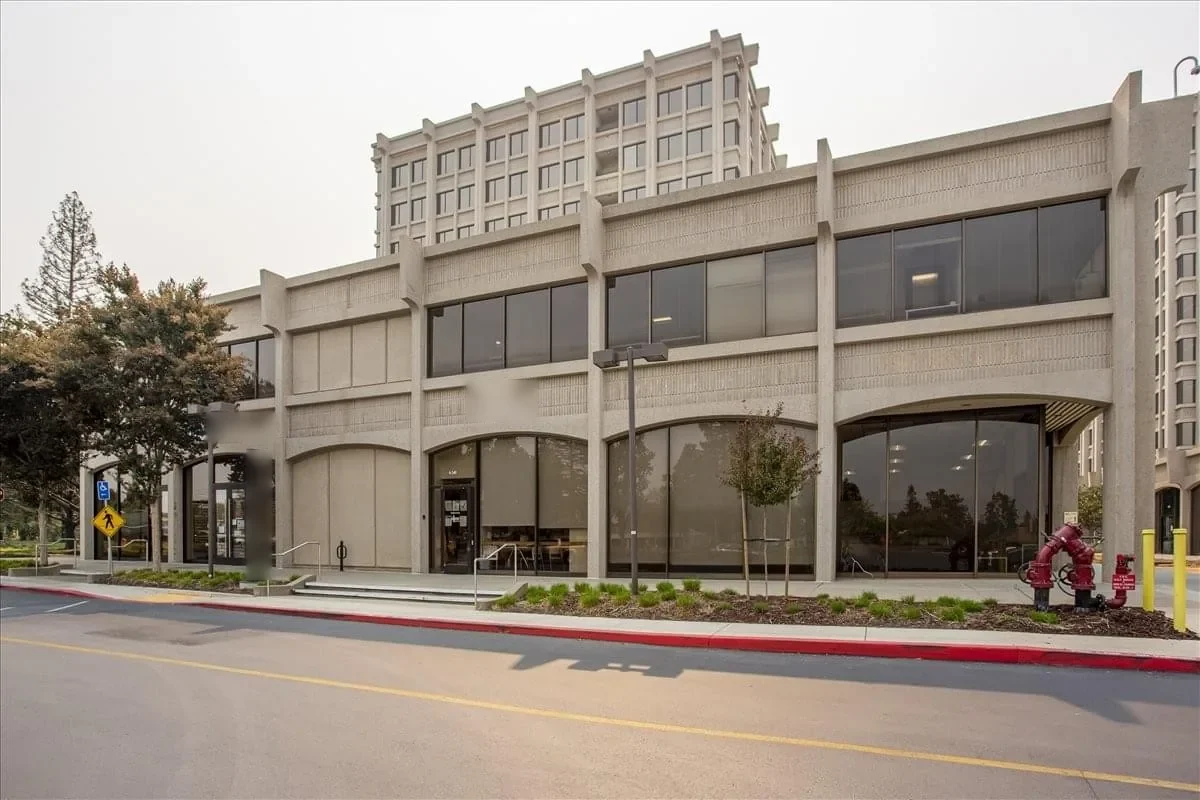
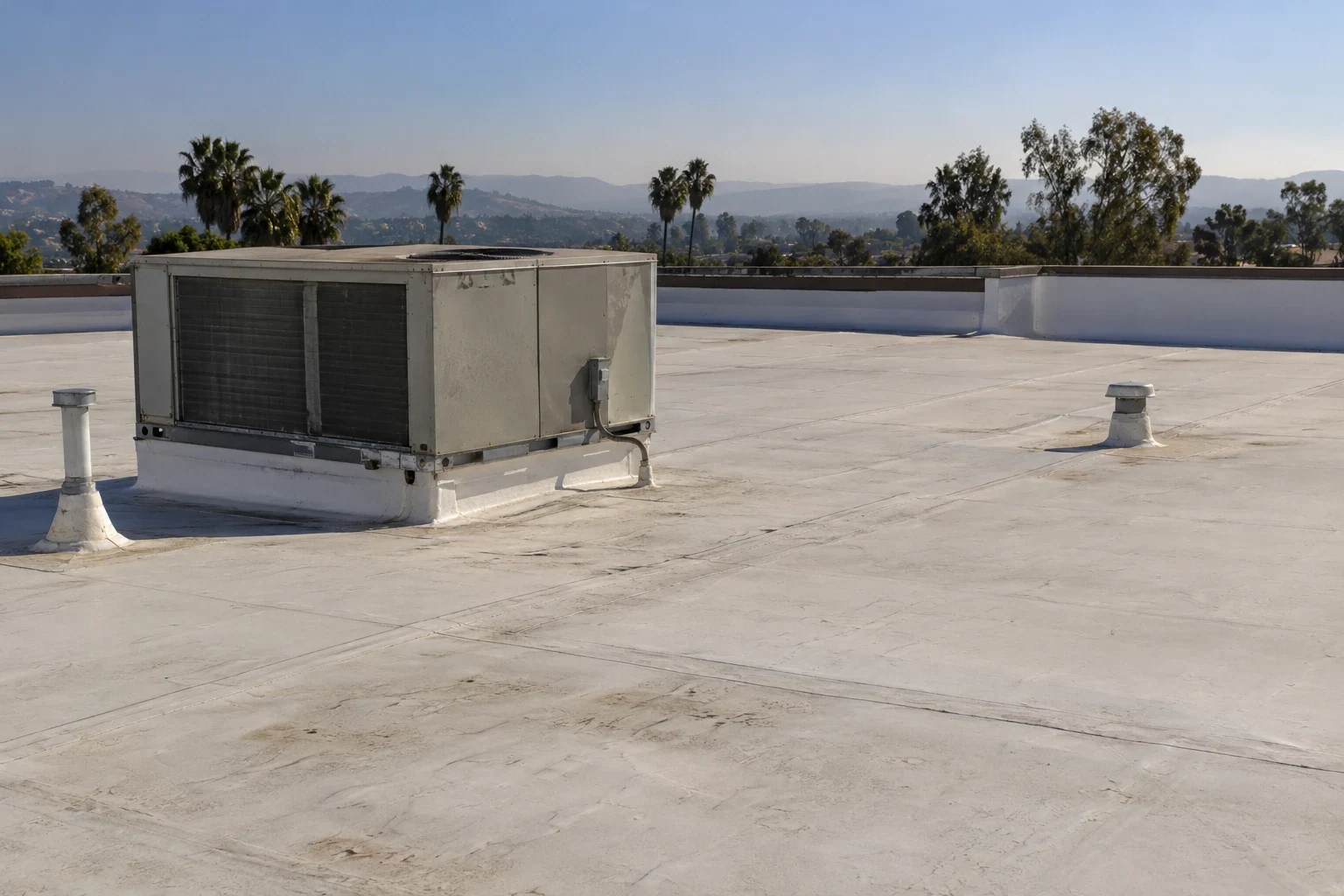
Manufacturing Facility Roofing in Oxnard, CA
Schedule a manufacturing roof assessment
Manufacturing Facility Roofing
A manufacturing roof inspection starts with the process below the membrane. A leak above packaging, electrical controls, stored inputs, or a production line may need a different work window and interior protection than a defect over an exterior service bay. Oxnard's Central Industrial Area includes agricultural processing and vehicle or equipment repair, while Camino Real Business Park supports manufacturing and research uses. Those local activities make access and continuity important, but the roof assembly still has to be identified at each building. We map the affected section, inspect its details, and set a repair boundary that operations can review.
Before work starts, we confirm line schedules, shutdown limits, exhaust and intake locations, lift access, overhead protection, and who can release the affected area. We do not assume that a plant's addition matches its original roof. Changes in elevation, drains, penetrations, or previous patches can reveal separate assemblies.
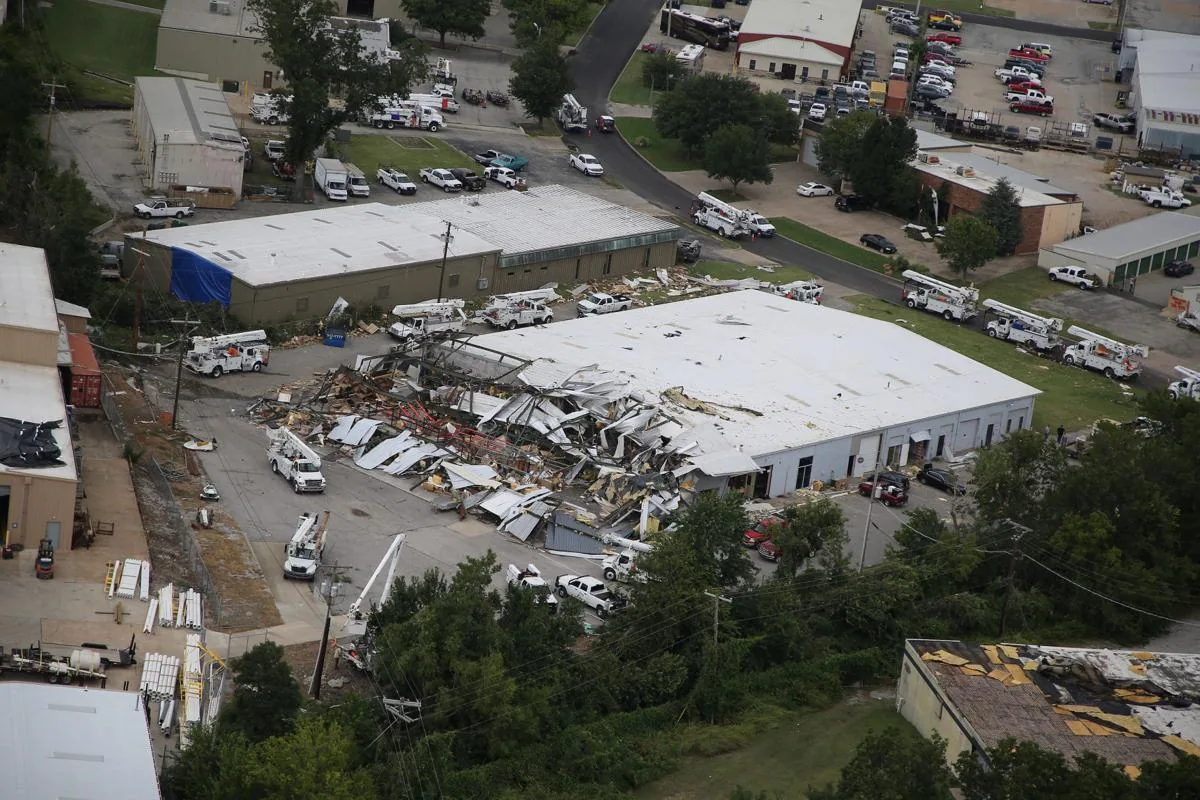
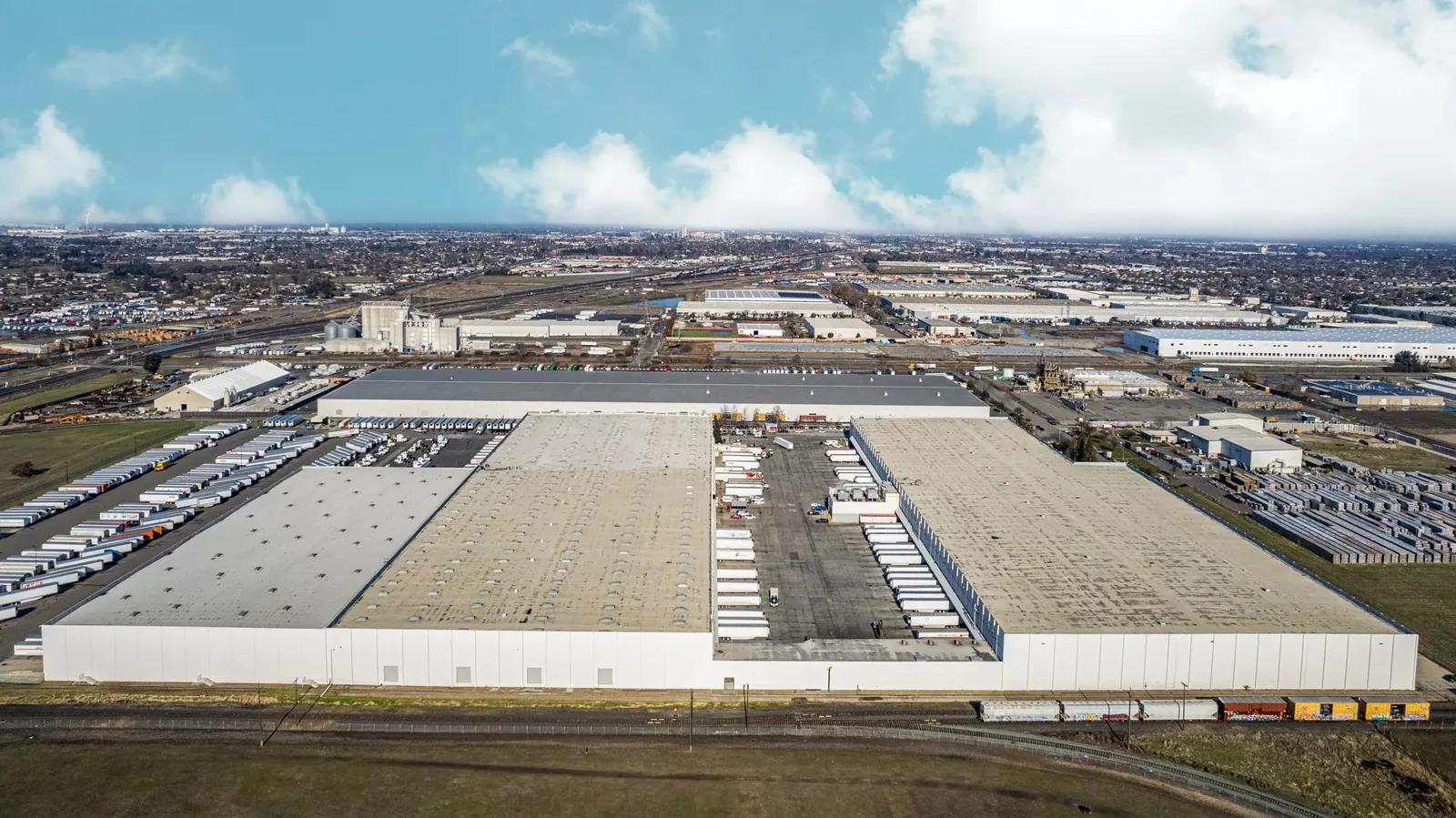
Set a work window the plant can hold
Operations should identify where production can continue, what must stop, and which routes stay clear. We plan the material delivery, staging, lift position, tie-off route, debris path, and access control with the site contact. If a process depends on ventilation or rooftop equipment, the facilities lead confirms operating status and the mechanical trade responsible for isolation.
For buildings near Oxnard's Central Industrial Area, outdoor storage and vehicle or equipment repair can affect truck paths and staging. Camino Real Business Park includes manufacturing, research, and office activity along U.S. 101, so the site manager should identify the individual building and access gate. A written occupied-facility sequence can divide the job by roof section and state the daily dry-in limit. Do not set a production restart against an unverified assumption about a closed roof opening.
Trace the defect to its roof detail
Water can enter at an open seam, failed curb, puncture, wall transition, drain, or edge termination, then travel before it reaches a process area. We compare the reported room and timing with the roof plan, equipment locations, low points, and adjacent details. A moisture mark is not automatically the entry point. We separate a confirmed opening from a suspected path and identify whether a test cut or additional access is needed to resolve the difference.
For active water entry, we can stabilize the area promptly, including overnight, weekends, and holidays, then return for permanent repair when the work window is approved. The inspection record maps seams, drains, curbs, and edge metal; a repair scope identifies preparation, compatible materials, tie-in, and dry-in steps. If the line below cannot stop, we state what protection can be installed from the roof and what interior control the plant must provide. Temporary cover is labeled separately from completed repair.
Identify the roof before choosing a repair
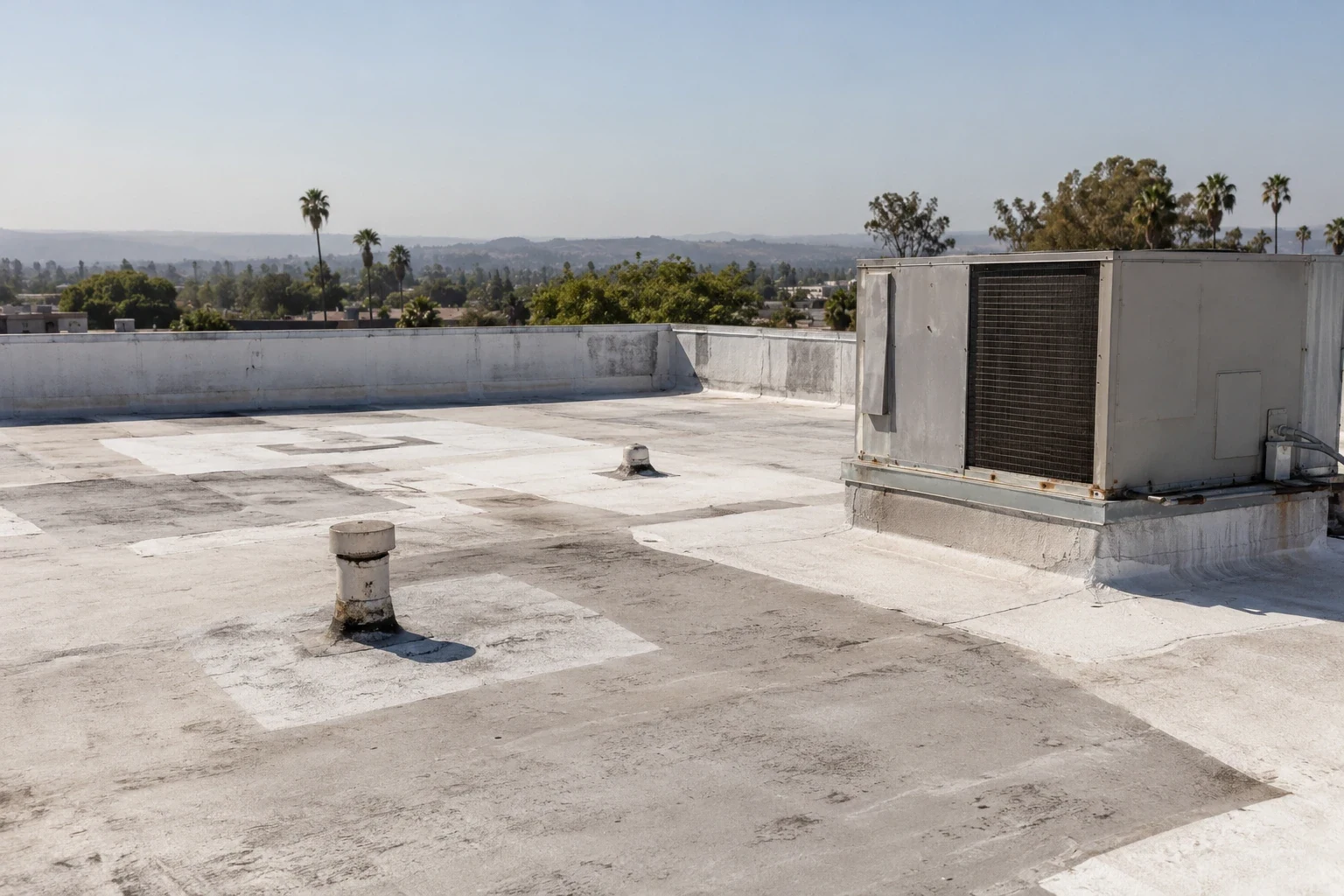
Membrane type, attachment, insulation, cover board, and deck affect the repair method. We inspect visible laps, seams, fasteners, coating transitions, curb seals, and prior patches. When plans do not match the roof, we record the discrepancy instead of treating the drawing as proof. A targeted opening can confirm concealed layers when that answer will change the scope.
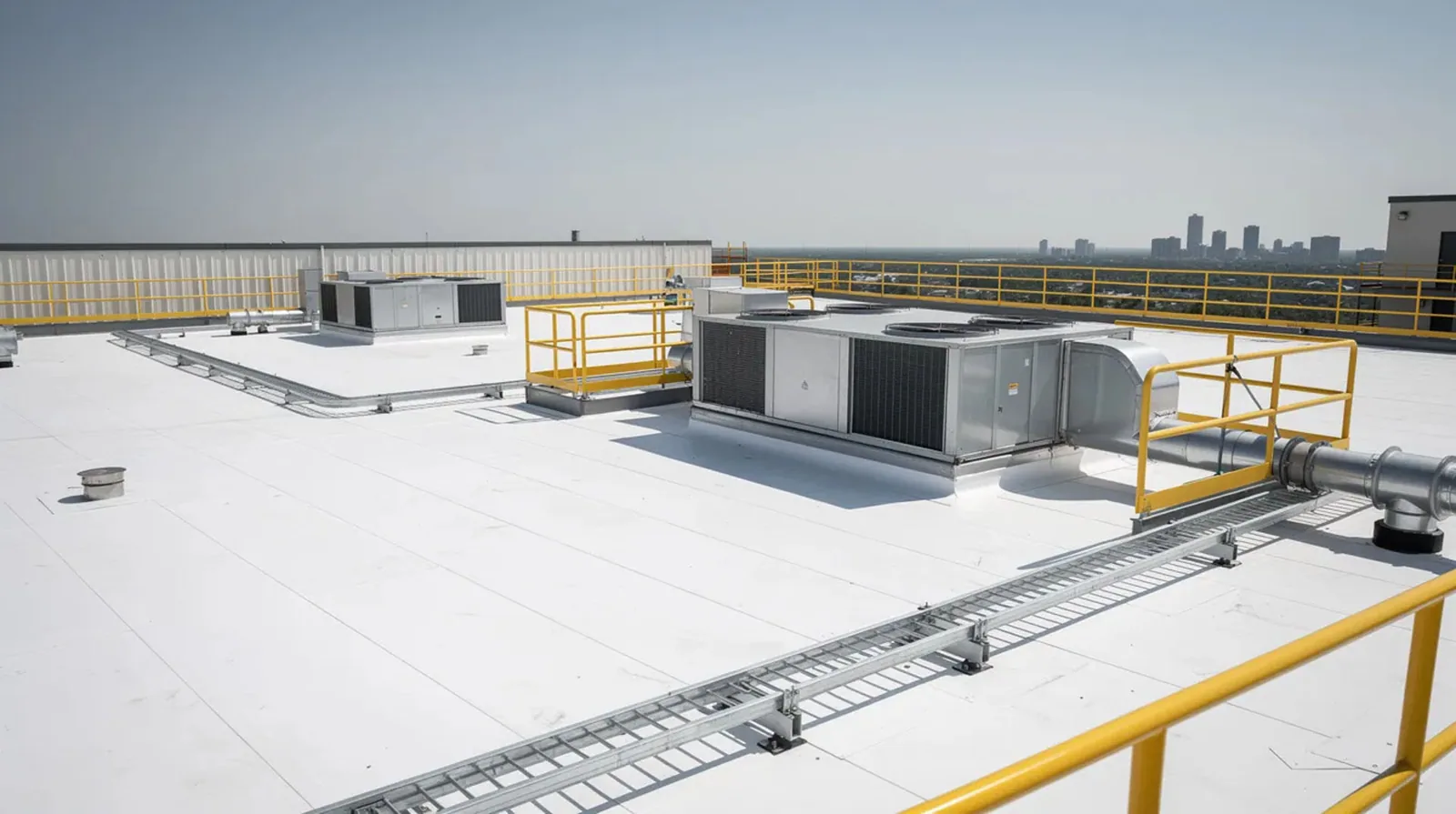
Oxnard's industrial and research districts do not establish what material any one facility has installed. We identify the assembly in the field before selecting a compatible tie-in. A manufacturing-plant roof review can account for process equipment and separate buildings, while the TPO system calls for seam and flashing details suited to that membrane. If moisture is widespread or attachment is questionable, we compare repair with testing and replacement. A cover-board scope must address substrate condition, fastening, edge height, and transitions rather than treating insulation as an isolated layer.
Keep drainage and process areas protected
Water management deserves a separate pass at low points, drains, scuppers, overflow paths, gutters, and roof-to-wall transitions. We look for debris, sediment lines, restricted outlets, lifted membrane, and standing-water marks. If a process area below has sensitive materials, the site plan should identify containment, shutdown, and interior protection before a test opening. We state where the opening will be made, what it is expected to confirm, and how the roof will be restored before asking for approval.
Oxnard's August 2023 station report logged 1.77 inches during Hilary, the highest August total in that station's record. If a plant reported water during the event, work orders and a roof-zone inspection can connect the date with the drains, seams, and interior areas involved.
Price options against the operating plan
A localized defect with sound membrane around it may support a repair. Repeated seam failure, multiple wet zones, loose attachment, or deterioration at many penetrations can justify testing or a replacement option. A recover evaluation checks existing layers, drainage, perimeter height, and attachment before adding material. If a concealed condition changes removal depth, the proposal should identify a hold point for approval instead of assuming that work can expand without an operational review.
Cost and duration depend on access, protection, staging, material handling, removal depth, insulation, edge metal, equipment coordination, and the amount of roof that can be exposed safely in one shift. The replacement plan lays out the work boundary, sequencing, and dry-in method for each section. For a plant with distribution next to production, a logistics operator's access constraints may also affect deliveries and truck circulation. We identify those limits in the project schedule so the facilities manager can compare production impact with the repair alternative.
Use local context without assuming the roof
Oxnard's planning documents distinguish the Central Industrial Area from the Business and Research Park, with different industrial, research, administrative, and commercial uses. Camino Real's specific plan includes manufacturing and research, while Sakioka Farms has operating distribution, cold-storage, and fruit-processing activity. These facts help orient site coordination. They do not tell us the age, material, condition, or roof size of a particular production building. The survey remains specific to the building and the system that is visible.
The City placed Sakioka Farms just off U.S. 101 between Rice Avenue and Del Norte Boulevard. A warehouse roof survey may help when the facility also stores product, and property-management records can carry access approvals across several managed buildings. We use the local setting to ask better coordination questions, then base the repair recommendation on the roof evidence.
Return the roof to operations with a clear record
Before handing the area back, we record the repair location, material, preparation, tie-in, photographs, test results, and any limitation that remains. Temporary protection must be easy to distinguish from permanent work. If a mechanical trade needs to finish a curb or reconnect equipment, name the receiving surface, the responsible party, and the follow-up inspection. The facilities team should not have to infer whether a process area can restart from a roof photograph alone.
Send the roof plan, equipment list, known leak location, prior repair history, process schedule, safety and access requirements, and the person who approves work. We will return a building-specific scope with a dry-in boundary, hold points, and the evidence needed for the next decision. Each shift closes with a usable note for plant operations and maintenance.
Related Roofing Work
More from Industries We Serve and nearby services
Schedule a manufacturing roof assessment
Provide the plant roof plan, process areas, equipment schedule, active leak reports, access requirements, and production windows. We will inspect the assembly and return a repair sequence tied to operations.
Common Questions
Can roofing work continue during production?
Often, when the work can be divided into approved zones. We set access, interior protection, equipment status, and a dry-in limit with the operations contact before mobilizing.
How do you protect a production line from a roof opening?
We identify the work area, expected opening, interior protection, and close-of-shift condition before cutting. The plant contact confirms any process isolation or containment needed below.
What if the roof drawings do not match the building?
We mark the discrepancy and inspect the visible assembly. If concealed layers would change the recommendation, we propose a focused test and restoration plan.
Can a leak be repaired before the line stops?
We assess whether stabilization can be completed safely from the roof and what protection is needed below. Permanent work follows an approved window and repair boundary.
What should the closeout include?
It should name the building and roof zone, installed material, repair detail, photographs, test results, and remaining work. We record temporary cover separately from permanent correction.