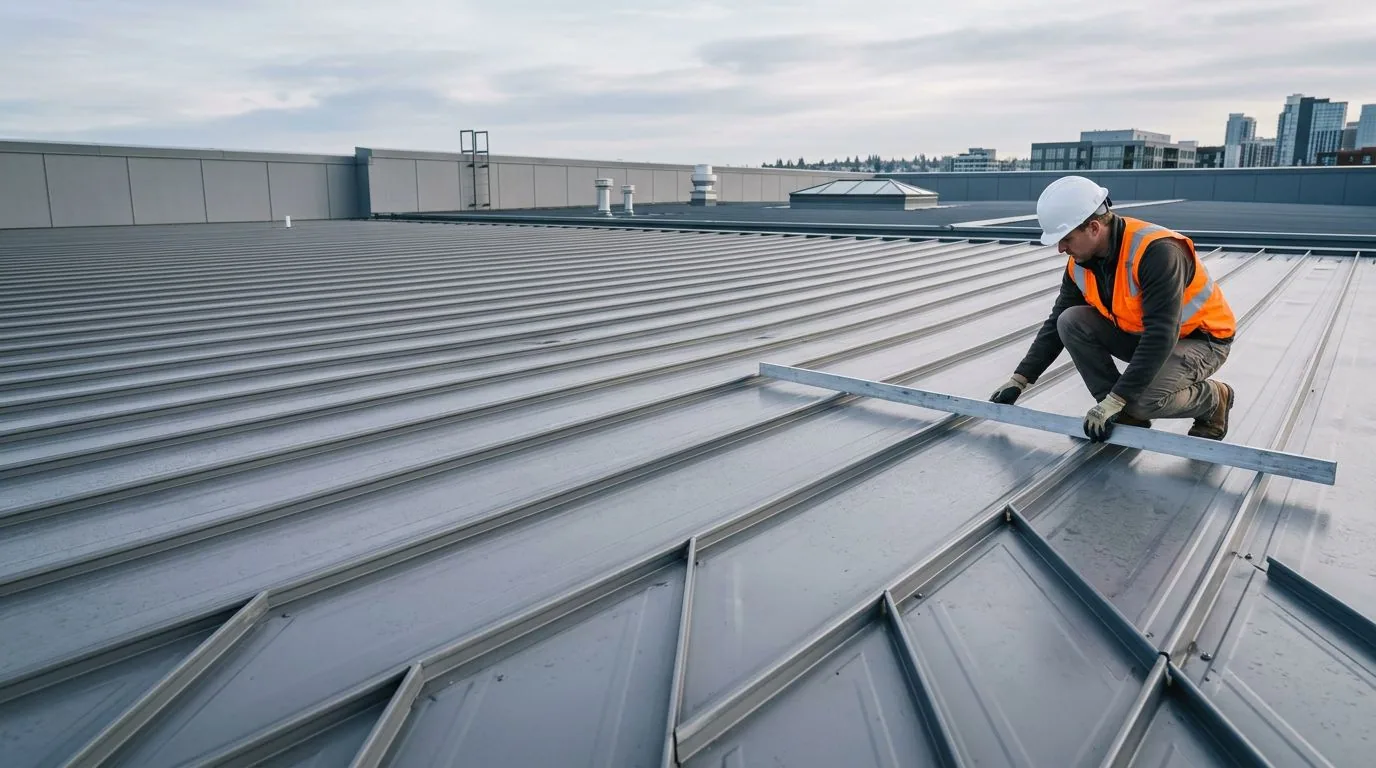
Roofing for Real Estate Investors and REITs in Oxnard, CA
Order a roof diligence review
Roofing for Real Estate Investors and REITs
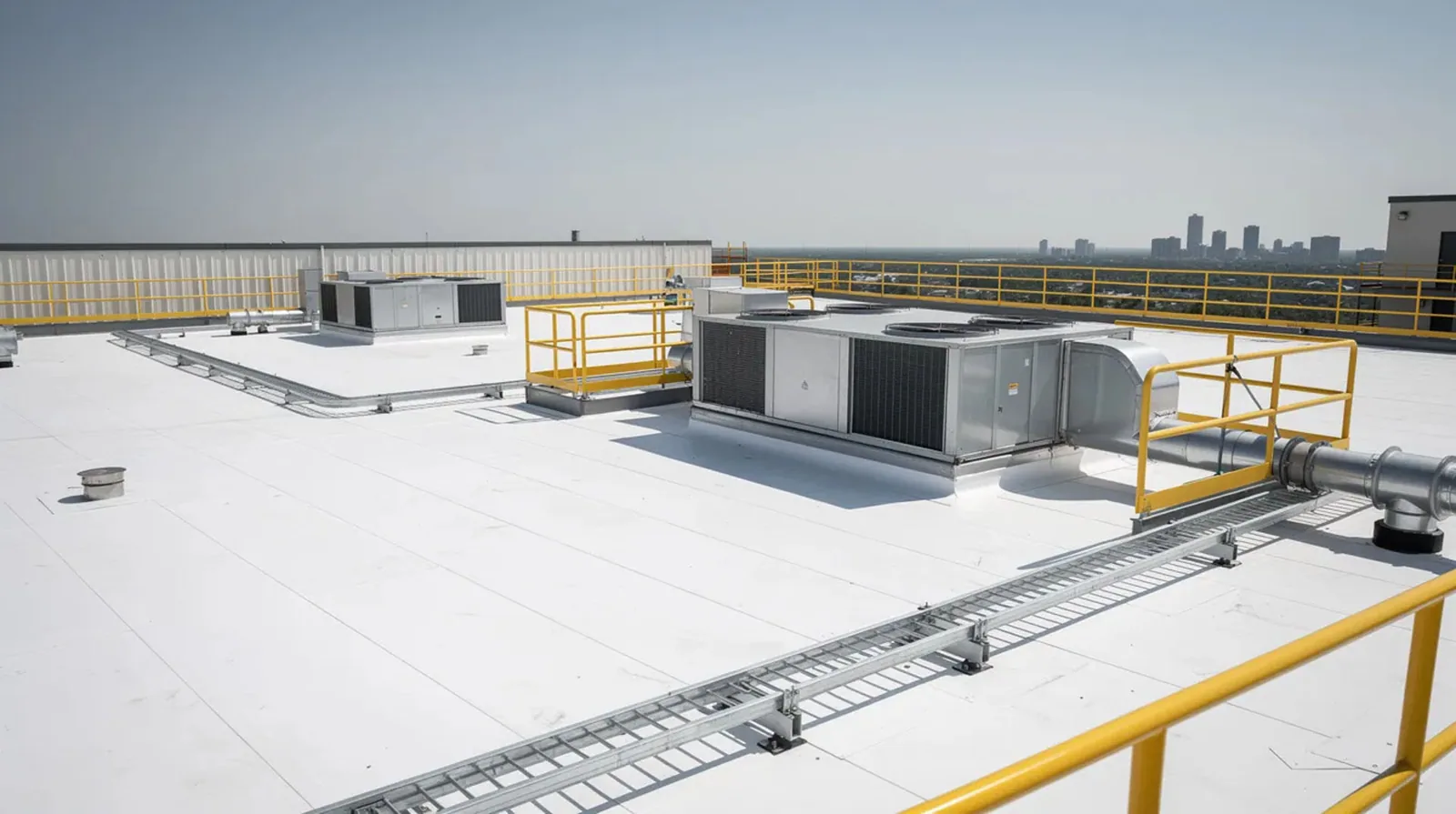
An acquisition file needs roof findings that can be tested against the building, not a general statement about age. In Oxnard, an investor may compare a mixed-use property in Downtown Edge with a research or office building in Camino Real Business Park. Those uses create different access conditions, but neither identifies the assembly or its remaining service life. We inspect the accessible roof, map visible sections, and connect photographs to observed defects, prior repairs, and questions that could affect the transaction or capital plan.
Our report separates what we saw from what needs confirmation. A split seam, wet insulation indication, loose edge, or repeated drain obstruction each carries a different scope and cost implication. We identify repair, testing, or replacement paths with the assumptions attached. For an investor reviewing several assets, a consistent field-marking method helps compare buildings without making one roof's condition stand in for another. Oxnard's commercial, industrial, and Business and Research Park areas make the market diverse; the diligence record still follows the roof in front of us.
Test the roof record against field conditions
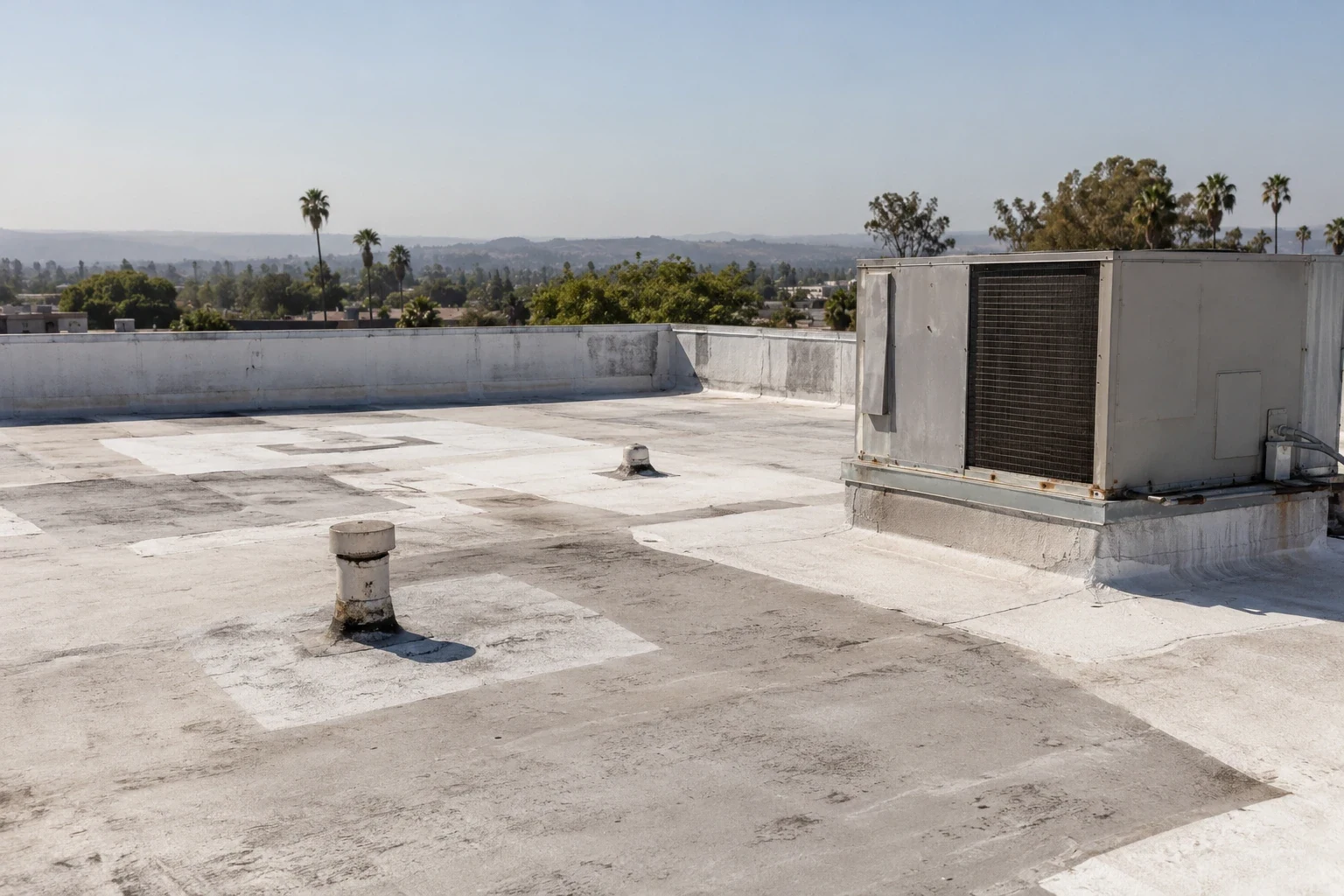
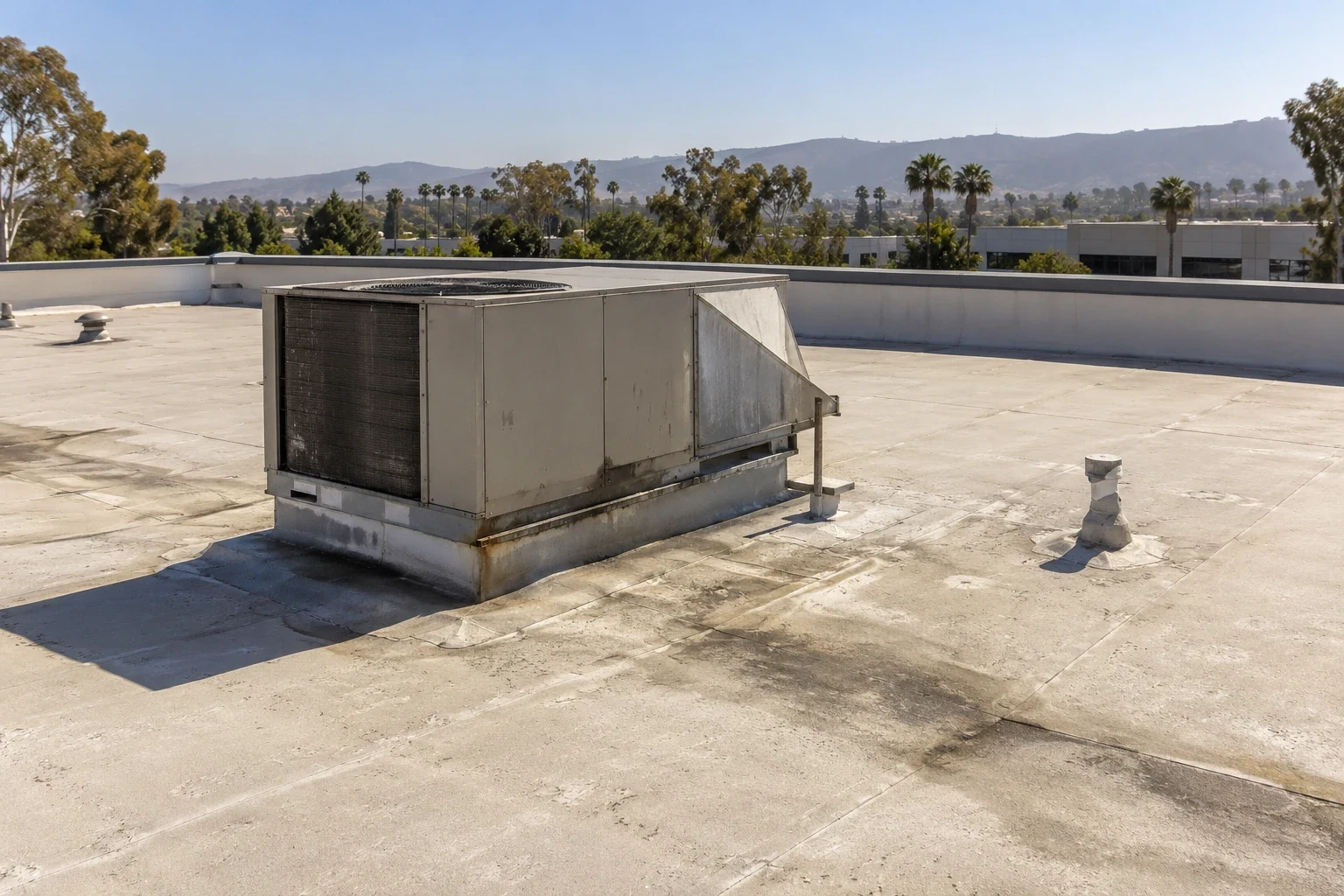
Start with roof plans, prior condition surveys, invoices, warranty documents, tenant reports, and any planned equipment changes. We compare those records with visible seams, penetrations, drains, edge metal, surface transitions, and previous patches. A plan may show an old curb that has since moved, or a repair invoice may not identify the roof section. We record those gaps clearly. When the deck or concealed layers could change the recommendation, a focused test opening is more useful than treating an unknown as a confirmed defect.
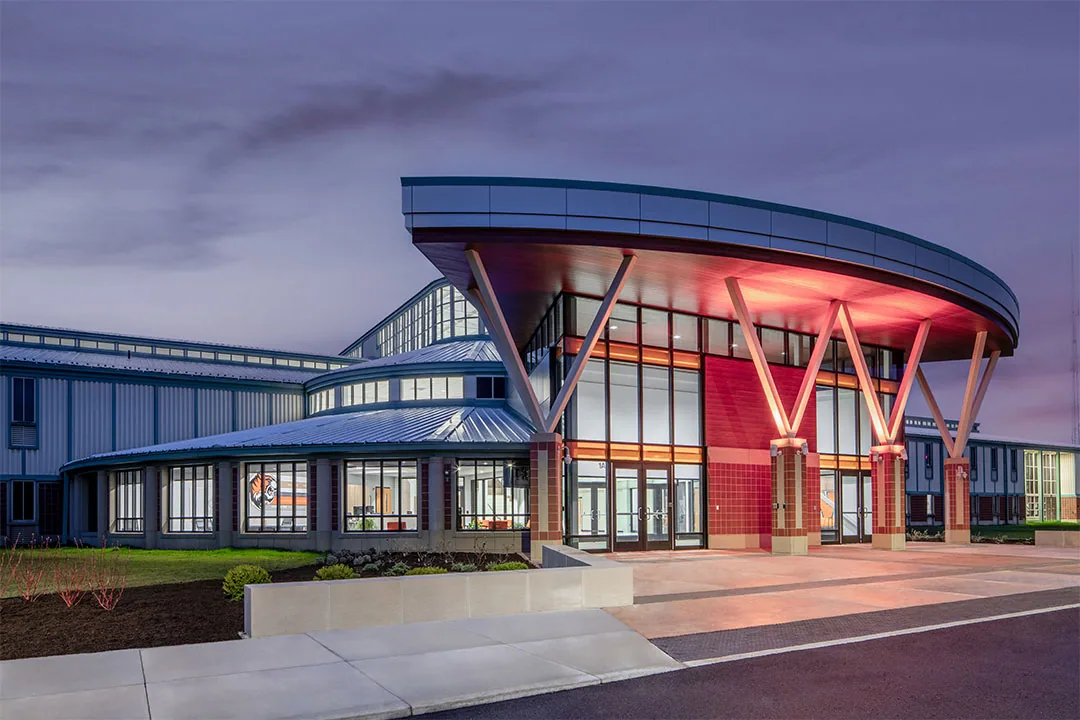
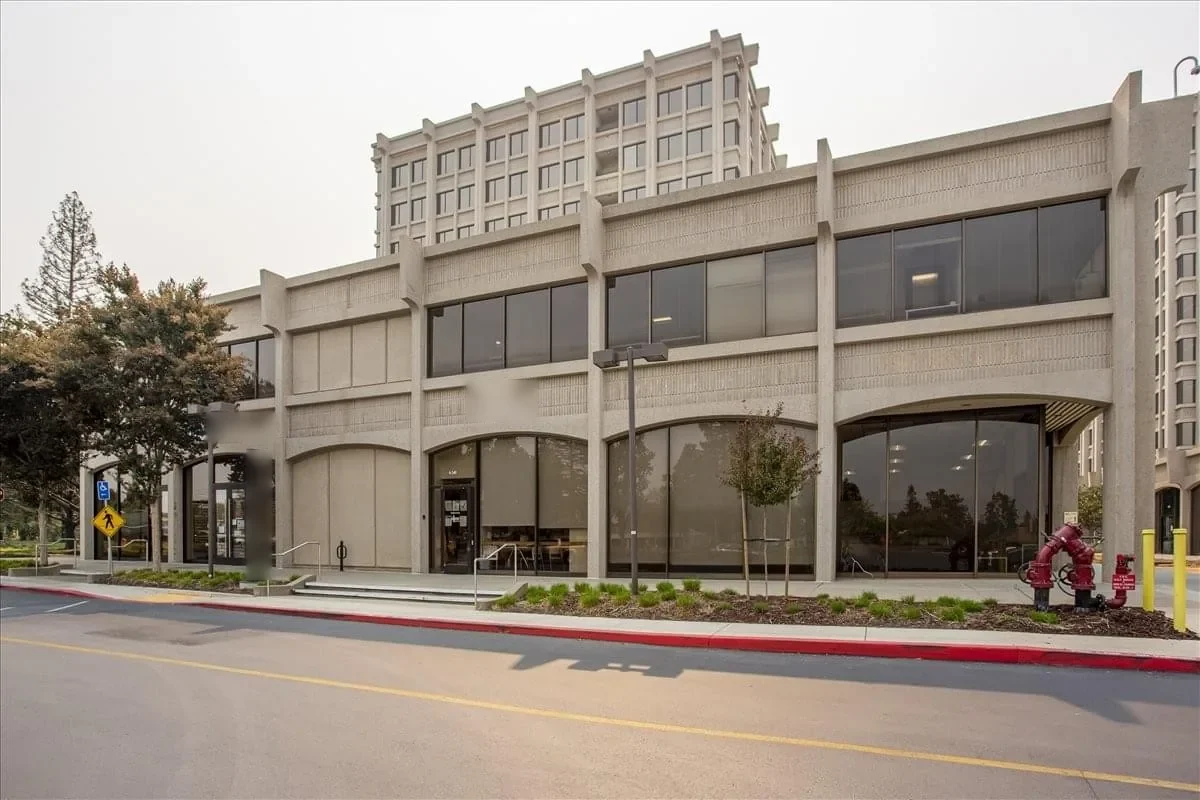
For a property near Camino Real Business Park, where the specific plan accommodates office, manufacturing, research, and limited commercial activity, the building's use can affect access and work timing. In Downtown Edge, mixed-use and commercial activity may require a different access plan. A field inspection with marked findings gives the diligence team locations to compare with the seller's records. The office-building roof scope may include several elevations and equipment zones; each receives a separate Diligence Notes.
Separate immediate exposure from future capital
Active water entry, loose metal, open flashing, and blocked overflow routes need a near-term response. Other conditions may belong in a planned repair cycle if the assembly remains stable and the interior is dry. We state the evidence for each priority and identify what would change it, such as another leak report, a test result, or upcoming mechanical work. This makes it possible to distinguish a current defect from a future allowance in the acquisition model.
Repair cost depends on access, preparation, membrane compatibility, affected area, removal depth, insulation, cover board, edge conditions, and the dry-in sequence. A defined repair can address a localized defect, while recurring failures or broad moisture may justify testing and a larger option. If several entities manage the asset, a property-management work record can establish who controls access, approves a scope, and receives closeout documentation. We provide alternatives with quantities and assumptions rather than a single number detached from field conditions.
Compare the assembly options
A recover may be appropriate when existing layers are suitable, dry, attached, and compatible with the proposed system. The evaluation checks drainage, perimeter height, penetrations, and how the added assembly will terminate. Moisture or weak attachment can make a recover a poor fit, even when the visible surface looks serviceable. Replacement planning includes removal limits, deck review, insulation layout, new flashing, edge metal, and protection of the building each day.
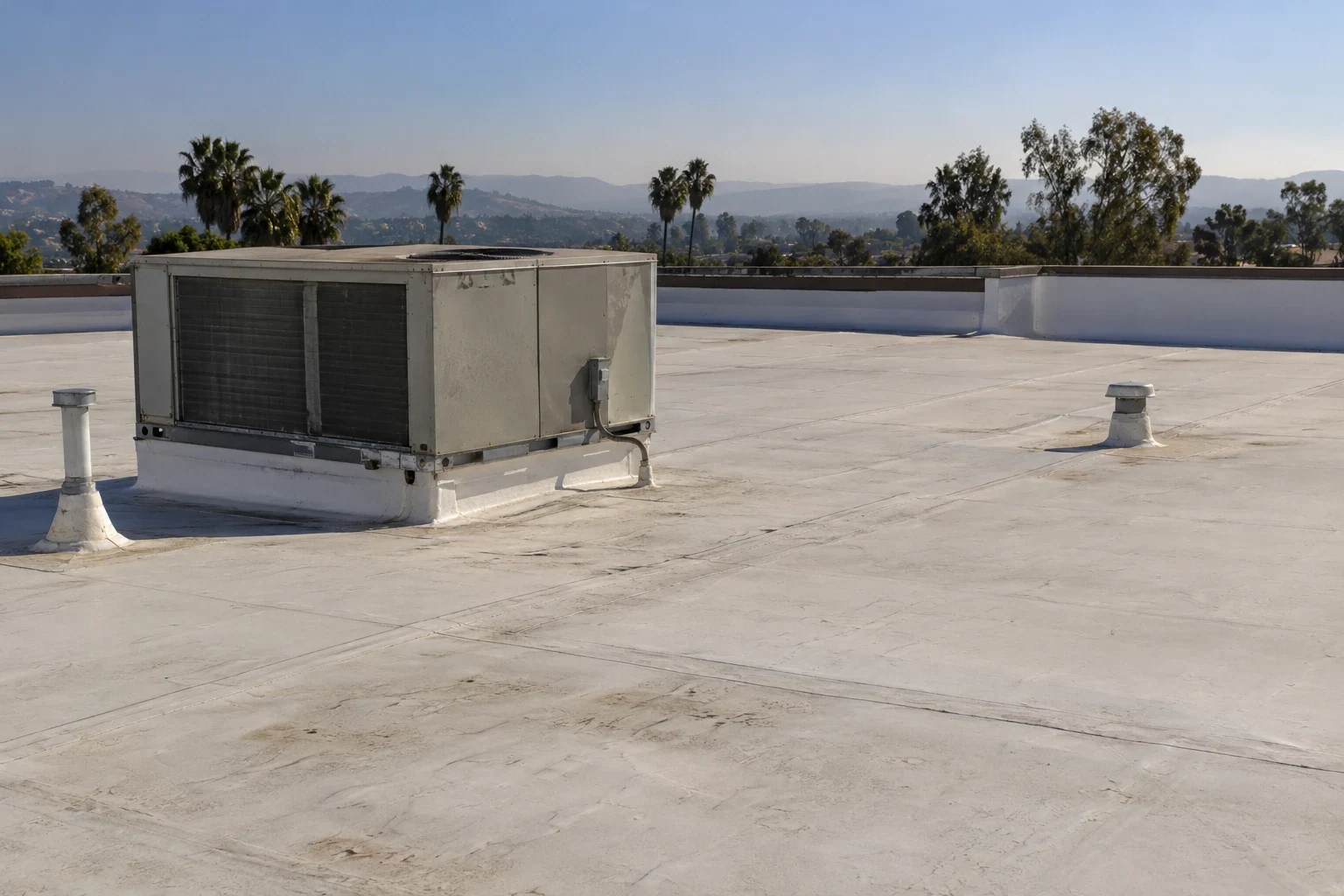
For a metal roof, the review changes to panel seams, fasteners, closures, and transitions. A membrane roof requires attention to lap condition, welds or adhesive bonds, curb details, and penetrations. We identify the roof system before choosing materials; product selection cannot be based on an assumed construction date. The TPO assembly and standing-seam panels call for different inspections and repair details. If an investment asset has prior coating work, we note the substrate and adhesion questions before pricing another application.
Put local weather and parcel context in bounds
The Oxnard weather station recorded 1.77 inches during Tropical Storm Hilary in August 2023, setting a new August monthly record at that station. That dated measurement supports a drainage review; it does not establish water entry or damage at a specific asset. We inspect low points, drains, scuppers, overflow outlets, and the interior locations associated with any report. A property file should connect a weather event to observed conditions only when the building evidence supports that connection.
Oxnard's Local Coastal Program identifies hazards and adaptation policies for properties within the mapped coastal zone. Confirm the parcel before applying coastal planning context to an acquisition or project. The coastal designation does not reveal the roof's material, current condition, or failure risk. A Downtown Edge asset and one near a coastal area may have different planning questions, while both still need a roof walk and building-specific scope. For multi-asset owners, capital planning records can preserve that distinction as projects move between operating and investment teams.
Keep asset comparisons consistent
A portfolio comparison is useful when each report records the same core fields: building and roof identifier, assembly, access limit, defect location, evidence, recommended next action, and unresolved question. We can group results by urgent work, planned maintenance, additional testing, and long-term replacement without flattening differences between properties. A separate photo set and roof map for each building helps an analyst trace a capital assumption back to field evidence.
If the owner uses different property managers, set one approval path for emergency stabilization and another for permanent work. Identify who can approve a test cut, who receives insurance documentation, and how change orders are reviewed. A field-marked condition report and the multi-property roof program can keep records comparable. For medical assets, health systems may also need access and shutdown planning connected to the building's clinical operations. That record supports a lender review, sale process, annual budget, or handoff to an operating team without implying that the roofs share one condition.
Make the next owner decision concrete
A useful roof deliverable closes with a short decision list. It names the repair that can proceed, the test needed before pricing concealed work, the area that needs a second access visit, and any temporary protection still in place. A replacement option should state removal assumptions, expected work zones, sequencing constraints, and the point where concealed conditions would pause the crew. That gives the investment team a defensible range and a clear approval step.
Send the roof plans, prior reports, work history, current leak locations, equipment schedule, transaction timeline, and access contact. Tell us which asset decision depends on the survey. We will map observed conditions, distinguish facts from unknowns, and return repair or capital options tied to the roof assembly. The closeout should let the next owner find the marked location and understand what evidence is still needed.
Related Roofing Work
More from Industries We Serve and nearby services
Order a roof diligence review
Share the asset list, roof plans, prior reports, transaction dates, current leak records, and access contacts. We will return field-marked conditions and the next decision for each building.
Common Questions
Can you inspect a roof before we close on a property?
Yes. We can document accessible conditions, mark roof sections, and identify where testing or records are needed before a scope can be priced.
Will an inspection confirm the roof's remaining life?
A field visit cannot assign an exact end date. It can document current condition, recurring defects, moisture evidence, and the assumptions that would affect a service-life estimate.
What if the seller's roof records do not match the building?
We compare plans and invoices with visible sections and details, then list each mismatch for follow-up. A focused test may resolve an assembly question that surface review cannot answer.
How do you estimate a replacement allowance?
We define the roof area, removal depth, access, material, insulation, edge details, and dry-in sequence. If concealed conditions remain unknown, the allowance identifies that exposure instead of hiding it.
Can several assets be surveyed under one assignment?
Yes, with a separate map and findings record for each building. We can then group urgent repairs and capital options while preserving each asset's distinct condition.