Commercial Roofing for Property Managers in Oxnard, CA
Set a portfolio roof review
Property Managers
A portfolio roof review starts with the building list and the next decision due. In Oxnard, a manager may oversee a downtown office, a warehouse in the Central Industrial Area, and a tenant property near U.S. 101, each with a different access contact and roof assembly. We identify the property, map the roof sections, and tie each field mark to a photograph and repair priority. The record should help you decide what needs action now, what belongs in the next budget, and what needs another look before a lease or equipment change.
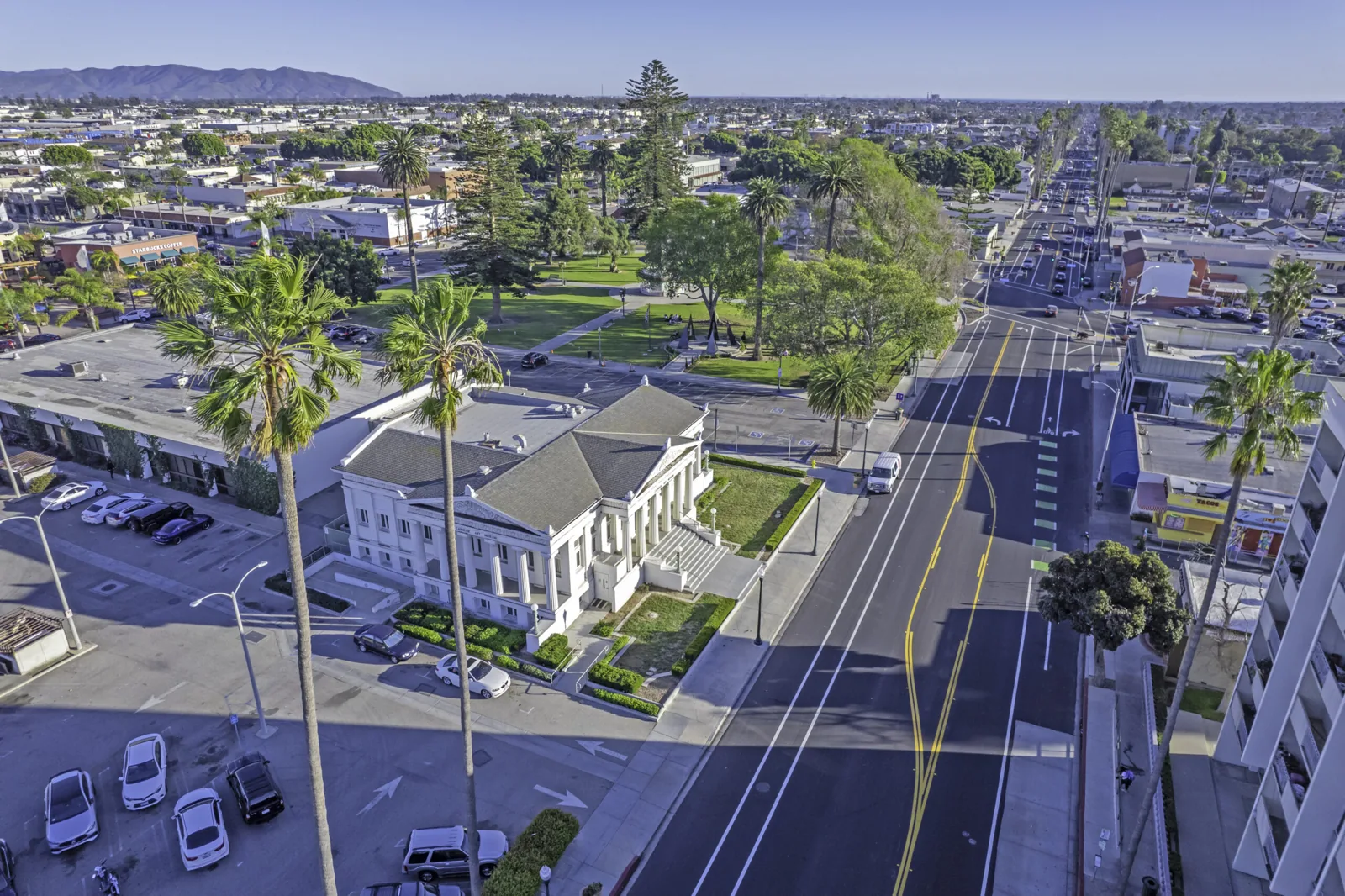
Oxnard's General Plan separates commercial uses, industrial districts, and Business and Research Park designations. That land-use mix matters when you schedule lifts, deliveries, tenant notices, and roof access. The building use informs the plan, but the condition comes from the roof itself. A walk at a Central Industrial Area property may involve outdoor storage or repair operations; at a Downtown Oxnard building, tenant circulation and mixed-use activity can set a tighter work window. We document those limits before assigning the repair scope.
Sort the portfolio by building and decision
A useful portfolio register separates each roof rather than grouping properties by owner or tenant. We record the building identifier, roof area, known assembly, access point, current concern, and decision date. Keep roof areas distinct when one parcel contains multiple structures; a warehouse addition may have different seams, drainage, or insulation from the original building.
For every visit, the manager can provide prior reports, repair invoices, plans, equipment schedules, and the name of the person who can authorize access. We compare the drawings with visible section breaks and note discrepancies. A photo marked to a plan is easier to use than an image labeled only by date. Our roof asset records can connect that field information to a longer maintenance cycle, while a condition report with photographs supports a specific repair or budget request. Each entry should make its limit clear when an area was blocked or could not be safely reached.
Separate active leaks from planned work
When water is entering, the first task is to identify the likely opening and protect the area below it. A ceiling stain may sit away from the roof penetration that admitted water, so we trace nearby seams, curbs, wall transitions, and drainage paths. The report distinguishes a confirmed defect from an area that needs testing. If several tenants report water, each room and time should be compared against the roof map rather than combined as a single repair location.
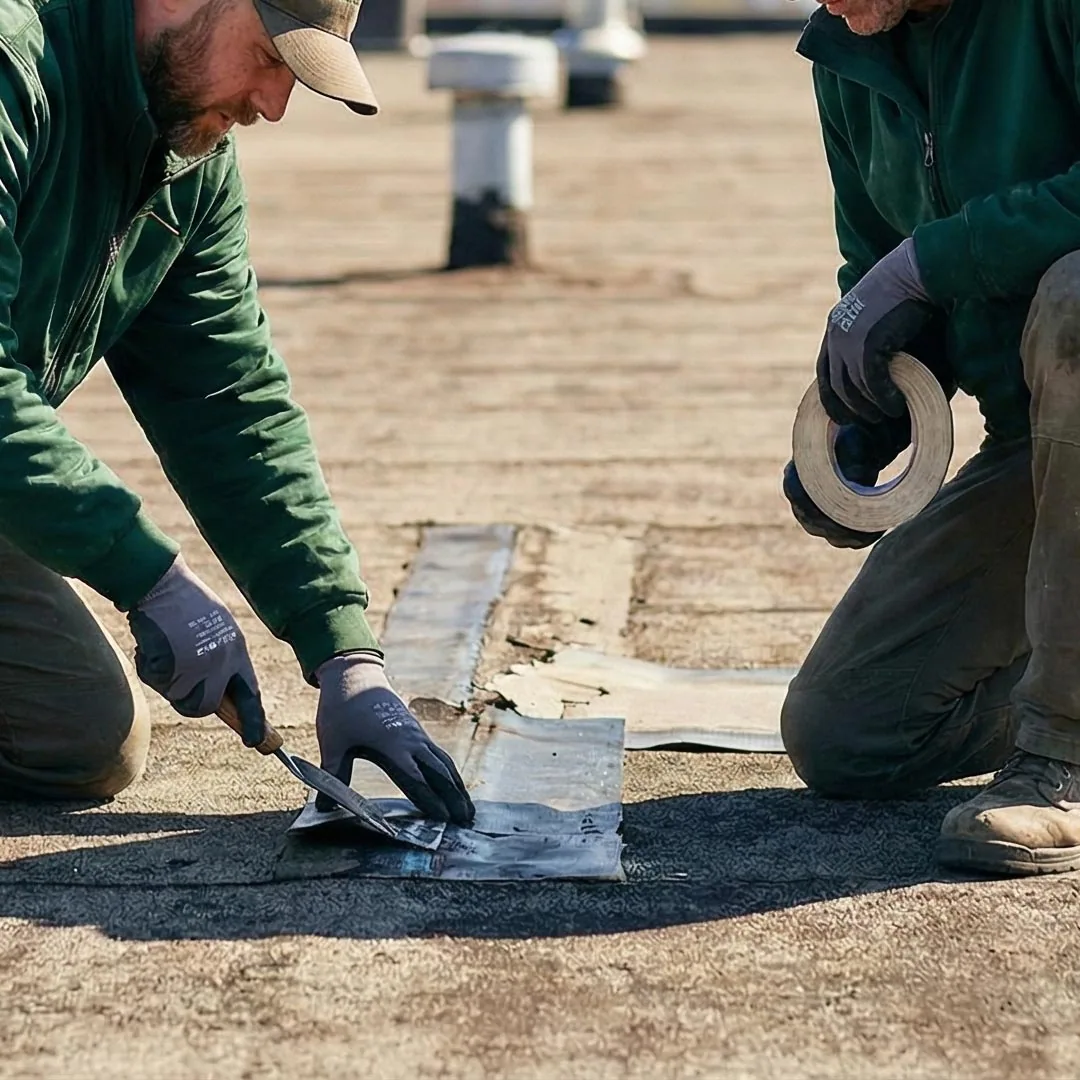
For a defined membrane opening, commercial roof repair can include surface preparation, a compatible patch or tie-in, and a closeout image. If the assembly shows broad moisture or weak attachment, we may recommend a test cut before setting a larger boundary. That protects the budget from treating concealed conditions as known. Keep emergency stabilization separate from permanent correction in the work order. The crew records what was secured, what remains exposed, and what approval is needed before extending removal. Managers can then update tenants with a scope tied to an actual roof section.
Set access around tenants and operations
Roof work can intersect with deliveries, customer entrances, vehicle lanes, rooftop equipment, and occupied rooms. Before mobilization, we confirm the access route, lift position, staging area, work hours, interior protection, and the person who can release each zone. Properties in the Central Industrial Area may have outdoor storage or equipment repair activity, while RiverPark combines commercial space with residential, park, and open-space uses. The local setting changes coordination, not the roof repair method. A marked plan keeps the work boundary visible to site staff and the roofing crew.
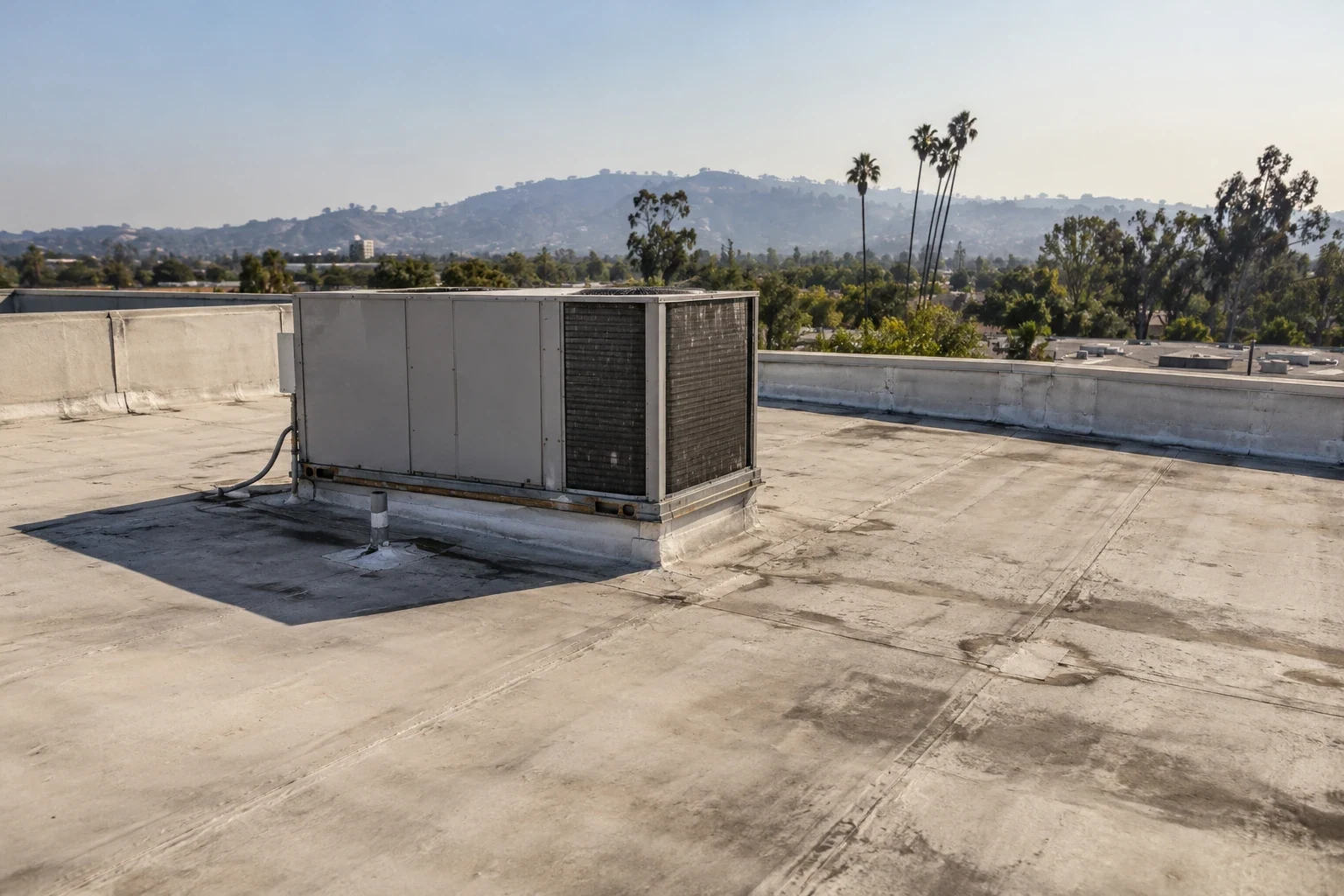
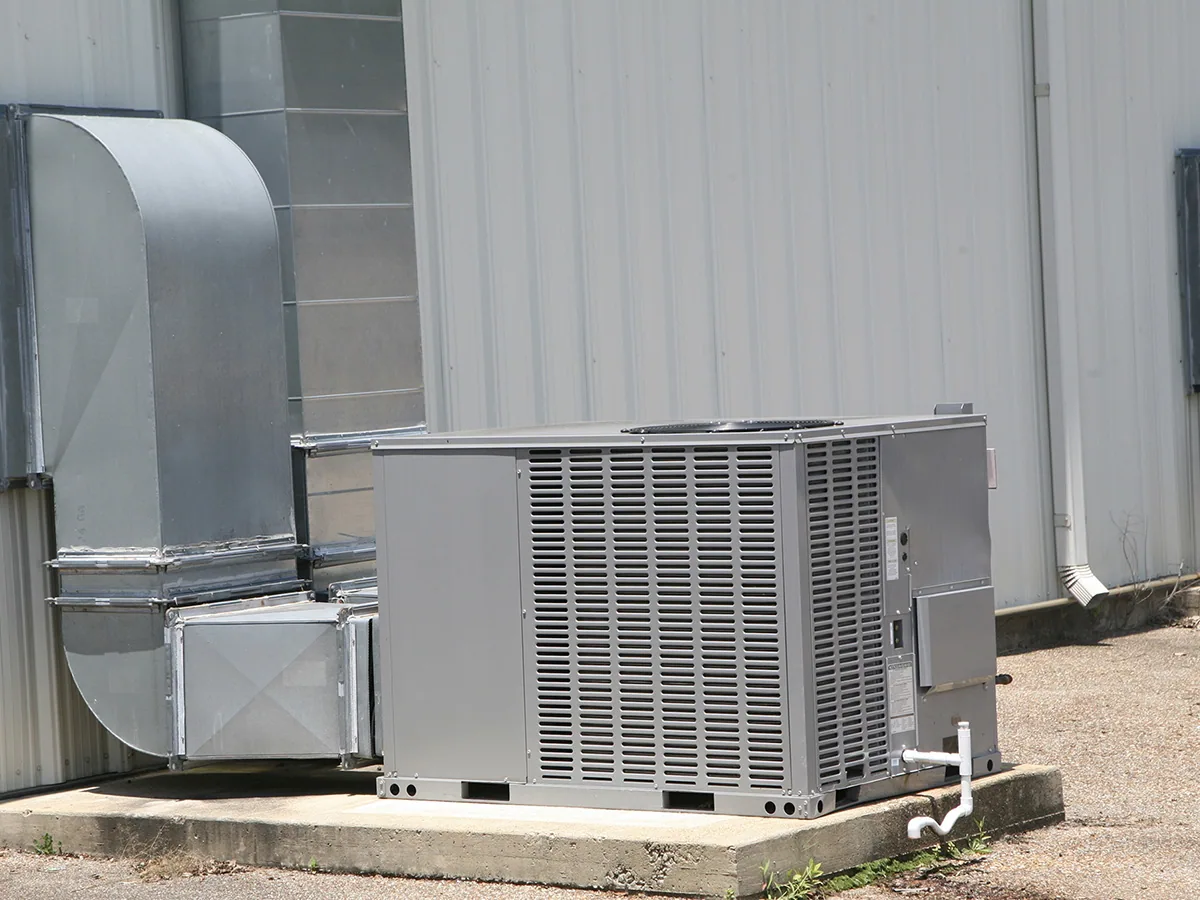
If an HVAC contractor or sign installer needs the same roof area, place that activity on the schedule before flashing is opened or replaced. We identify the trade handoff and the condition of the receiving surface. The occupied-building work plan can sequence noisy or disruptive tasks by zone, while curb and equipment work needs a clear division of responsibility. For active loading sites, manufacturing operators and distribution teams may need delivery or equipment routes kept open. Confirm whether a unit can be shut down, who controls it, and when it can restart.
Compare repair, recover, and replacement
A portfolio decision should compare the condition and consequence of each option. A localized split with sound material around it may support repair. Repeated seam failures, widespread moisture, unstable attachment, or deck concerns can call for additional testing or a broader replacement scope. A recover evaluation checks existing layers, drainage, attachment, and edge height before another roof is installed. Adding material over a wet or unstable assembly does not remove the concealed problem.
We list assumptions, exclusions, affected roof zones, and cost drivers for each alternative. Removal depth, access, material handling, insulation, cover board, drains, equipment, and the daily dry-in sequence can change price and duration. Portfolio planning can compare near-term repairs with larger projects across the properties, without treating every roof as the same age or assembly. Where a location falls within Oxnard's mapped coastal zone, the Local Coastal Program may apply to property planning; the parcel and project scope determine whether it is relevant. A coastal label alone does not establish the roof's condition or exposure.
Keep each service interval useful
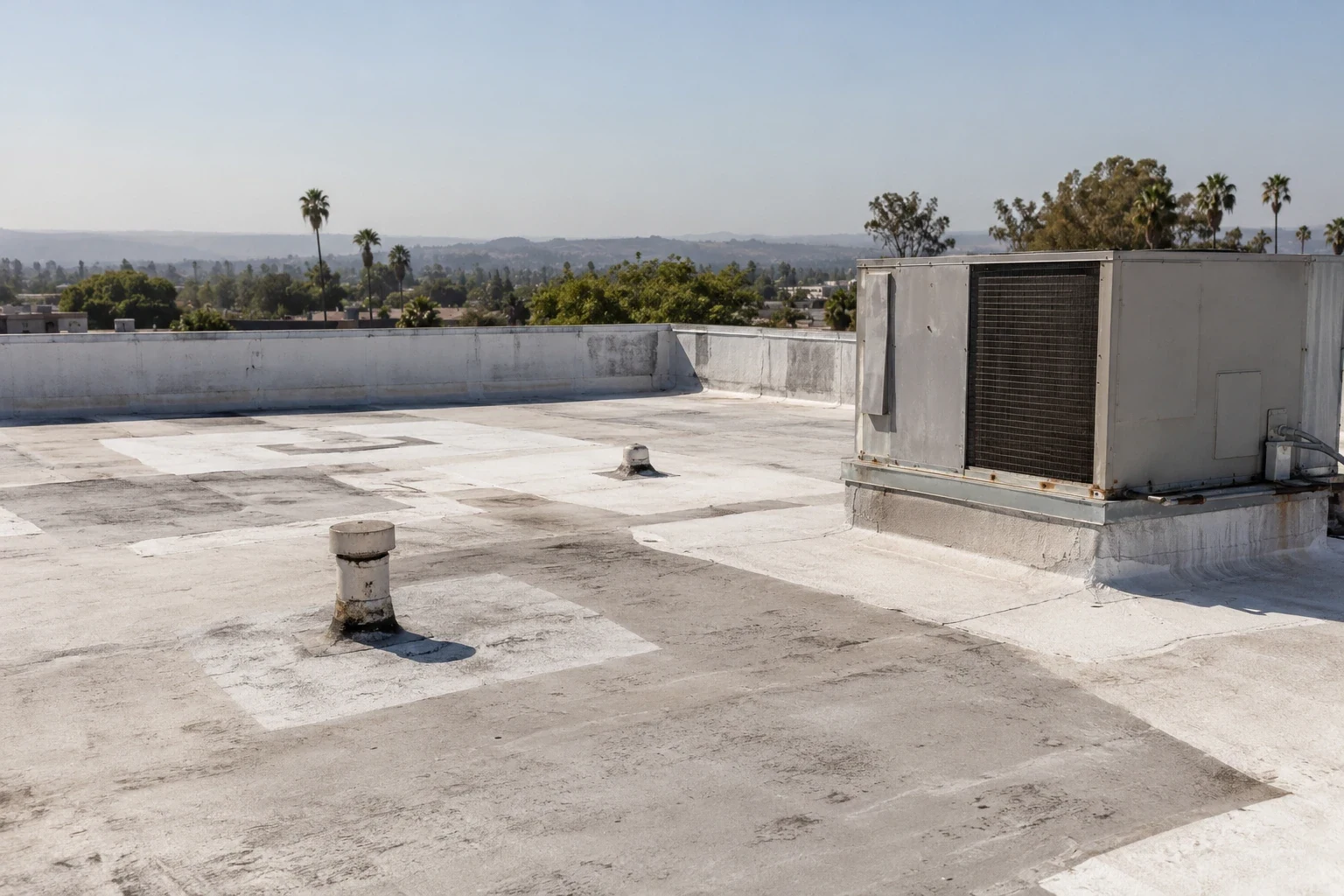
A maintenance visit should return to known low points, drains, scuppers, seams, penetrations, edge metal, and prior repairs. We compare the current field marks with the last report and record changes by roof section. Cleaning a drain is different from repairing a failed flashing, and both should have separate completion notes. A preventive maintenance visit can also identify equipment work that may disturb the membrane before a leak appears.
The Oxnard weather station recorded 1.77 inches during Tropical Storm Hilary in August 2023, a new monthly record at that station. That dated rainfall record is a reason to review drainage documentation, not a claim that a particular property was damaged. After heavy rain, a property manager can compare interior reports with the mapped roof and identify any overflow or blocked outlet that needs attention. We write the observation, photo location, action taken, and next review date so another manager can continue the file without reconstructing the prior visit.
Close the work order with a field record
Closeout should identify the property, roof section, material installed, repair detail, photographs, and any area not completed. Temporary protection remains labeled as temporary, with the permanent scope and return visit stated separately. If water entered occupied space, the record can name the interior area reported and the roof detail inspected without promising that one visible stain explains every condition. This gives the owner a clear handoff for tenant communication, insurance documentation, and the next budget review.
Send the building roster, roof plans, access contacts, equipment schedules, prior repairs, and the open decision dates. Mark which property needs urgent attention and which can be scheduled for a portfolio survey. We will return a building-specific record and a repair path that fits the assembly and operating window. The next manager should be able to locate the field mark and understand the approval still required.
Related Roofing Work
More from Industries We Serve and nearby services
Set a portfolio roof review
Send the property roster, roof plans, open leak reports, equipment schedules, access contacts, and approval dates. We will map each building's condition and return a prioritized repair record.
Common Questions
Can one inspection cover several managed buildings?
Yes, when access and timing allow. We keep a separate roof map, condition record, and photo set for each building so findings do not blend across a portfolio.
What should I send before the portfolio walk?
Provide the property list, roof plans, prior repair records, equipment schedules, access contacts, and any decision deadline. We can identify missing records during the walk.
How do you prioritize a new tenant leak?
We inspect the reported room and nearby roof details, then mark the likely entry point and any uncertainty. Active water entry is separated from work that can be scheduled.
Can you help with next year's roof budget?
The condition report separates urgent repair, planned maintenance, and testing that could change the scope. We identify the assumptions behind each option for your budget file.
What goes into a completed repair record?
It includes the roof zone, repair material and detail, photographs, limitations, and remaining work. A temporary cover is recorded separately from permanent correction.