Distribution Center Roofing in Oxnard, CA
Plan the distribution roof walk
Distribution Center Roofing
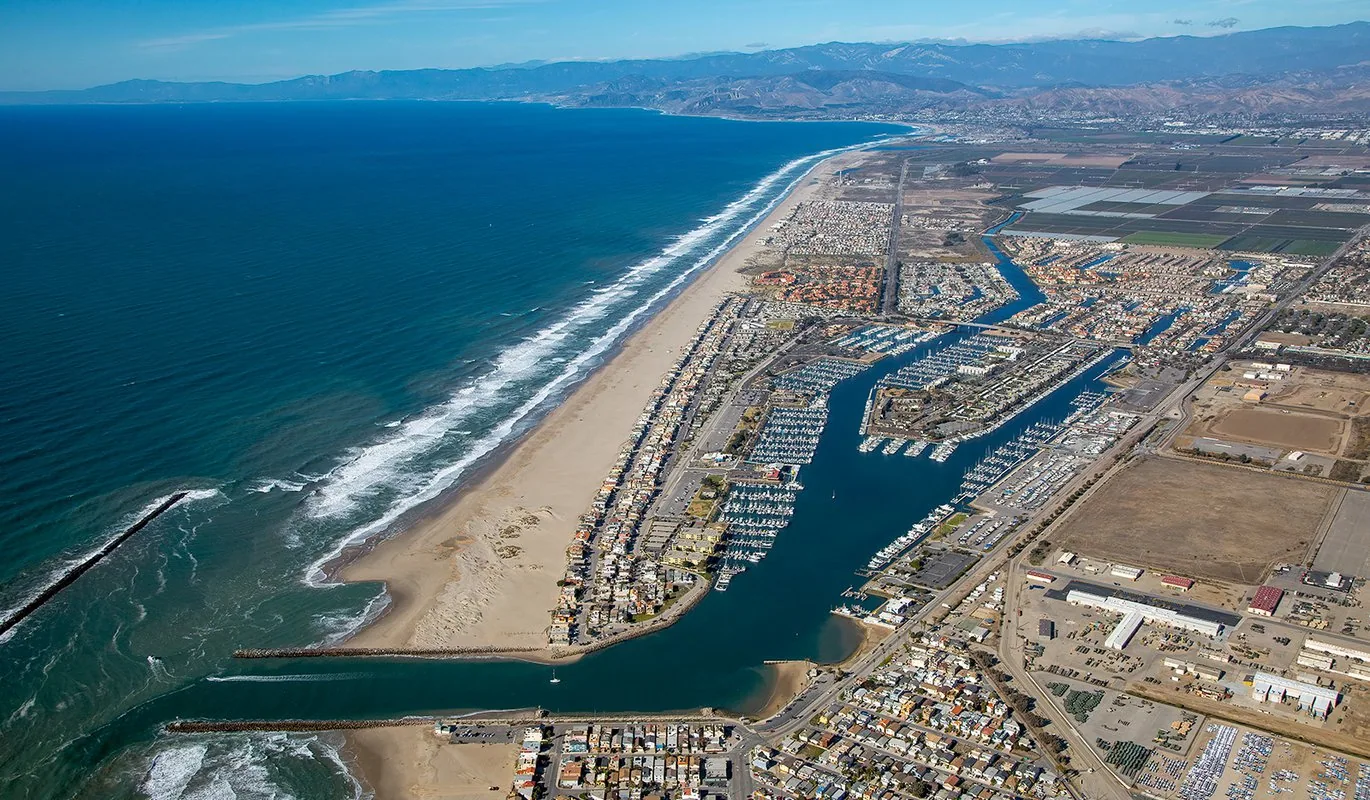
A distribution-center roof walk starts with the dock schedule and the building sections that must stay available. Oxnard reported operating distribution uses in the Sakioka Farms Business Park, where new roads and industrial projects shape a distinct business area. That context helps frame delivery and staging questions, but the actual roof assembly comes from the assigned building. We map access, drains, seams, equipment, and any leak area before setting the work boundary.
Port Hueneme and Naval Base Ventura County are major employment engines in the neighboring city, and Oxnard is among the regional worker-home communities. We confirm each distribution building’s roof assembly and delivery routes with its operations contact. A visit at Sakioka Farms begins with current plans and the operations contact. We document the actual access window before choosing inspection or repair steps.
Sequence the dock and roof access
Dock doors, trailers, lifts, and yard movements can affect where a crew stages materials. The operations contact confirms delivery peaks, vehicle paths, gate access, and any aisle that cannot be blocked. We mark the ground route and the roof entrance, then coordinate the lift or ladder position with the site lead. If the crew must pass through an active area, the access plan identifies interior protection and the time allowed for the move.
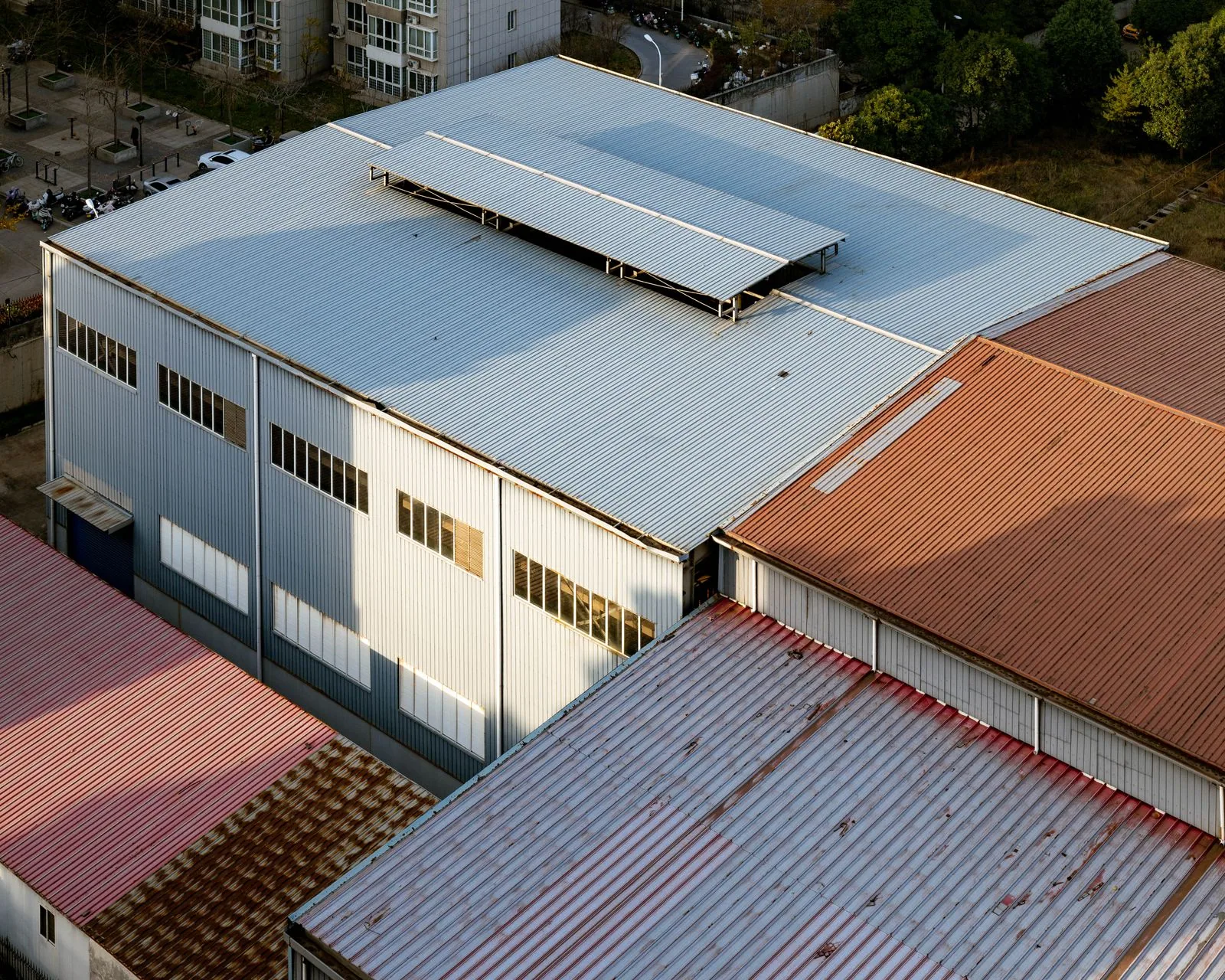
A distribution building may include multiple roof zones serving different dock banks or equipment areas. We match each one to the current roof plan instead of using a broad label such as warehouse roof. The inspection record uses wide and detail photographs to locate seam, flashing, and drainage findings. A warehouse roof review may involve similar access needs, while a high-throughput distribution operation can require its own dock-specific staging sequence.
If access changes after mobilization, we update the route and identify any roof area that remains uninspected. A delay is easier to manage when the asset manager can see whether it came from a delivery restriction, an unsafe roof zone, or a revised material condition. The work record carries the revised window and any temporary protection so the next shift knows what can proceed.
Follow drainage across the distribution roof
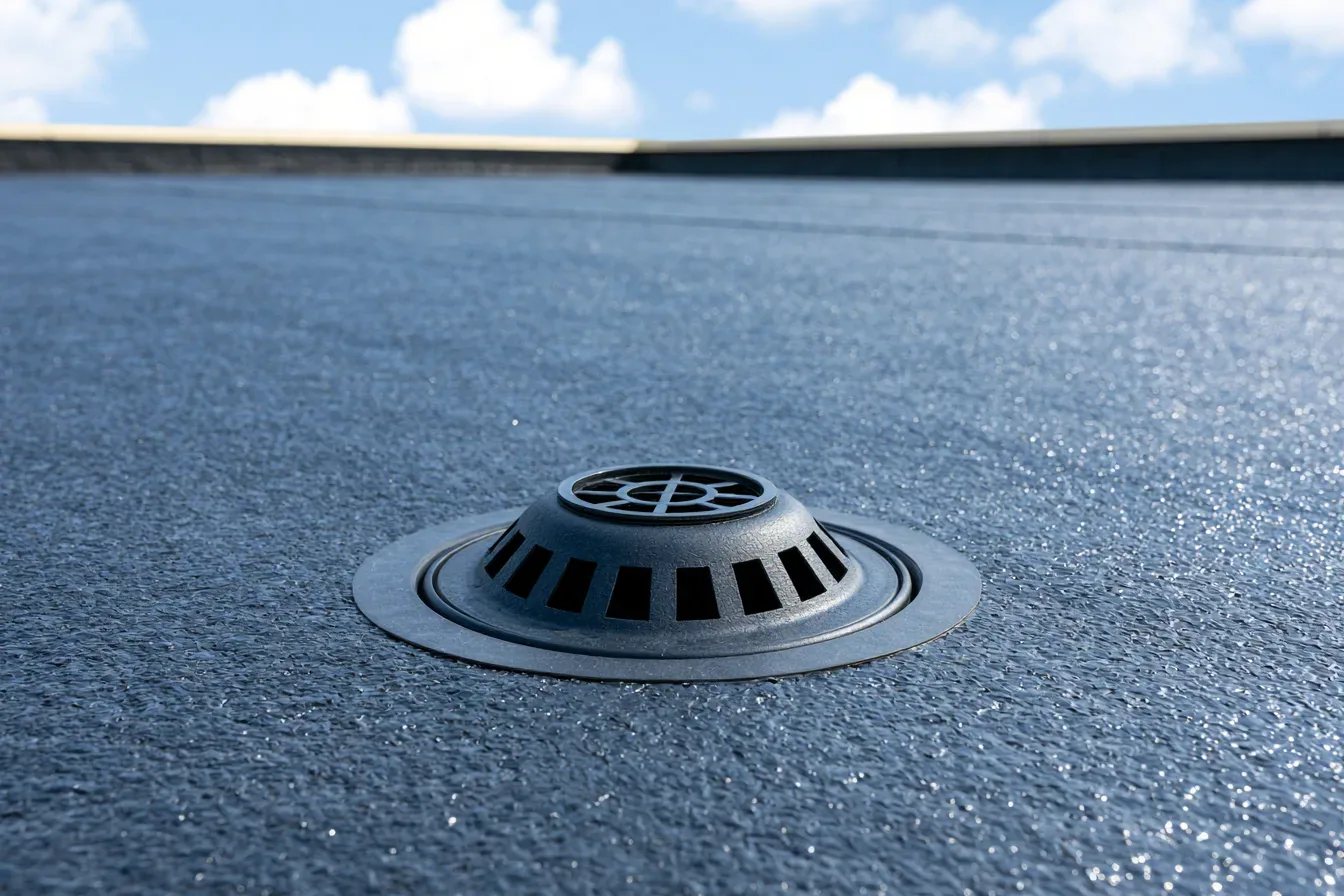
Long roof runs can carry water past a reported leak before it reaches a ceiling or stored material. We inspect the low points, drains, scuppers, overflow openings, and membrane transitions connected to the report. Debris and water marks are logged by location. If water collects near a curb, compare the outlet and surrounding slope before attributing the condition to a membrane failure. The field mark should identify what is visible and where further measurement is needed.
For the Oxnard station, Hilary's 1.77-inch August 2023 total was the largest August month in the record. It is a single dated weather event. For a distribution center, the practical follow-up is to check drainage continuity and overflow paths, then compare current conditions with the site plan. A drainage inspection can record outlets and adjacent details without treating a weather record as proof of roof damage.
When an interior report affects several bays, map each report separately and compare it with roof features above and upslope. Moisture below the sheet may change removal. An infrared survey can identify a candidate test area, but the approval packet should state what the test will establish, how the opening will be kept dry, and how it will be restored before permanent work is priced. If the test cannot proceed during the dock window, we record who can authorize access and when the crew can return without disrupting the operation.
Inspect equipment interfaces and penetrations
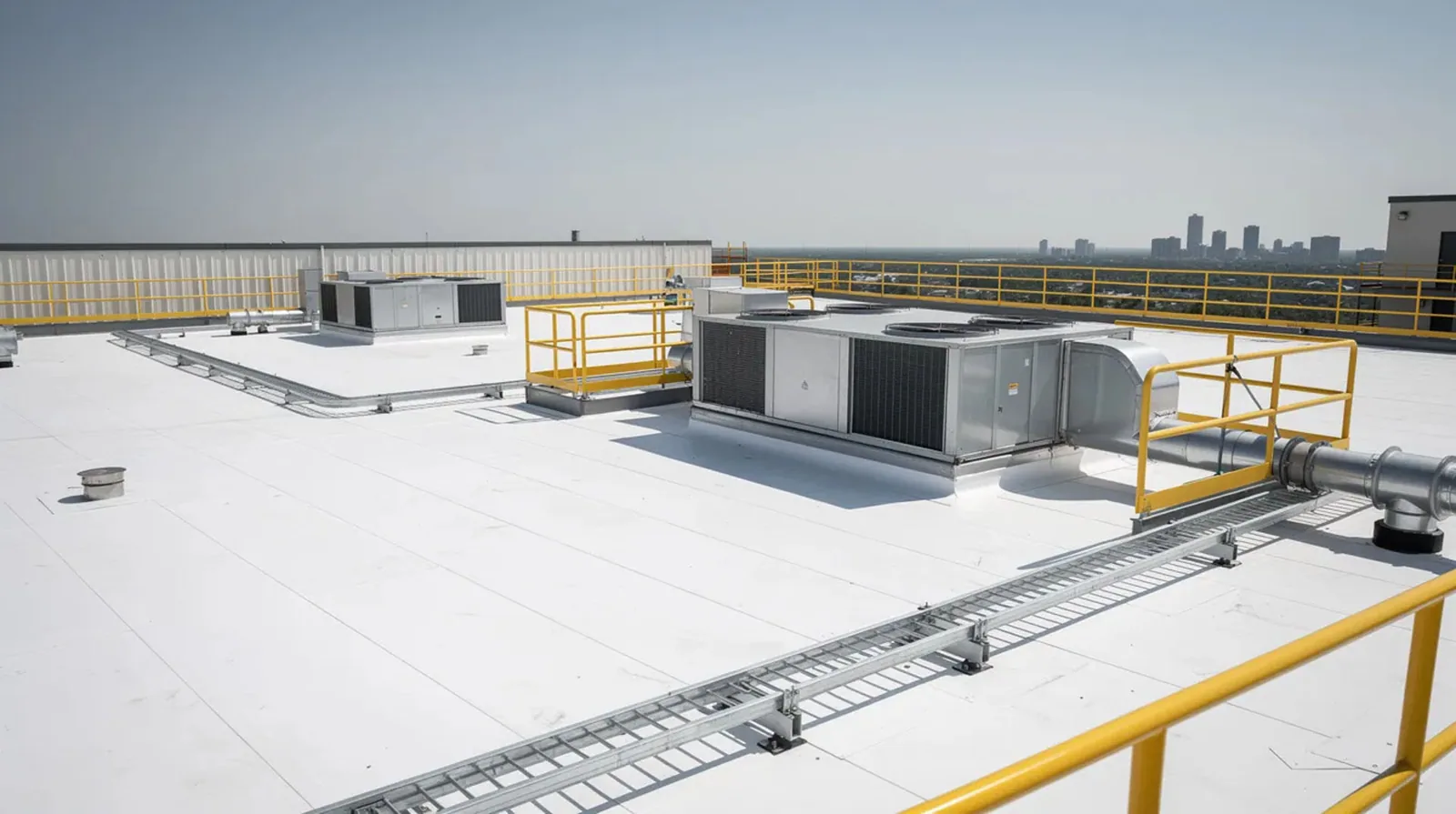
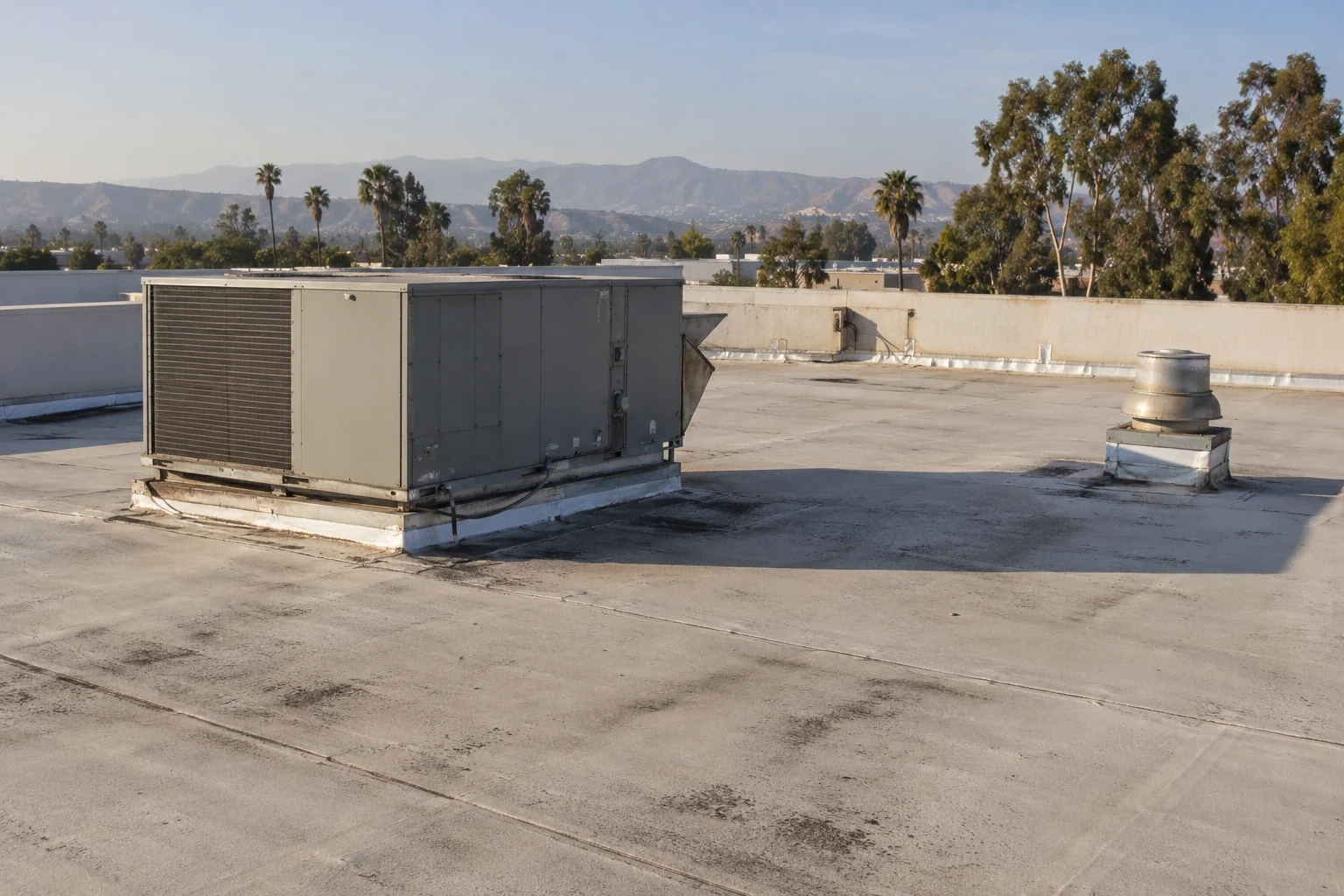
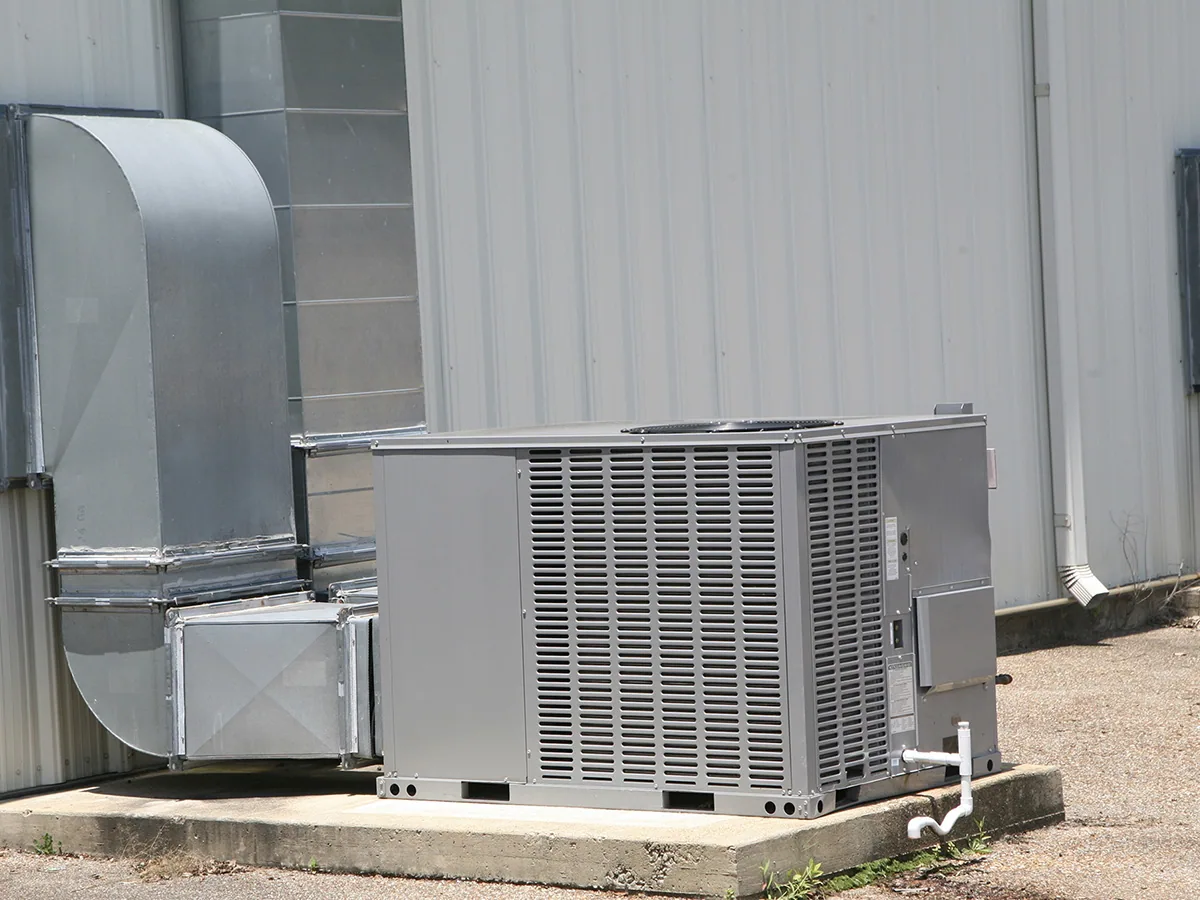
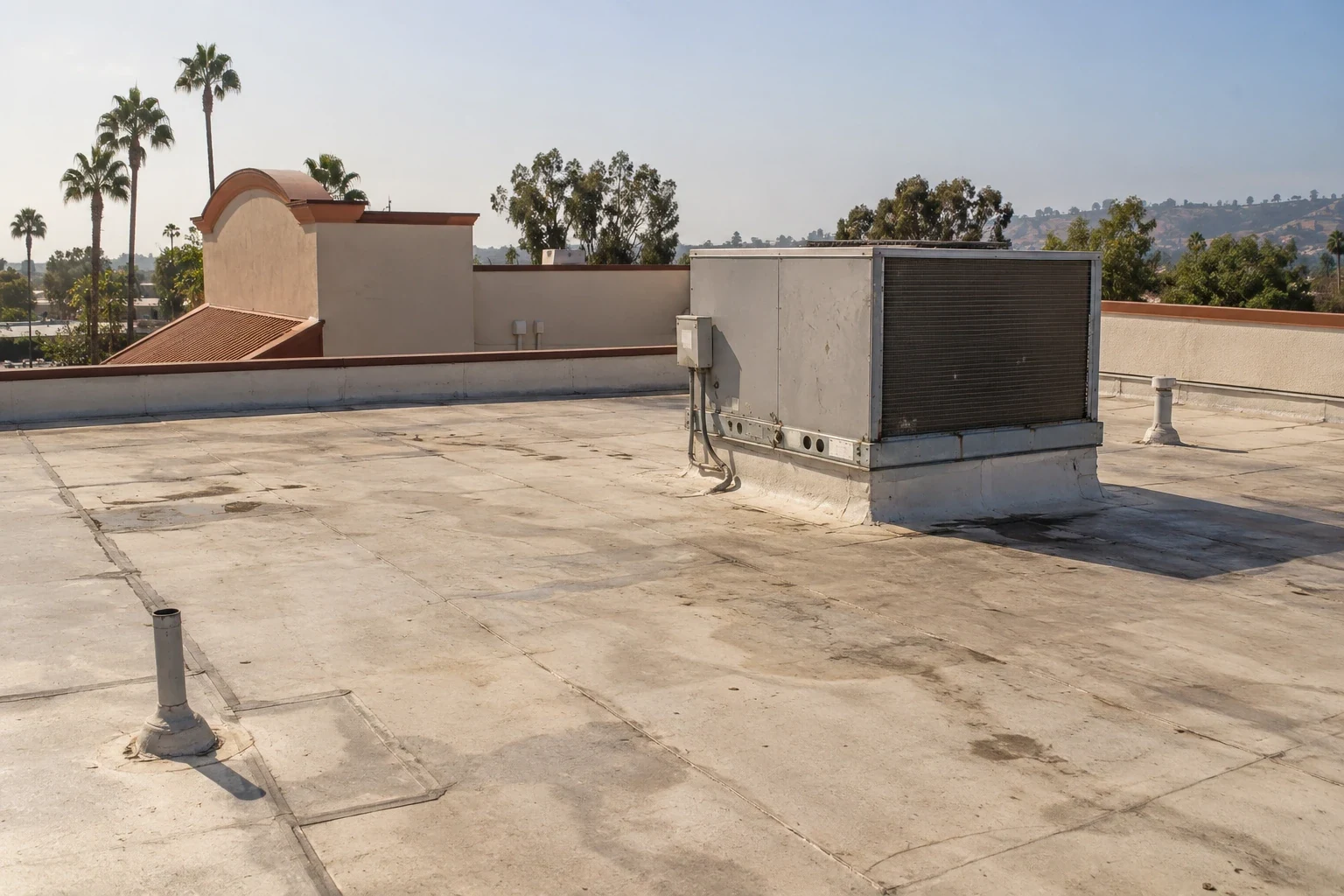
Exhaust, refrigeration, HVAC, and electrical components interrupt the roof plane. We check the curb seal, flashing height, fasteners, counterflashing, and the membrane around each connection. If an equipment replacement is planned, confirm unit dimensions and curb changes before removal. The mechanical contractor and roofing crew need a defined handoff so a new unit does not leave a gap at the roof assembly.
Distribution centers and manufacturing properties may share industrial zones but do not share roof details by default. The Camino Real plan designates U.S. 101 frontage for a mix of manufacturing, research, office, and limited commercial activity. Its use mix differs from Sakioka's operating distribution context, and each building needs a roof-level inspection. A manufacturing roof assessment also ties equipment interfaces to production access, while this scope follows the distribution site's dock and service schedule.
Where a conduit, abandoned opening, or support has been altered, we photograph the connection and identify any work outside the roofing scope. The repair boundary follows the prepared receiving surface. A curb and support review can coordinate the roofing detail with the trade responsible for the equipment or support change.
Compare options against the same operating plan
A local seam or puncture can be repaired when the membrane and substrate around it provide a sound tie-in. If failures recur, moisture extends below the sheet, or attachment is weak, additional testing or a larger removal area may be appropriate. The repair scope identifies preparation, compatible material, staging, dock protection, and the point where the crew stops if concealed layers differ from the plan.
A recover proposal checks what remains in place, attachment, drainage, edge height, and adjoining transitions. Replacement includes removal, insulation, cover board, perimeter metal, and the dry-in sequence for each work area. Cost and duration depend on removal depth, access windows, material handling, protection below, and how much roof can be opened safely while distribution continues. We show these assumptions beside each option and keep testing separate from approved permanent construction.
If the operation cannot pause, divide the work into zones and coordinate the changeover with the site contact. A phased roofing plan identifies daily work limits, material routes, and temporary tie-ins. The asset manager can review a defined sequence instead of a single broad line item that does not say which dock area must close or when it reopens.
Hand the roof record back to operations
At closeout, label the repaired zone, material, tie-in, photos, test results, and any area the crew could not reach. Temporary dry-in and permanent repair appear as separate actions. If another trade still has work at the curb or rooftop support, name the pending handoff and the protection left in place. A maintenance visit can verify a seam, drain, or edge at an interval tied to the condition recorded.
Active water entry can be reported overnight or on a holiday or weekend for emergency response. The initial visit protects the opening, documents conditions, and identifies permanent repairs. Send the roof plan, equipment schedule, dock restrictions, recent repair history, and approval contact. We will map the building conditions and return a scope that operations can connect to its work window.
Related Roofing Work
More from Property Types We Roof and nearby services
Plan the distribution roof walk
Send roof plans, equipment schedules, dock windows, leak locations, repair records, access limits, and approval contacts. We will map the affected zone and propose a workable sequence.
Common Questions
How do you work around active loading docks?
The site lead identifies delivery windows, vehicle paths, and staging limits. We sequence material movement and roof access around those confirmed restrictions.
What does an inspection map for a distribution roof?
It identifies the roof zones, drainage features, equipment connections, observed defects, photographs, and areas that still require access or testing.
Can a leak report from one dock affect other roof areas?
It can guide where we look, but we inspect connected roof details before extending the boundary. Separate reports remain separately marked.
When is a phased reroof useful?
Use it when dock operations or occupied areas need a planned sequence. The daily limit, dry-in point, and handoff are stated before work starts.
What remains after emergency roof service?
The closeout distinguishes temporary water control from permanent work and identifies any follow-up test, repair, or trade handoff.