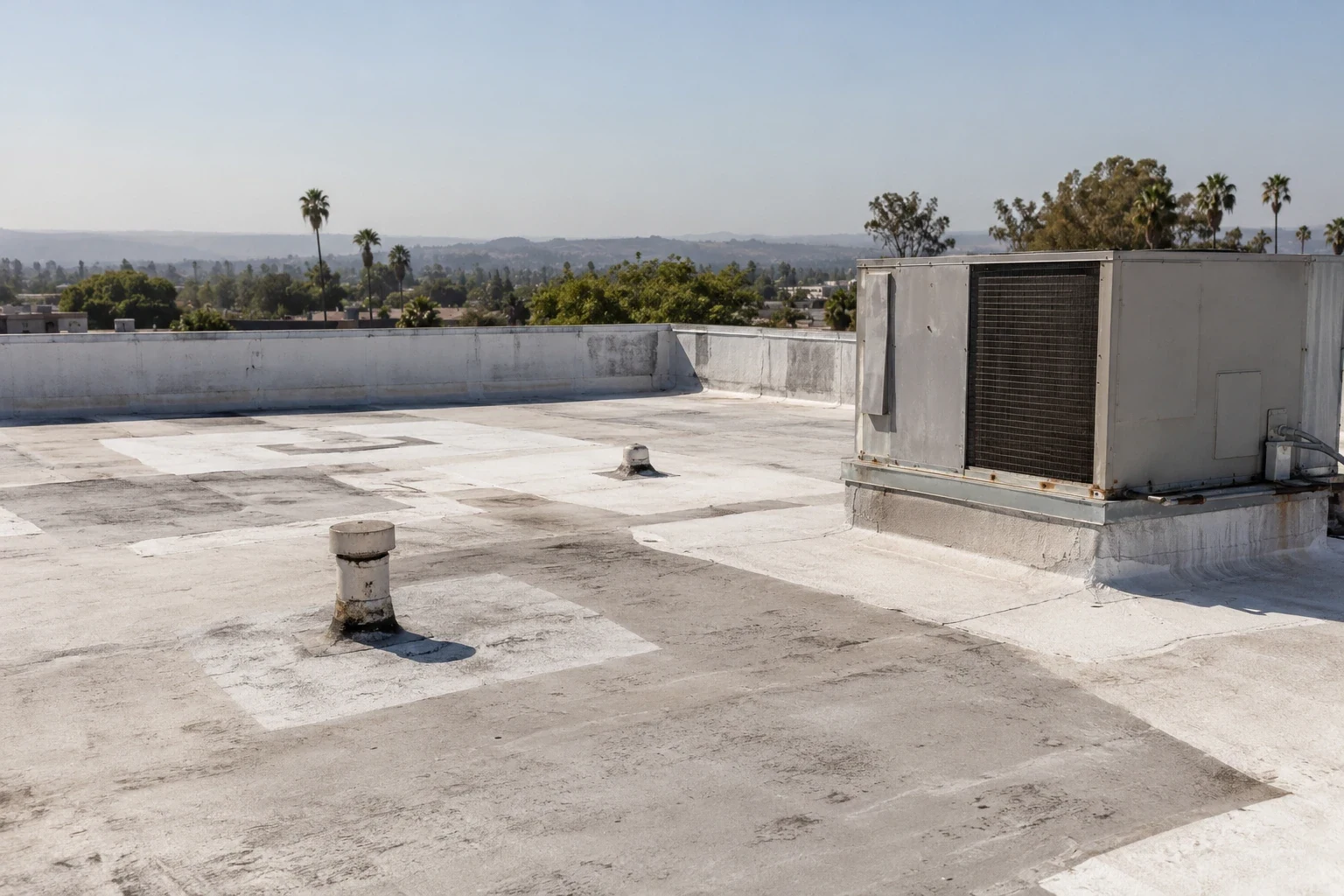
Commercial Roofing in Camino Real Business Park, Oxnard, CA
Schedule a Camino Real roof walk
Camino Real Business Park
An office, research, or manufacturing building at Camino Real Business Park may have roof access tied to tenant schedules, equipment operations, and deliveries. The specific plan organizes the area for office, industrial, research and development, professional, and limited commercial uses beside U.S. 101. That describes the business park, not the roof system at any one property. We begin by identifying the building, assembly where visible, equipment, access route, and roof sections that need attention. Then we trace drainage and check seams, curbs, penetrations, walls, and perimeter metal.
This differs from agricultural processing and repair uses described for the Central Industrial Area.
Work beside the Ventura Freeway corridor can involve delivery timing and an active property, but staging must be confirmed for the actual site. We ask who controls access, what must keep operating, and which interior areas need protection. An owner can use those details to distinguish an immediate repair from a test, maintenance item, or longer-term capital decision.
Walk from the access point to each roof section
We start with the roof plan, stair or hatch, tie-off route, and equipment schedule. A building with separate elevations, additions, or transitions needs a map that shows where each roof section begins and ends. We note any area that cannot be reached safely or is blocked by equipment. That limitation belongs beside the inspection result, so a clear photo of one section is not mistaken for a complete view of another.
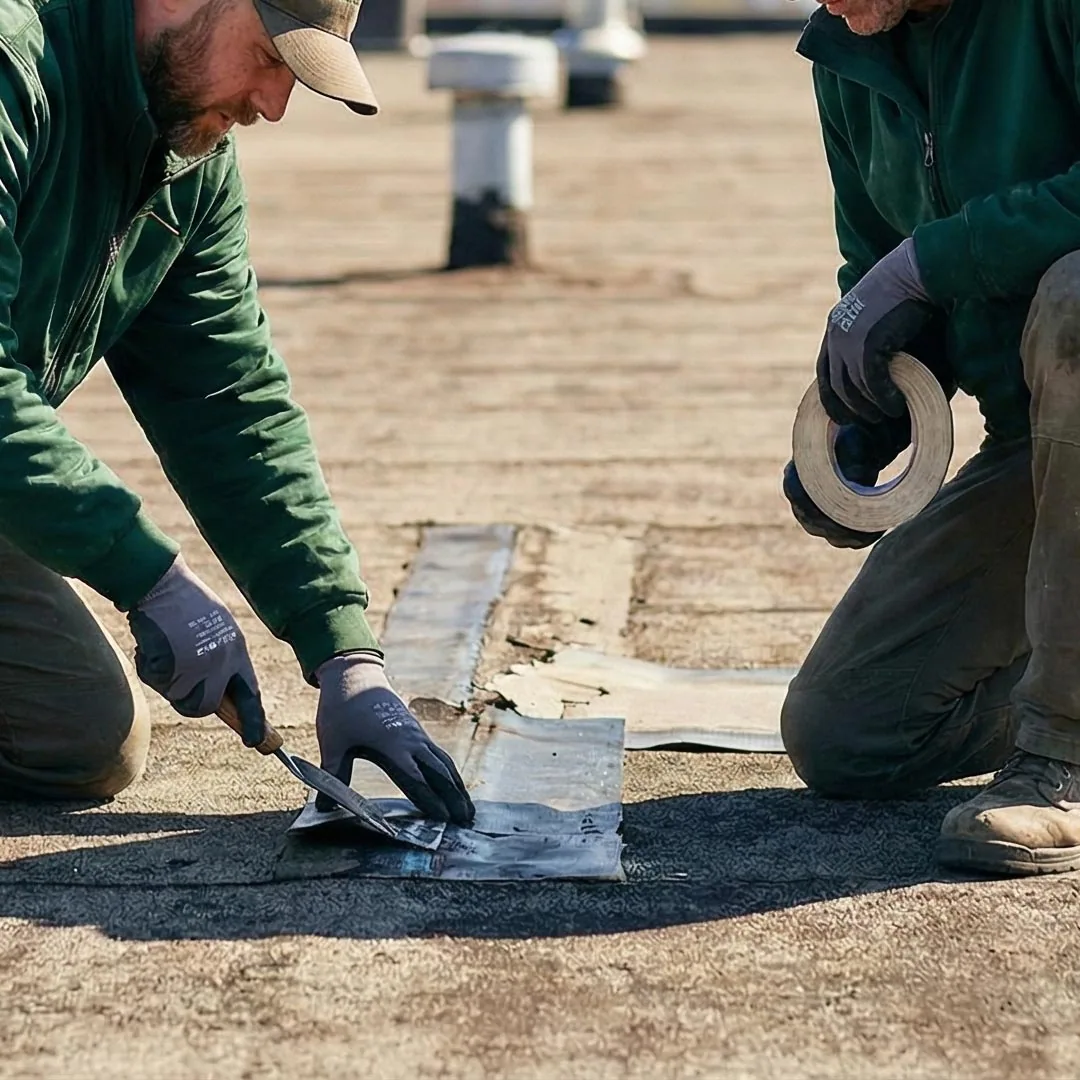
The walk follows low points and outlets, then seams, penetrations, curbs, wall lines, roof edges, and earlier repairs. We look for open laps, split membrane, loose terminations, standing water clues, surface oxidation, and movement around supports. A commercial roof inspection documents the accessible surface and limits; condition reporting connects findings with photos and priorities. If a hidden layer could change the scope, we identify a test location instead of assigning a quantity from appearance alone.
U.S. 101 fronts Camino Real Business Park, and nearby land uses include agricultural and existing industrial or commercial development. Those adjacencies may affect truck access or work-hour coordination, but they do not establish what an individual roof contains. We record the actual assembly, visible repairs, and details that need follow-up before recommending material or method.
Inspect penetrations and drainage interfaces
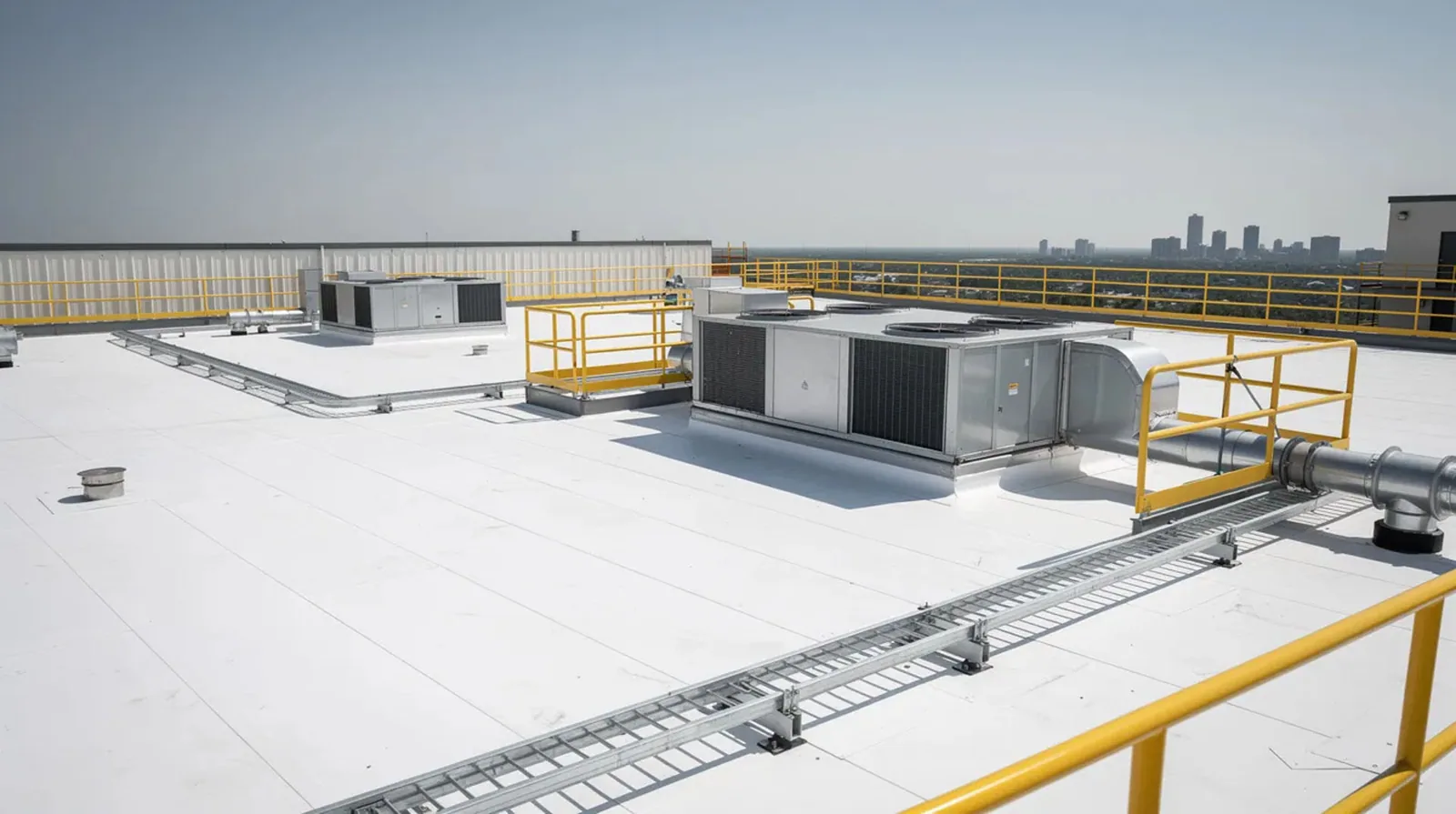
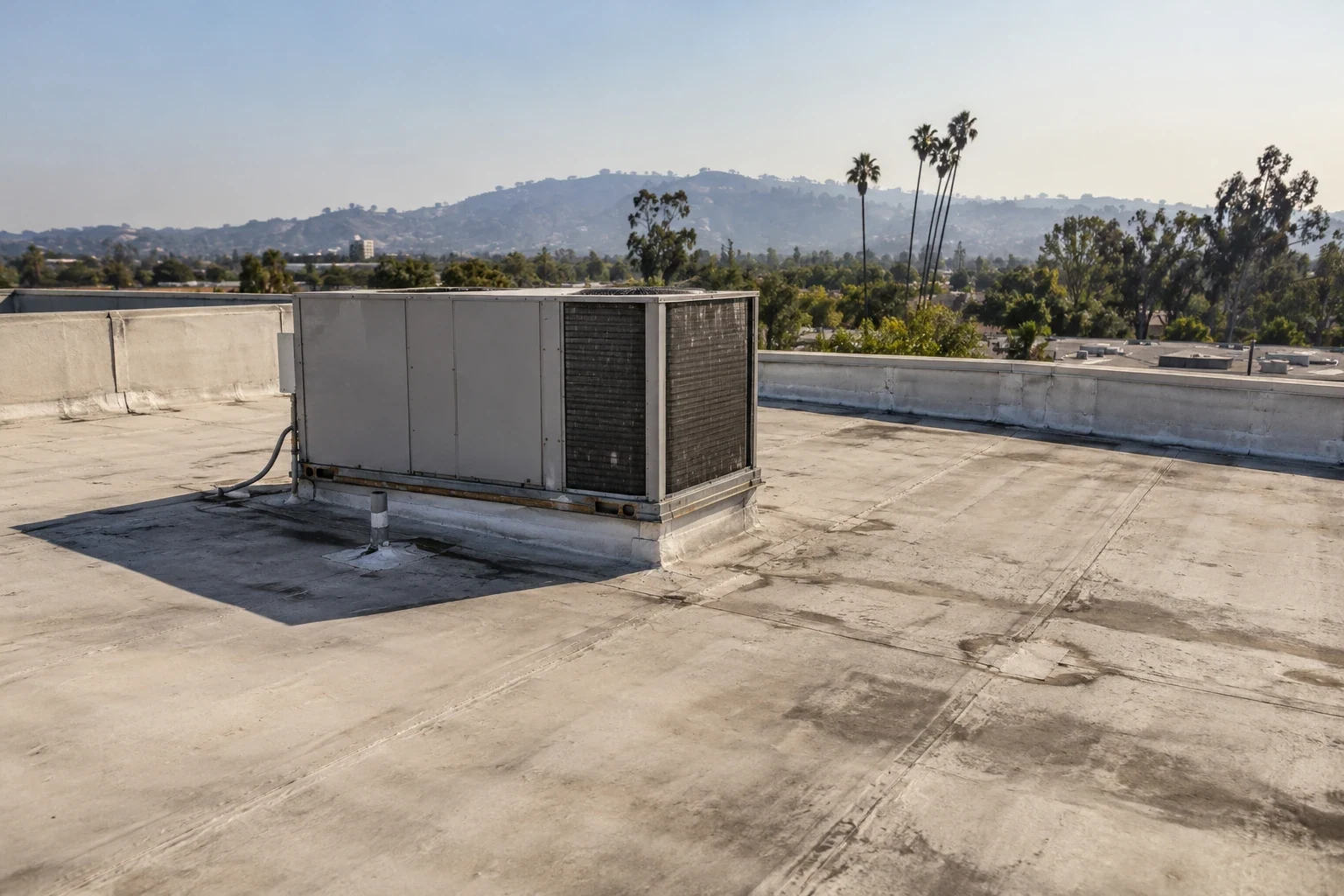
Office and research properties can have rooftop units, conduits, exhaust, controls, and support frames. At each curb, we check the membrane connection, flashing corners, fasteners, sealant, and whether water can pass around the base. A replacement unit may use a different footprint or line route than the equipment it replaced. We coordinate with the mechanical trade where a shutdown, lift, or curb alteration is necessary, and we keep the roof repair limit tied to the actual interface.
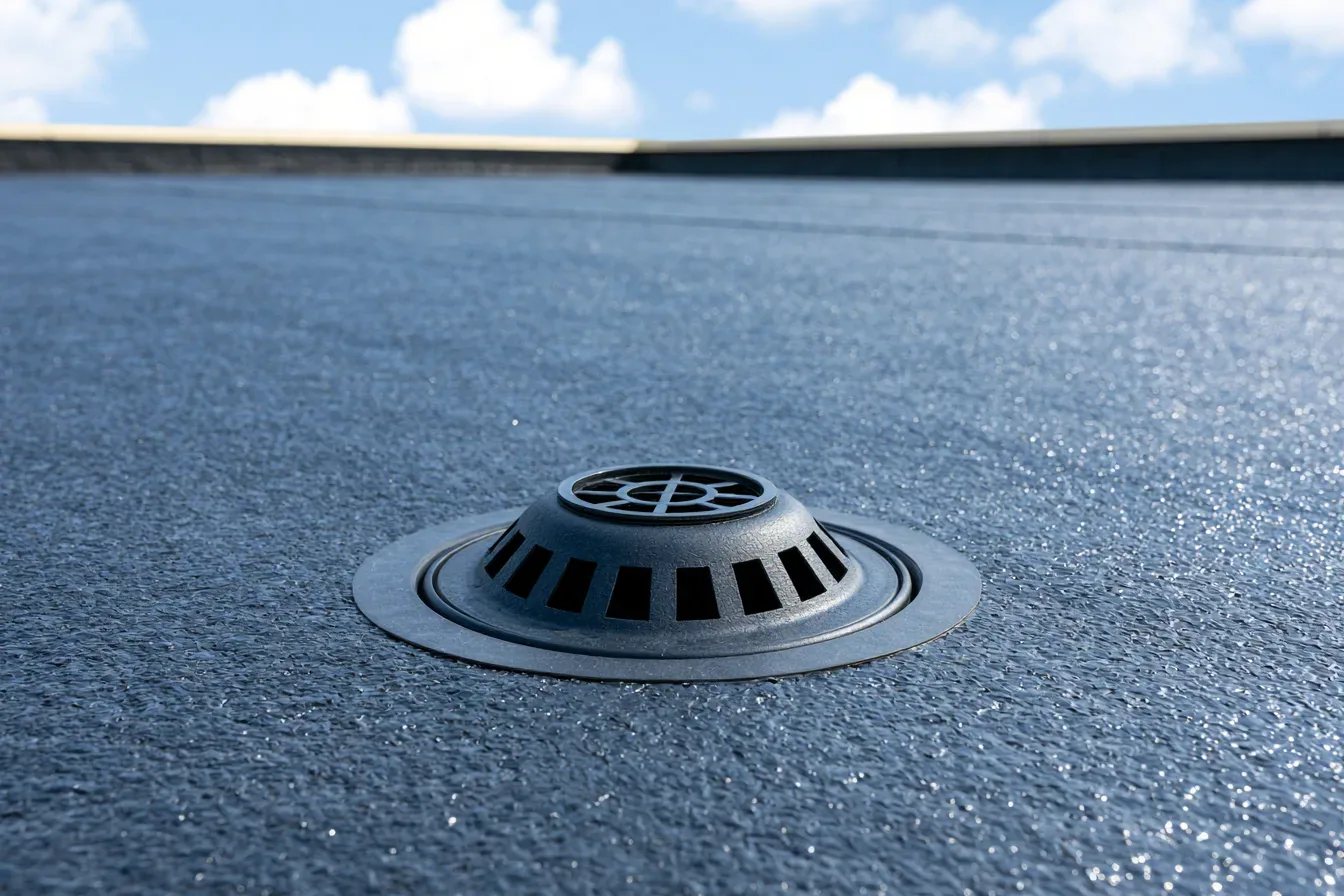
Drainage inspection follows the roof's low points to drains, scuppers, gutters, and overflow outlets. We separate debris that can be cleared from damaged flashing or a failed drain connection. If a room reports a leak, we compare the interior location with roof seams, walls, and penetrations above it. Water can travel before becoming visible indoors, so the nearest unit is not automatically the source. A drain and scupper check records the outlet and surrounding membrane; a verified flashing defect gets a repair scope.
The Oxnard station logged 1.77 inches during Hilary in August 2023, a new monthly August high. At Camino Real, we compare the reported room with the roof’s outlets, seams, and wall transitions, then mark any confirmed repair boundary.
Plan work around tenants and equipment
Before opening the membrane, confirm access hours, material staging, lift route, occupant protection, and the person who can approve a field change. A repair beside a working lab, office, or production area may need a smaller exposure and clear end-of-shift dry-in. The scope should state what area will be opened, how it will be protected, and what could extend the work if insulation or deck conditions differ from what the surface showed.
Oxnard identifies office, manufacturing, research, professional, and limited commercial uses in the Camino Real plan. That range means a single park can contain different operating constraints. We ask which equipment must stay active, where tenants need quiet or odor controls, and whether deliveries can use the normal route during roof work. When another trade needs roof access, the schedule shows how its work interacts with curb flashing or the membrane rather than leaving that interface for a later repair.
Occupied-building work can be divided by roof zone. We protect the rooms beneath the current section, close the day's opening, and record any temporary measure separately from permanent correction. A staged reroof plan can preserve that sequence across a larger surface. If water is entering now, emergency response is available overnight, on weekends, and holidays while the permanent scope is organized.
Set the repair boundary with field evidence
A localized split with sound membrane around it may support a targeted repair. Repeated patches, broad moisture indications, failed edge metal, or movement across multiple sections can point to testing or broader rehabilitation. We compare assembly, attachment, insulation transitions, penetrations, and drainage before choosing repair, recover, coating, or replacement. Where the existing surface cannot answer what is beneath it, a test cut or other investigation can keep the estimate from treating a concealed layer as known.
Cost and duration depend on area, preparation, access equipment, removal depth, replacement insulation, roof-edge work, drain modifications, disposal, and the window available to expose the surface. A defined repair can address a verified defect; a recover evaluation checks whether the existing assembly is a suitable base. We show the measurements and assumptions that drive each option, including any test allowance that remains unconfirmed.
Camino Real is a planned area for mixed business uses, while Sakioka Farms Business Park has a separate role in Oxnard's employment and distribution context. Neither planning label determines the roofing material at an individual building. The inspection records what is present before we recommend a compatible repair detail.
Leave the building file ready for follow-up
A useful closeout links the roof section to work performed, material installed, photographs, test findings, and the next action. If a leak was stabilized, label the temporary protection and state what permanent work remains. If a test changes the repair boundary, preserve the original field mark and add the revised quantity and approval. This history allows a facility manager or property owner to see which roof area changed and why.
A maintenance visit can return to drains, seams, supports, and prior repairs at an interval based on observed condition and operating needs. Keep roof plans, leak reports, equipment records, access instructions, and repair closeouts together. The next technician can compare the same areas, check whether equipment has changed, and record any new condition without confusing the park-level land use with a building-level roof finding.
Send the roof plan, access contact, equipment schedule, recent leak reports, and prior repair records. We will inspect the relevant sections, document visible conditions, and return an action list that fits the property and its operating calendar.
Related Roofing Work
More from Service Areas and nearby services
Schedule a Camino Real roof walk
Provide the roof plan, leak history, equipment schedule, access contact, and operating window. We will inspect the relevant sections and return mapped findings with a defined next step.
Common Questions
Does the Camino Real plan confirm what roof system a building uses?
No. The plan describes permitted land uses in the business park. We identify the visible roof assembly at the property and recommend a test if concealed layers could change the work.
Can roof work proceed while office or research operations continue?
Often, when access, interior protection, and the exposed work area are agreed in advance. We plan the daily opening and dry-in sequence around the building's operating limits.
How do you handle equipment added after the original roof?
We inspect the current curb, support, flashing, and membrane tie-in, then coordinate with the equipment trade if the unit or service lines need to move. The repaired detail is mapped for later review.
What information narrows the repair estimate?
Roof plans, leak locations, prior repairs, equipment schedules, access details, and interior protection needs help define the scope. A test allowance remains separate when concealed conditions are unresolved.
Should the park share one maintenance schedule?
A common calendar can help dispatch, but the service interval should reflect each assembly, condition, repair history, and operating consequence. Separate field marks make that comparison useful.