
Modified Bitumen Roofing in Oxnard, CA
Inspect modified-bitumen layers
Modified Bitumen Roofing
A modified-bitumen roof shows its construction at the cap sheet, seams and transitions. We identify whether the assembly is SBS or APP, how the plies are joined and what substrate sits below before selecting a repair. Oxnard, CA has industrial properties that include agricultural processing and vehicle or equipment service, plus business and research uses near Camino Real. A service yard may need hot-work controls and a production site may need intakes protected during application. We inspect the plies, granule surface, flashings and drainage, then select a patch, restoration or replacement scope.
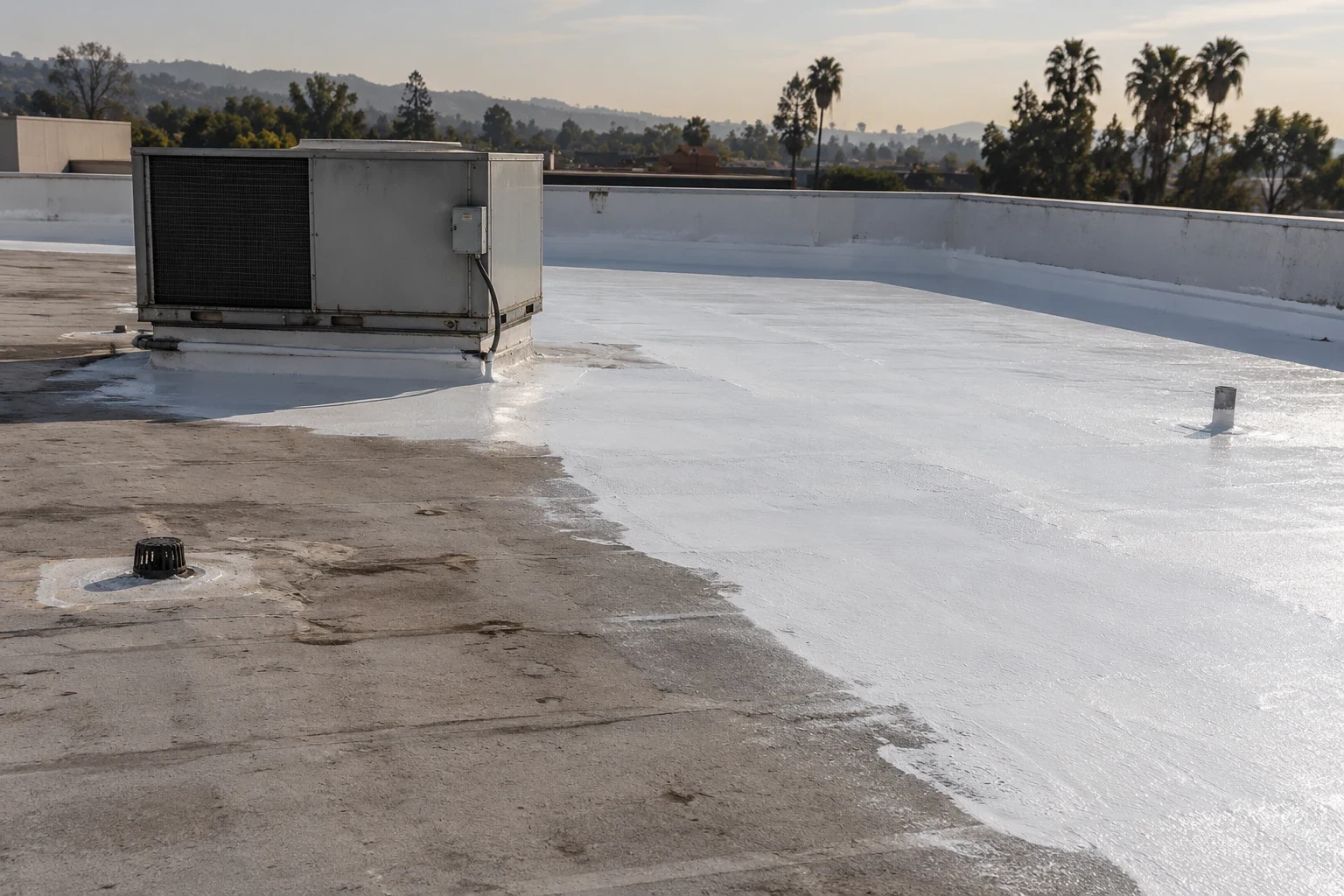
Identify the plies and cap sheet
Modified bitumen roofing uses asphalt modified with polymers and is installed in one or more plies. SBS and APP systems differ in formulation and installation options. We look at visible cap-sheet markings, granule condition, lap seams, flashing and repair history, then compare those observations with submittals where available. A dark surface alone does not identify the product.
Blisters, splits, ridges and exposed reinforcement each have a different cause. We check whether a blister contains moisture, whether a split follows a lap or movement joint, and whether granules have worn away at a traffic path. The repair should stop at sound material and retain the layer sequence required for the assembly. A commercial roof inspection can document where defects are isolated and where they repeat.
Where records are missing, a small test cut may be considered at an agreed location. We repair the opening and record each layer rather than infer the build-up from an exposed edge elsewhere.
Restore laps without burying defects
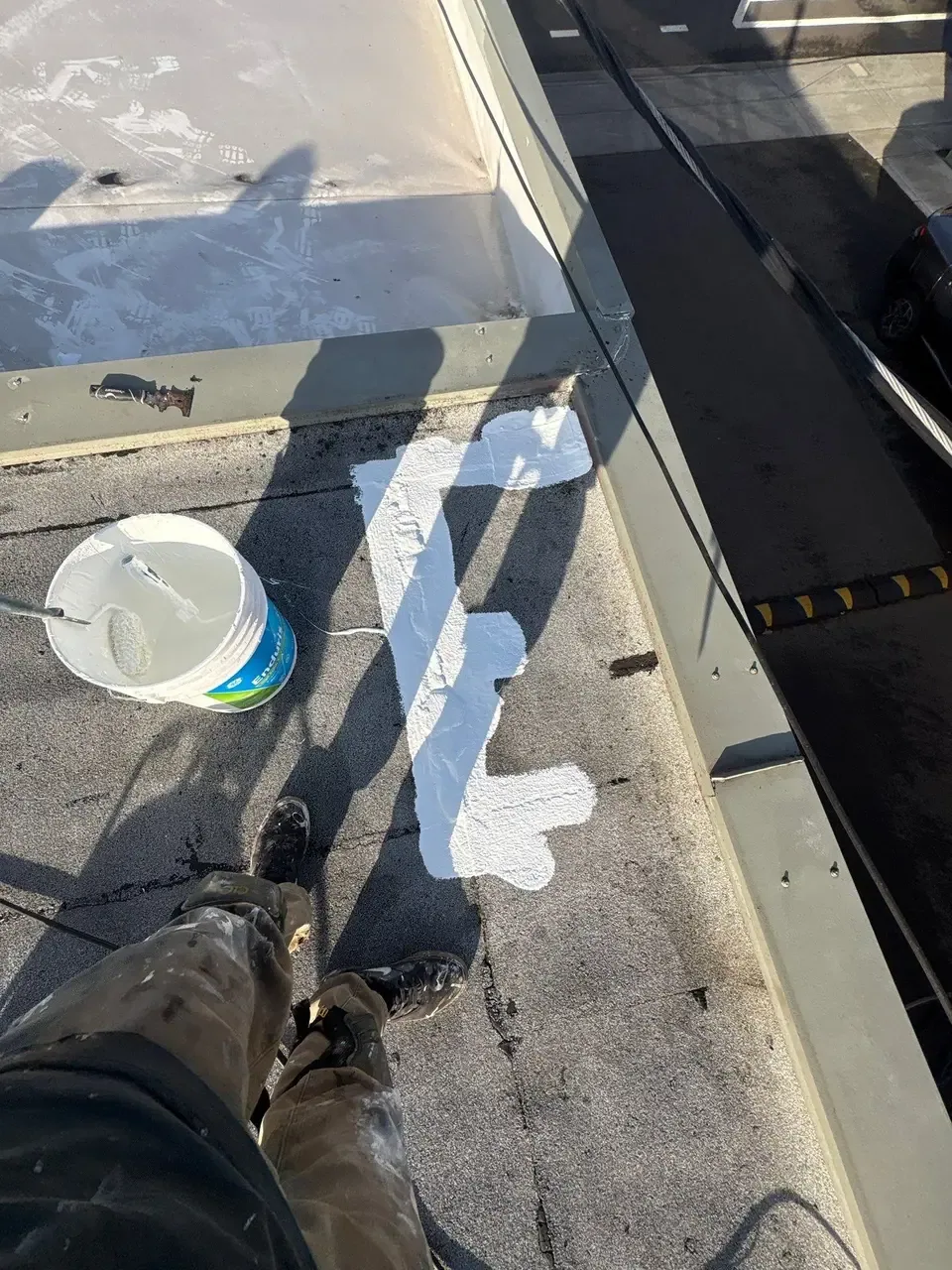
Lap seams can open where heat or adhesive coverage was inconsistent, the sheet moved, or a prior repair ended on weak material. We examine the overlap, check for moisture beneath it and map the affected run. A patch should extend beyond the failed lap and seal to sound, prepared membrane. Coating or mastic over a loose seam can hide the condition without reconnecting the plies.
Cap-sheet granules protect the surface, but embedded debris, worn spots and bare asphalt need attention. We prepare the repair area according to the product and use compatible membrane or surfacing. At a penetration or wall, the patch must connect to a flashing detail that reaches the required height and terminates securely.
For a leak involving multiple plies, leak repair follows the water path and records affected interior areas. Flashing repair can be added when the transition, rather than the field sheet, is the failure point.
Plan application and fire controls
Modified-bitumen work may use torch application, hot asphalt, cold adhesive or self-adhered material, depending on the specified product and assembly. Each method has limits for substrate, temperature, wind and roof conditions. The selected method determines how the new sheet turns up at curbs and terminates at metal edges, so those details are settled before material is ordered.
Torch or kettle work requires a hot-work plan, fire watch and protection of combustible materials and openings. Site restrictions may limit heat-based installation near equipment, rooftop intakes or stored goods. We confirm permits, extinguishers, monitoring duration and access to the work zone with the project contact. If a cold-applied or self-adhered assembly is specified, surface preparation and adhesive conditions still need control.
At an active industrial property, staging and fire controls must fit the operating plan. Occupied-site sequencing sets work zones, access windows, and interior protection before removal begins.
Tie flashings into the field plies
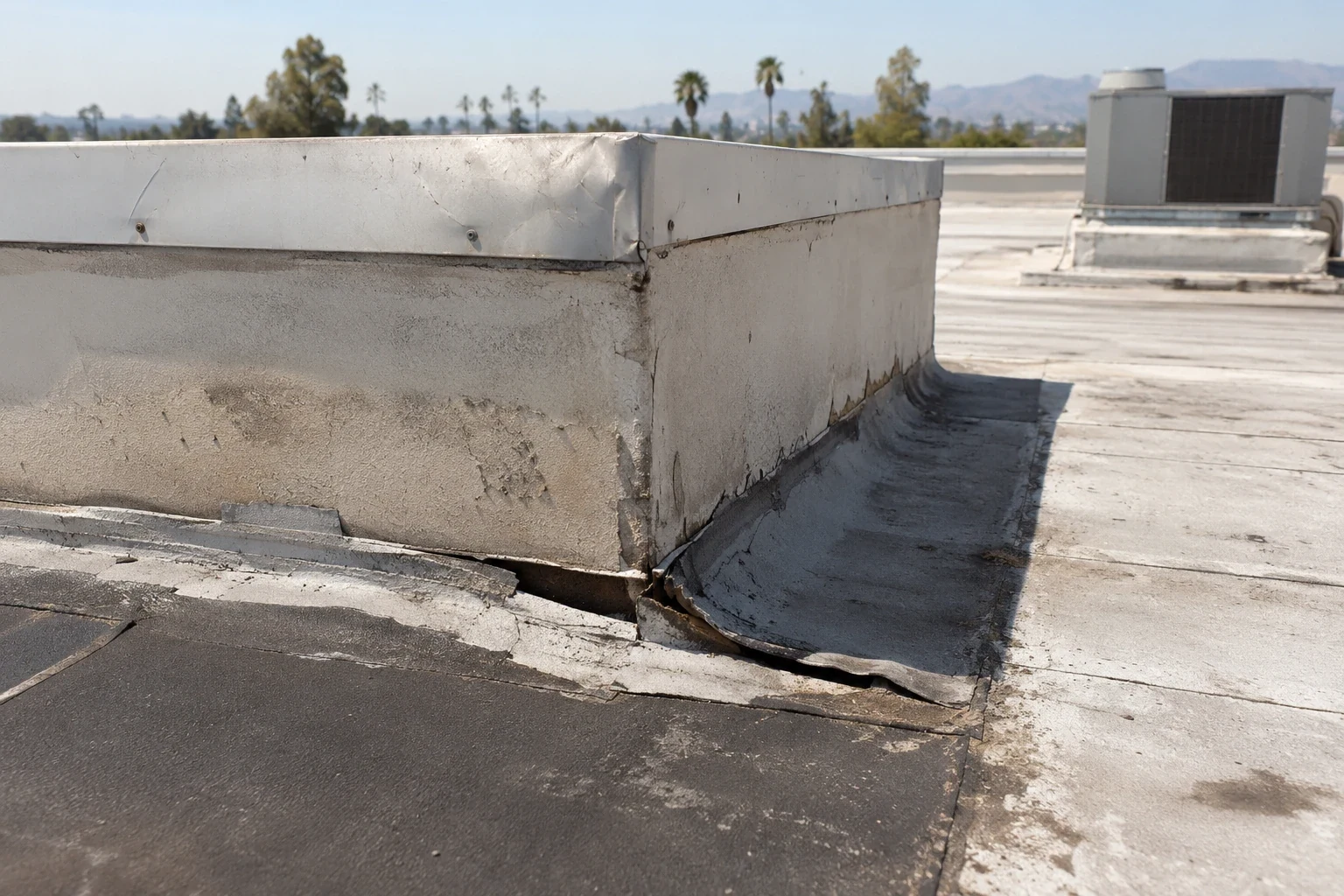
Parapets, curbs, scuppers and equipment supports need compatible flashing that bonds to the field assembly. We inspect cant strips, curb height, base flashing, counterflashing and termination bars. A wall detail may require removing metal so the membrane can be reconnected. The repair scope notes those steps and avoids relying on a surface bead to close an open edge.
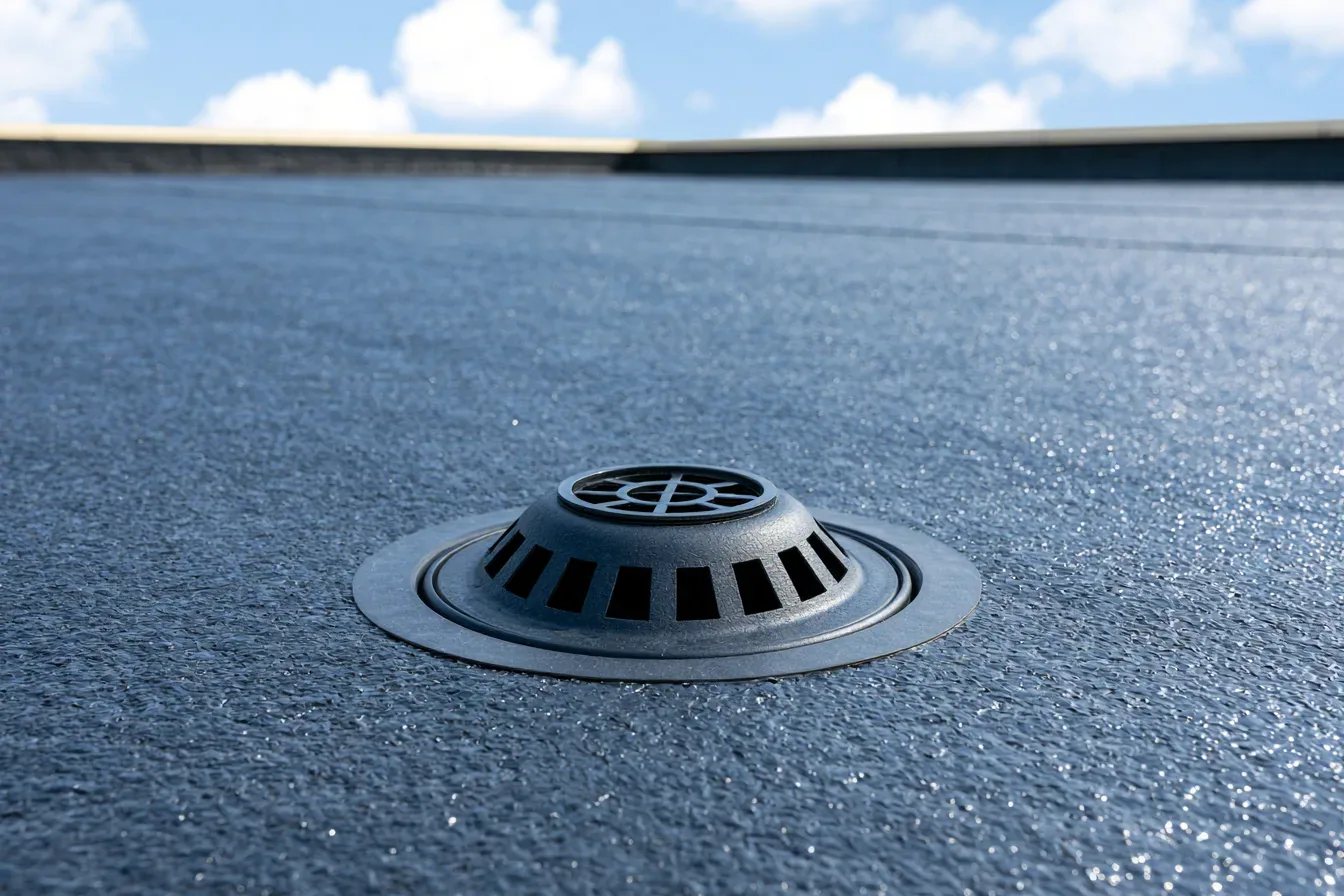
At drains, the membrane must connect to the bowl without blocking the clamp ring or changing the flow path. A cricket may guide water around a curb, but it needs a measured layout and clean tie-in. Drainage work can address low points and outlet details in the same project.
When a mechanical unit is moved, the roofing sequence needs the curb footprint and equipment schedule. Curb and support work coordinates that interface with the mechanical trade.
Account for Oxnard's building and weather context
The Central Industrial Area includes outdoor storage, agricultural processing and vehicle or equipment repair. These uses can affect staging, fire controls and the route materials take to the roof. We verify the actual building's operating needs, particularly where work uses heat or adhesive with a limited installation window.
Camino Real’s plan places research, manufacturing and office uses near U.S. 101. For torch or kettle work, we identify rooftop intakes and set the fire-watch route before choosing an application window. At Sakioka Farms, the reported distribution, cold-storage, and fruit-processing uses make material staging and work windows important to confirm with the building contact. Camino Real Business Park is a broad district; the work method follows the building’s approved hot-work conditions.
Hilary produced 1.77 inches at the Oxnard gauge in August 2023, a record monthly total. For modified-bitumen work, inspect laps, drains, and edge transitions before sizing the opening; overnight protection and installation timing follow current roof conditions and forecast.
Choose repair, recover or replacement
Localized splits, punctures or lap failures can be repaired when surrounding plies remain bonded and dry. Widespread surface loss, recurring openings, wet insulation or unstable attachment can make replacement more practical. We inspect representative areas and explain which conditions affect the recommendation, including access, removal depth and the substrate beneath the bitumen.
A recover is possible only when the existing assembly and project requirements permit another layer. Added material changes roof height at parapets, curbs and drains. Recover evaluation reviews the existing layers and tie-ins; a full roof replacement can rebuild insulation and flashing with a new system.
We mark each retained and removed layer so bids state the same tear-off limits. Built-up roofing and EPDM are different assembly choices with separate repair details.
Keep the layer record with the repair
We record system type, ply count when known, attachment or application method, repaired zones and materials used. Photographs show concealed laps and flashing. The roof plan marks the SBS or APP assembly beside each repair zone so later crews can match the sheet and application method.
Before mobilization, we confirm hot-work restrictions, site access, staging, weather window and protection below the active area. At closeout, the crew checks laps, edge terminations and drainage paths, then submits required inspection information and repair photographs.
CRA can maintain, repair or replace modified-bitumen roofs in Oxnard. Share the roof plan, product records, leak history and access restrictions. We will inspect the plies, mark the repair limits and define the safest installation method that fits the specified assembly.
Related Roofing Work
More from Roof Systems and nearby services
Inspect modified-bitumen layers
Send roof plans, prior scopes, product data, known leak locations and hot-work restrictions. We will inspect the plies and flashing, then recommend repair, recover or replacement for your Oxnard building.
Common Questions
How can I tell whether the roof is SBS or APP modified bitumen?
Product records or markings are the best evidence. We also inspect cap-sheet and seam details, but surface appearance alone may not identify the polymer. If the system cannot be confirmed, we select materials only after checking compatibility and project requirements.
Can an open modified-bitumen seam be sealed with roof cement?
A surface smear may not reconnect the lap and can conceal trapped moisture or loose plies. We examine the overlap, prepare sound material and use a compatible repair detail. The repair should address the failed bond and show its limits.
When does modified-bitumen roofing require a hot-work permit?
Torch or kettle methods generally require site-specific authorization, fire protection and a designated watch. The property rules and contract set the applicable controls. We identify heat-based work in advance and coordinate permits, combustibles, roof openings and monitoring with the responsible site contact.
Can modified bitumen be recovered with another roof system?
The existing layers, moisture, attachment, fire requirements and project criteria determine whether a recover is permitted. We inspect the assembly and review compatibility before adding material. If the deck or insulation is compromised, removal may be necessary.
What makes a blister in a modified-bitumen roof?
Heat, trapped air or moisture and bond conditions can contribute. We inspect the blister and surrounding plies before cutting or patching it. The scope should identify whether the condition is dry, wet or connected to a broader seam or substrate failure.