Commercial Roof Repair in Oxnard, CA
Get a field-marked repair scope
Commercial Roof Repair
A loose termination can send water behind a membrane long before the interior shows a stain. On a retail roof in Downtown Oxnard, an industrial building near the Rose-Santa Clara Corridor, or a repair shop in the Central Industrial Area, the fix begins with the detail that failed and the water path around it. We inspect the membrane, seams, flashing, drains, curbs, and edge metal, then mark the repair area so the scope matches what is present. Oxnard’s land-use plan places agricultural processing and vehicle or equipment repair among Central Industrial Area uses. Those operations can mean roof traffic, exhaust equipment, and tight work windows, but we verify each condition on the building. A repair should stop the leak source, restore a compatible detail, and leave a record for the next service visit. industrial roofs in the Central Industrial Area and Downtown Oxnard properties need the same clear field diagnosis, with different access plans.
Find the failed detail
Water often travels before it reaches the ceiling. A puncture may sit upslope from the stain. A failed seam can draw water toward a curb or wall. A blocked drain can keep a large area wet even when the membrane itself remains intact. We trace the path from the interior report to the roof surface, then inspect nearby laps, penetrations, terminations, and low points. The repair description should name the failed condition instead of calling every visit a patch.
We also check the roof assembly around the defect. Surface oxidation on metal, a cracked counterflashing joint, an open pitch pocket, or a membrane pulled from an edge each calls for a different preparation and repair method. A patch installed over loose material can fail at the new perimeter. We remove unsound material to a stable boundary, prepare the substrate, and tie the repair into sound roof area. If water entry is active, the leak tracing and repair visit focuses first on stopping the path and protecting the interior.
Repair the membrane and seam
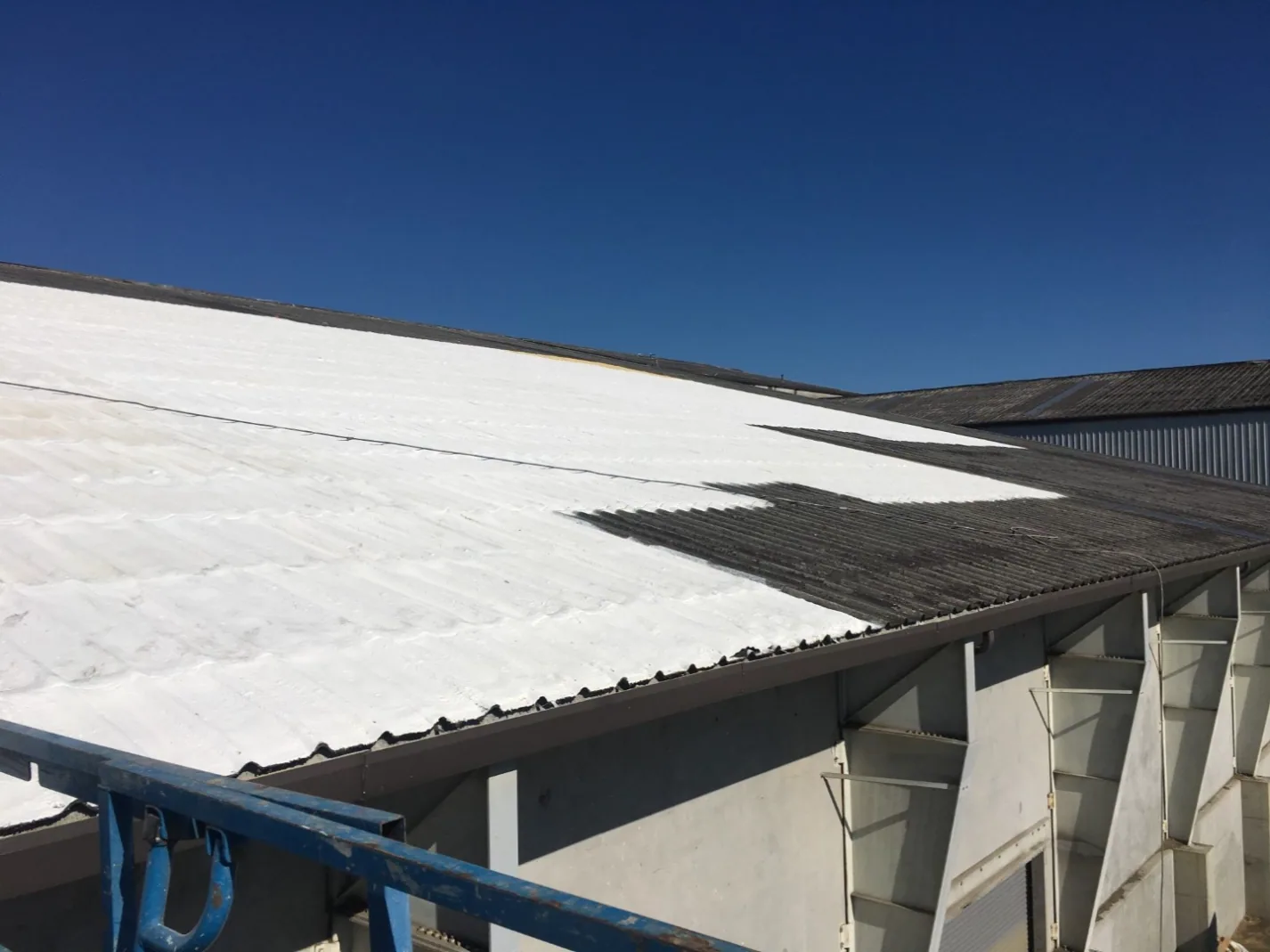
Membrane repairs depend on the roof system. A thermoplastic seam can be cleaned and heat-welded when the material remains weldable. EPDM repairs use compatible adhesives and patches. Modified bitumen and built-up surfaces need preparation and layers that suit the existing asphalt system. Metal panels call for panel-specific fastening, sealant, or replacement work. We confirm what is installed before selecting a repair material, because a generic patch may not bond or move with the existing roof.
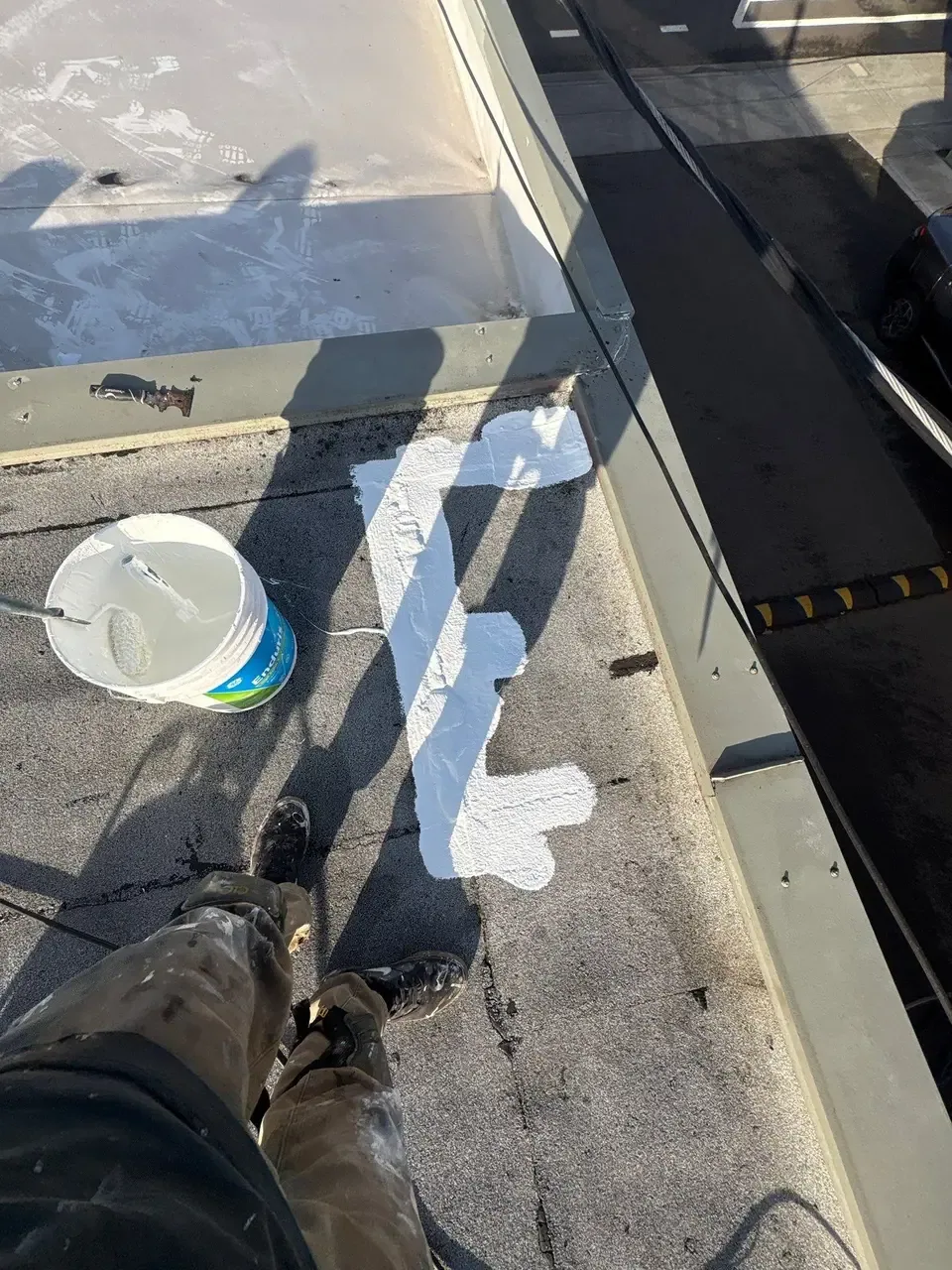
The repair boundary matters as much as the patch. We remove dirt, oxidation, loose coating, and failed sealant where those conditions interfere with adhesion. At a seam, we check whether the opening is isolated or part of a longer separation. At a puncture, we inspect for compressed cover board and damage beneath the opening. We take photographs before and after, mark the repair location on the roof plan, and state any nearby condition that remains. A seam failure repair or membrane puncture repair can address a defined defect without assuming the full roof needs replacement.
Close the wall and curb transitions
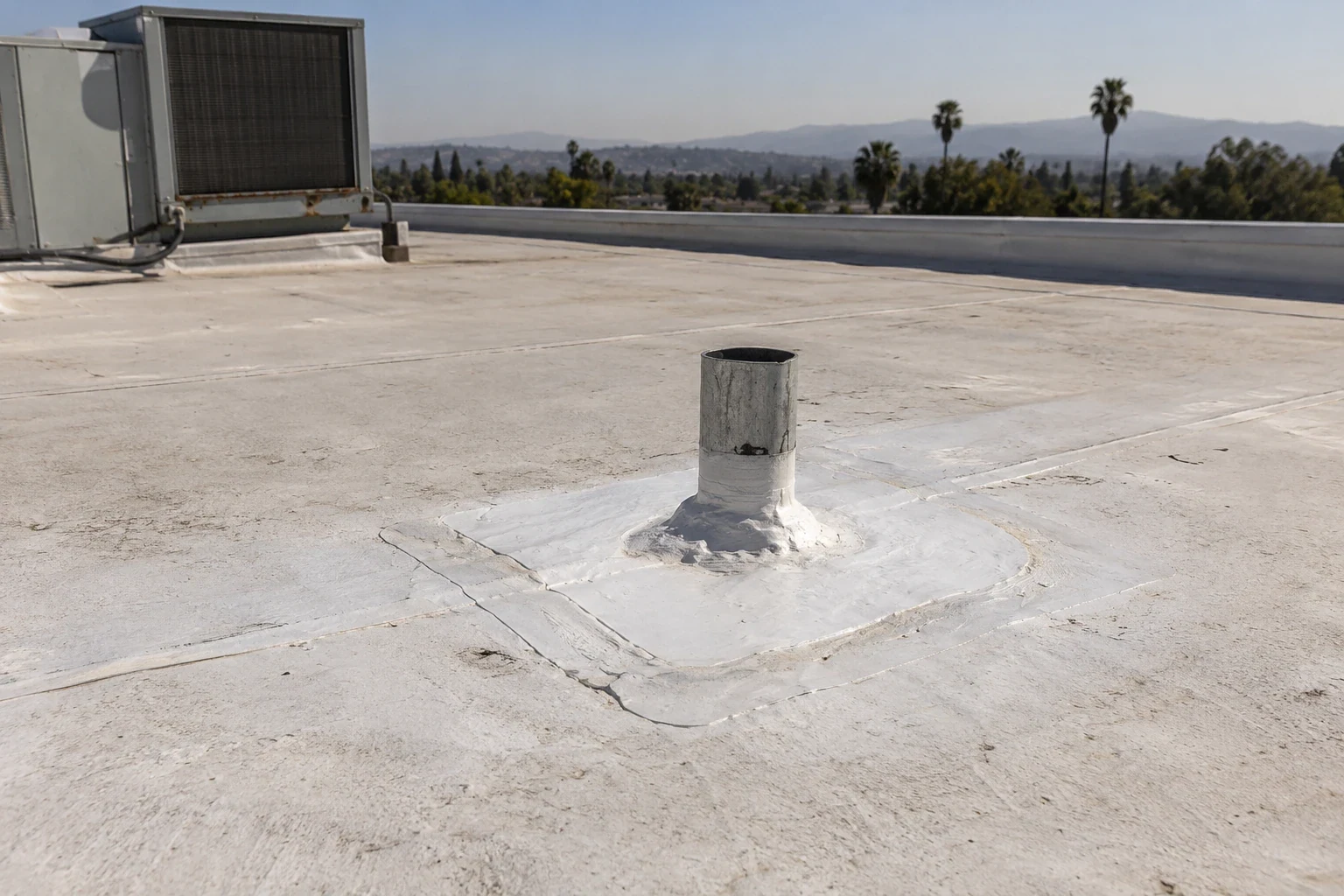
Many repeat leaks originate where the field membrane meets a wall, curb, drain, or equipment support. We inspect the height and continuity of flashing, look for separation at corners, and test whether water can pass behind the termination. A curb seal needs a stable surface and a complete turn at each corner. Wall flashing must connect to the roof membrane and the wall assembly in a way that sheds water outward. If metal coping has lifted or corroded, fastening and substrate conditions must be checked before resealing.
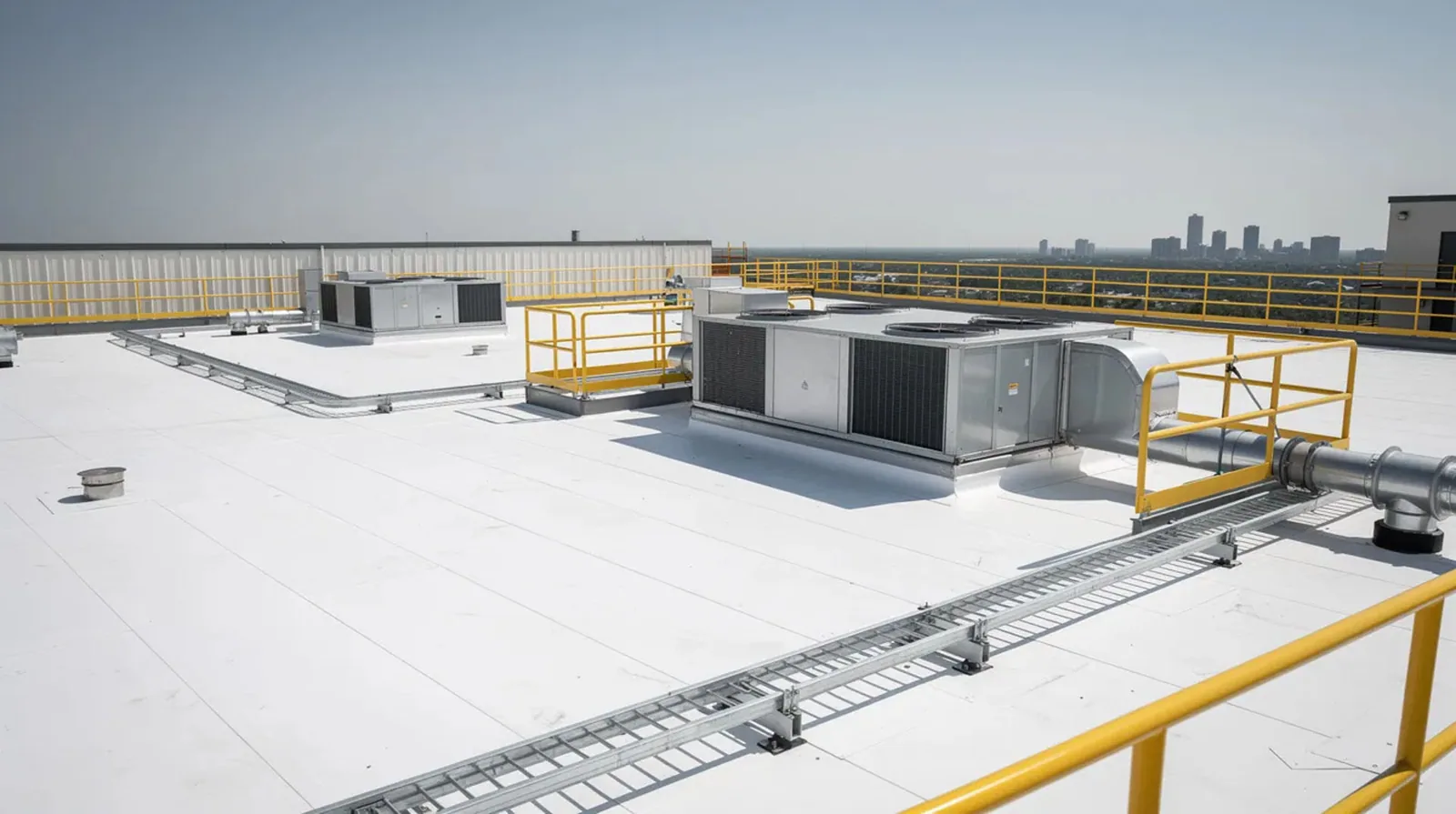
Roof-mounted equipment adds movement and service traffic. A repair plan should make clear which penetrations can be sealed in place and which need mechanical work before the membrane is closed. We coordinate around active intakes and exhaust where repair activity could introduce dust or fumes. At a multi-tenant property, we set a short access window and keep tools and removed material clear of tenant paths. For extensive edge and drainage defects, compare the repair list with edge-metal and coping work before authorizing isolated sealant replacements.
Use local weather as context
Tropical Storm Hilary brought 1.77 inches of rain to the Oxnard station in August 2023, a new monthly record for that month. Compare work orders from the period with current drain, scupper, and overflow conditions. Then trace the reported leak to the low points, membrane details, and wall transitions on the building under inspection.
Coastal planning is also parcel-specific. Oxnard’s Local Coastal Program addresses hazards for the mapped coastal zone, including sea-level-rise planning. Salt exposure should not be assumed at every site. Where surface oxidation or corrosion is present, we record its location and extent, then identify whether the repair requires metal replacement, coating removal, or a compatible protective system. commercial properties along the Rose-Santa Clara Corridor span multiple uses; a roof walk should follow the actual building exposure instead of applying one district-wide assumption.
Separate a repair from a replacement
A repair is appropriate when the defect is localized, the surrounding roof is sound, and the repair can tie into stable material. We look for repeated patches, broad seam separation, widespread wet insulation, failing edge metal, and deck movement that may signal a larger problem. Those findings do not automatically require replacement, but they change what the repair should include. We show the owner where the condition repeats and which areas need additional testing.
Cost and timing depend on access, repair size, roof height, membrane type, preparation, water protection, and whether equipment must be moved. We identify materials and limits in the proposal, along with any concealed condition that would change the price. For an owner comparing options, we can place a localized fix beside a phased scope or commercial roof replacement. On a multi-building property in RiverPark, roof plans and past service records help distinguish one building’s issue from a condition shared across the portfolio.
Leave useful repair notes
After the work, the record should show the defect, the repair boundary, the material used, and any condition left for monitoring. We use photographs and field marks that a facility manager can find again without guessing where the crew stood. If the repair depends on a mechanical shutdown or temporary protection, the closeout notes those steps. If water remains in insulation outside the repair boundary, the report says whether further testing is recommended.
Related Roofing Work
More from Commercial Roofing Services and nearby services
Get a field-marked repair scope
Send the leak locations, roof plans, prior repair notes, and access constraints. We will trace the condition, identify the assembly, and document the repair boundary before work begins.
Common Questions
What roof details do you repair most often?
The field walk may find open seams, punctures, loose terminations, failed curb seals, damaged flashing, leaking drains, or corroded metal. We identify the actual failure and match the method to the installed roof system. The repair scope will say which detail is being corrected and what adjacent condition remains.
How can you tell whether a leak is coming from the roof?
Start with the ceiling report, then compare its location with penetrations, seams, drains, and wall transitions above. Water can travel along a deck or insulation before showing indoors. We check likely paths and document the evidence before making the repair, so the work addresses the entry point rather than only the stain.
Can you patch a roof if the material is unknown?
We first identify the membrane or panel as closely as the field conditions allow. A compatible repair product and preparation method depend on that identification. If an area is too deteriorated to identify reliably, we explain the test or removal needed before committing to a permanent detail.
When does a repair become a larger roofing project?
Repeated failures, wet insulation, loose attachment, failing edges, or widespread seam separation may show that several systems are involved. We map the extent, test where needed, and compare a defined repair with phased restoration or replacement. The owner receives the findings and scope boundaries before work expands.
What should be included in a repair closeout?
Look for the repair location, roof system, materials and preparation, before-and-after photographs, and any remaining condition. We record those items and note when a later check is useful. That gives the next facility manager a reliable starting point if the area changes or another leak appears.