
Built-Up Roofing
A built-up roof hides several plies beneath its surfacing, so the visible gravel or cap does not tell the full story. We inspect the field, roof edges, drains and penetrations before choosing a repair method. In Oxnard, CA, Sakioka Farms includes distribution, cold-storage and fruit-processing development, while Camino Real Business Park combines research, manufacturing, office and limited commercial uses. At each property, equipment routes shape roof staging. We identify the surface, movement and ply transitions at curbs and walls. The scope then addresses the layers that are actually failing.
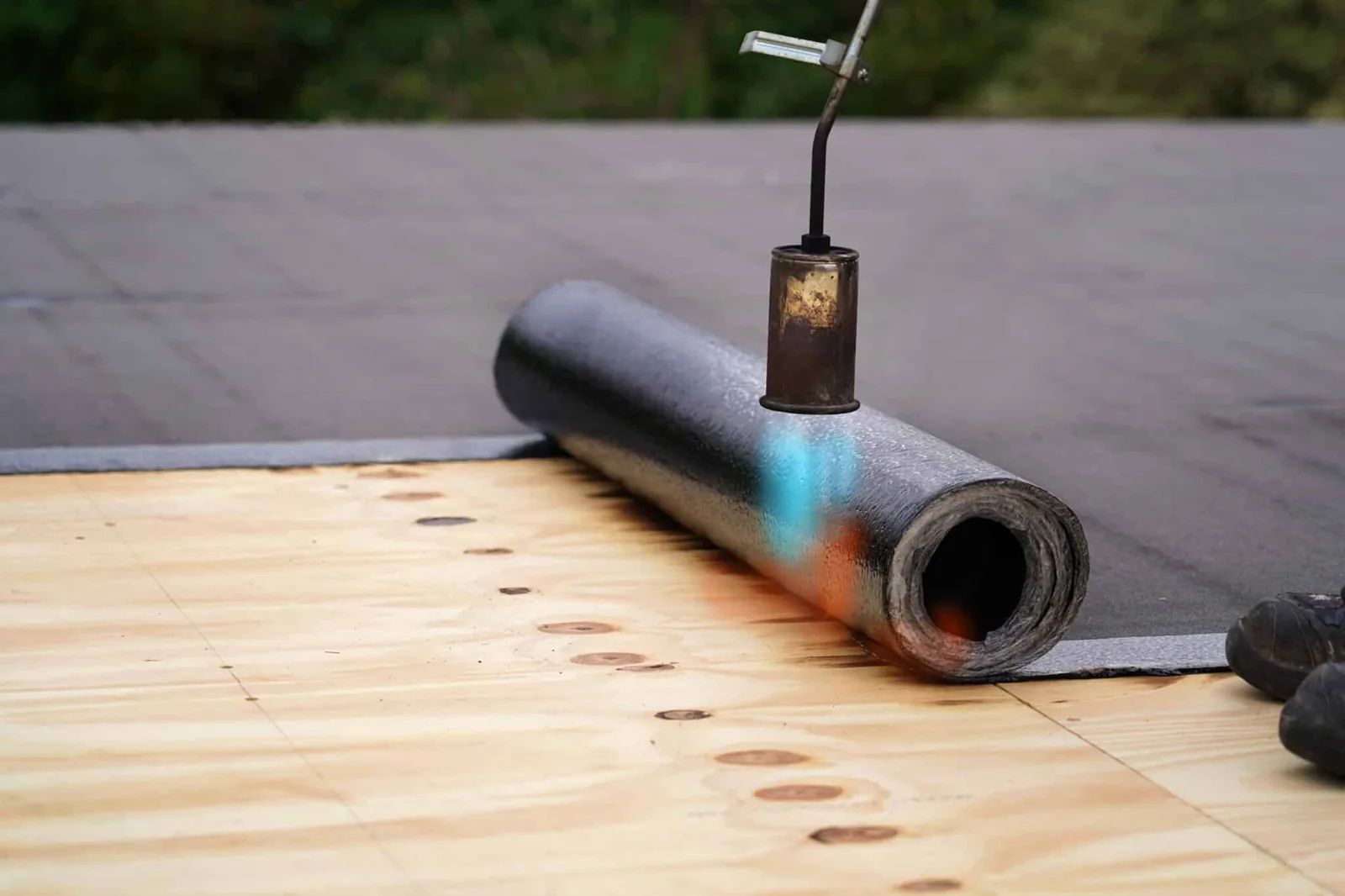
Read the surface and layer stack
Built-up roofing combines alternating reinforcing plies and bitumen. Aggregate surfacing, a cap sheet or a coating may protect the top layer. We inspect exposed edges, drains, blisters, splits, patches and changes in texture to understand what may sit below. When gravel shifts or collects at a drain, we clear an inspection area and check the cap and underlying plies before deciding whether repair is needed.
We check for moisture signs, displacement, open flashings and prior patch material. A core may be appropriate when the owner needs confirmation of layer count or insulation condition. Sampling happens at an agreed location, and the opening is repaired after the layers are recorded. A roof inspection can map the field and note where further testing would change the repair decision.
If the original plans are available, we compare the specified assembly with roof evidence. Multiple additions or resurfacing layers can change the actual build-up, so the written scope identifies uncertainty rather than assume the drawing remains accurate.
Follow the bitumen and reinforcing plies
Each ply contributes to the waterproofing assembly. A split in the cap sheet may be a surface defect, or it may connect to a failed lap beneath. We inspect the affected area, remove surfacing as needed and determine whether the reinforcement remains bonded. Repairs use compatible bitumen, reinforcing fabric or membrane products appropriate to the system and project specification.
A patch must tie into sound material around its perimeter. Covering a blister without checking trapped moisture can leave the cause in place. We note whether the area is dry, soft or displaced, then mark the repair boundary and sequence. On a roof with repeated splits, we review movement joints, attachment and substrate conditions rather than apply the same patch at every location.
Commercial roof repair can address localized damage. If water appears inside, leak repair traces the path through the field and flashing before materials are removed.
Match surfacing to the selected repair
Aggregate protects a built-up roof from exposure and foot traffic, but loose stone can migrate into drains or collect at parapets. We check whether the surfacing is embedded, where it is missing and how it affects access to the membrane. A repaired area may need replacement surfacing compatible with the bitumen and existing field.
Cap sheets and coatings use other surface approaches. The repair must prepare the existing assembly and restore protection without sealing moisture beneath it. We consider roof use, equipment paths, drain openings and future maintenance. If traffic repeats near a unit or hatch, walk pads can protect the surface without spreading loose aggregate into the water path.
Oxnard planning identifies industrial uses that include outdoor storage, agricultural processing and equipment service. Material deliveries and roof traffic can intersect with those operations. We set staging and temporary protection with the facility contact rather than treat the surface as an unoccupied work zone.
Build transitions through the full stack
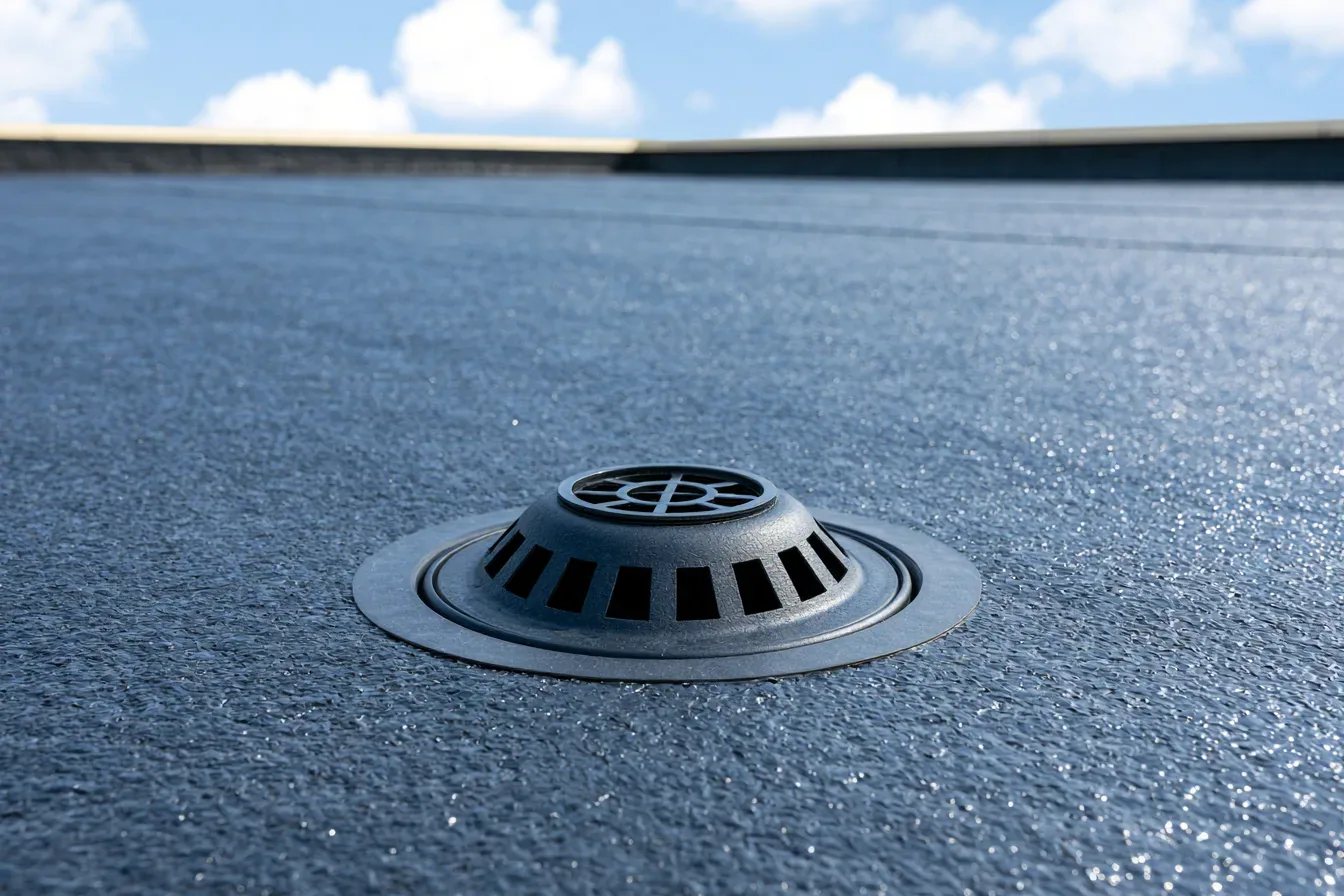
Parapets, curbs, drains and expansion joints break the roof plane and need layers that connect to the field. We inspect base flashing, cant strips, metal terminations and the condition behind counterflashing. At a drain, the membrane and plies must fit the bowl and clamp without narrowing the opening. A surface patch cannot correct a loose termination bar or deteriorated curb.
Hot asphalt or torch work may be part of some built-up installations. The chosen method follows the specification, site rules and fire controls. We identify the work method, fire watch, access and protection of nearby intakes before mobilizing. Where a site prohibits open flame, a different approved detail may be needed.
Drain and scupper work can address outlet geometry; edge metal and coping tie the roof into the parapet or exterior drainage.
Set the next assembly decision
A localized failure may need a repair if the surrounding plies are bonded and dry. Widespread blisters, splits, saturated insulation or excessive repair layers may support replacement instead. A recover is considered only when the existing assembly, fire criteria, drainage and edge heights allow another layer. We inspect the roof and explain what remains under each option.
Modified bitumen is another multi-ply asphalt system, but its sheet construction and installation details differ from built-up roofing. Modified-bitumen assemblies can be compared when the project is considering a new roof. For a full rebuild, replacement planning coordinates substrate, insulation, membrane, surfacing and perimeter details. A single-ply alternative such as EPDM roofing has a different seam and repair approach.
RiverPark's specific plan spans housing, commercial space, parks and open space. For a commercial roof there, we still verify the building's use, access and assembly before setting work hours or material delivery.
Inspect below the aggregate line
Maintenance includes drain clearing, inspection of flashings, checking aggregate distribution and looking for displaced surfacing around service routes. We note blisters, cracks and patch edges with photographs and roof-zone labels. A low area that repeatedly holds water should be measured before adding material that could raise the surface around it.
Roof crews and other trades should use established paths, protect the surfacing and remove scrap at the end of the shift. Repeated equipment service can scatter stone or press it into a membrane. We review walk pads and access points to reduce unnecessary traffic over seams and repaired areas.
Preventive roof maintenance records recurring conditions. At Sakioka Farms, operating logistics and cold-storage activity can influence when roof work is staged; Sakioka Farms area service is coordinated with the property's access contact.
Record the roof's actual construction
The closeout record notes visible surfacing, known ply sequence, repair materials, flashing work and drainage observations. Photographs show areas where surfacing was lifted to inspect the assembly and identify concealed conditions. The facilities lead can compare the mapped patch and ply condition with later leak reports to see whether the same zone is recurring.
Before starting, we confirm access, staging, fire controls, weather limits and protection below the work zone. Repairs are closed in a sequence that leaves the building dry at shift end. If tear-off exposes a different layer than expected, we document it and seek direction before extending the scope.
CRA can inspect and repair built-up roofs or plan replacement when the assembly no longer supports repair. Provide existing drawings, leak reports, repair history and access restrictions. We will verify the roof stack and define the next work by field condition.
Related Roofing Work
More from Roof Systems and nearby services
Inspect a built-up roof
Send roof plans, repair history, reported leak areas and site access requirements. We will inspect surfacing, plies, flashings and drainage, then define a built-up roof repair or replacement scope in Oxnard.
Common Questions
How do you locate a leak under a gravel built-up roof?
We inspect interior evidence, drains, flashings and roof sections around the reported area, then check surfacing and exposed details. If needed, an agreed core can confirm layers or moisture. We trace the leak path to a drain, flashing, seam or roof field before selecting the repair area.
Can loose gravel be placed back after a repair?
Only when the repair is complete and the aggregate is suitable for the roof surface. We remove contaminated or embedded stone as needed, make the repair and restore surfacing so it protects the area without blocking drains.
When is a built-up roof beyond patching?
Repeated splits, broad wet insulation, widespread blisters or many repair layers can make another patch short-lived. We assess the plies, deck, drainage and remaining sound areas, then compare repair, recover and replacement scopes.
Does built-up roofing always require hot asphalt?
No. The approved assembly and product specification determine the installation method. Some systems use hot asphalt or torch application; others use cold adhesive or self-adhered components. We follow the project method and site fire controls.
What should be included in a built-up roof maintenance record?
Record roof zones, surfacing condition, drains, flashing, repairs, photographs and any test cuts. Note where aggregate has moved and whether water remains after drainage. Those details help compare conditions on later inspections.