
PVC Roofing
A PVC membrane is often selected where a roof needs a heat-welded single-ply surface and resistance to oils or grease. We verify the actual exposure, deck, insulation and drainage before recommending it. Oxnard, CA has agricultural processing and vehicle or equipment repair uses in the Central Industrial Area, and office or manufacturing activity near Camino Real Business Park. Vehicle service can put exhaust near the roofline, while food processing can add washdown and delivery constraints. We check the actual exposure path, rooftop equipment and access hours before selecting PVC. We inspect the building, identify current membrane and repair history, and compare the proposed PVC assembly with the work the roof must support.
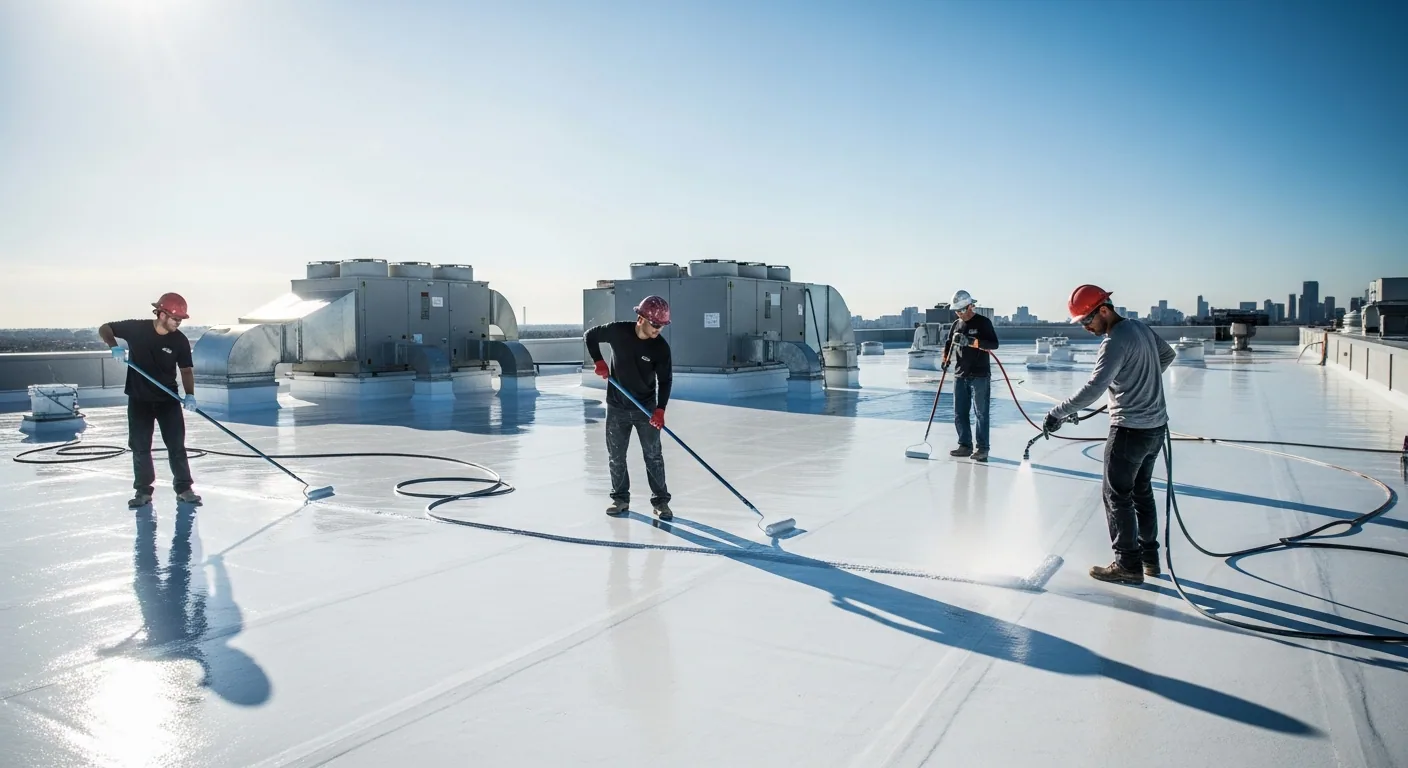
Confirm PVC fits the building
We ask where kitchen exhaust, process discharge, oils, solvents or frequent equipment service occur, then check those areas on the roof. PVC formulation and project specification matter; no membrane should be selected from a general label alone. We review product data, compatibility and the manufacturer's written limits against the substances and temperatures documented by the facility.
Roof condition comes first. We inspect for punctures, open seams, degraded flashing, wet insulation and attachment problems. If the current assembly is unstable, a new membrane cannot correct the concealed cause. A roof inspection can map defects and moisture questions before the owner compares a PVC replacement with repair or recover.
At Sakioka Farms, cold-storage receiving can narrow the safe delivery window; in the Central Industrial Area, repair-yard traffic can limit lift placement. We schedule PVC work around the building’s actual operating pattern.
Test the heat-welded seams
PVC sheets are joined with hot air; the installer adjusts speed, temperature and pressure, then checks the weld. We inspect seam edges for contamination, wrinkles, incomplete fusion and stress at changes in direction. A test weld can help set equipment before production, especially when the roof surface or ambient conditions have shifted.
Repair begins with a clean, dry surface. A patch must overlap sound membrane and be welded consistently at the perimeter. We remove incompatible material rather than trapping it under a new patch. If failures recur along long runs, we review fastening and sheet movement as well as weld technique. That distinction affects whether a localized repair will hold or a larger section needs replacement.
Field records mark each seam repaired, the material used and any adjacent condition. Commercial roof repair can address related tears or flashing failures found during the same survey.
Carry the membrane through roof details
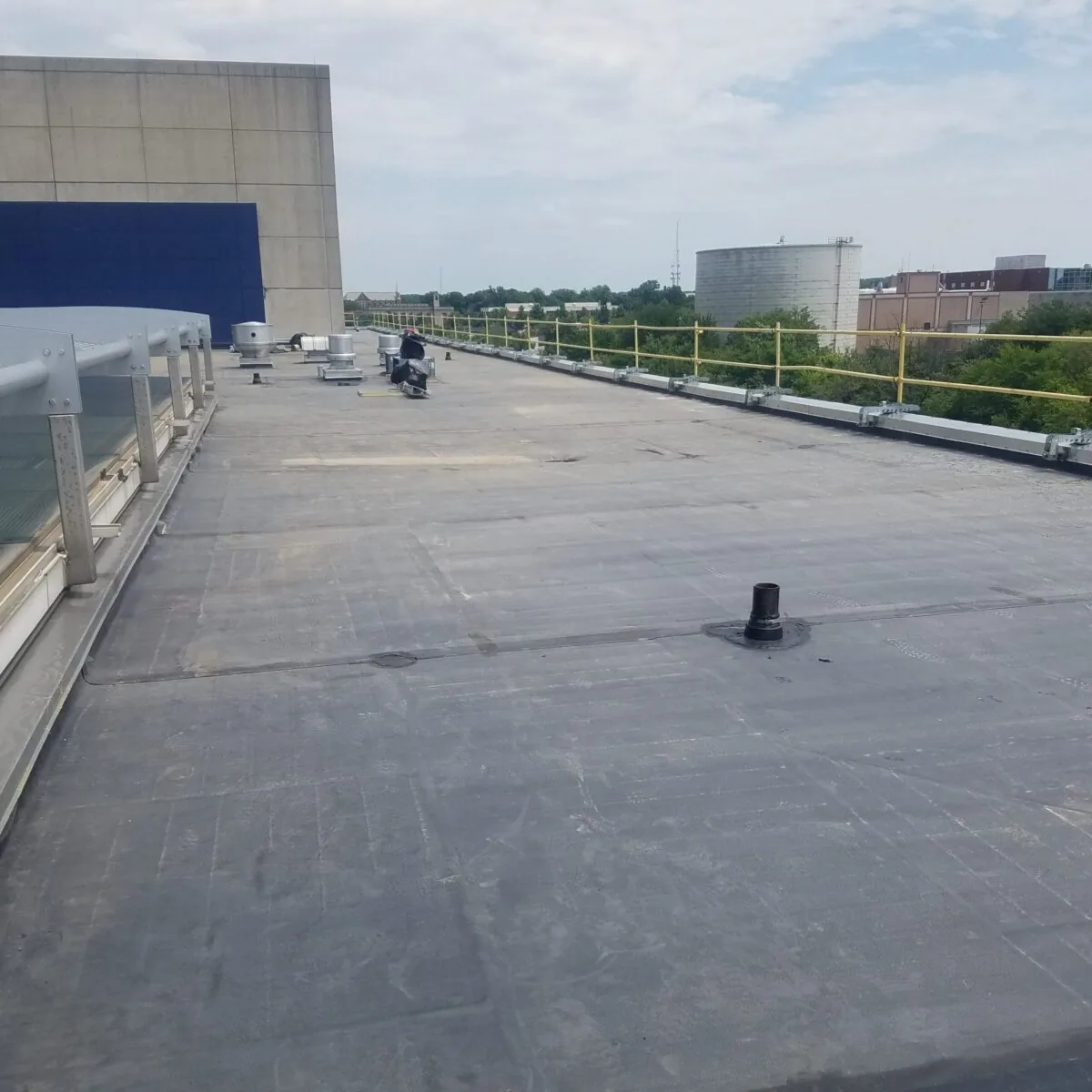
Curbs, pipes, skylights and parapets each need a formed or field-fabricated PVC flashing detail. We check curb height, corner shape, wall termination, counterflashing and access for future service. A flashing that ends below the required height or sits over a loose substrate leaves an open path behind the membrane.
At pipes, the boot size must fit the penetration, and clamps should not cut into the sheet. At rooftop units, the mechanical curb and roof flashing need compatible dimensions. Equipment curb work can be coordinated before a unit is lifted or replaced. Where roof openings are clustered, we sketch the layout so repair teams can find each transition later.
PVC must remain compatible with adjacent roofing, walkway material, adhesives and sealants. We review material boundaries where a repair meets another membrane or metal flashing, and isolate materials when the system instructions require it.
Protect drainage and service routes
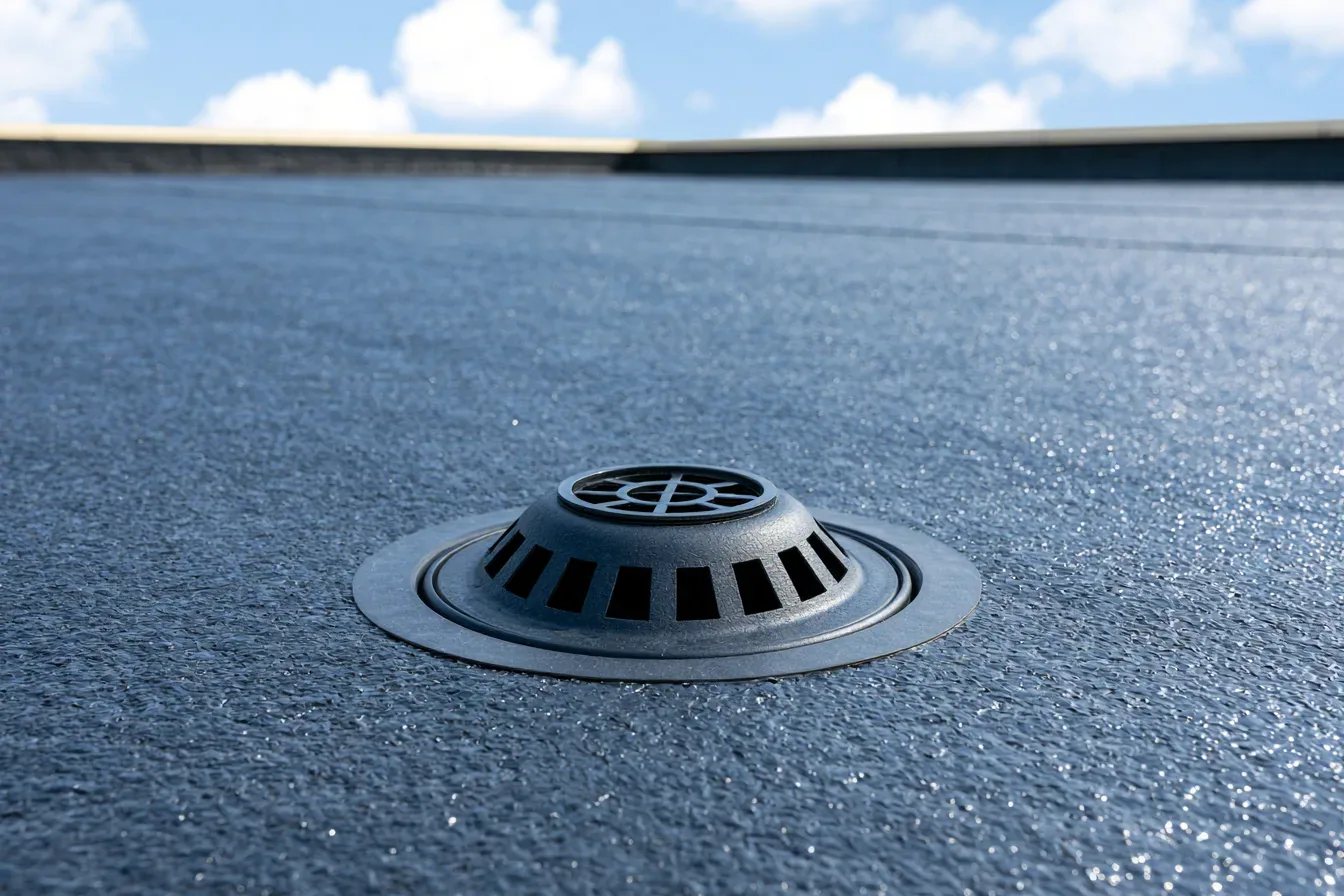
A smooth PVC field still needs a reliable path to the outlet. We check drain bowls, scuppers, overflow points, low spots and membrane wrinkles that slow water. If ponding reflects settled insulation or a high outlet, the repair needs a slope plan rather than a surface patch. At a parapet or gutter, new membrane must not reduce the opening or interrupt the termination.
The National Weather Service recorded an August monthly rainfall record at its Oxnard station during Hilary in 2023. We use the dated rainfall event to frame review of outlets and overflow, not as evidence that a particular PVC roof leaked. Drain and scupper work can be coordinated where the roof plane or outlet needs correction.
Camino Real Business Park brings research, production and office uses into one planned district. On a PVC roof, we route service walks between heat-welded seams, drains and equipment so routine work does not cut across a repair zone.
Choose attachment and insulation together
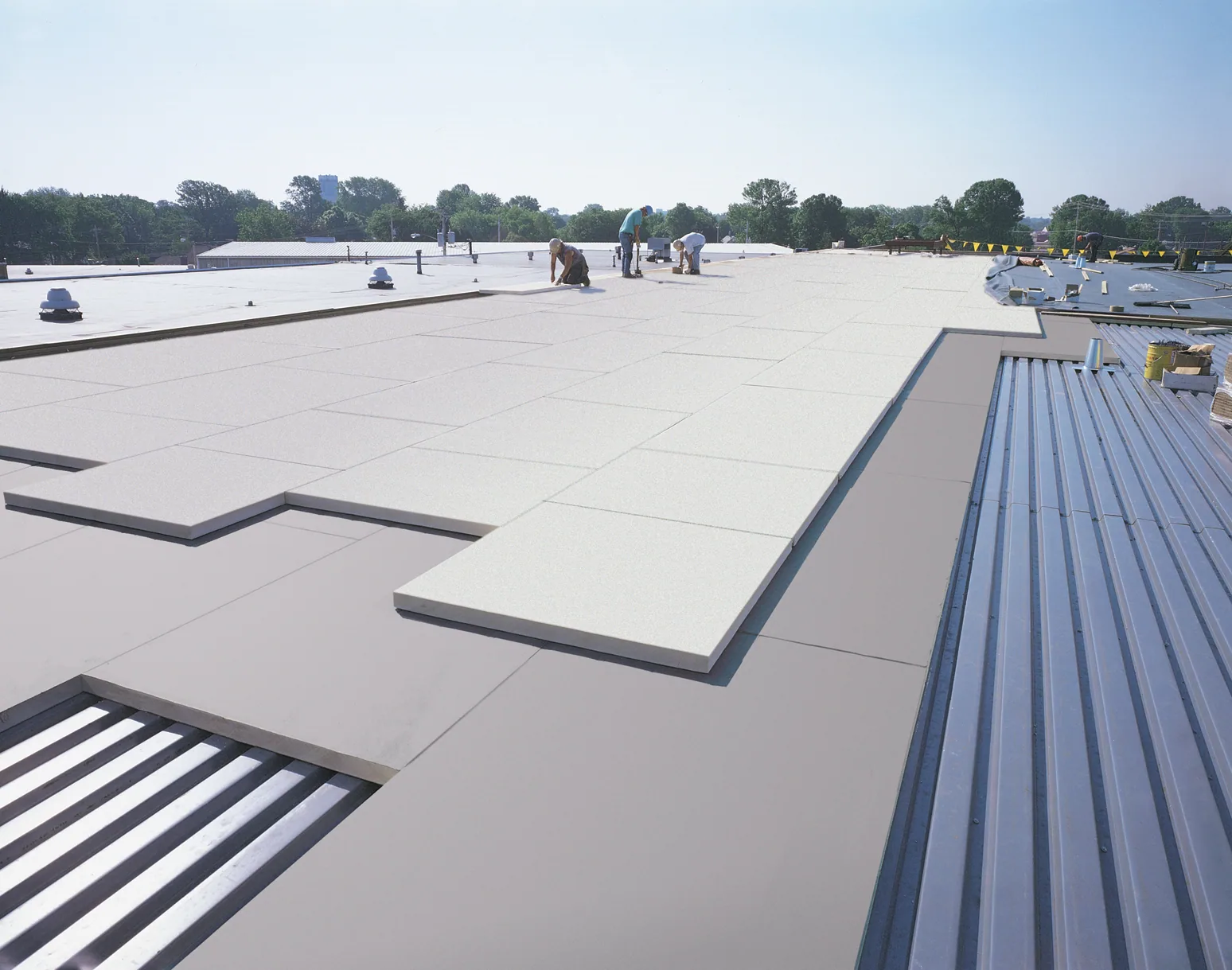
PVC may be mechanically attached, adhered or ballasted as part of an approved assembly. Deck, insulation, cover board, perimeter conditions and design loads affect the attachment. We verify the substrate and fastener engagement, and follow the project's specified pattern at corners and edges. If the deck will not hold the design fastener, the team resolves that before sheets are laid.
Insulation and cover board affect thermal continuity, surface stability and flashing height. A new layer can raise curbs or narrow scupper openings. Insulation and cover-board planning coordinates thickness and tapered slope with the PVC detail. If replacing the entire roof, replacement scope should include edge metal, penetrations and drains as well as the field sheet.
We record layer sequence and attachment so future crews can match repair material. TPO sheet is another welded option; KEE membrane has its own product specification and repair requirements.
Inspect chemical and traffic exposure
Maintenance walks should check seam edges, flashing corners, drains, walk pads and areas beneath exhaust discharge. A surface mark may be dirt, a stain or actual material change; we document it before choosing a cleaner or repair. Foot traffic around HVAC units can abrade the membrane, while stored materials can hide small punctures.
Cleaning and repair products must be approved for the specific PVC sheet. We avoid solvents or sealants that could affect the membrane, and we protect exposed material while work proceeds. If the area shows soft insulation or recurring separation, testing may be needed below the membrane. Preventive maintenance creates a recurring record of these details.
Camino Real area roofing is scheduled with the property's access requirements. The inspection interval follows system, exposure and use.
Keep product and repair records together
Closeout should identify the PVC manufacturer and sheet, attachment, insulation, flashing details, repair locations and maintenance requirements. We photograph representative welds and concealed transitions before they are covered. If the roof uses mixed materials, the record marks each boundary and any isolation layer.
Before mobilization, we confirm delivery staging, tie-off routes, roof access and protection for equipment below the work. The crew checks welds and penetrations before the final walk. Concealed damage is documented and submitted for direction rather than buried under new membrane.
CRA can inspect, repair and install PVC roofing in Oxnard. Share the roof plan, maintenance record, known chemical or grease exposure and project schedule. We will compare the assembly requirements with the roof in front of us and define a serviceable scope.
Related Roofing Work
More from Roof Systems and nearby services
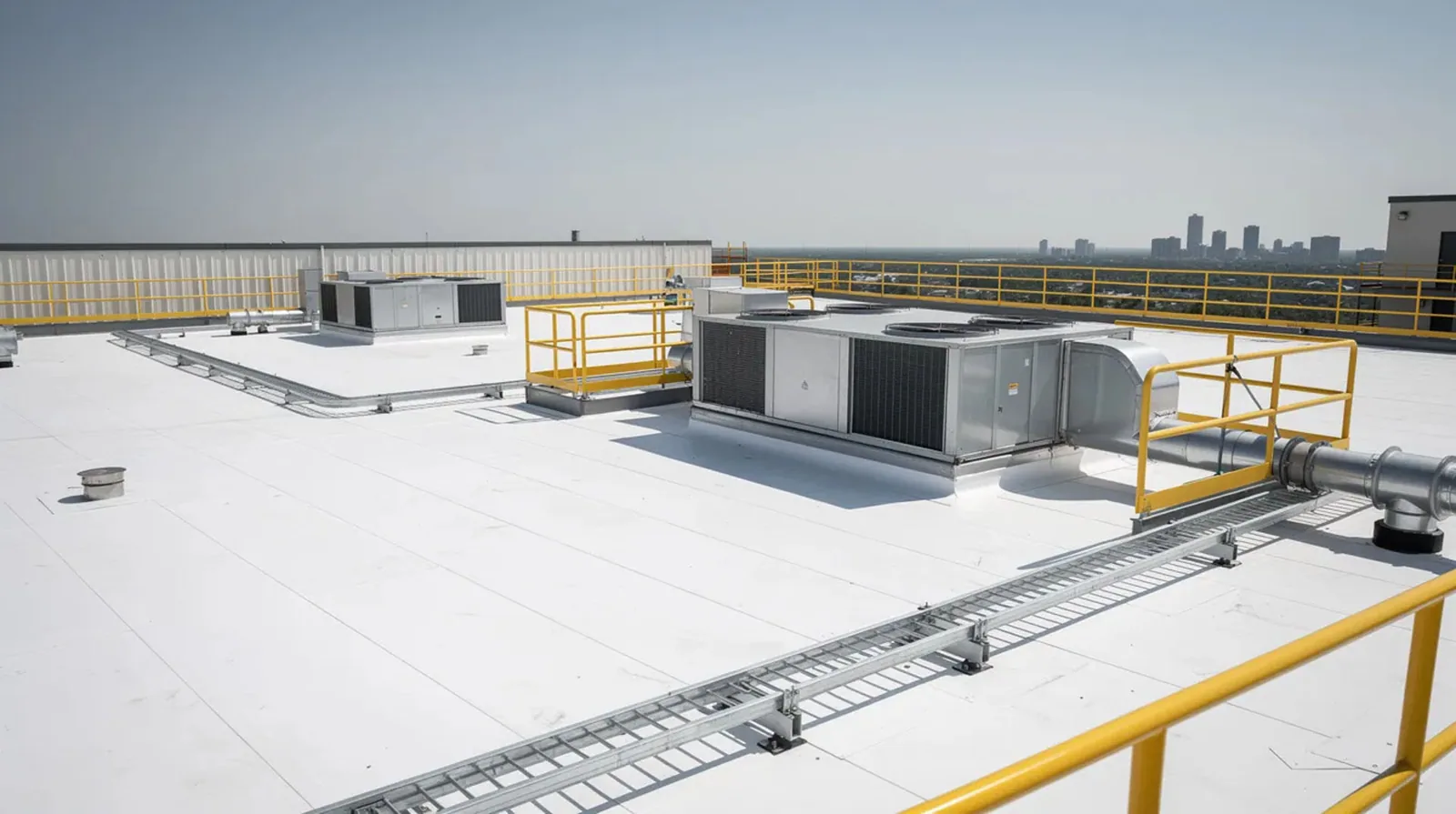
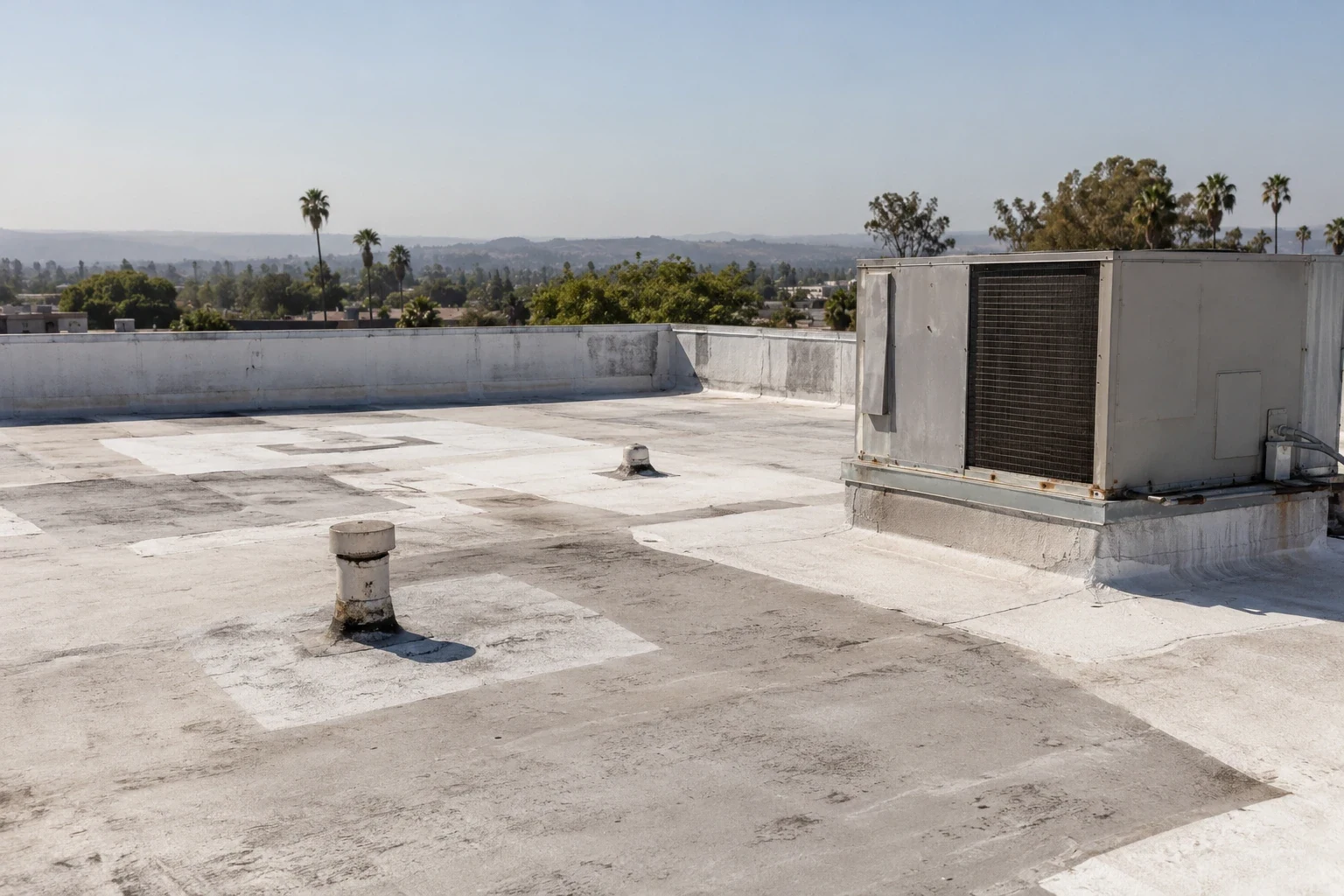
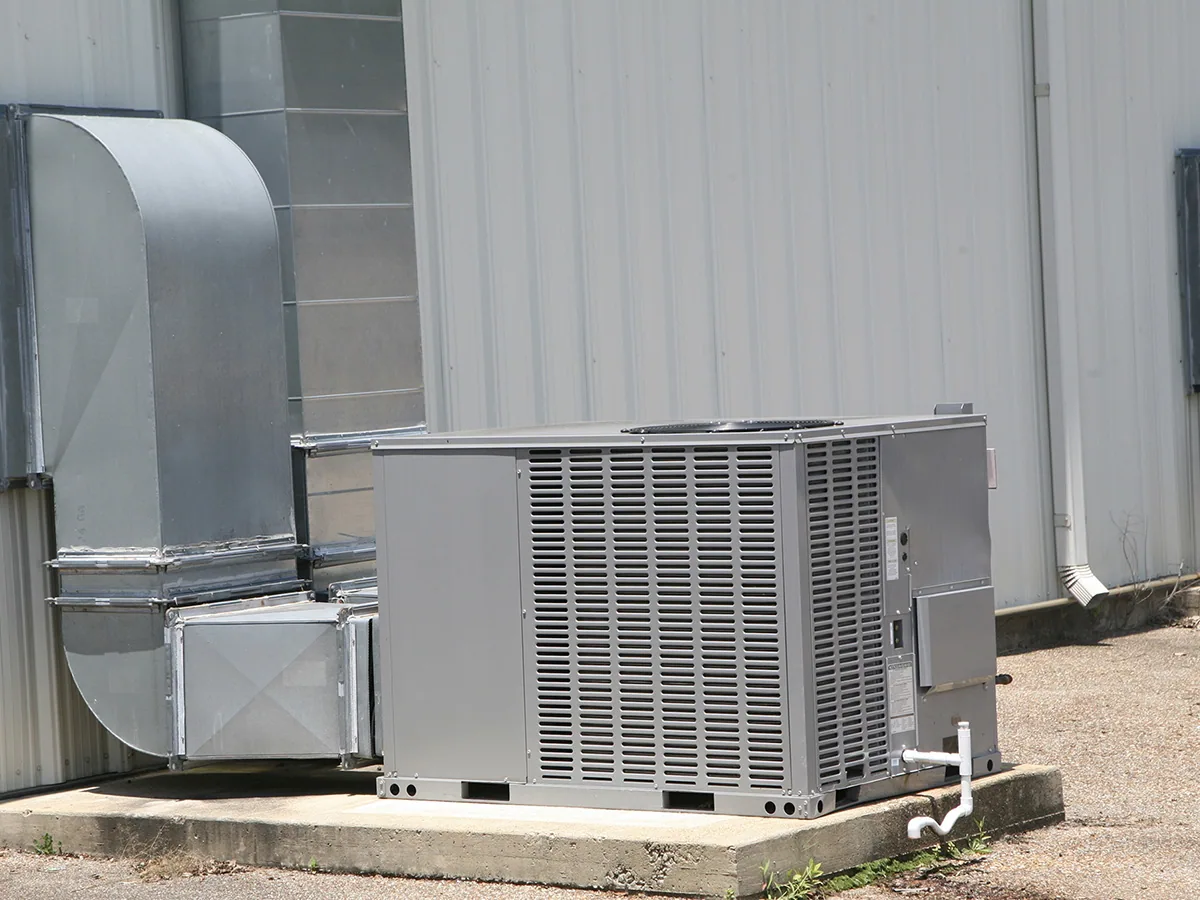
Evaluate a PVC roof assembly
Share roof plans, repair history, service routes and known rooftop exposure. We will inspect the membrane and details, then scope PVC repair, recover or replacement in Oxnard.
Common Questions
Is PVC roofing a good choice near kitchen exhaust?
It may be considered where the documented exposure and selected product support it. We inspect discharge direction, roof condition and product requirements before recommending a system. Exhaust controls and maintenance also affect performance, so the roof material is only one part of the decision.
How is a PVC seam checked after welding?
The installer inspects the seam visually and probes the cooled weld where appropriate. A test weld can verify equipment settings before production. We document weak or contaminated areas, remove failed material and re-weld or patch to sound membrane.
Can PVC be installed over an existing TPO roof?
The existing sheet, surface, attachment, moisture and system approvals determine whether a recover is allowed. Compatibility cannot be assumed from a similar appearance. We check the assembly and detail requirements before proposing another layer.
What causes PVC flashing to pull away at a curb?
Movement, low curb height, poor attachment, contaminated surfaces or incompatible materials can stress the transition. We inspect the curb, substrate, flashing and nearby membrane to identify the condition before selecting a patch or rebuilding the detail.
What should be recorded after a PVC repair?
Keep the membrane product information, repaired roof zone, photographs, weld details and any exposure or cleaning guidance. Those records help the next technician select compatible material and inspect the right transitions.