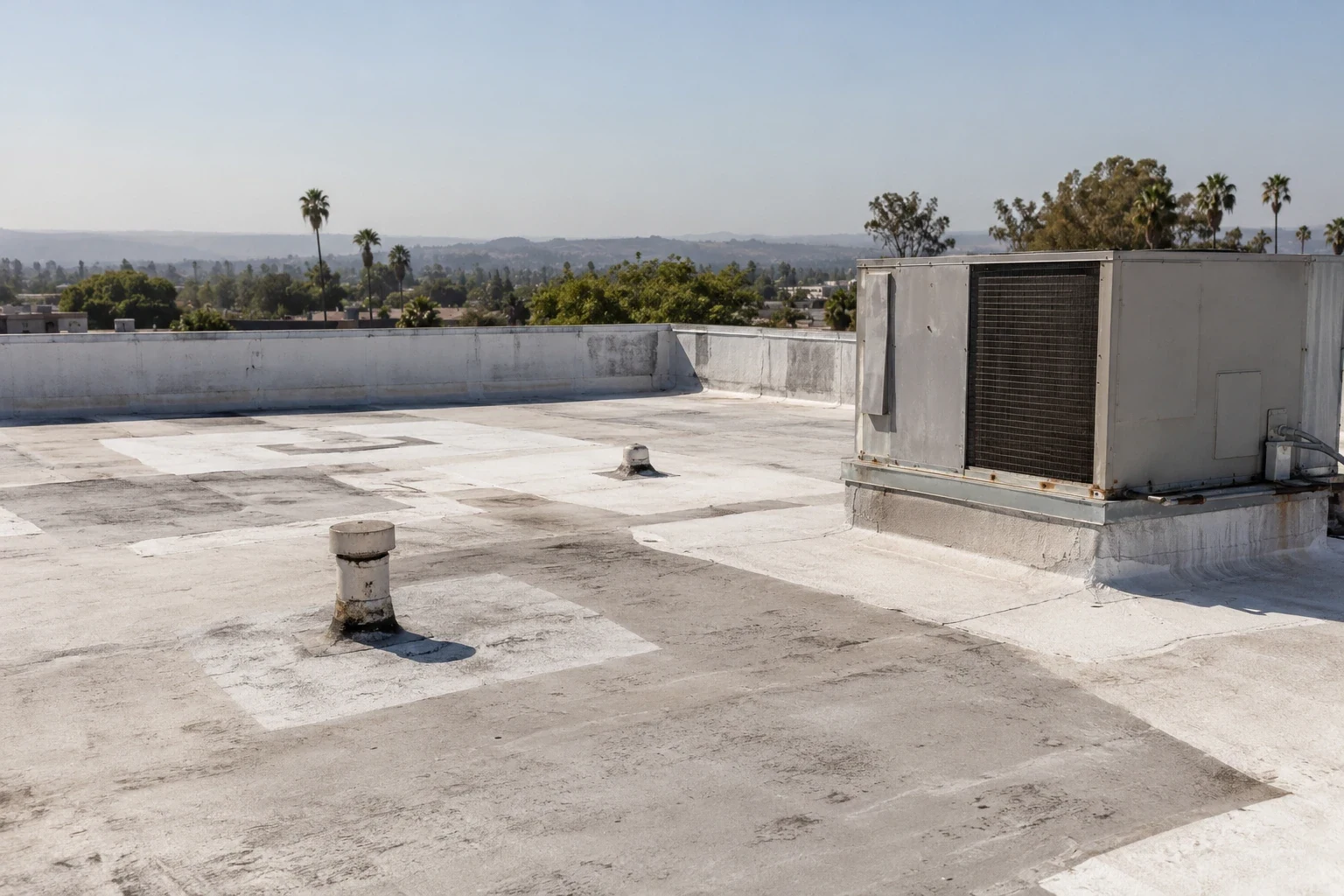
Commercial Roofing in Downtown Oxnard, Oxnard, CA
Arrange a Downtown Oxnard roof walk
Downtown Oxnard
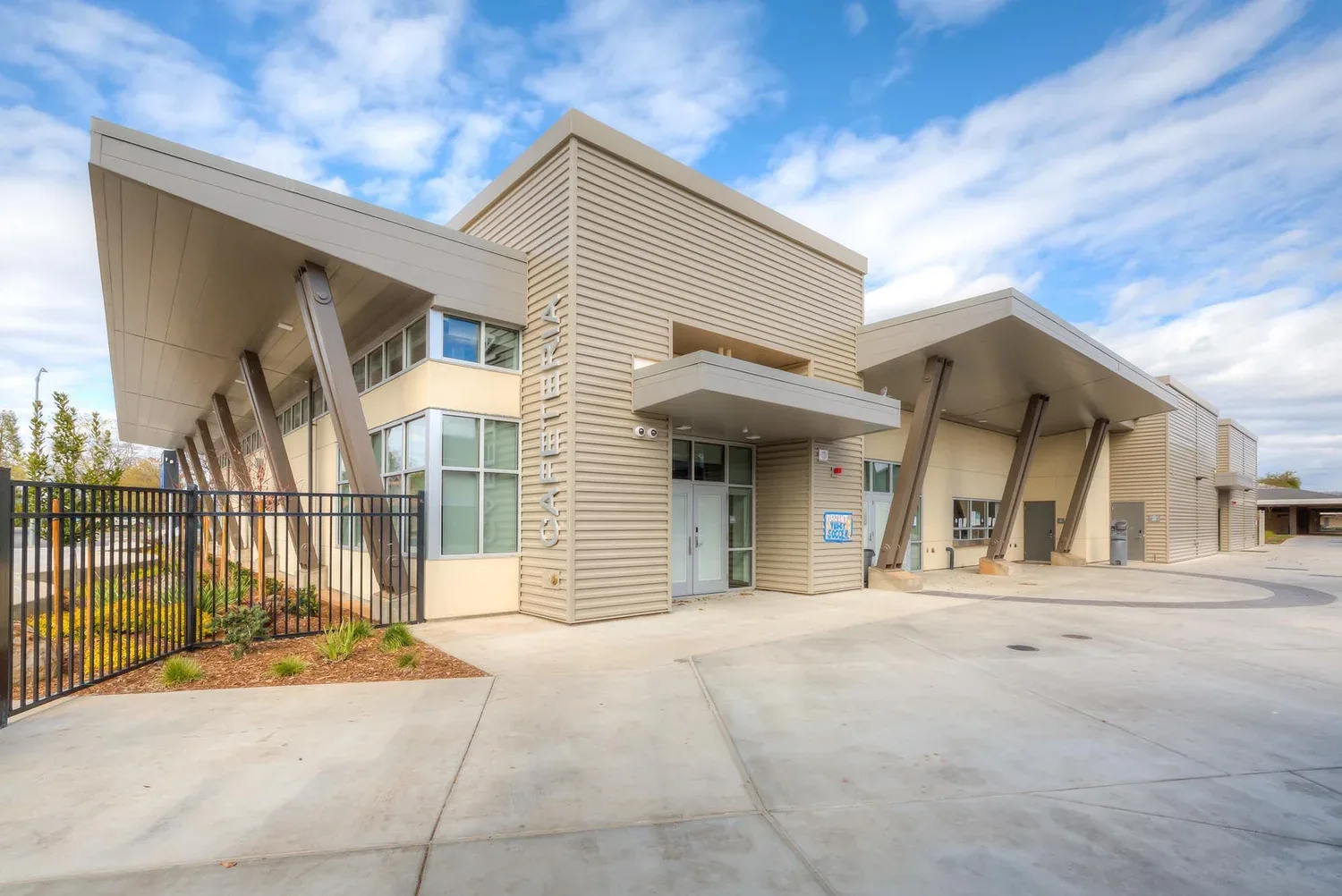
Retail, office, and live/work buildings put different demands on a Downtown Oxnard roof. A repair above an occupied storefront may need a narrow access window, while work over offices can require coordination with interior schedules and rooftop equipment. We start with the building and roof section: map access, identify the assembly where visible, trace drainage, and mark seams, curbs, wall transitions, and edge metal. Downtown Code districts include Downtown Core, Downtown General, and Downtown Edge. The field condition determines the scope.
Oxnard planning documents describe retail, office, residential, and live/work uses downtown. That mix makes occupant protection and work sequencing part of the roof decision. We separate temporary water protection from permanent repair, record conditions by roof zone, and note any area we could not reach.
Start at access and trace the roof
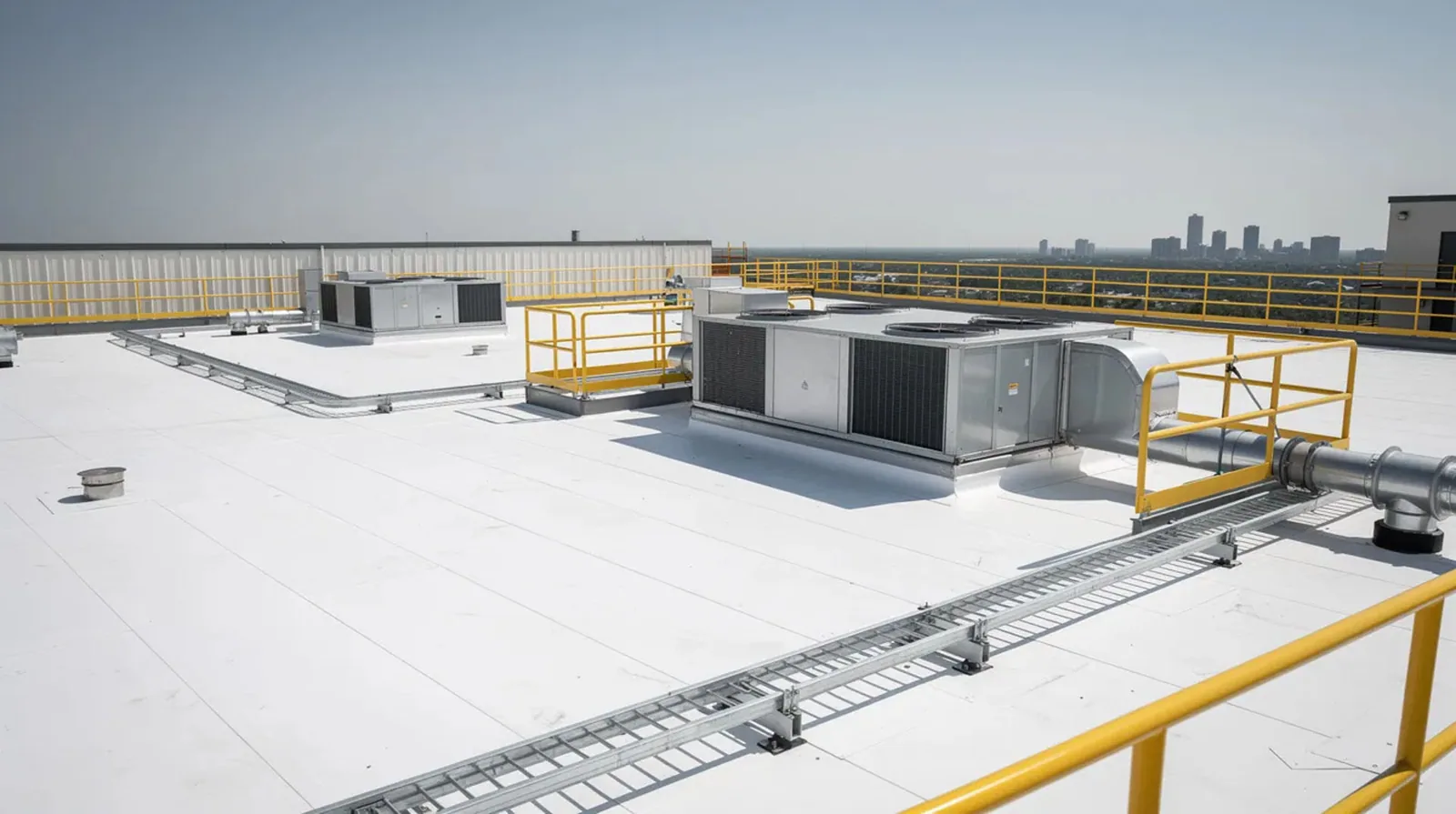
The first walk establishes where the crew can enter, where materials can be staged, and which roof areas are safe to inspect. In a compact downtown property, the route may pass through a tenant space, a shared service area, or a controlled stair. We confirm access with the building contact, note equipment that must remain operating, and identify tie-off points before moving across the surface. If plans show several additions or roof elevations, each section gets a separate field mark so findings remain tied to the right area.
From the access point, we follow low points toward drains and scuppers, then inspect seams, penetrations, curbs, wall transitions, and perimeter metal. We record open joints, loose terminations, punctures, ponding indicators, and previous patches with photos and roof-zone references. A hands-on inspection can establish the baseline; a photo-linked condition report keeps observations and recommendations together. Where equipment or a fragile surface blocks access, the record names the limitation instead of implying the entire roof was checked.
Downtown Core and Downtown Edge are distinct regulatory districts. We identify membrane type from the inspected roof surface and available building records. A visible single-ply surface, built-up roof, metal panel, or coating each calls for a different repair detail. When the assembly cannot be confirmed from the surface, a focused test may be more useful than pricing a broad repair on an assumption.
Follow water from the roof to the room
A ceiling mark is a starting point, not a roof map. A roof opening may be some distance from the ceiling stain because water can track across the deck or framing. We compare the reported room and timing with drains, penetrations, wall lines, and prior repairs above it. At the roof, we look for a split seam, failed curb seal, open counterflashing, blocked outlet, or another visible path. The inspection records what is present and what needs confirmation, which helps keep a likely entry point separate from a proven one.
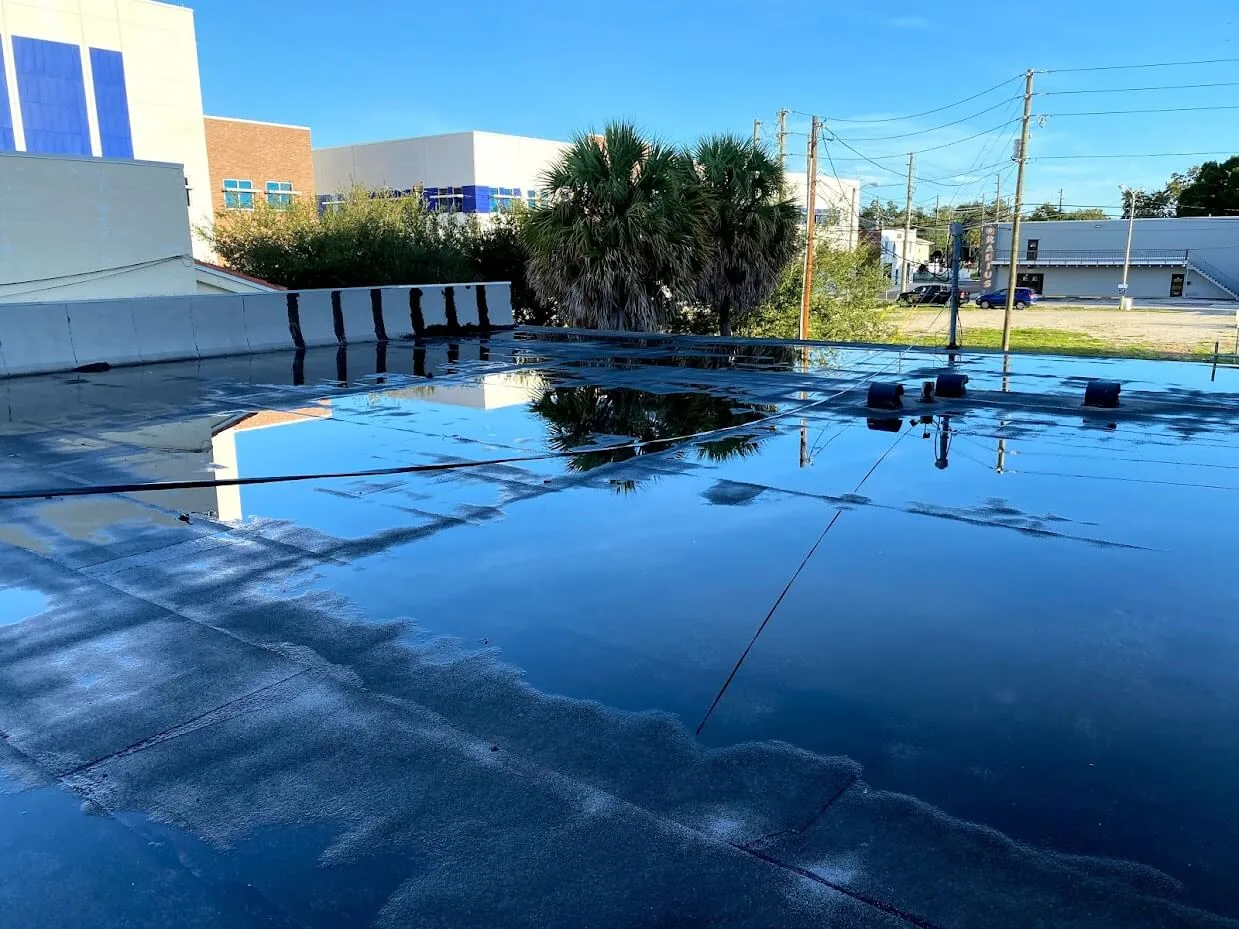
Drainage deserves a deliberate pass. We check the low point, drain bowl, clamping ring where accessible, overflow route, and nearby membrane for debris, standing water evidence, or movement. A blocked outlet may call for maintenance; a depressed area or damaged drain connection may need a repair scope. If a moisture survey indicates a suspect area, we explain whether a test cut is needed before replacement limits are set. This is especially useful when a downtown project must keep an occupied floor protected while the repair boundary is verified.
The Oxnard station's August 2023 Hilary reading was 1.77 inches, its highest recorded amount for that month. The dated Oxnard reading gives context to a drainage review. Our downtown inspection maps each property's outlets, low points, and reported water path before setting repair limits. A ponding-water evaluation begins with the actual slope, outlet, and roof surface. For a property near Downtown Edge, the same field sequence applies, while the building-specific findings decide the work.
Fit the repair to occupied space
Noise, odor, lift access, and the open roof area can affect tenants below. Before work, we identify the rooms beneath the repair zone, protection needs, delivery route, and hours when access is available. A flashing repair can fit a shorter window than wet-insulation removal that requires a larger opening and dry-in at each shift's end. We state those differences in the scope so an owner can coordinate notices and operations.
Downtown redevelopment proposals have included mixed-use and residential activity, making precise work limits useful where occupants share a building. We protect the interior below the active area, secure materials, and plan shifts around the approved exposure. If temporary rain protection comes before permanent correction, closeout keeps the two distinct. An occupied-building reroof plan can stage work by section.
Choose a repair, test, or larger scope
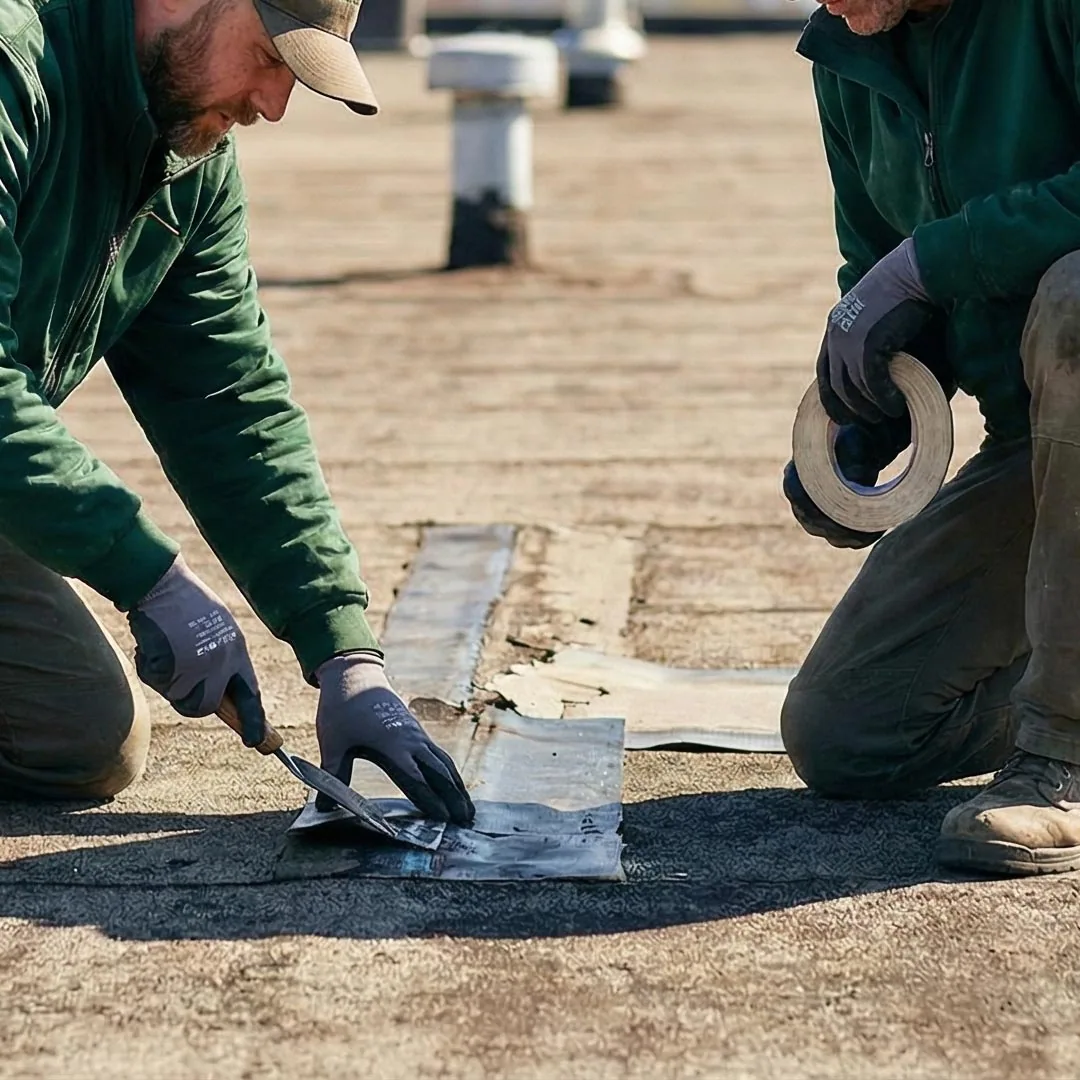
A durable recommendation separates visible conditions from concealed ones. If a seam opening has sound membrane around it, a targeted repair may work. Repeated patches, broad moisture indications, deteriorated flashing, or weak attachment can call for testing before choosing repair, recover, coating, or replacement. We check material compatibility and describe preparation, tie-ins, edge work, and needed removal.
Cost and timing follow the measured scope. Access equipment, interior protection, tear-off depth, insulation, perimeter metal, drain work, haul-off, and daily exposure limits all matter. A test allowance stays separate from confirmed quantities. Our commercial repair work addresses defined defects; a roof recover review checks whether another layer is suitable. For a nearby Central Industrial Area property, roof use and access differ, but the same field evidence sets the scope.
Leave a useful record for the next visit
After repair, the closeout should name the roof section, preparation, material installed, photo references, test result if applicable, and any remaining limitation. The next maintenance visit can then compare the same seam, curb, drain, or edge instead of starting from a vague note that the roof was repaired. We can set a service interval based on the observed condition, assembly, prior repair history, and consequences of a missed defect, rather than applying one calendar to every building.
A written maintenance visit can clear drains, review edge metal, inspect penetrations, and revisit earlier field marks. Keep the roof plan and repair history with the building contact, especially when tenants or ownership change. If another leak is reported, record its room, date, and operating conditions before comparing it with the roof map. This helps distinguish a new opening from a previously monitored detail and gives the follow-up inspection a defined starting point.
For a work visit, provide the roof-zone drawing, active leak report, recent repair record, mechanical service hours, and entry procedure. We will map the observed condition and define whether testing or repair comes next.
Related Roofing Work
More from Service Areas and nearby services
Arrange a Downtown Oxnard roof walk
Send the property roof plan, the affected zone, leak timing, prior repair history, equipment windows, and site access procedure. We will relate field observations to building use and return a documented repair or test recommendation.
Common Questions
Can roof work be staged around downtown tenants?
Yes. We identify access, interior protection, noise limits, delivery timing, and the size of each open section before scheduling. The plan follows the approved work area and dry-in needs.
What if a leak appears far from the roof opening?
Water can move before it reaches the ceiling. We compare the room report with roof seams, penetrations, walls, and drainage, then mark the likely path and any test needed to confirm it.
How do you decide whether to repair or replace a section?
The membrane around the defect, moisture evidence, attachment, flashing, and repair history guide that choice. We state what is confirmed and separate concealed conditions that need testing.
Does Downtown Edge have different roof repair requirements?
Downtown Edge is a separate district in the City's downtown framework. The applicable project review depends on the property and proposed work; our roof visit documents the assembly and condition for that review.
What information helps price a downtown roof repair?
A roof plan, marked leak area, access details, prior repair records, equipment schedule, and interior protection needs help define the work. Testing may be needed when concealed layers could change the quantity.