
Commercial Roof Inspection in Oxnard, CA
Schedule a field inspection
Commercial Roof Inspection
An inspection starts with the roof map and the next decision. A manager may need to know whether a leak is isolated, whether a budget request needs evidence, or whether a planned equipment change will affect the membrane. We walk the accessible roof and record seams, flashing, drains, curbs, edges, surface wear, and prior repair areas. An agricultural processor in the Central Industrial Area has different operating constraints from offices and research uses near Camino Real Business Park. The site use informs access and timing, but the roof findings come from the field. The report links photographs to marked locations and states what needs repair, monitoring, or additional testing. That gives an asset manager a useful condition record instead of an unranked list of observations.
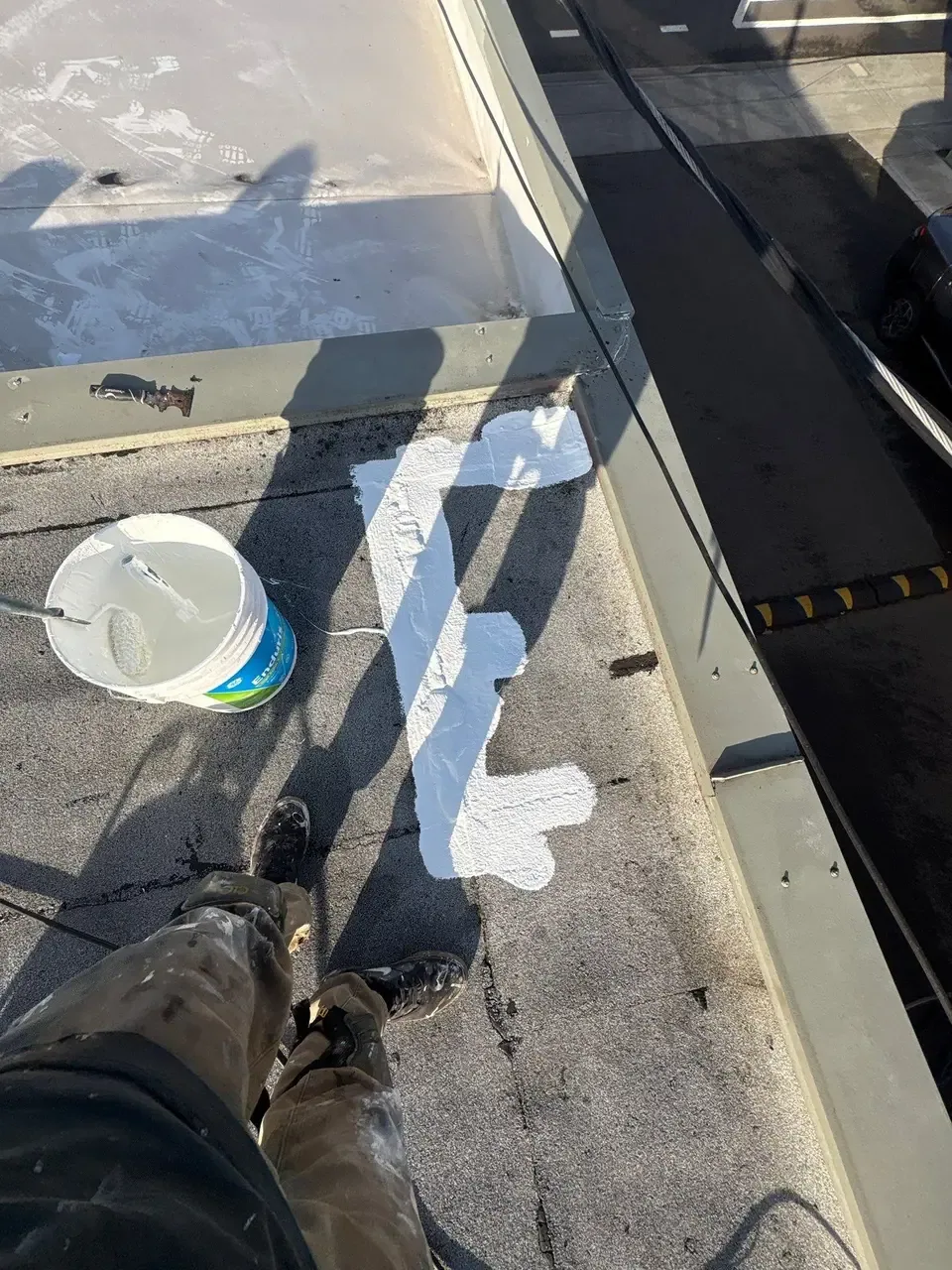
Walk the roof in a repeatable order
We begin at the access point and note the route, safety controls, and any area that cannot be reached. Then we follow the roof by section, tracing low points and drainage paths before checking penetrations, seams, transitions, and perimeter details. A roof with several elevations needs a map that identifies each break. On large properties, a repeatable route helps the next visit compare the same areas without pretending that separate buildings share the same condition.
At each section, we note open or bridged seams, loose terminations, cracked sealant, surface oxidation, membrane wear, punctures, and signs of ponding. We look at drains and scuppers for debris or restricted openings, then check how overflow water would leave the roof. We do not infer a failure from color or age alone. Each finding is tied to a visible condition, its location, and the next action. For a broader portfolio, photo-backed condition reports can keep the field marks consistent across sites.
Identify what the roof is made of
The inspection records the roof type when it can be identified. A single-ply membrane, built-up assembly, modified bitumen, coating, or metal panel each has different seams and repair methods. We note visible layers, cover boards, insulation transitions, edge conditions, and signs of prior work. When a product or layer cannot be identified from the surface, the report says so and recommends a targeted test rather than guessing.
That distinction matters before repairs or equipment projects. A new curb detail must connect to the existing membrane. A coating proposal needs a compatible, properly prepared substrate. A fastening question may require knowing the deck type. Oxnard’s adopted 2025 California Building Standards Code is part of the local permit context for applicable roof work, but the inspection does not substitute for project-specific code review. We can compare the roof’s visible condition with the intended scope, then identify questions that need a core cut or plan review. See TPO roof construction and modified bitumen assemblies for different inspection points.
Trace drainage and moisture clues
A roof inspection follows water toward and away from the building. We check low points, drains, scuppers, gutters, overflow outlets, and areas where water lines or sediment show a recurring path. Ponding is recorded by location and extent rather than described as an automatic failure. The report notes whether the condition appears tied to slope, a blocked opening, a deflected deck, or a local obstruction that needs maintenance.
Where interior leak reports exist, we compare their room locations with the roof map. A ceiling stain can be offset from the opening, so nearby seams, curbs, and wall details deserve attention. If moisture may be beneath the surface, infrared readings can guide core cuts; they do not establish wet insulation by themselves. We document the evidence and identify what would confirm the condition. Oxnard’s NWS station recorded 1.77 inches during Hilary in August 2023, a monthly record at that station. It is one dated event, useful as context for drainage review, not proof of damage at a particular property.
Sort findings by consequence
A useful inspection separates urgent defects from planned maintenance. We identify active openings, loose metal, exposed insulation, and drainage restrictions that warrant prompt action. Other findings may belong in a near-term repair plan, while stable surface conditions can be monitored at the next service interval. The report explains why each item sits in its category and what could change that priority, such as continued water entry or equipment work.
For a property manager, this order supports a clear work request. The field mark, photograph, repair recommendation, and access note should refer to the same location. We also identify when a roofer, mechanical contractor, or plumbing trade needs to coordinate at the roof. At Sakioka Farms business properties, distribution and cold-storage operations may require specific access windows; on other properties the main constraint may be tenant occupancy or a secure equipment area. The inspection makes those constraints visible before the repair is scheduled.
Use the report to plan the next action
The report should answer the question that prompted the inspection. For an active leak, it describes the likely entry point and a repair path. For a budget cycle, it separates immediate work from future monitoring. For a purchase or equipment change, it identifies observed conditions and the areas that need further review. Photographs are labeled by section and field mark, and the text avoids turning an unknown condition into a stated defect.
We can price repairs from marked findings when the scope is clear. If the survey shows extensive moisture or unstable attachment, we may recommend testing before preparing a replacement option. For a building in a multi-use area such as RiverPark or Downtown Oxnard, one report still follows that property’s assembly and access needs. Commercial roof repair can address defined defects, while drone roof inspection can supplement documentation on hard-to-access surfaces.
Keep the next visit comparable
We record the inspection date, access route, weather conditions observed, roof sections covered, limitations, and photographs. If a mechanical unit blocked an area or a surface was unsafe to walk, that limitation appears in the record. The next inspection can then revisit that zone instead of assuming it was clear. When the owner has prior plans or repair logs, we can use them to relate new marks to earlier work.
Before the inspection, share roof plans, known leak locations, previous repair records, equipment schedules, and the decision you need to make. Identify who can provide roof access and which areas have operating restrictions. We will return a field-marked report with repair priorities and recommended follow-up. Camino Real Business Park roofs may include varied office and industrial uses, so the report should state the specific building and section covered.
Related Roofing Work
More from Commercial Roofing Services and nearby services
Schedule a field inspection
Send the roof plan, prior repair notes, leak locations, equipment schedule, and access contact. We will walk the roof, mark findings, and return priorities tied to the building.
Common Questions
What does a hands-on roof inspection cover?
We check accessible membrane or panels, seams, flashing, penetrations, curbs, drains, scuppers, perimeter edges, and visible prior repairs. We map the areas walked and record limitations. If the surface cannot show the condition below, we recommend a focused test rather than making an unsupported conclusion.
Will the inspection tell me exactly how long the roof will last?
A field visit cannot set a precise remaining-life date. It can document current condition, recurring defects, moisture evidence, and maintenance needs. We identify which findings may shorten service life and what testing or repairs would make the next forecast more useful.
Can you inspect several buildings during one visit?
Yes, when access and schedule allow. Each building receives its own roof map and field marks so findings do not get blended. We confirm which structures are included, note areas not reached, and group the resulting work by priority or operating schedule.
Do you check the roof after a leak report?
We can compare the reported room and timing with roof features above it, then inspect nearby seams, drains, curbs, and wall transitions. Water may travel before it becomes visible indoors. The report describes the likely path and any other condition that needs confirmation.
What should I provide before the inspection?
Roof plans, past repair records, interior leak locations, equipment schedules, access instructions, and the decision deadline help us focus the walk. Tell us about restricted work areas or equipment that cannot be interrupted. If records are missing, we can still map the accessible roof and identify unknowns.