
KEE Roofing
KEE roofing uses a PVC-based membrane modified with ketone ethylene ester, but products and formulations differ. We identify the exact sheet before choosing a repair or replacement detail. Oxnard planning areas include agricultural processing, vehicle and equipment repair, and storage uses. At the 430-acre Sakioka Farms Business Park, operating distribution, cold-storage, and fruit-processing uses are present. We inspect each roof’s actual surface, equipment, and access paths before recommending KEE maintenance or repair. We inspect the installed system, review available product records and check seams, flashings and substrate. The recommendation follows the roof in front of us and the requirements for that specific KEE product.
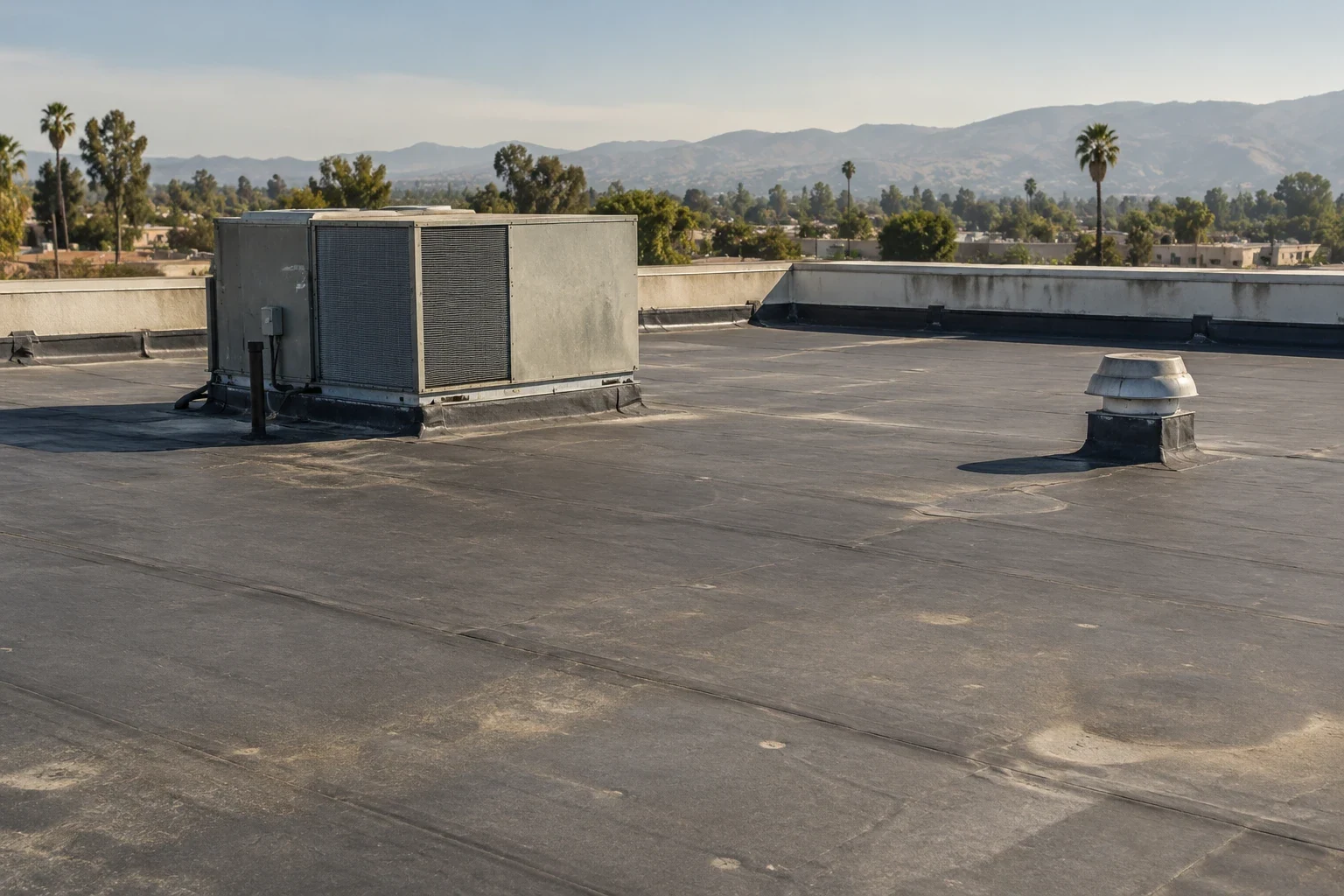
Confirm the membrane before selecting repair
KEE and standard PVC can look alike from the roof surface. The product label or submittal guides repair selection; at the seam, we compare it with the installed sheet, reinforcement and existing repair material before setting the weld temperature. When identification remains uncertain, we avoid applying an adhesive or coating until compatibility is confirmed.
KEE is a PVC alloy used in roofing membranes. Product-specific chemistry and specifications affect how a patch bonds and which cleaner or flashing material is acceptable. We inspect repairs already present and ask what products were used. A roof system inspection can record the assembly before the owner authorizes a larger scope.
Oxnard’s Central Industrial Area includes agricultural processing and vehicle or equipment repair. We inspect the KEE membrane and document any observed surface condition, equipment discharge, or recurring access path before selecting compatible maintenance or repair.
Set the weld for the specific sheet
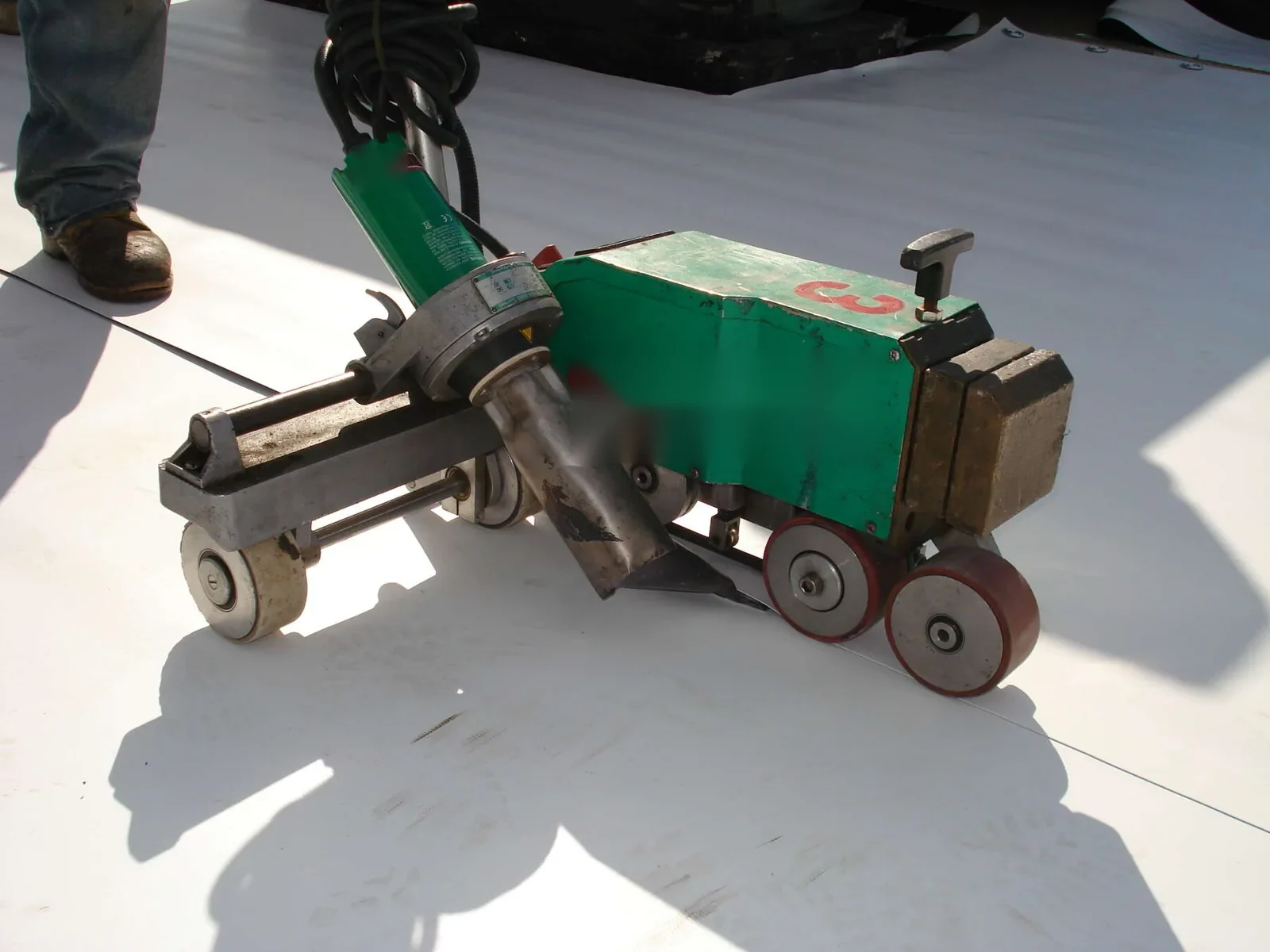
KEE seams are commonly heat-welded, and the installation team has to tune the welder for the material and conditions. We verify a test weld, then inspect seam width, continuity and edge fusion as work proceeds. Dust, moisture, temperature and sheet tension can affect the result. A weld that looks shiny is not enough; the seam should be checked after it cools.
Repair follows the product instructions. The crew cleans the membrane with an approved method, removes failed or incompatible material, and welds a compatible patch onto sound sheet. At a tear or puncture, we inspect the board beneath it so the repair does not bridge a soft or wet area. If repeated openings trace a long run, we check sheet movement and attachment before closing each mark.
Commercial roof repair can address seam and puncture findings; coating restoration is considered only when the KEE product and proposed coating are documented as compatible.
Keep corners and curbs supported
At a curb, pipe or roof edge, the membrane turns through a tight geometry. We check the substrate, curb height, corner condition and termination bar before forming a new flashing detail. An open corner may need a preformed component or field weld, depending on the product instructions. We look for stress where a rigid curb meets a flexible roof, particularly after equipment service or movement.
Metal counterflashing, sealant and adjacent walkway products must suit the membrane chemistry. We review interfaces where KEE meets another sheet, asphaltic roofing or coated metal. A separation layer may be needed. The detail is not complete until the upper termination, corners and sheet-to-sheet weld are all secure.
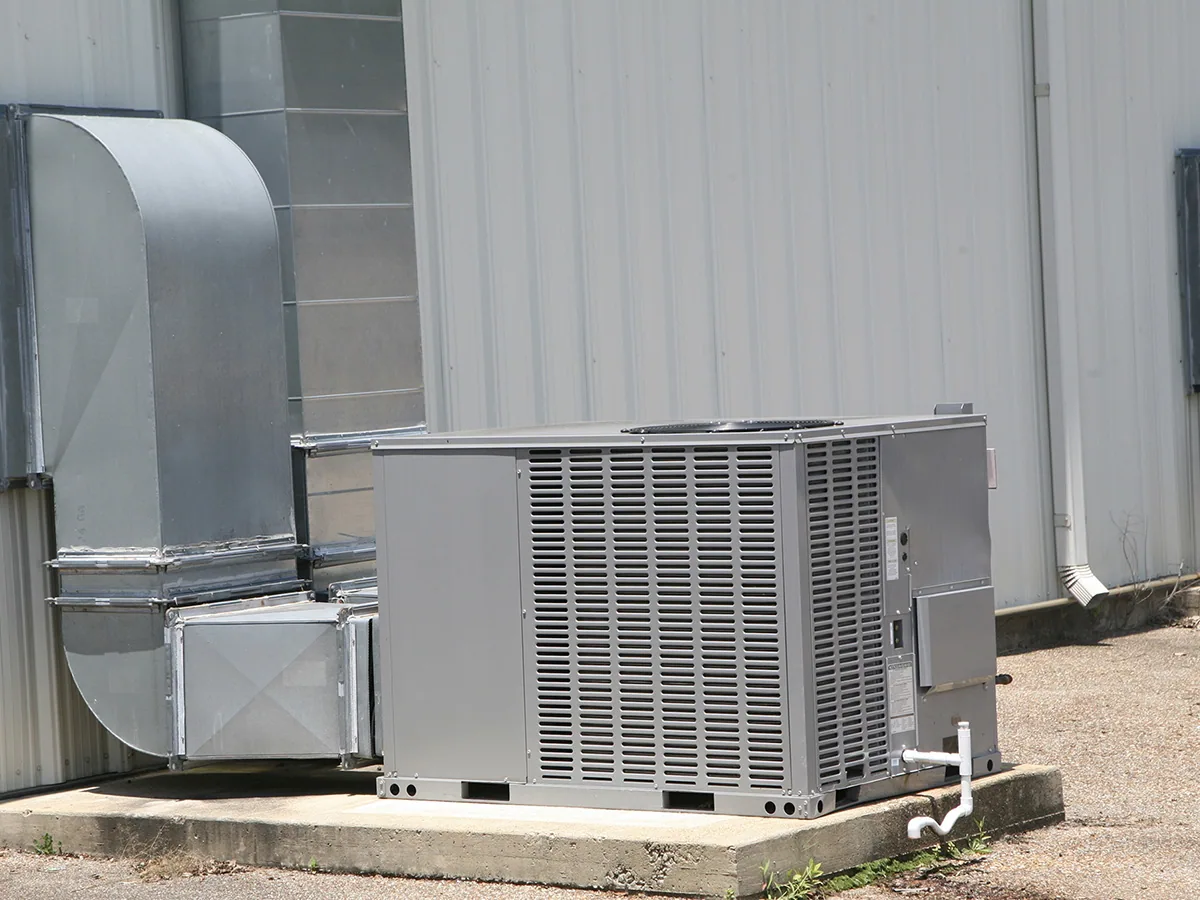
When an HVAC unit is being changed, curb dimensions and load support should be set before roofing work is cut. Equipment curb coordination helps align the mechanical footprint and membrane flashing.
Lay out water paths around the assembly
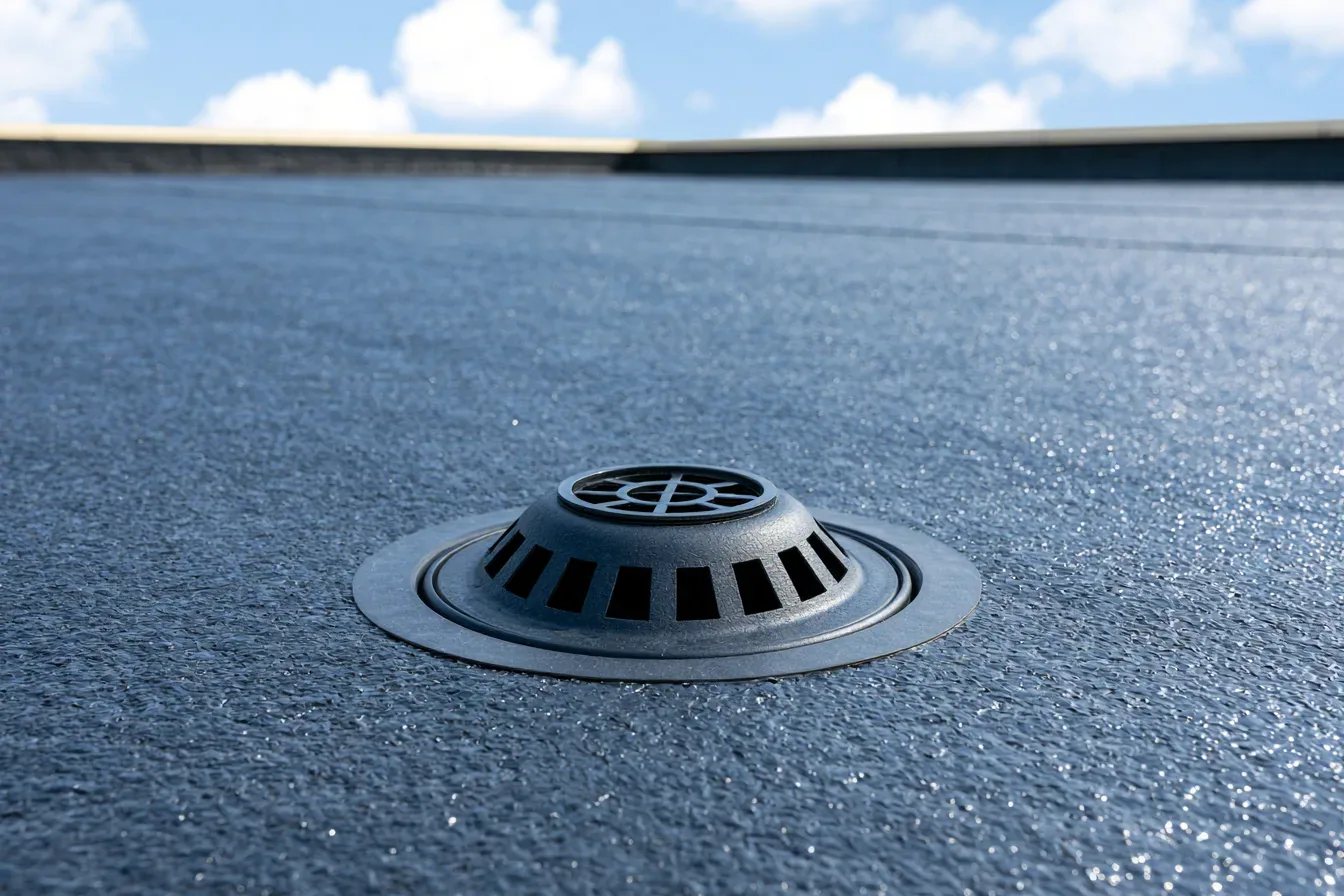
Roof drains and scuppers need open throats and a continuous membrane connection. We inspect low points, drain bowls, overflow openings, crickets and areas where repair layers create a ridge. KEE can handle normal roof exposure only as part of a sound assembly; it cannot correct a reversed slope or a drain set above the surrounding roof.
The August 2023 Hilary event brought a record 1.77 inches for August to the Oxnard observing station. We inspect reported leak areas, KEE welds, drains, and tapered transitions to define any needed correction. Drainage service can address an outlet or tapered-system repair.
Camino Real Business Park is planned for research, manufacturing, office, and limited commercial uses. For KEE seam work, we confirm the inspected building’s access, equipment paths, and operating window before staging welding tools.
Compare KEE with other membrane choices
KEE, PVC and TPO are not interchangeable labels. We compare the project specification, exposure, attachment, repair materials, expected service and manufacturer requirements. A documented use case may support KEE, while another building may be better served by a different assembly. We explain the tradeoffs from field evidence and product data rather than claim one membrane fits every roof.
Existing layers and deck strength also matter. Mechanical attachment, adhesive or a ballasted design must be approved for the roof structure and wind criteria. Added insulation affects curb height, drains and perimeter terminations. insulation and cover-board planning coordinates those components before the new sheet is installed.
For sheet alternatives, PVC roofing and TPO roofing each require their own approved detail set. The owner can compare those assemblies against the roof's actual service conditions.
Track exposure and repairs over time
A KEE inspection checks weld edges, flashings, penetration boots, drains and traffic lanes. We also note stains or contact points near exhausts and rooftop equipment. Where a concern is present, we identify the product, location and next test instead of covering the surface before compatibility is known.
Service crews should use walk pads where foot traffic repeats and avoid sharp tools or unapproved cleaners. After other trades work on the roof, a brief follow-up can catch a lifted corner, puncture or displaced pad. The record should include date, roof zone, photos, repaired component and product used.
For a Central Industrial Area roof, we set the maintenance interval from the installed KEE system, observed roof use, and exposure.
Keep the KEE specification with the roof file
Closeout gives the facilities crew the product name, weld and flashing details, attachment notes and repair locations. Photos of representative welds let a later technician match the KEE sheet before opening another seam.
The building contact sets the delivery window and roof route; the crew protects exposed seams through each shift. If opening the assembly reveals a different substrate or attachment, we show the condition and agree on the revised repair before proceeding.
We inspect and repair KEE systems or coordinate replacement when the assembly calls for it. Provide prior submittals, roof plans, repair history and known exposures. We will confirm the membrane, map current conditions and define a product-compatible scope.
Related Roofing Work
More from Roof Systems and nearby services
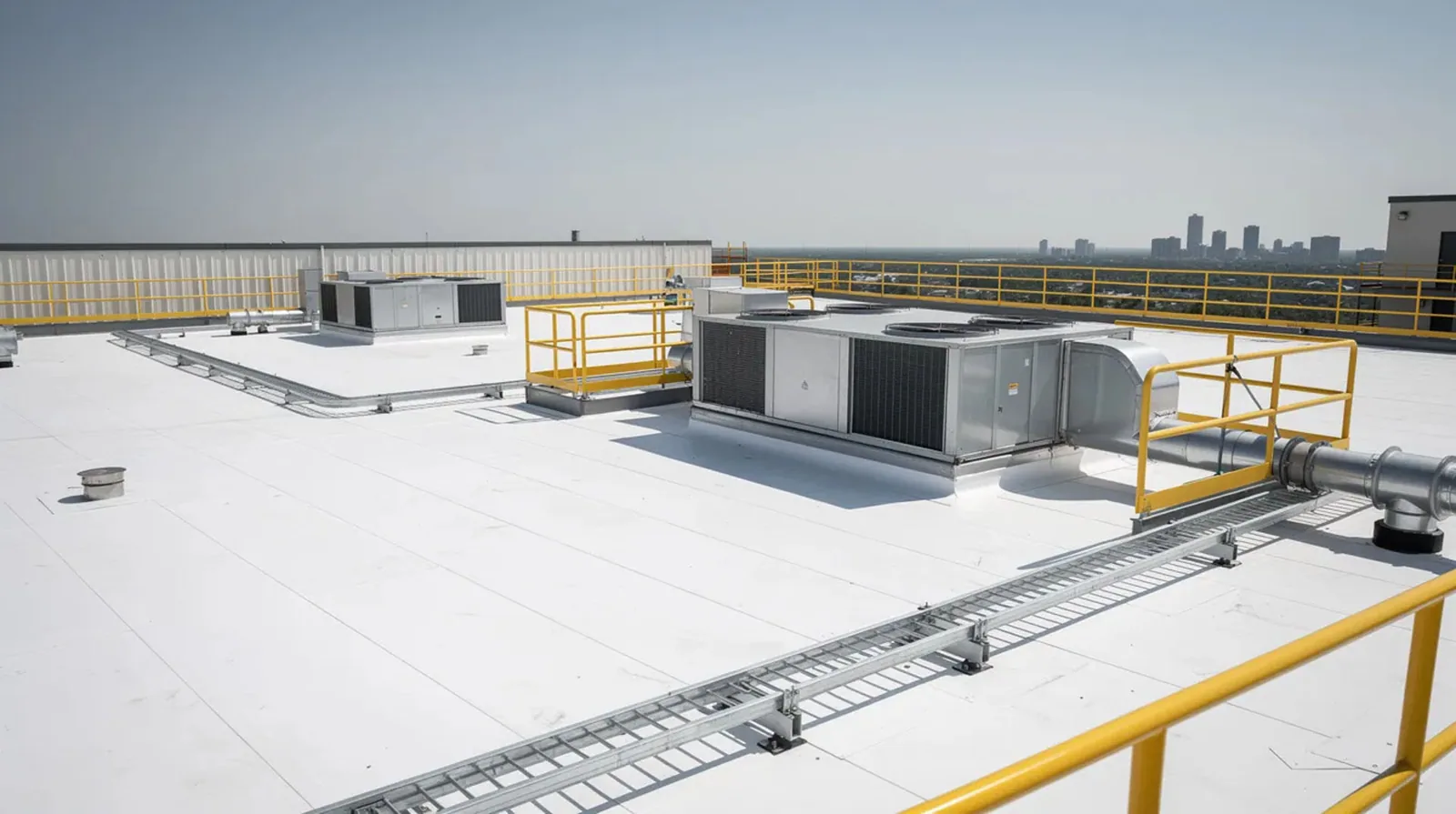
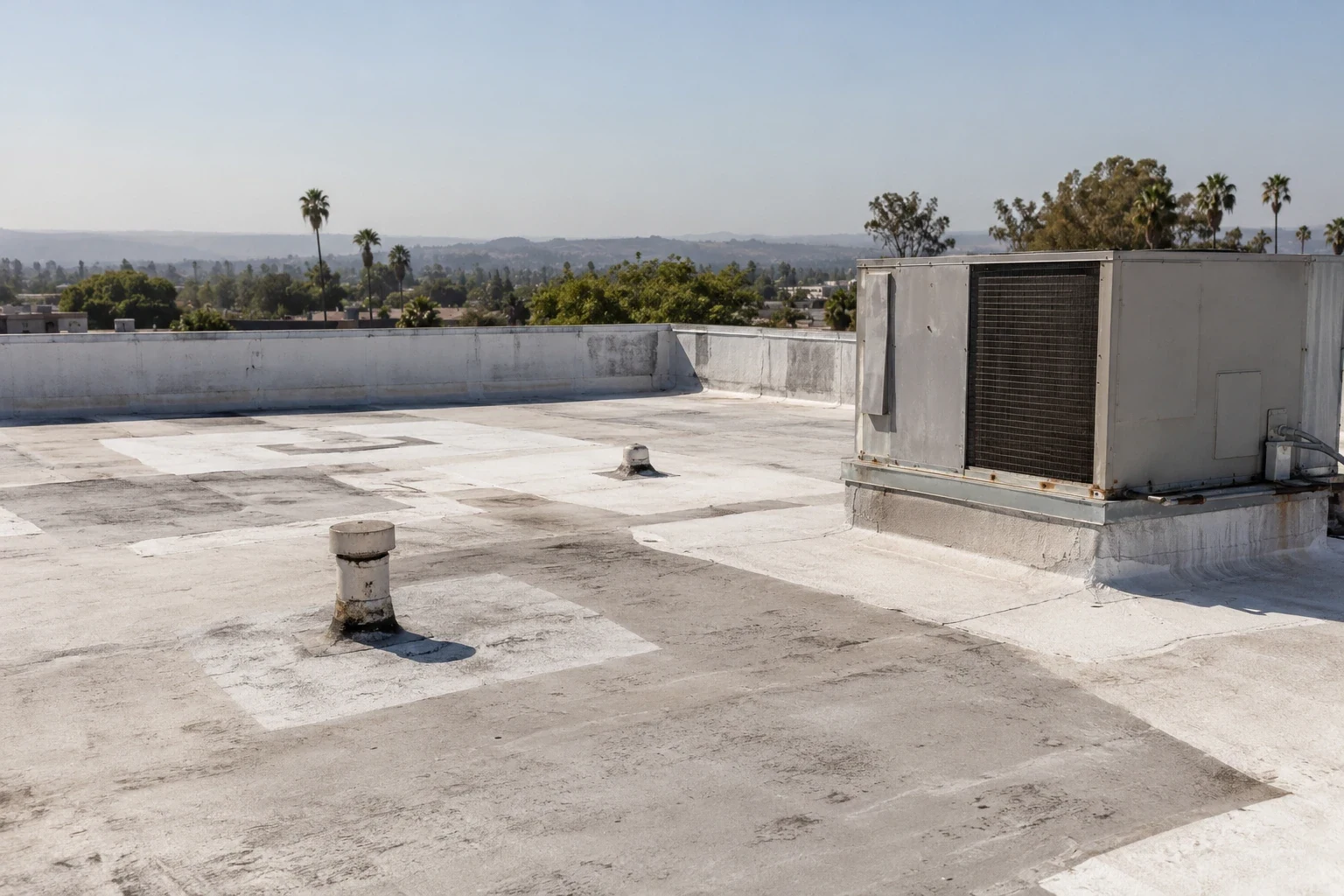
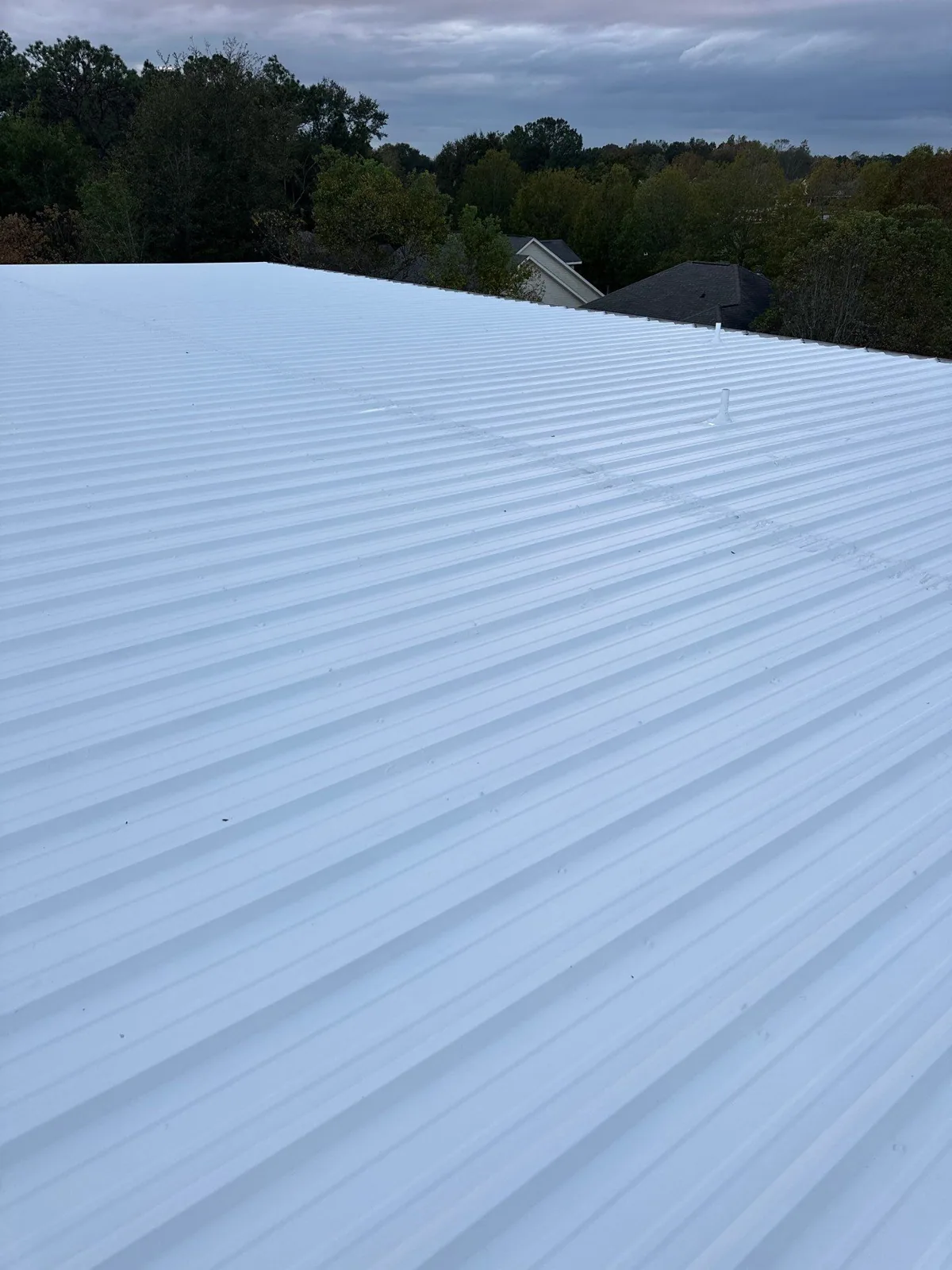
Verify your KEE roof system
Send roof plans, product submittals, repair history and known rooftop exposures. We will identify the membrane, inspect seams and flashings, and scope compatible KEE work in Oxnard.
Common Questions
How do I know if the roof is KEE or standard PVC?
Product submittals, labels or warranty records are the best starting point, followed by field review of the sheet and repairs. KEE and PVC can appear similar. We avoid choosing a cleaner, adhesive or patch until the actual product and compatibility are established.
Can KEE seams be repaired with ordinary PVC material?
The product requirements control. A PVC-looking patch may not be compatible with a particular KEE membrane. We identify the sheet, prepare the surface with an approved method, test the weld when needed and use material accepted for that system.
What roof exposures make KEE worth considering?
We inspect any documented chemical or grease exposure, the roof condition, and equipment service areas, then compare those findings with the membrane manufacturer's product data and project requirements.
Can KEE be recovered over an older membrane?
Only if the existing assembly is dry, attached and permitted by system requirements. We also check substrate compatibility, edge height, drainage and flashing. If moisture or widespread failure is present, removal or replacement may be needed instead.
What information belongs in the KEE roof file?
Keep the product identification, approved details, attachment pattern, seam and flashing materials, repair photos and maintenance notes. Those records help future crews select compatible products and avoid treating KEE as generic PVC.