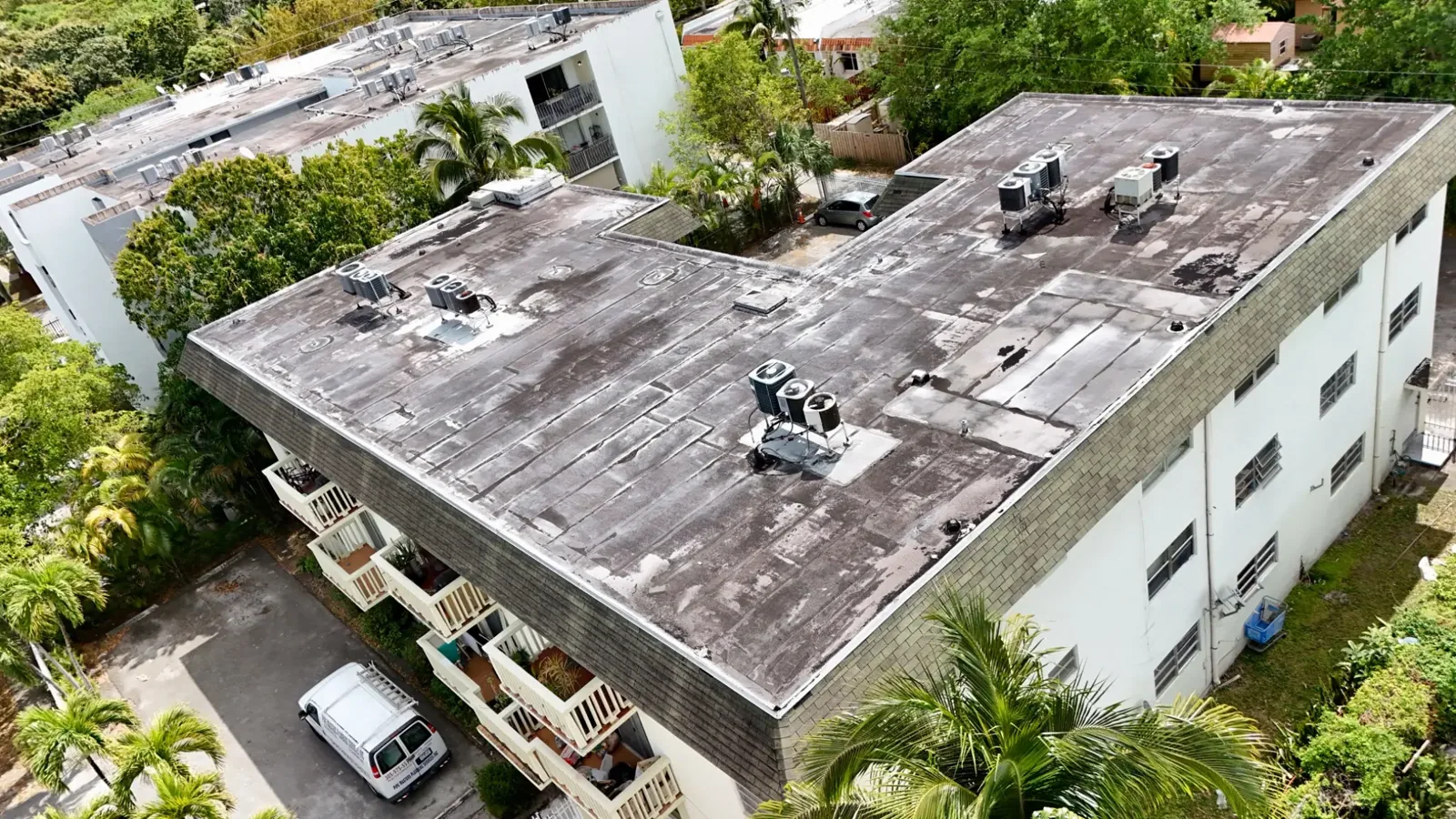
Commercial Roof Condition Reports in Oxnard, CA
Order a marked roof condition report
Commercial Roof Condition Reports
A condition report should let a facility manager find the same roof detail on the next visit. In Oxnard, that may mean documenting a distribution building at Sakioka Farms, a mixed-use property in Downtown Oxnard, or a manufacturing space at Camino Real Business Park. Each use presents different access and work-window questions; none tells us the assembly or condition. We walk the accessible sections, apply field marks to a roof plan, photograph each finding, and state the action that follows from what is visible.
The report separates an observed defect from a suspected water path, a test indication, and an area that could not be reached. It identifies repair, monitoring, testing, or replacement planning without turning uncertainty into a confirmed condition. A manager can use that distinction to request work, set a budget item, compare a proposal, or retain a record for the next service interval.
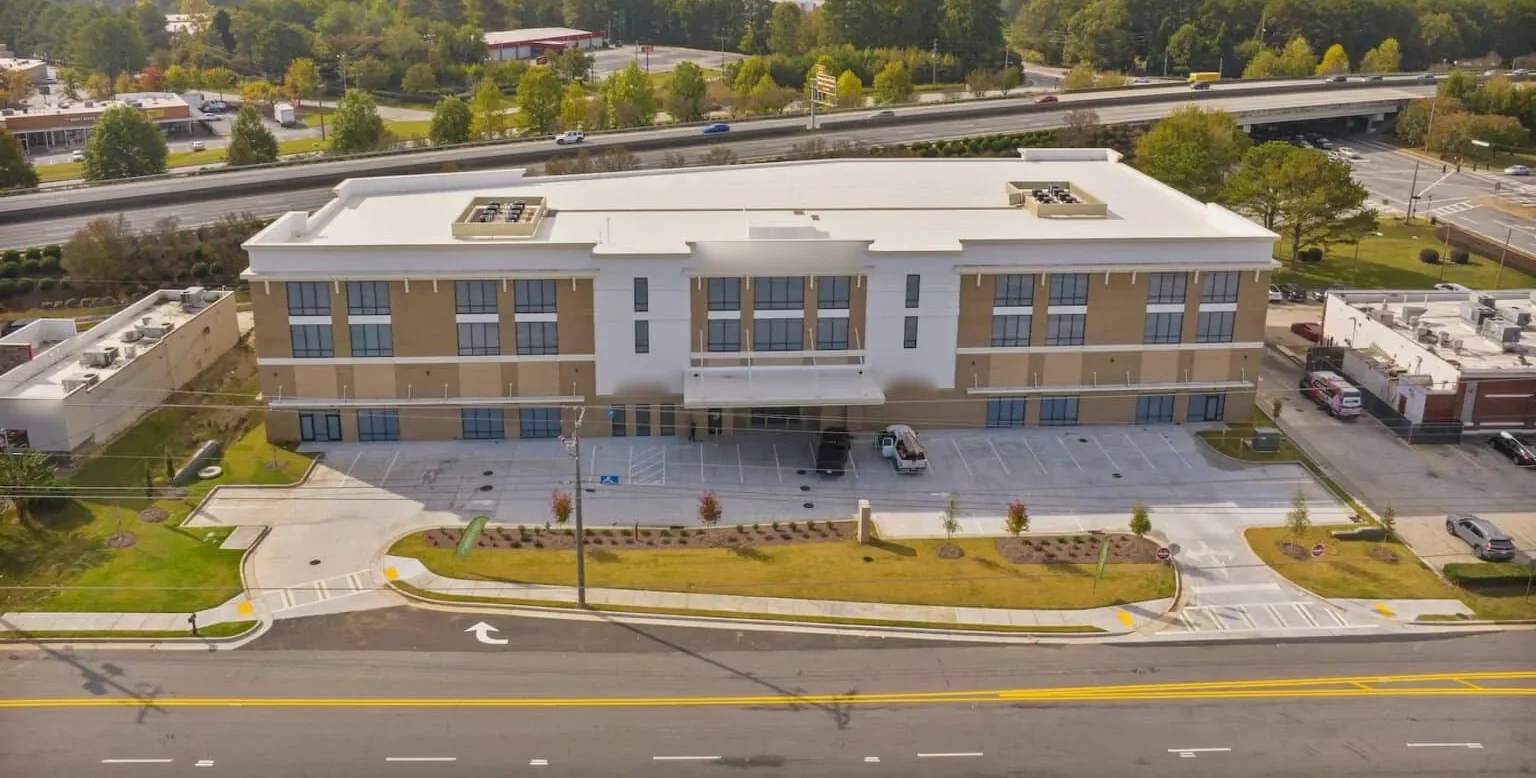
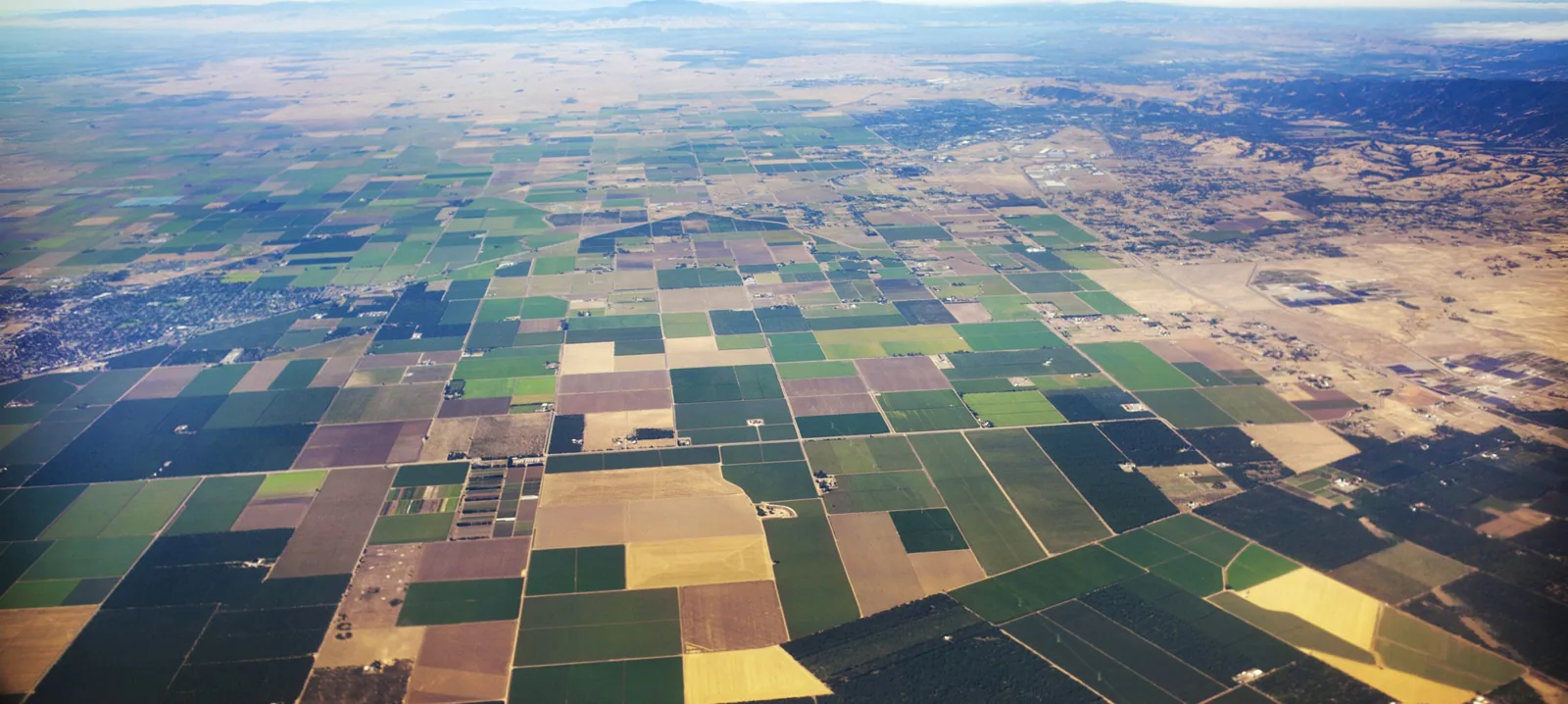
Mark each finding on the roof plan
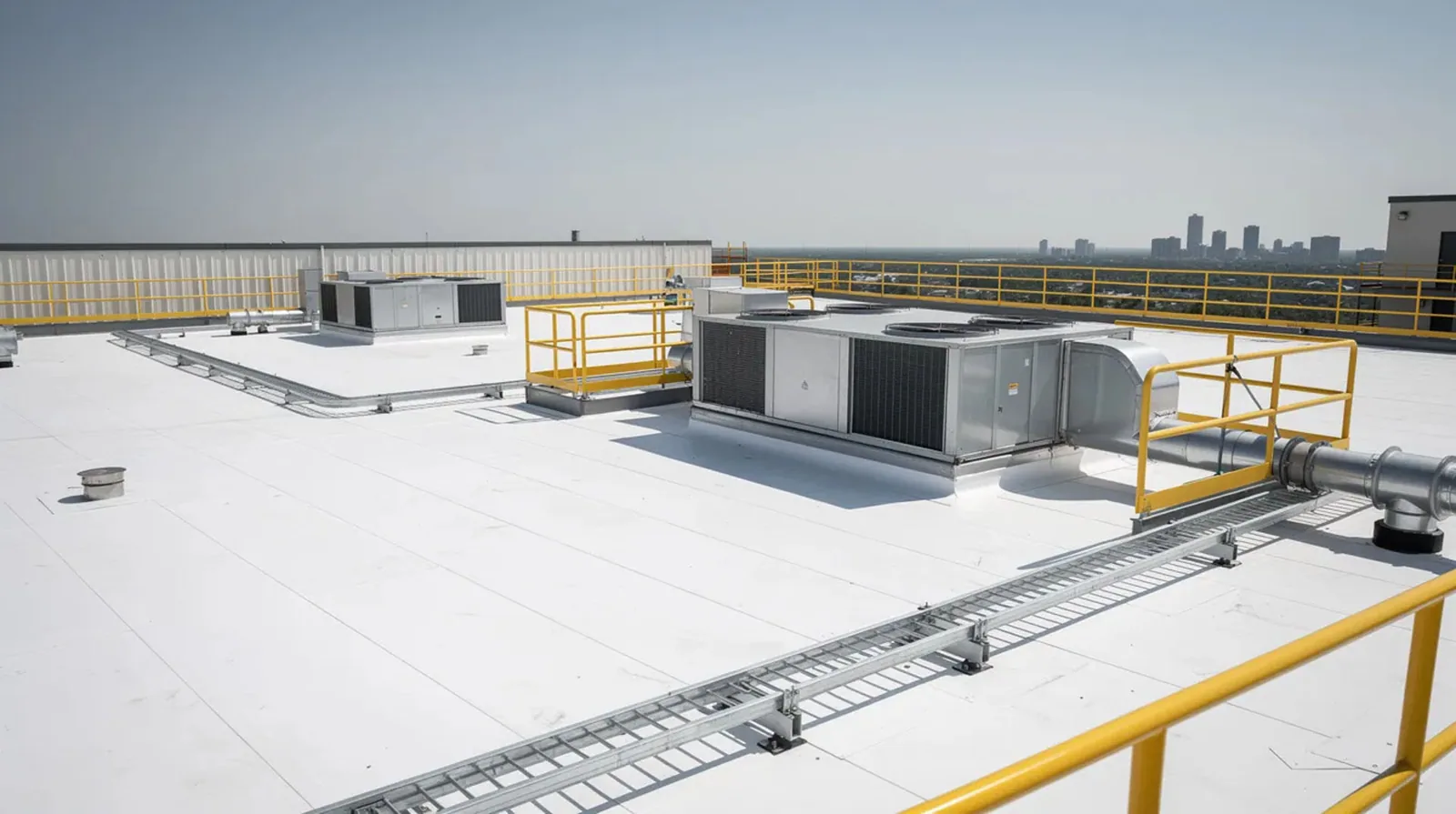
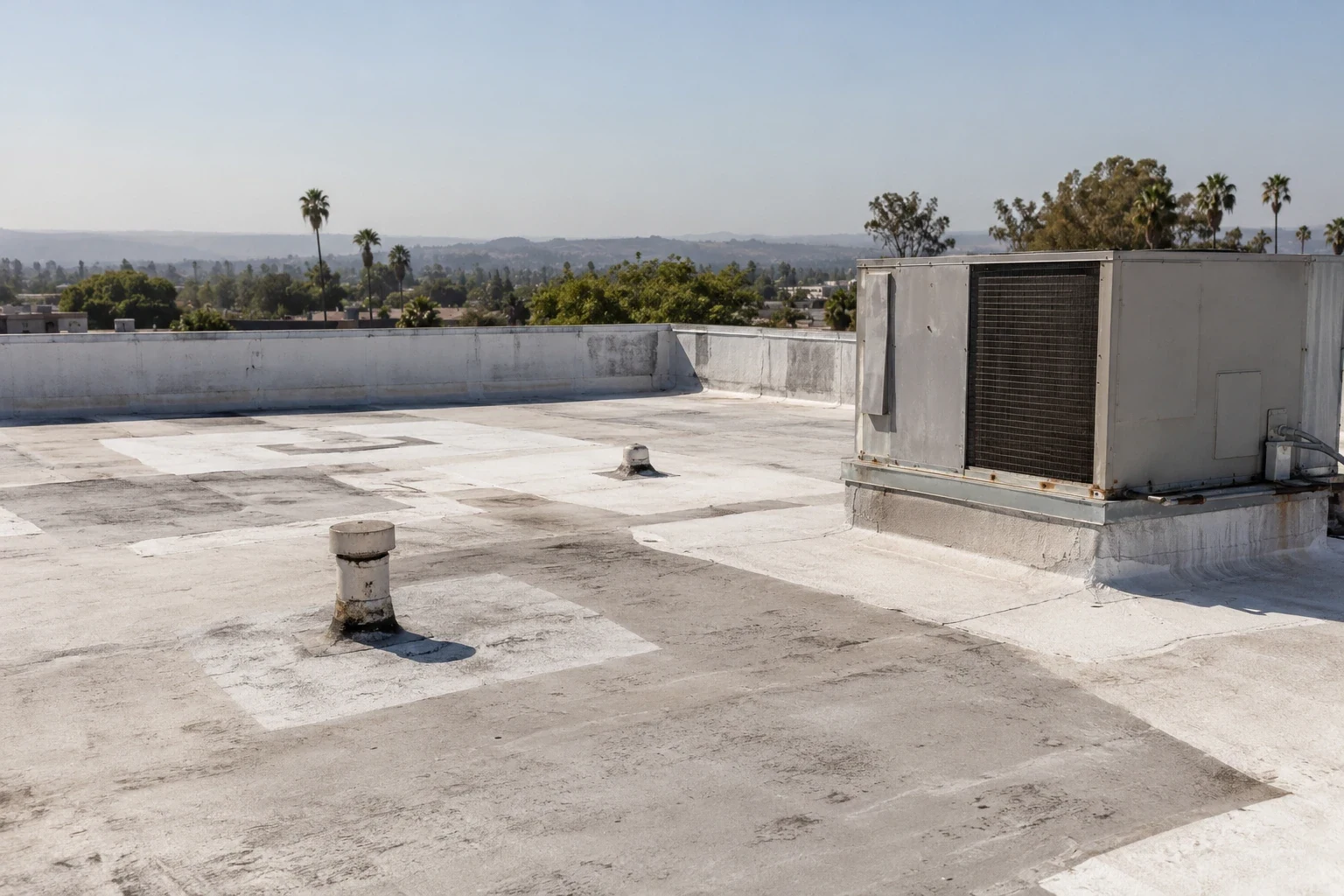
Begin with a building identifier and roof section, then use a field mark that can be found from the hatch, ladder, or parapet. The mark should connect to the drawing reference, photograph, and written observation. We note seams, drains, low points, curbs, penetrations, wall transitions, edge metal, surface oxidation, and previous patches. If a property has several elevations or additions, each should appear as its own mapped area instead of a generic front or rear label.
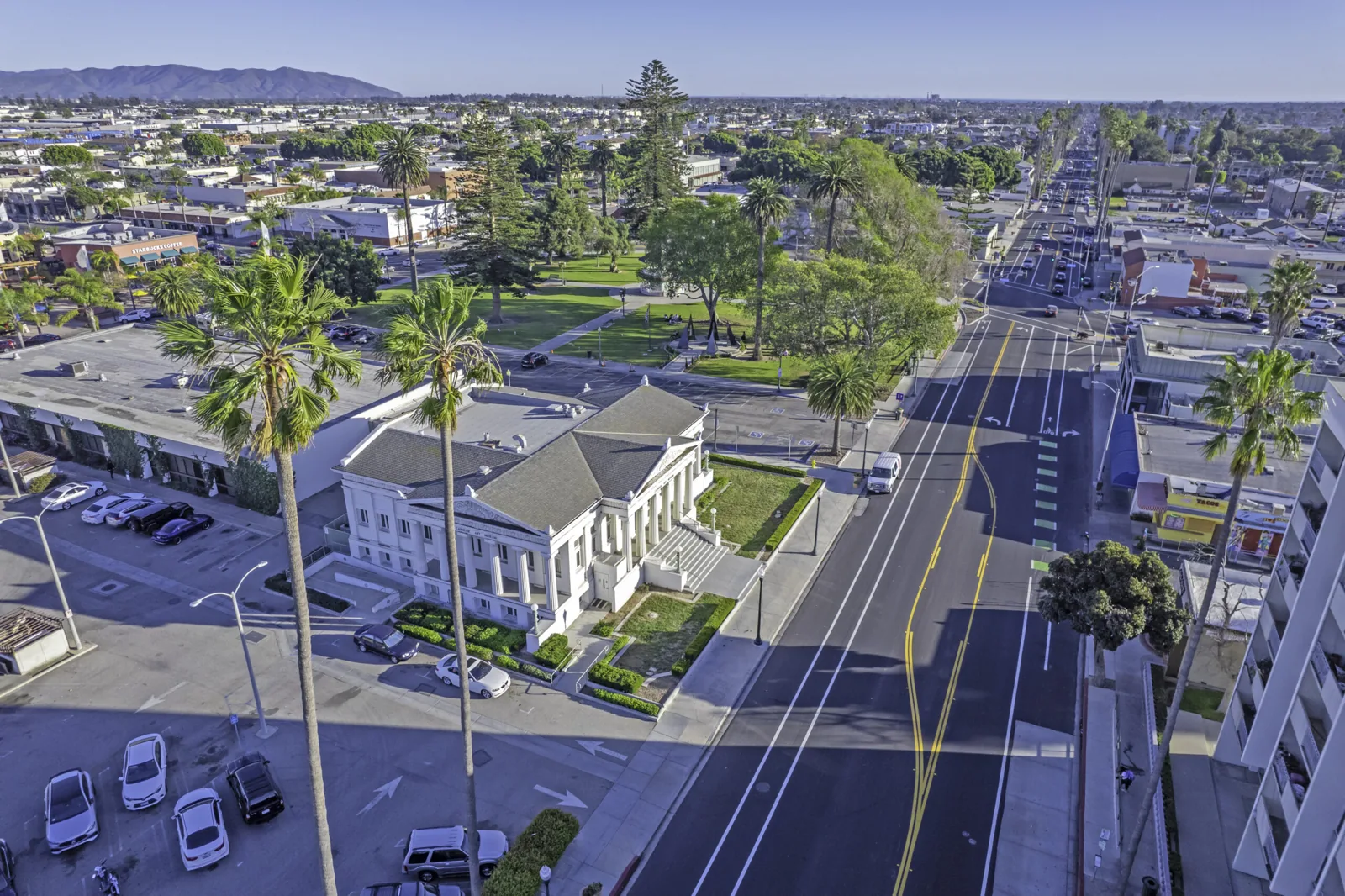
Oxnard's General Plan distinguishes the Central Industrial Area from the Business and Research Park. Sakioka Farms includes distribution and cold-storage uses, while Camino Real Business Park supports manufacturing, research, office, and limited commercial activity. Those contexts can affect truck access and staging. A report for a Sakioka Farms building and a Downtown Oxnard property record still need separate maps and building contacts. The location informs the visit, but the finding belongs to the roof detail.
Separate evidence from interpretation
Write what is visible before stating what it may mean. An open seam, displaced edge, blocked outlet, or puncture is an observation. A ceiling stain may be consistent with water entry, but its position alone does not identify the roof opening. We compare its location and timing with drains, seams, curbs, and nearby wall details, then label a likely path only when the field evidence supports one.
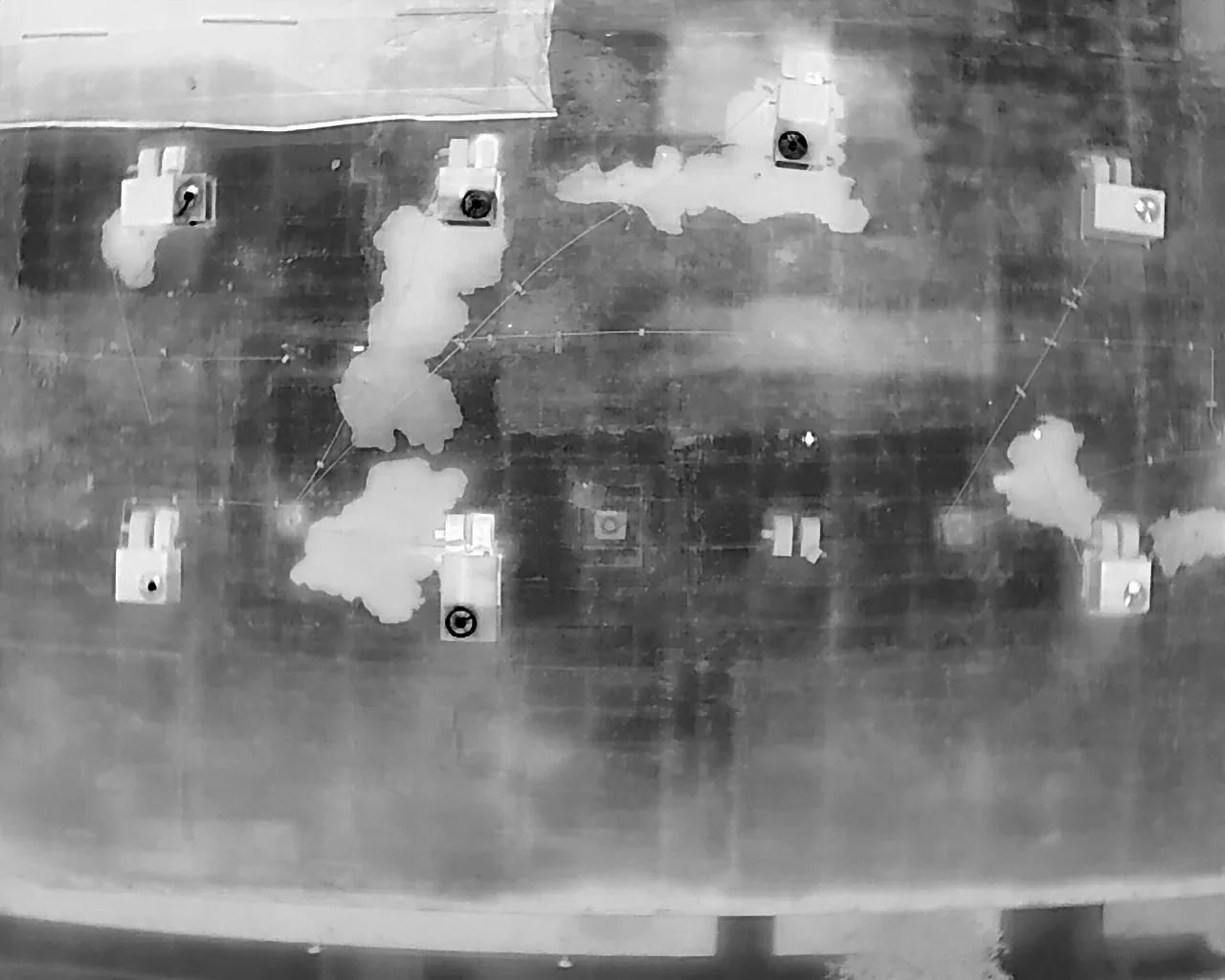
If the insulation or deck is concealed, state that limitation. Infrared indications can guide a test area, while a test cut reveals the layers at that point. The report names each test location, method, result, and restoration. A hands-on inspection sets out the accessible surface and its limits; a moisture survey can identify areas for confirmation. The reader should be able to tell which conclusion rests on direct observation and which question remains open.
Rank the work by consequence
An active opening, loose edge metal, restricted drain, and worn coating do not belong in one undifferentiated list. We sort findings into immediate response, planned repair, maintenance, testing, or monitoring. Each priority includes its basis, affected roof zone, and next action. When waiting could allow further water entry or damage, the report states the condition that makes a response time-sensitive.
A localized tear with sound membrane around it may support a patch. Repeated seam separation, broad moisture, weak attachment, or deck concerns can call for testing or a broader option. The report identifies preparation, compatible material, tie-in, and any interior protection needed for repair. A marked repair scope can carry those details into a work order, while asset records preserve the photo and field mark after the repair is closed. The priority should be revised when new evidence changes the recommendation.
Record drainage in its local context
For drainage, the report records the roof's slope, low points, primary outlets, and overflow route as separate observations. We compare ponding lines or sediment marks with the outlet condition and note whether water has a clear path off the roof. A blocked strainer calls for maintenance; a depressed area or failed drain connection needs a different scope. The report names the measured area and the follow-up that will confirm performance.
Where a property falls within Oxnard's mapped coastal zone, its planning file may include hazard and adaptation considerations. The roof report records parcel context separately from visible assembly conditions, then notes any project review that the owner should coordinate. For the roof itself, we document edge-metal corrosion, attachment, flashing, drainage and observed moisture. This gives the asset manager a field record while keeping planning questions with the correct parcel.
Compare repair and replacement assumptions
The report should explain the limit of the recommended repair and the result that would broaden it. If a concealed layer is unknown, list a focused test rather than assigning a removal quantity from appearance alone. A recover evaluation checks moisture, existing layers, attachment, drainage, edge height, and flashing transitions. Replacement planning identifies tear-off depth, insulation, cover board, perimeter details, equipment, and daily dry-in.
Access route, lift placement, material handling, work hours, interior protection, and the area exposed per shift can affect duration and cost. We state those drivers with the proposed option. A replacement comparison should distinguish confirmed quantities from allowances, with a hold point if removal reveals a different assembly. For an acquisition or refinancing decision, due-diligence findings can be kept separate from the repair proposal while referring to the same field mark.
Give the next reviewer a usable file
A complete report lists the inspection date, property and roof identifiers, sections covered, access limitations, findings, photographs, tests, priority, and follow-up action. It also identifies areas that were blocked or unsafe to enter. Keep temporary protection separate from permanent repair, and state whether a test or second visit remains open. Those fields help a later manager compare the same roof zone without relying on a verbal explanation.
After the repair, add a disposition for every finding: corrected, monitored, referred for testing, or still open. The updated image should show the repaired detail and its relation to the field mark. If a test changes the scope, preserve the original observation and add the result rather than rewriting history. That sequence lets ownership see how the recommendation changed and why.
Send the roof plan, prior work orders, leak reports, equipment schedule, access instructions, and the decision the report needs to support. We can return marked findings and recommendations tied to each building. For a property near Sakioka Farms or Downtown Oxnard, include site contacts and operating windows so inspection findings can be acted on. The field file should help the next reviewer verify what was seen, what changed, and which approval remains.
Related Roofing Work
More from Roofing Capabilities and nearby services
Order a marked roof condition report
Share the roof plan, building identifiers, leak reports, repair history, equipment schedule, and access contact. We will inspect the sections and return photographs, priorities, and next actions tied to field marks.
Common Questions
What makes a roof finding easy to verify later?
A roof-zone reference, field mark, photograph, observation, and next action should appear together. Separate buildings and additions receive distinct identifiers.
Will a report identify the source of every interior stain?
Only when the roof evidence supports that conclusion. We compare the reported location with nearby details and state what remains uncertain or needs testing.
How does the report handle inaccessible areas?
It names the area, reason access was limited, and the contact or condition needed for a follow-up visit. Findings do not imply that an uninspected zone was clear.
Can a report be used to compare contractor proposals?
Yes. The field marks, repair boundaries, materials, and assumptions give the owner a basis for comparing scope. Unknown layers and allowances should remain identified.
What should I provide before the survey?
Send roof plans, past repairs, leak locations, equipment schedules, access contacts, and the decision deadline. The report can then answer the question driving the inspection.