Commercial Roof Edge Metal, Coping and Gutters in Oxnard, CA
Scope the roof edge
Commercial Roof Edge Metal, Coping and Gutters
A roof edge can look finished while leaving the membrane exposed at its most vulnerable turn. We check how the field sheet, termination, coping, fascia, gutter and wall meet before selecting a repair. In Oxnard, we inspect perimeter assemblies at distribution and cold-storage properties near Sakioka Farms, service buildings in the Central Industrial Area, and office or research properties at Camino Real Business Park. We confirm each roof’s membrane, termination, and drainage details before setting scope. We photograph open joints, loose metal and water paths, then coordinate perimeter work with the membrane and drainage details.
Follow the edge before choosing a detail
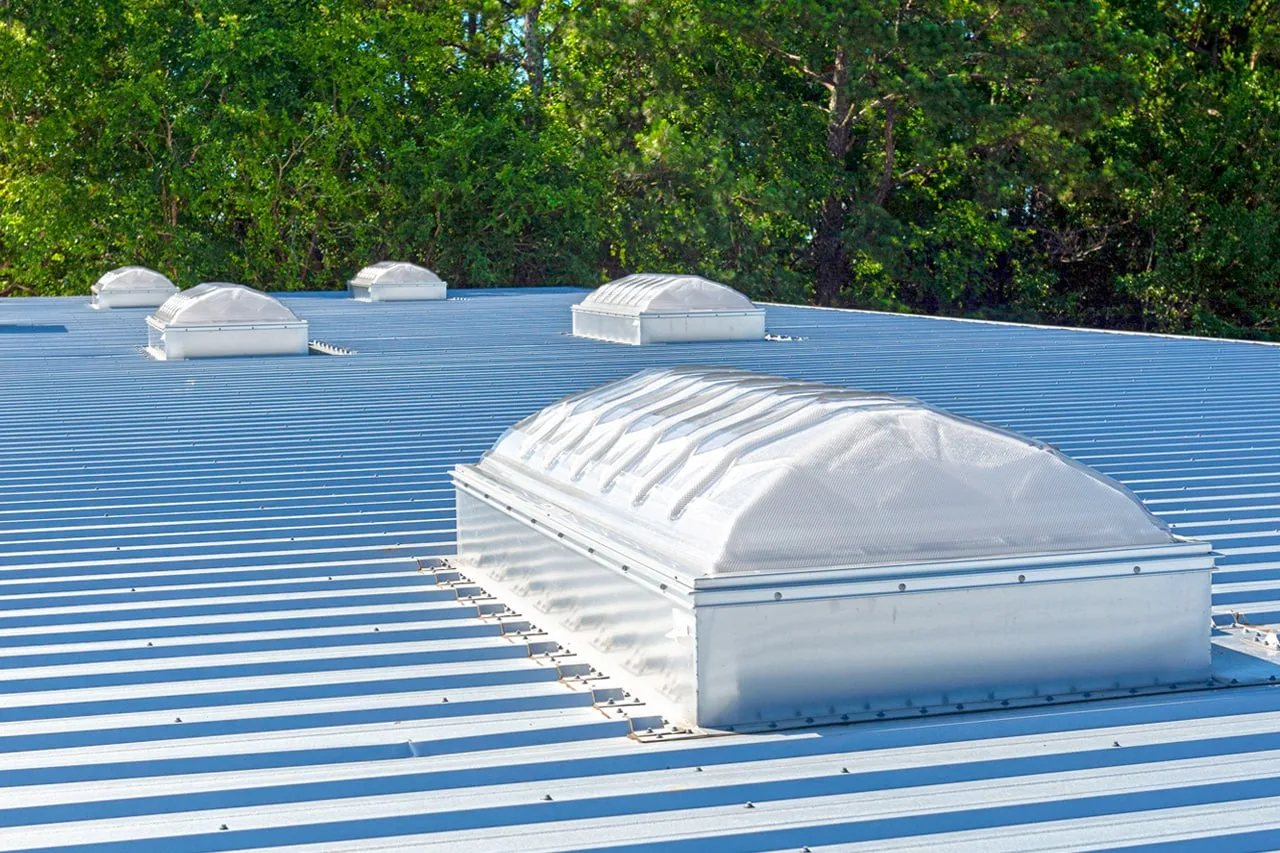
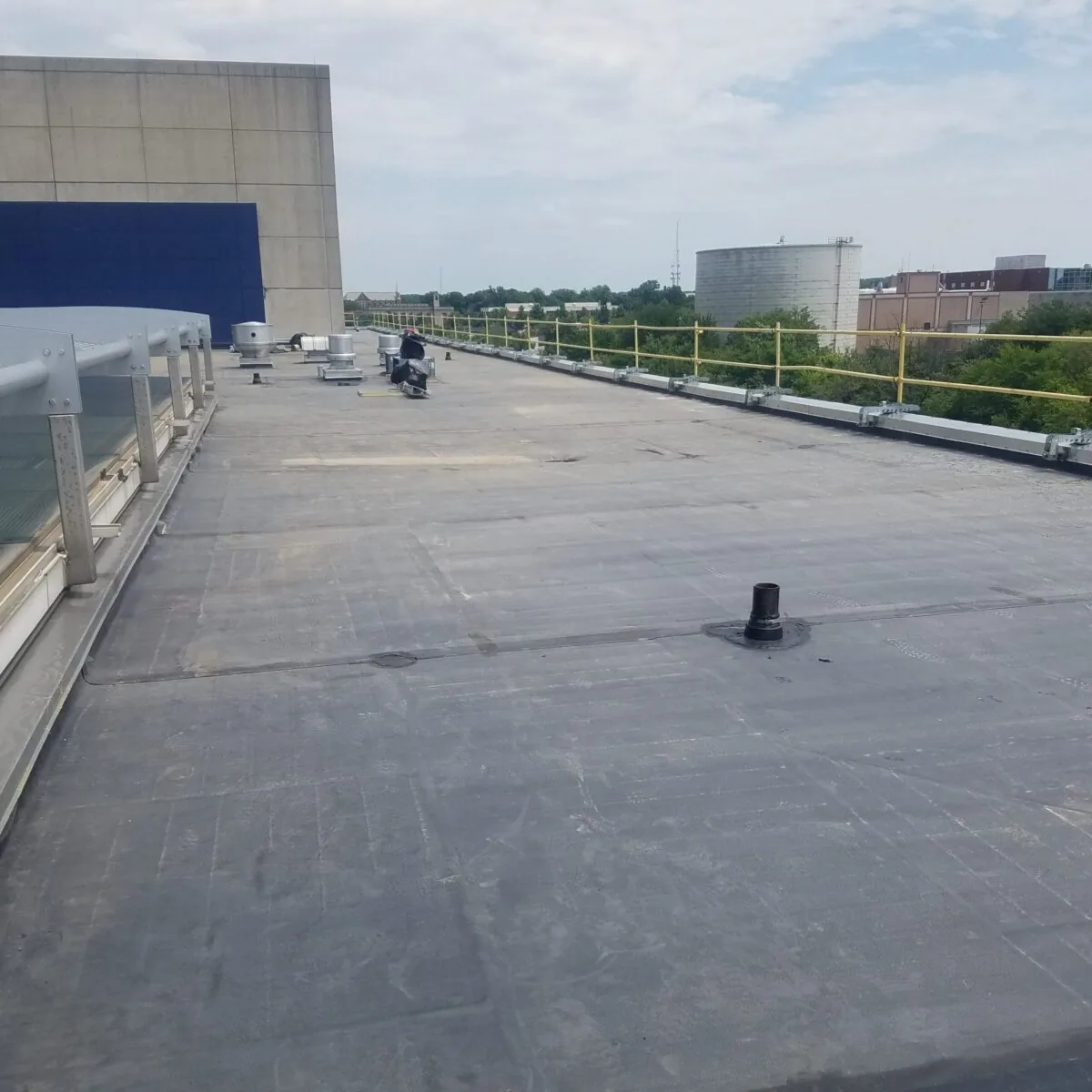
We trace the perimeter and mark changes in parapet height, wall material, roof level and drainage direction. One side may have coping, another fascia, and a third a gutter. Each transition needs a compatible termination. We look for lifted cleats, open joints, exposed fasteners, separated sealant and water tracks behind the metal.
Drawings can show the intended assembly, but additions or repairs may have changed it. We verify accessible conditions and document areas needing closer review. If the membrane also needs evaluation, a commercial roof inspection can put the perimeter findings in context.
Keep parapet coping secure and continuous
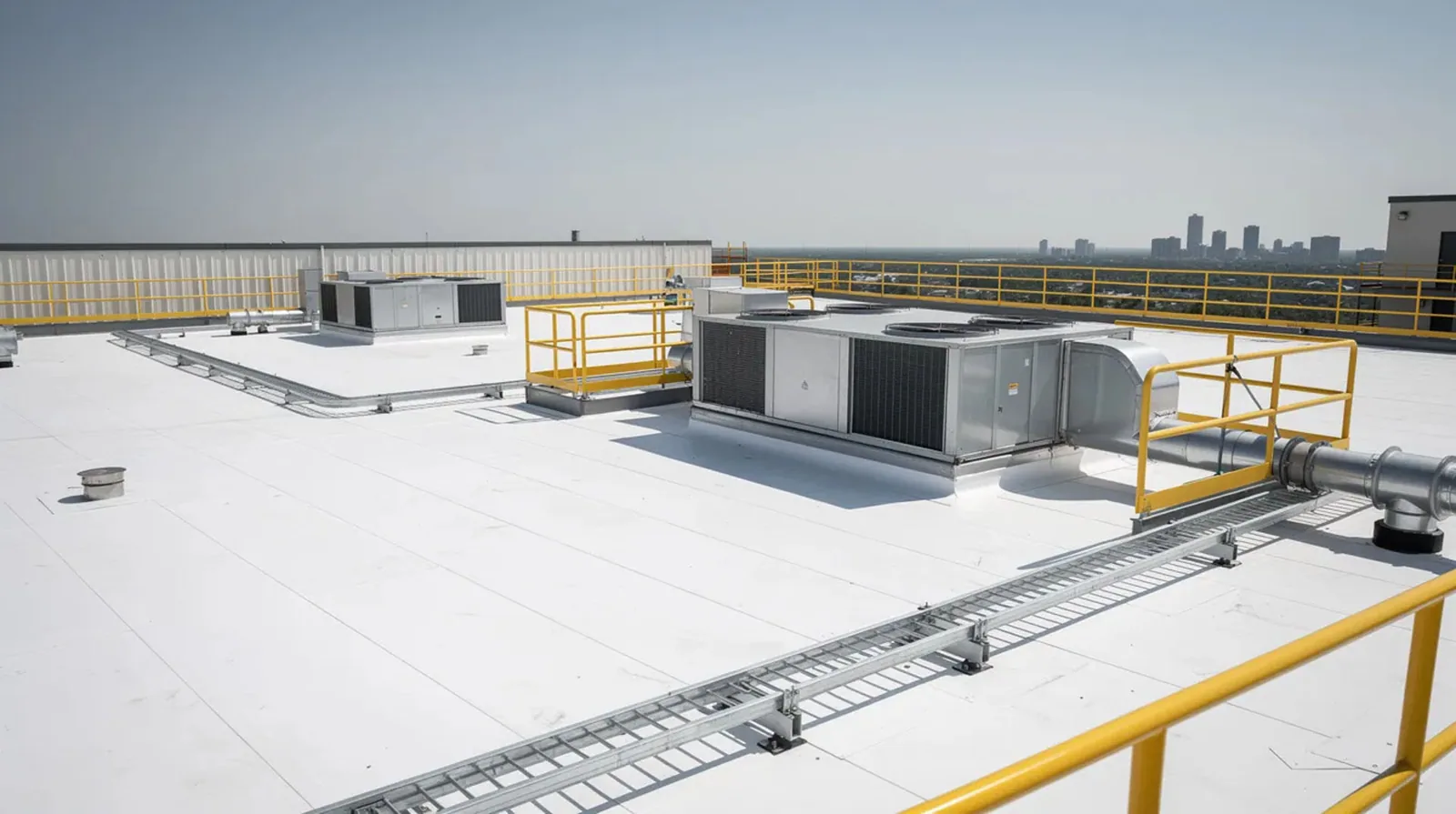
Coping protects the top of a parapet and directs water away from the wall. Its cleats, end dams, joints and corners matter as much as the cap. We check attachment, lap direction and openings at changes in height. A straight-looking section can still have a raised seam or a gap at its return.
The repair must fit the wall and roof edge. We confirm substrate condition and membrane termination instead of sealing over loose metal. Replacement pieces are measured for the actual parapet profile, with corners and joints coordinated. If masonry or framing needs correction, the scope should identify it before new metal covers the area.
The 430-acre Sakioka Farms Business Park has operating distribution, cold-storage, and fruit-processing uses. At each property, we confirm loading activity and access with the site contact before sequencing perimeter work. A roof inspection at Sakioka Farms records the building’s actual edge and drainage details.
Tie the membrane into the metal
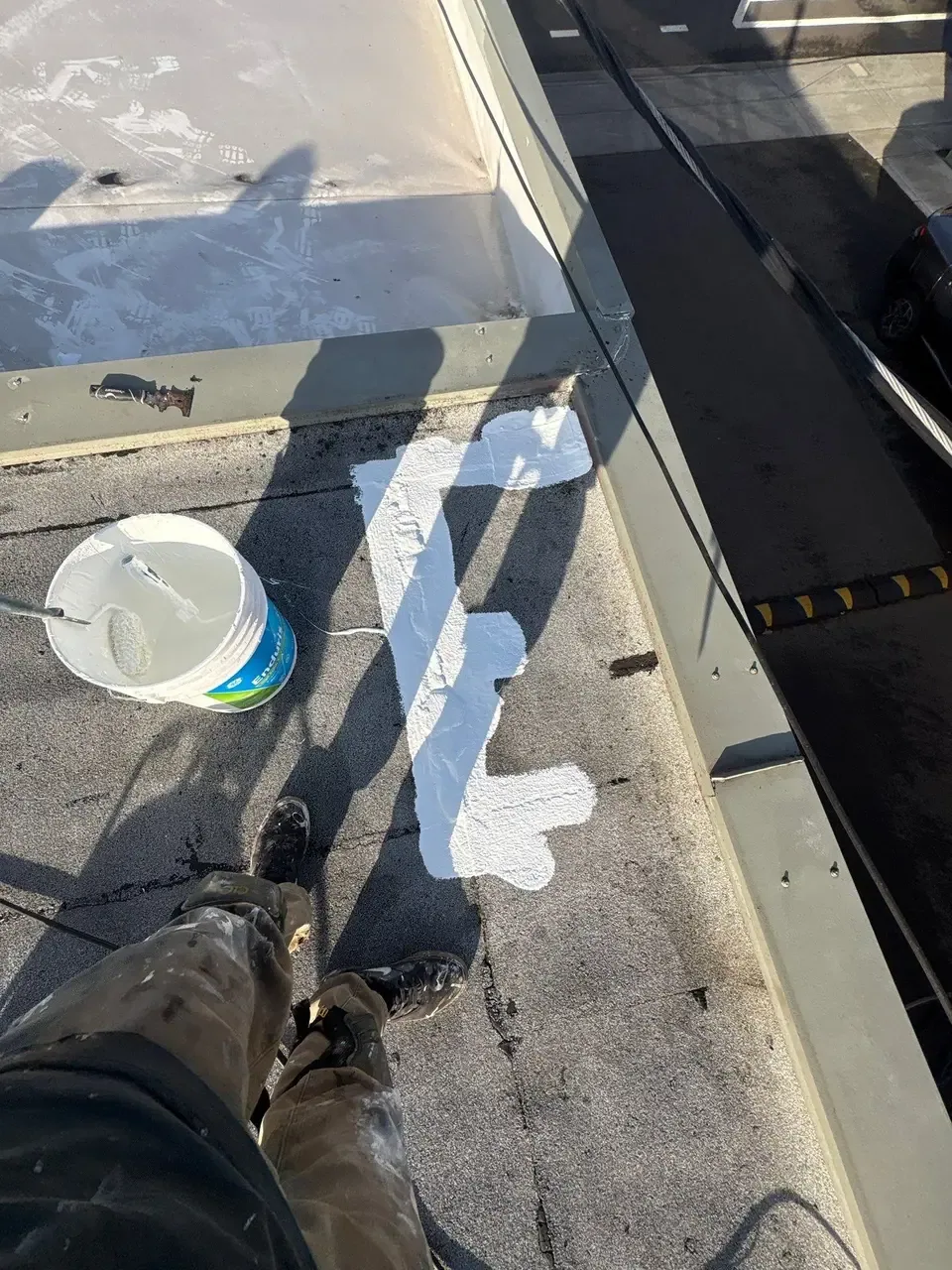
The membrane should terminate securely through ordinary temperature change and building movement. We check the bar or cleat, fasteners, sealant, counterflashing and surface beneath the metal. Sometimes a section must come off to expose the membrane edge. New sealant over a separated interface can hide a gap without restoring the connection.
Material and fastening depend on the roof system and substrate. We check compatibility where metals meet, review corrosion and avoid details that trap water. At a wall, counterflashing needs adequate coverage and a sound upper termination. On a replacement project, perimeter metal belongs in the installation plan. Commercial roof replacement planning coordinates those details with the selected assembly.
Give runoff a clear route
Gutters and downspouts carry runoff away from the building. We inspect hangers, seams, end caps, outlets and discharge points. Sagging sections can hold debris; a restricted outlet may send water over fascia or back toward a wall. We also confirm which roof planes feed the system. A clean gutter helps only when the roof can drain to it and the outlet remains open.
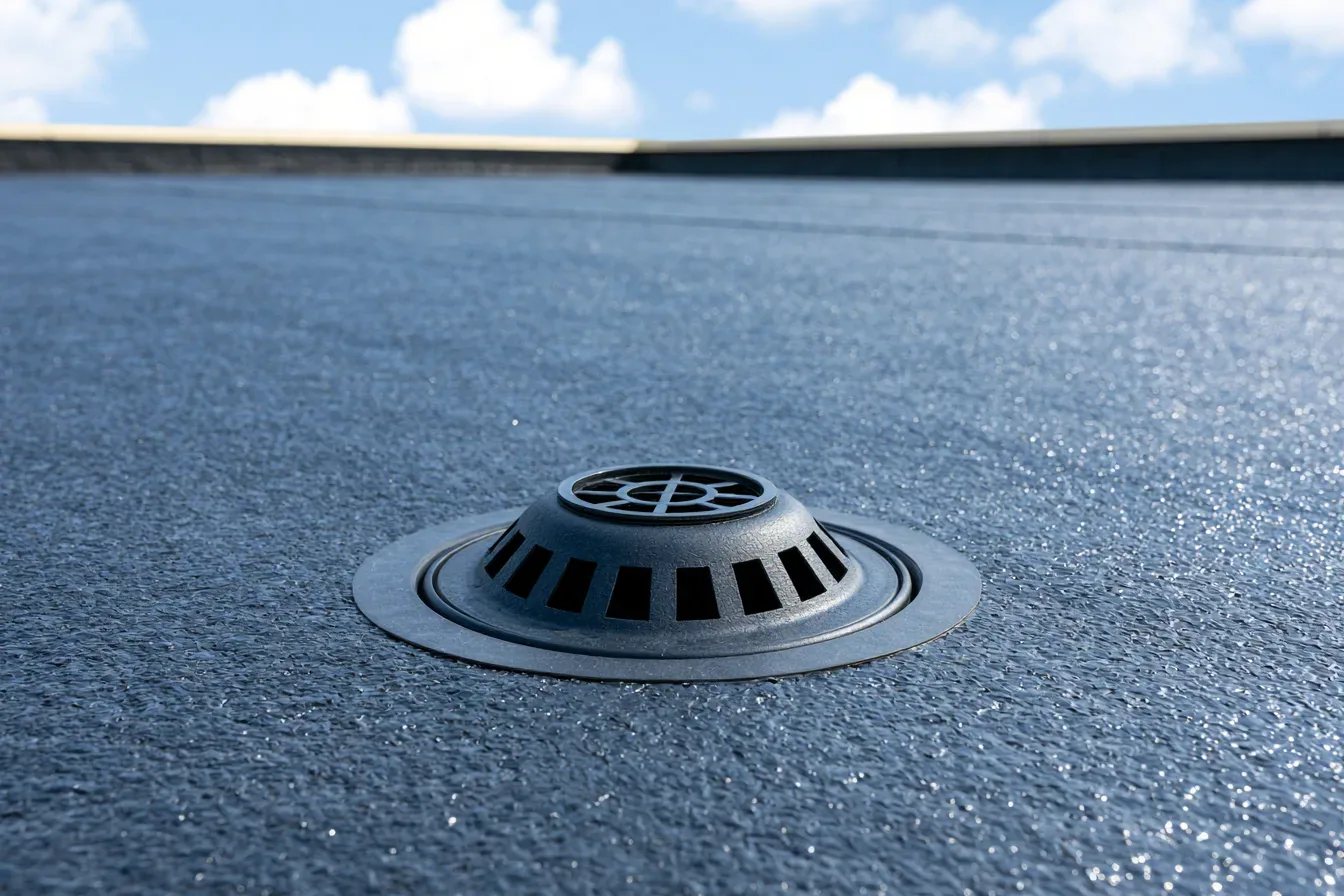
Internal drains may serve other roof areas, so we map each route before shifting flow. New metal must not cover a scupper or reduce an overflow opening. Discharge should not create a hazard at a walk or loading area. Drain and scupper work addresses connected roof-plane details.
Oxnard designates the Central Industrial Area for uses that include agricultural processing and repair/storage operations. Before perimeter work, we walk the property boundary with its contact and mark the lift or material route clear of active doors.
Choose repair or replacement by condition
A short run of loose coping or a failed gutter outlet may call for focused repair. Widespread corrosion, repeated open joints, damaged substrate or incompatible transitions may favor replacement. We compare sound metal with the cost and disruption of piecemeal work. The written scope separates removal, substrate preparation, new metal, attachment, tie-ins and disposal.
Interior staining may start above the visible symptom. We trace water before assigning cause: a membrane seam, wall flashing, coping joint or gutter overflow can be involved. Leak repair addresses membrane and flashing sources; our edge scope covers connected perimeter metal and collection components.
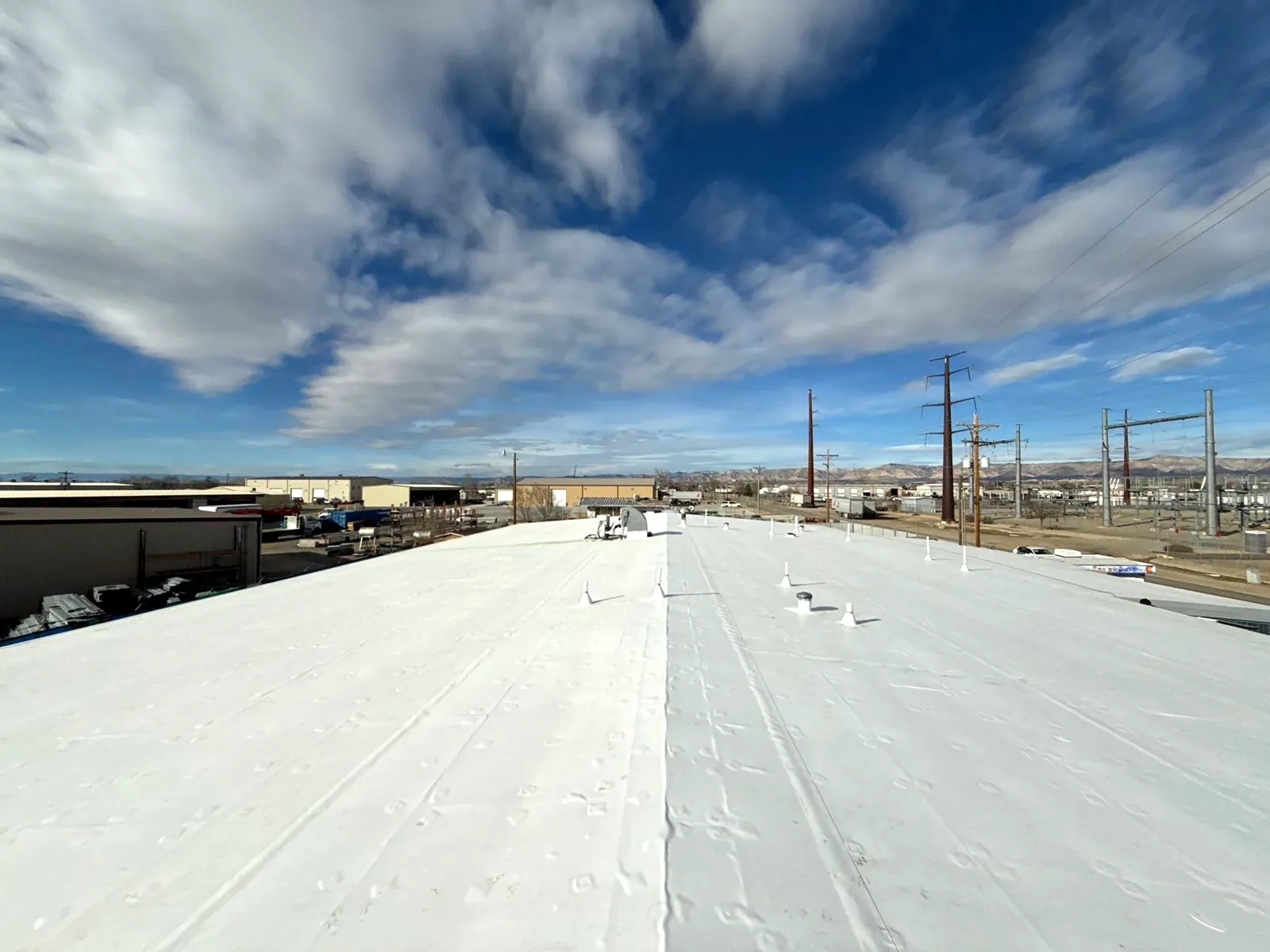
Added roof layers can change coping, curb or gutter clearance. Before recover work, we verify the build-up and termination. Roof recover planning evaluates those interfaces. Sound, compatible metal may remain; damaged or unsuitable material belongs in the scope.
Plan around coastal and industrial settings
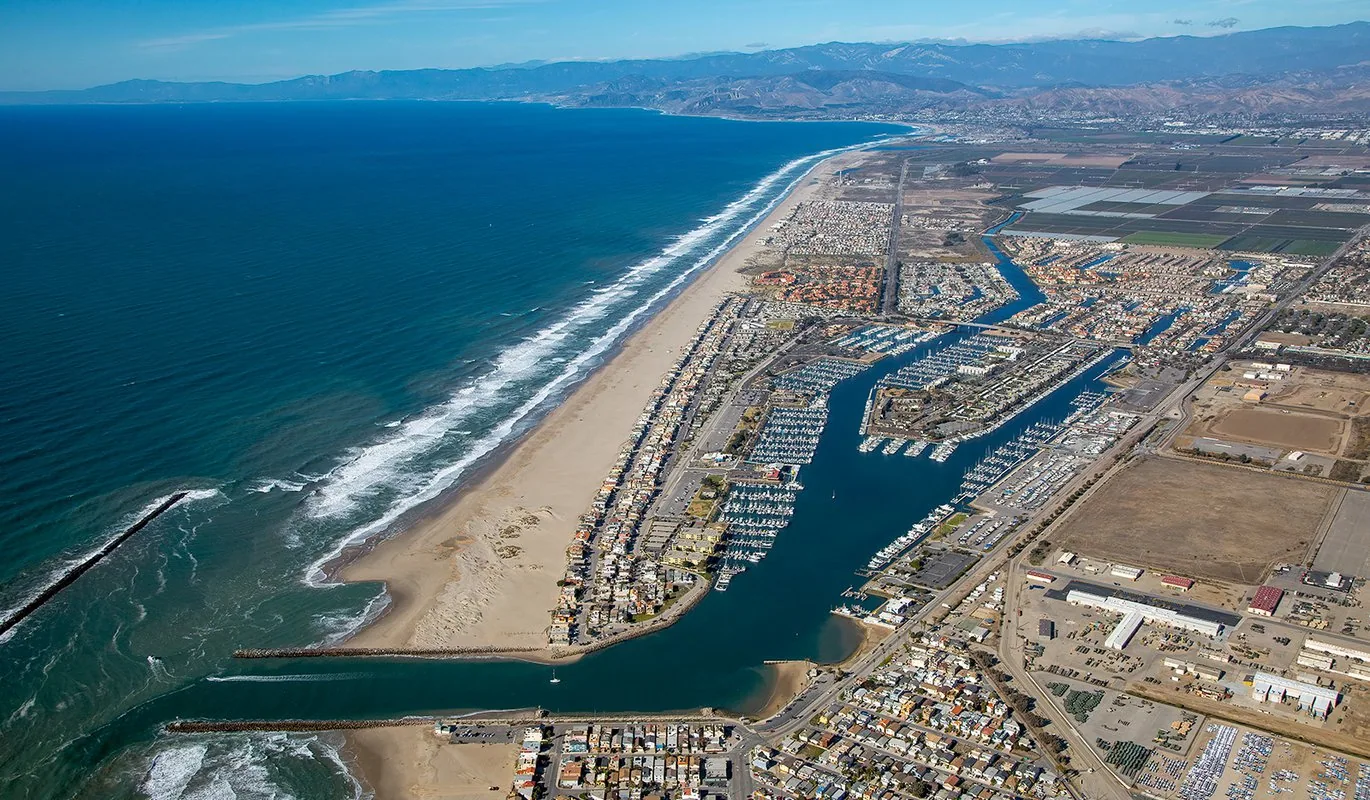
Oxnard's resilience framework addresses sea-level rise and other mapped coastal hazards where the city's coastal policies apply. That planning context does not establish a roof's exposure or condition. We confirm the property's setting, metal, drainage route and material condition during the survey. For a site near the coast, observed exposure and maintenance history matter more than a broad city label.
Camino Real Business Park’s adopted plan includes office, research, manufacturing, and limited commercial uses along U.S. 101. We confirm roof access and equipment conditions with each property contact before handling perimeter materials. A Camino Real roof inspection documents the edge conditions found on the building.
Oxnard's observing station reached 1.77 inches for Hilary in August 2023, a record amount for August. We inspect each property’s roof photographs, dimensions, drainage, and assembly before recommending edge repairs.
Leave the perimeter ready for service
A closeout should leave the roof-to-wall connection understandable and inspectable. We identify repaired sections, record joint details and note conditions that need monitoring. When gutters or downspouts are included, we document their route to discharge. The property team can distinguish routine maintenance from work requiring a contractor.
Before mobilizing, we confirm access, operating hours, disposal, equipment protection and how each opening will be secured at day's end. During work, we protect exposed membrane edges and inspect concealed details before covering them. At completion, we review photographs and the agreed scope with the project contact.
We coordinate edge metal with connected drainage, membrane repair, or replacement work. We can also provide a condition record for budgeting. The result is a defined perimeter detail, an open water route and a scope the owner can maintain.
Related Roofing Work
More from Commercial Roofing Services and nearby services
Scope the roof edge
Request a commercial roof-edge evaluation in Oxnard. We will inspect the coping, membrane termination, gutters and discharge route, then provide a scope tied to the conditions on your building.
Common Questions
When should commercial coping be repaired instead of replaced?
A loose joint can be repaired when cleats, substrate and neighboring sections remain sound. Widespread corrosion, repeated openings or failed attachment can favor replacement. We inspect the run and explain how corners, end conditions and membrane terminations will be handled.
Can new coping go over existing roof metal?
Only after checking the assembly. A cover can hide loose attachment, corrosion or a failed membrane edge, and it can raise the perimeter. We verify the substrate and wall profile first, then show how exposed roofing will stay protected during the work.
Why would a recently cleaned gutter still overflow?
A restricted outlet, poor pitch, separated seam or excess flow can cause overflow after cleaning. We trace water from the roof plane through the downspout to discharge, then scope the condition that interrupts the route.
Do edge repairs involve the roof membrane?
The membrane often terminates at the metal, so we inspect that connection when a cap or gutter is removed. If the sheet, bar or substrate is sound, work may stay limited. If damaged, the scope shows how the connection will be restored.
How do you limit disruption at an active building?
We confirm access, work hours, loading activity and areas that must stay open. The sequence can divide a long perimeter into manageable sections, with openings protected at each shift end and material staging coordinated with the site contact.