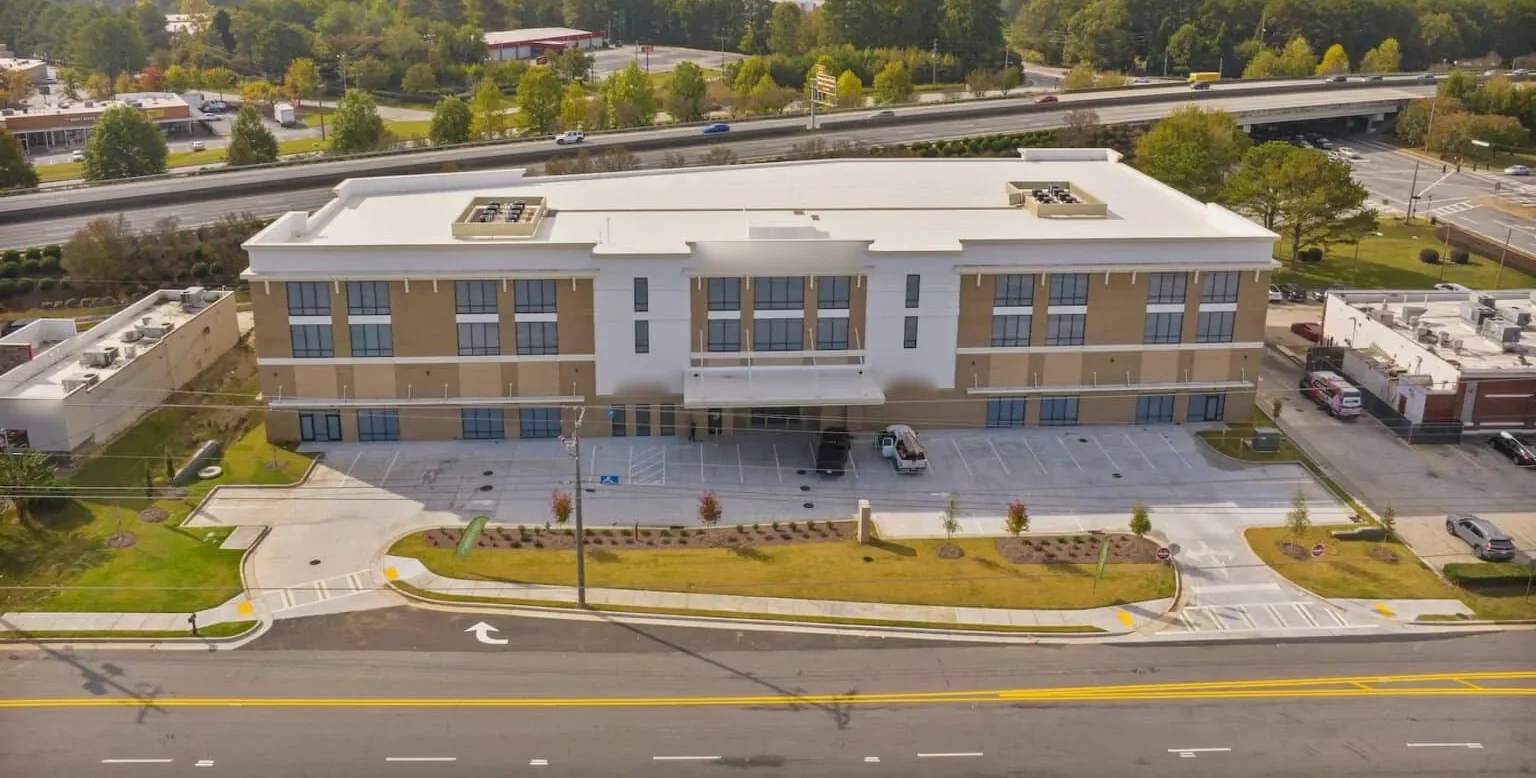
Retail and Restaurant Chain Roofing

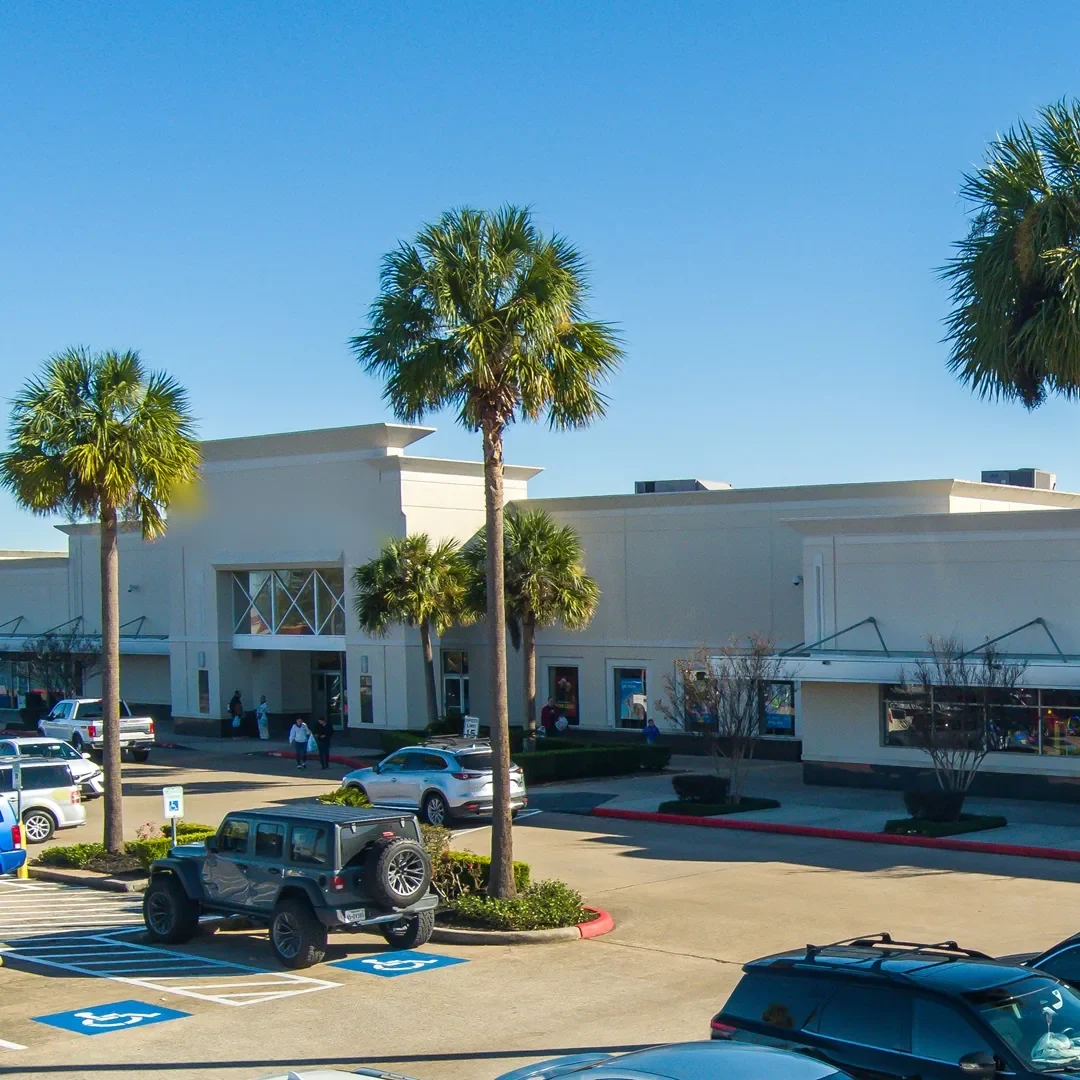
A retail roof repair should keep the customer route in view. A leak near a dining room, checkout line, stock area, or receiving door may call for different protection and scheduling than a defect over a service corridor. In Oxnard, Downtown's code supports mixed retail and office activity, RiverPark combines commercial space with housing and parks, and the Rose-Santa Clara planning area includes retail-commercial and business uses. A chain may operate in any of these settings, but the actual roof condition and access plan belong to the individual building.

We inspect the reported area, map the roof sections, and connect photos to seams, drains, curbs, wall transitions, and previous patches. The site lead identifies store hours, deliveries, kitchen exhaust, customer entrances, lift access, and any area that cannot be closed. Those details determine where materials can be staged and how a daily dry-in is maintained. A portfolio manager receives building-specific findings that can be compared across locations without assuming every store has the same assembly.

Retail and Restaurant Chain Roofing in Oxnard, CA

Set the access window before opening the roof

Before mobilization, confirm public hours, meal periods, deliveries, waste pickup, tenant access, and emergency exits. We plan the roof hatch or ladder route, lift position, pedestrian control, staging area, and debris removal. A restaurant may need protection around kitchen exhaust and dining operations; a retail store may need aisles and inventory kept clear below the repair. The owner identifies the person who can approve a closure and the area that must remain open.

Downtown Oxnard includes mixed urban uses, while RiverPark's specific plan combines commercial space with housing, parks, and open space. A visit near the Rose-Santa Clara Corridor may instead involve retail-commercial and business uses across a broader corridor. These are useful settings for planning access and tenant coordination, not evidence about any store's roof. Our inspection record names the building, work limit, access route, and any space not reached.

Keep customers and inventory outside the work zone

We identify the area below the planned roof opening and discuss how to protect stock, food service, point-of-sale equipment, and occupied rooms. If a ceiling tile or finish must be removed, establish who controls that interior work and how the area will be secured. The repair plan states the expected duration, protection method, noise or odor restrictions, and close-of-shift condition. If operations cannot stop, divide the work into smaller sections and verify the temporary boundary each day.

When rain enters after closing, dispatch is available overnight, on weekends, and holidays. We secure interim protection, photograph the roof opening, and set the durable repair for the store’s next approved access window. We compare the reported room with low points, drains, seams, curbs, and walls above or upslope. The repair scope identifies preparation, material compatibility, tie-in, and limits. An emergency cover remains marked as temporary until the approved permanent correction is complete and photographed.

Inspect around exhaust, signs, and rooftop units

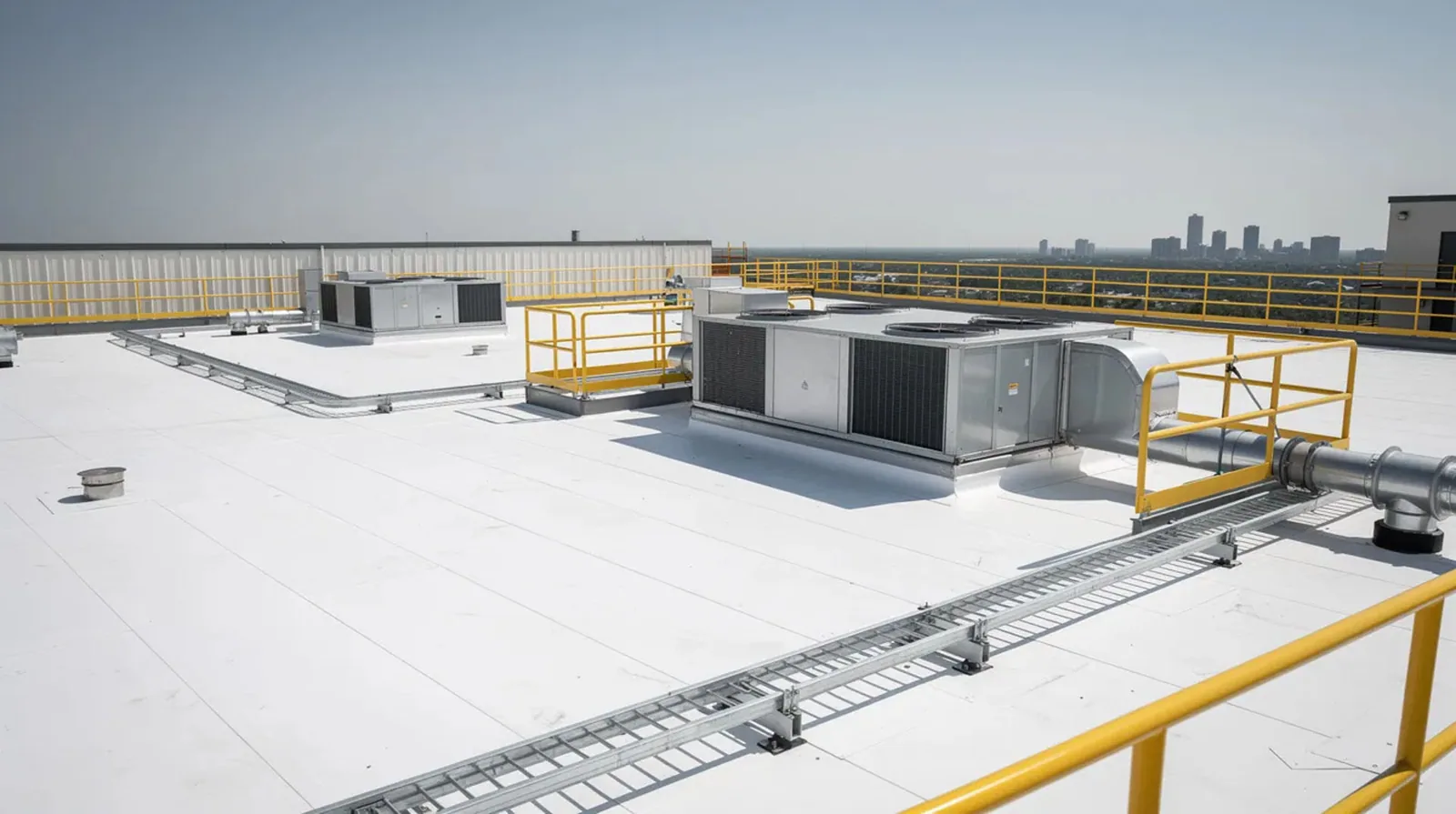
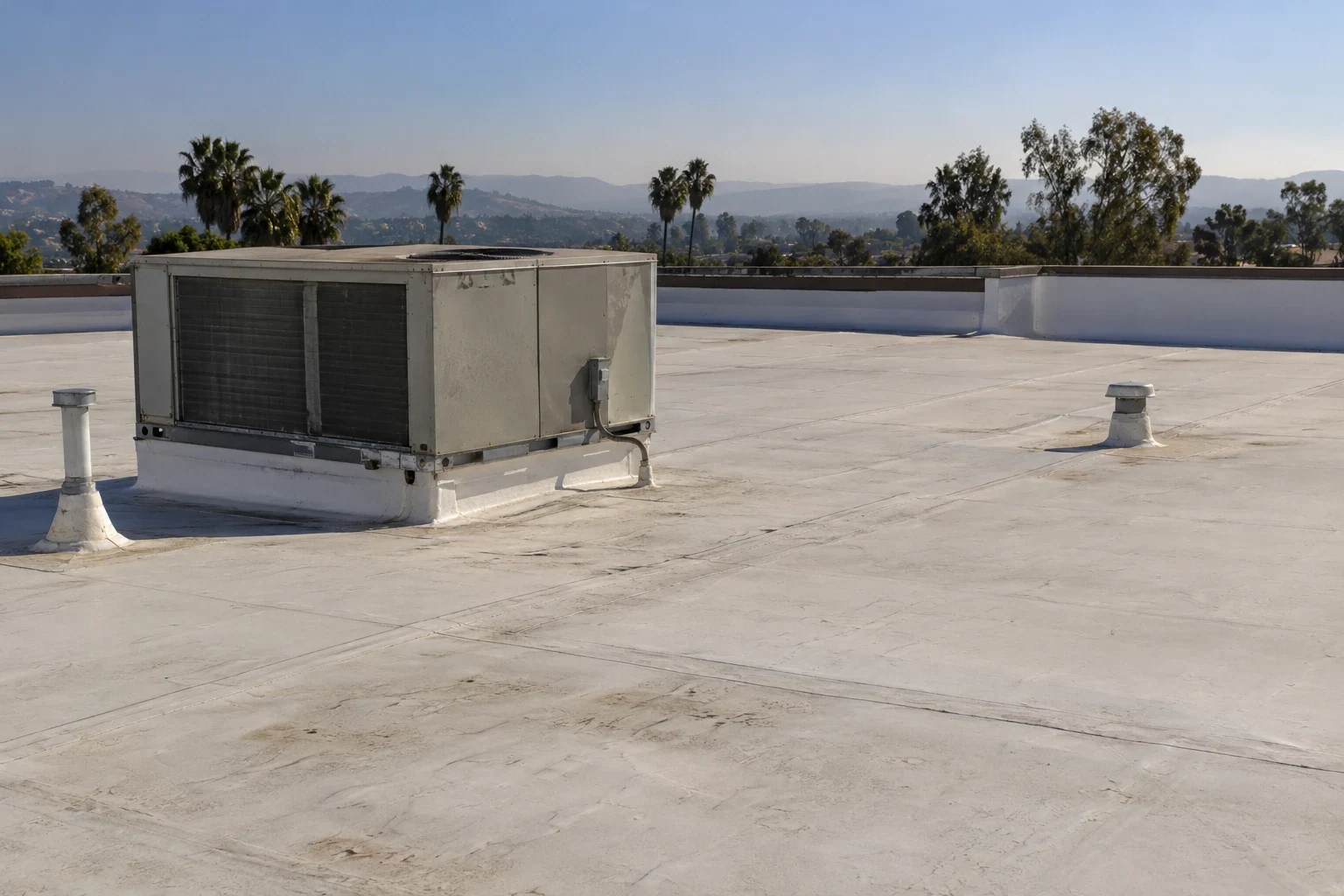
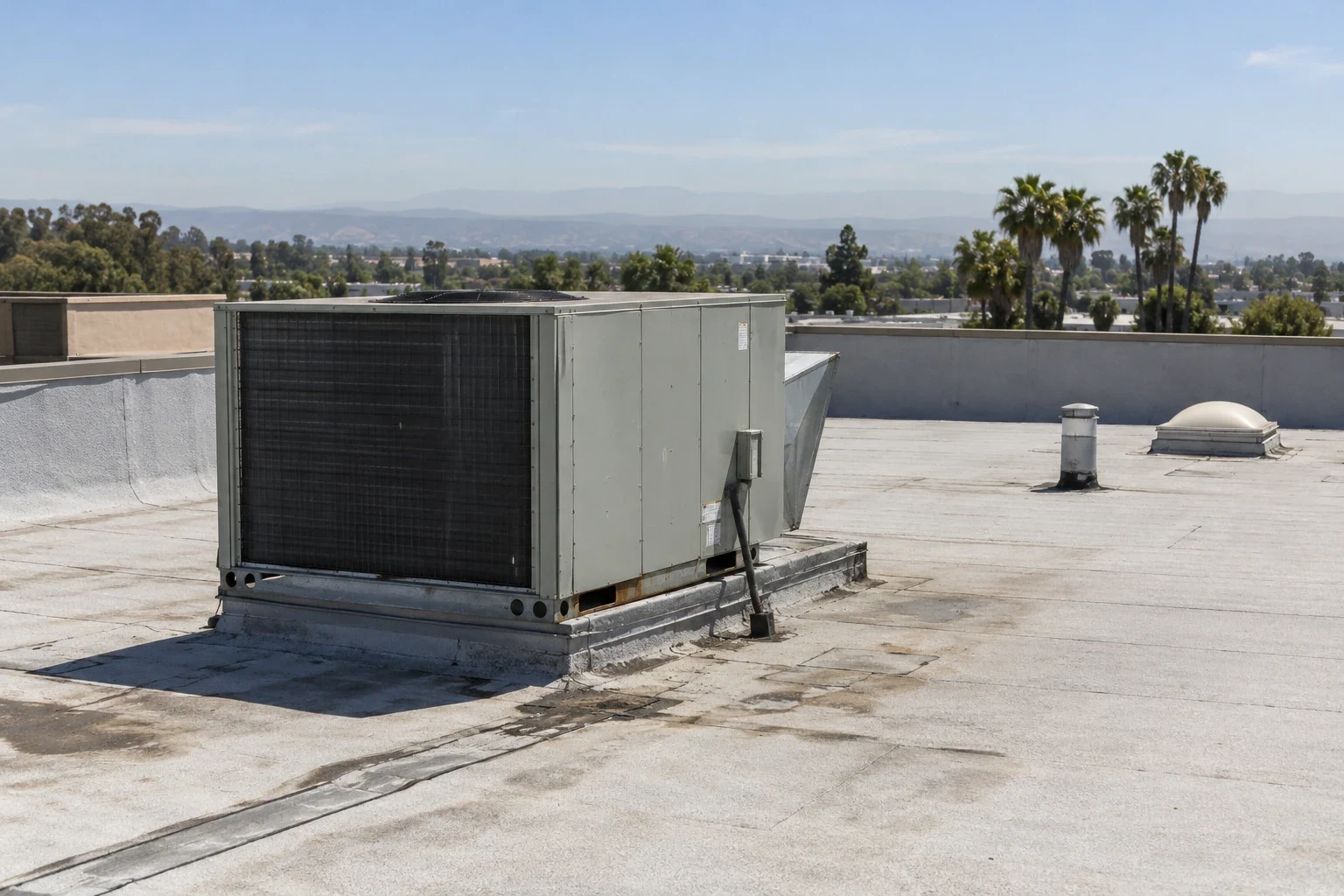
Kitchen exhaust, HVAC units, sign supports, conduits, and service walk pads can create a dense roof field. We check the curb seal, base flashing, counterflashing, seams, and nearby membrane for movement or separation. A repair should not be placed over grease residue, loose coating, or a wet substrate without proper preparation. If equipment must be disconnected or lifted, identify the mechanical trade and confirm who restores the curb, wiring, and startup.

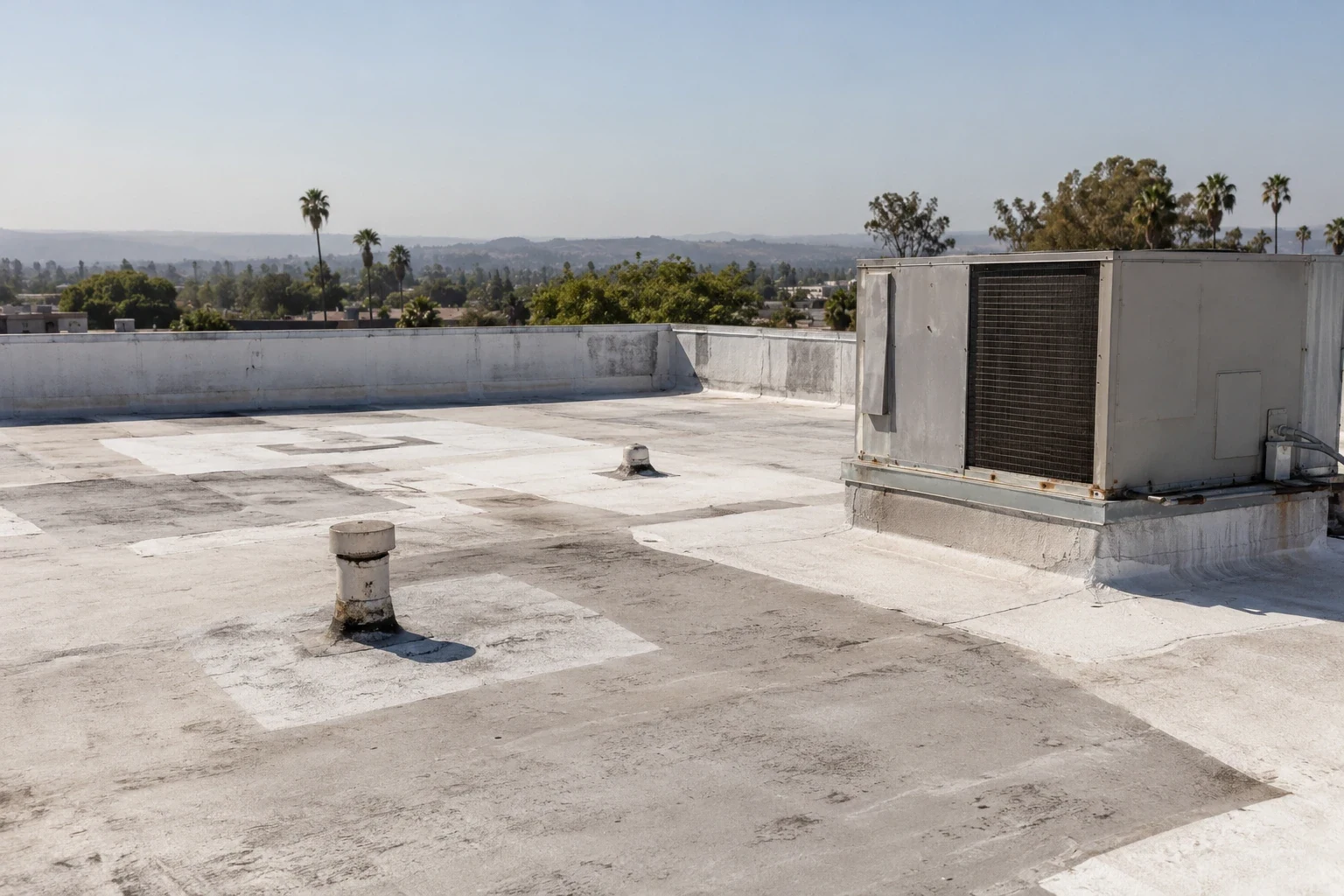
Retail expansions can leave old penetrations or a transition between different roof assemblies. We map each elevation and record a prior patch separately from the surface around it. A shopping-center roof inspection can organize multiple tenant areas, while a TPO system needs a compatible membrane weld or flashing detail. If a restaurant sits inside a larger complex, the owner should identify who controls roof access and who pays for work over shared space before the scope is issued.

Follow water to the outlet and the opening

We inspect drains, scuppers, gutters, overflow openings, low points, and roof-to-wall transitions. Debris can restrict an outlet, while open flashing or a puncture can admit water even when drainage is clear. We record each condition by roof section and photo reference. If a leak appears in a dining area but the nearest drain is across the roof, check the upstream path and details instead of assuming the stain sits below the entry.

Hilary’s August 2023 rain set a new Oxnard station record at 1.77 inches. A chain-level log can retain that date, while each store’s work order connects a reported leak to its own interior location, drainage route, and repair evidence. For food and retail operators, set a separate interior-protection plan if a test opening is needed. The report names the test purpose, location, restoration, and approval point before that opening is made.

Make records comparable across locations

For each store, keep the roof map, assembly, repair history, access notes, work window, and building contact in one record. Chain-wide reports can then compare which locations need immediate work, planned maintenance, or additional testing. The comparison must not merge unlike roofs. A restaurant with an older addition may have separate sheet goods, different drainage, or a prior coating that is absent at another location.

A multi-location roof program can use common field labels for urgent defect, maintenance item, and follow-up test. A property-management contact can help establish who approves access where a landlord and tenant share responsibility. If the chain shares dock schedules with a third-party provider, coordinate the roof window with the logistics operator. For locations that depend on scheduled deliveries, compare work windows with the operating calendar. The file should identify a point of contact, approval method, insurance documentation request, and the next date when the roof can be checked again.

Compare repair and replacement around trading hours

One split at a prepared seam can be repaired where the surrounding sheet accepts a tested tie-in. Several reopened laps, wet insulation, or a soft deck call for a wider investigation before the store approves removal. A recover is considered only after checking the existing layers, attachment, drainage, perimeter height, and penetrations. We state the removal assumptions, protected areas, materials, and daily dry-in sequence for each option. The owner can then compare downtime and cost drivers before approving work.

Oxnard's 2022 General Plan progress report notes operating distribution, cold-storage, and fruit-processing activity at Sakioka Farms, a local reminder that supply and delivery operations are part of the regional building mix. It does not identify a retail store's roof system. For a chain location, the proposed scope follows the field survey and store schedule. Send the roof plan, current leak reports, store hours, equipment list, tenant contacts, and deadline. We will return a marked repair boundary and a work sequence the location manager can review.

Schedule a chain location roof review

Send the store roster, roof plans, leak reports, operating hours, delivery schedule, equipment list, and access contacts. We will map each location and plan a repair window around its operations.

Common Questions

Can the roof be repaired after a store closes?

Often. We confirm access, staging, noise restrictions, weather protection, and any work that must continue after customers leave. The approved window sets the repair boundary.

How do you protect food or merchandise below a leak?

We identify the interior area, expected roof opening, protection method, and close-of-shift condition with the site contact. The operator directs any product move or food-safety control.

Can one inspection cover several stores?

Yes, with separate roof maps, photos, access limits, and findings for each location. We can group the schedule while keeping each building's condition distinct.

What if an HVAC unit blocks the flashing?

We note the limitation and identify the trade coordination or shutdown needed to expose the detail. The repair scope stays provisional until the receiving surface is visible.

Does a large ceiling stain define the roof repair area?

Not by itself. We trace the report against roof seams, curbs, drains, and slope, then mark the likely opening and any test needed to confirm it.

ServicesRoof SystemsProperty TypesIndustriesService AreasDamage RepairCapabilitiesManufacturersAboutRequest a Roof Assessment555-555-5555
Call555-555-5555