
Commercial Skylight and Penetration Flashing in Oxnard, CA
Review a skylight or flashing leak
Commercial Skylight and Penetration Flashing
A skylight curb can stay dry for years, then begin leaking where the roof membrane turns upward. We inspect the curb, flashing, cap, fasteners, sealant and surrounding roof before naming a cause. On a commercial building in Oxnard, CA, the detail may sit among rooftop units, exhausts, conduits or other penetrations that share the same drainage plane. A leak near one opening does not prove that opening is at fault. We trace staining, inspect the roof surface and document each transition that could admit water. The repair plan identifies whether glazing, curb, membrane or a combination needs work.
Trace water to the opening
We begin inside when access allows, locating stains, damaged finishes and the point where water first appears. The path above may run along a deck flute, framing member or conduit before it reaches the room. On the roof, we identify the related skylight or penetration and inspect the uphill side, corners, curb height, membrane laps and nearby seams. A wet ceiling location alone is not enough to assign the source.
We record whether the opening is fixed, operable or part of a larger daylight assembly, then note its visible condition and access requirements. Old sealant, cracked glazing or loose trim can matter, but each observation needs to be tied to the roof detail. A commercial roof inspection can assess the adjacent membrane and flashing when the source is not confined to one curb.
Inspect the curb and its corners
The curb raises the skylight above the roof. We check its height, rigidity, corners and deck connection. Soft wood, corroded metal or loose fasteners can compromise flashing even when the membrane looks intact. The curb must also leave water a path around it.
At each corner, the membrane must turn and join without a pinhole, fishmouth or unsupported fold. The condition of the existing roof system determines whether the repair can use a compatible flashing component or needs a broader tie-in. We do not bury questionable material beneath another layer. Where the curb itself is damaged, we describe what must be rebuilt and how the opening will be protected while work proceeds.
Sakioka Farms includes distribution and cold-storage development; that context does not establish a particular roof configuration. We follow site access rules. Sakioka Farms area coverage provides the location context; the field survey controls the detail.
Reconnect the roof membrane
Flashing must bond or attach to a sound part of the roof assembly and rise high enough to protect the curb transition. We remove failed material as needed, prepare the surface and install a compatible flashing detail. Corners receive particular attention because separate planes meet there. Fasteners, cover strips or liquid-applied materials are used only when they suit the roof system and manufacturer requirements.
A surface patch can fail if it bridges dirt, moisture or loose membrane. We check the substrate, dry the work area and extend the repair far enough to reach sound material. If the opening is close to a seam, drain or expansion joint, the repair must preserve those neighboring details. Commercial roof repair can address related membrane conditions found during the survey.
We photograph the curb before and after the tie-in, including corners and the uphill side. That record helps the owner understand what was exposed and which components were replaced. If the roof is under warranty, the project team can review requirements before altering a manufacturer detail.
Separate nearby penetrations
Pipe boots, electrical conduits, equipment supports and exhaust curbs may sit close to a skylight. Each opening requires a detail matched to its shape, movement and service access. We check whether multiple penetrations share one flashing pan or have separate boots, and whether any support blocks inspection or water flow. A skylight repair should not leave a nearby pipe boot split or a conduit seal concealed by new material.
When several openings share one roof area, we number them on a field sketch and list conditions separately. The sketch identifies which boot needs replacement and which curb can remain. If rooftop equipment supports need their own work, equipment-curb and support service addresses those load-bearing transitions.
Camino Real Business Park is planned for office, research, manufacturing and limited commercial uses alongside U.S. 101. Equipment and operating schedules vary. Warehouse roofing coordination starts with the actual roof and access plan.
Decide whether glazing also needs attention
Some leaks come from the curb flashing; others involve the skylight assembly itself. We inspect visible glazing, frame joints, gaskets, fasteners and the cap. Haze, cracking, failed seals or loose frame components may warrant a glazing specialist or replacement recommendation. Roofing work can restore the curb-to-membrane connection, but it cannot correct a failed skylight frame by covering it with roof material.
If the skylight remains serviceable, we protect it and keep flashing clear of components that need maintenance. Before replacement, we confirm dimensions, curb geometry, fall protection and interior use. We coordinate with daylighting or mechanical contractors when needed. The written estimate separates roof flashing from glazing work and assigns each interface clearly.
Account for local exposure without guessing
Some Oxnard shoreline zones fall within mapped coastal hazard policies that include sea-level rise. Those boundaries do not tell us the condition of an individual curb or skylight. We inspect the assembly, drainage and observed sealant or corrosion before proposing flashing work.
An August 2023 monthly total of 1.77 inches appears in the Oxnard NWS station record for Tropical Storm Hilary, its highest August entry. The regional weather record does not indicate whether a particular skylight leaked. We rely on current field evidence and repair history.
In industrial settings, roof access and indoor operations can dictate how an opening is protected during repair. We establish a safe work zone, confirm whether occupants or equipment below need protection, and keep debris from entering the building. We sequence work around roof conditions and building use.
Close the opening with a documented detail
Before work begins, we confirm the number of openings, roof access, interior protection needs and any restrictions on hot work or odor. Materials are staged so the opening can be secured if work pauses. Exposed areas are not left open at shift end.
After installation, we inspect the flashing around the full curb, check corners and transitions, and remove temporary protection. Photographs show the completed detail and any adjacent condition outside scope. Any suitable test is agreed in advance.
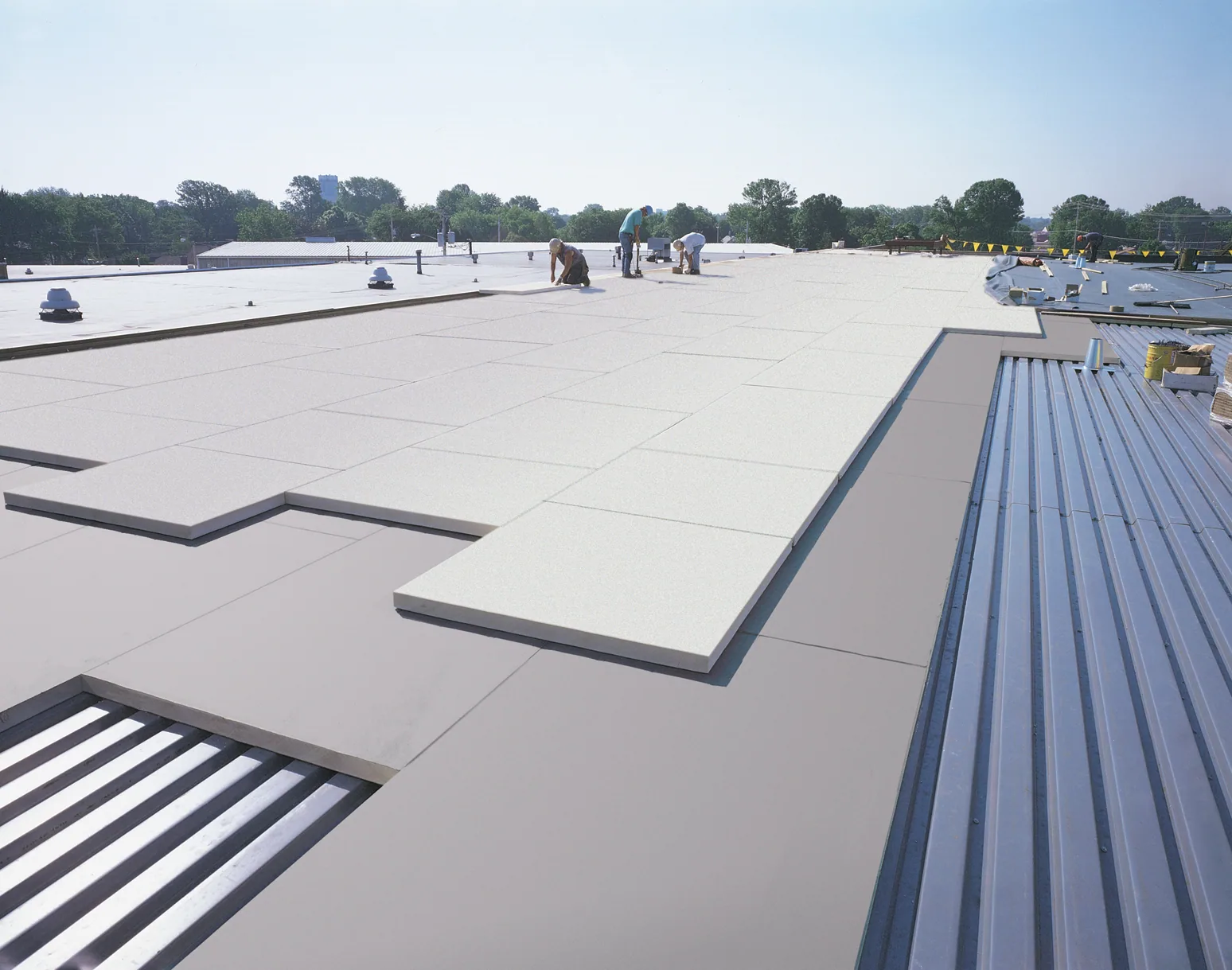
Owners receive a written scope that identifies the repair, materials and any recommended follow-up. If the inspection finds broader membrane deterioration, we can coordinate with roof recover planning or insulation and cover-board work. The goal is a watertight opening integrated with the roof assembly.
Related Roofing Work
More from Commercial Roofing Services and nearby services
Review a skylight or flashing leak
Share the roof location, interior symptoms, roof-system information and access requirements. We will inspect the opening and adjacent details, then scope the needed work in Oxnard.
Common Questions
How can you tell whether a skylight or its flashing is leaking?
We compare interior water evidence with the roof opening, curb, membrane corners and nearby seams. A stained ceiling does not identify the source by itself. The inspection follows the path and records whether glazing, frame joints, roof flashing or another nearby penetration needs attention.
Can a roofer repair the skylight without replacing it?
Often, if the glazing and frame remain sound and the leak is at the curb-to-roof transition. We inspect the frame, gaskets and curb before recommending work. If the skylight itself has failed, the estimate should identify glazing or replacement work separately from roof flashing.
Can you flash a skylight during a roof recover?
The curb height, new roof thickness and existing termination must be checked first. A new layer can leave inadequate flashing height or cover a weak curb. We include the opening in the recover detail and specify whether existing material can remain or must be removed.
What happens if several roof penetrations are close together?
We map and assess each opening rather than assuming they share one condition. The scope can separate skylight flashing, pipe boots, conduit seals and equipment supports, with a sequence that preserves access and drainage around every detail.
Will you test the repair after the flashing is complete?
Testing depends on the roof assembly and the opening. We first verify installation and photographs. If a controlled test is suitable, we agree on the method and limits with the property representative; testing should not introduce water where it could affect occupied space or sensitive equipment.