Commercial Ponding Water Roof Repair in Oxnard, CA
Request a ponding-water roof inspection
Commercial Ponding Water Roof Repair
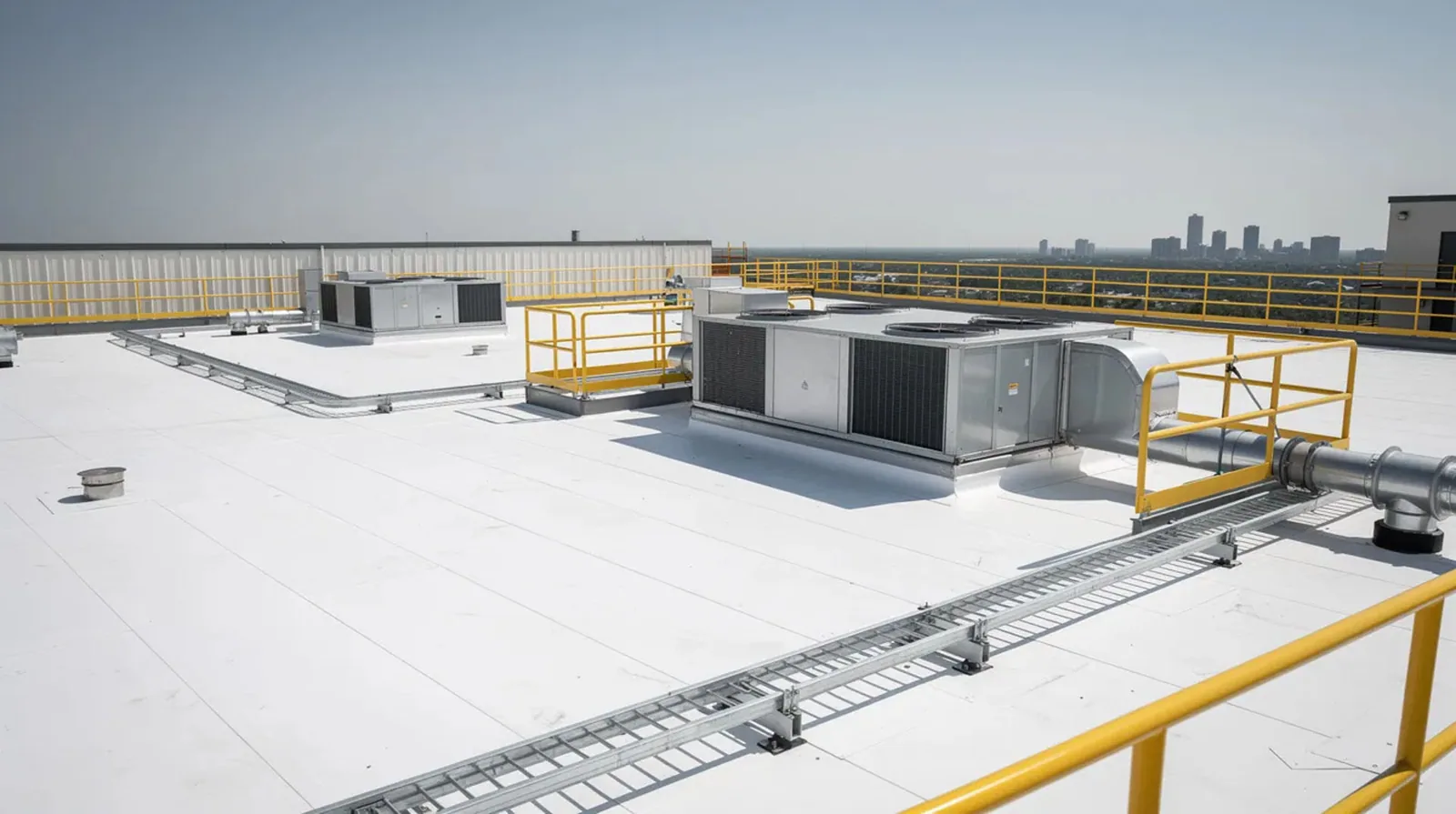
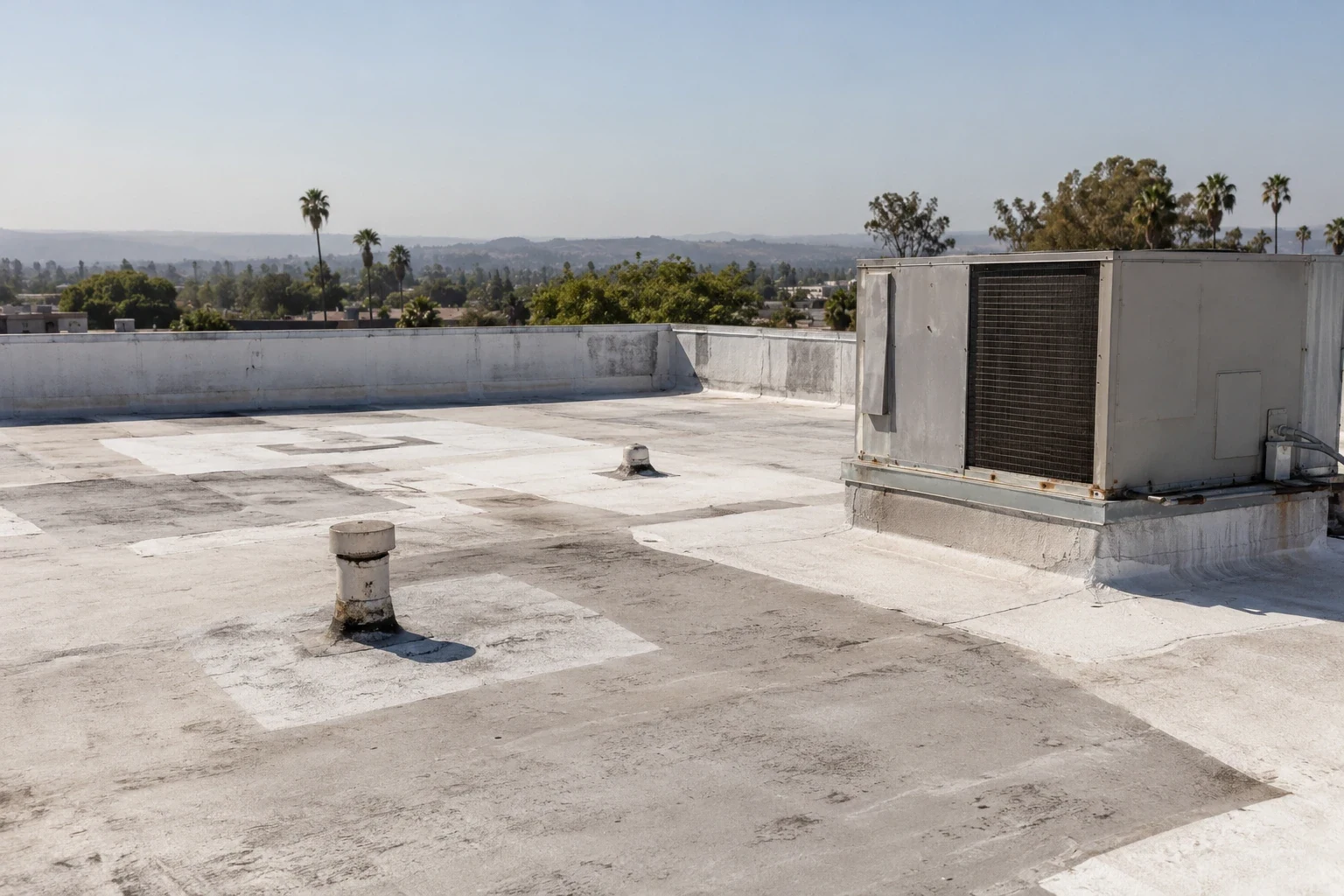
A shallow pool is a location to investigate, not a repair specification. Mark its edge, depth where practical, and distance to the nearest drain, scupper, or overflow. Then follow the roof slope and identify anything that holds water in place: debris, a raised patch, a curb, settled insulation, or a change in deck plane. The repair depends on which condition the field walk supports.
Sakioka Farms Business Park includes stormwater facilities as part of its subdivided business area, alongside city-reported distribution and cold-storage uses. Camino Real Business Park fronts U.S. 101 and includes manufacturing, research, office, and limited commercial uses. These local settings help frame delivery and site coordination; drainage on the roof still requires its own measurement. A Sakioka Farms Business Park roof assessment begins with the assigned building plan and the outlet serving that roof.
Measure the pool and its water path
Record whether water remains after ordinary drainage time, whether it recurs in the same place, and how the low point relates to visible slopes and drains. Mark ponding lines, sediment, algae, debris, membrane wrinkles, and changes in insulation height. Check whether an overflow is present and clear. A surface that looks level from a ladder may have a different slope across the full roof section, so field marks should be tied to a plan or measured elevation.
At the Oxnard National Weather Service station, Hilary brought 1.77 inches in August 2023, the highest August total recorded there. For a ponding review, compare the date of any water report with measured low points and outlet maintenance to identify whether roof geometry or a restriction is holding water. Mark the outlet condition and photograph the low point for a follow-up comparison. A commercial roof inspection can map the condition, while a drain and scupper service can address a confirmed outlet restriction.
Oxnard's Local Coastal Program maps hazards, including sea-level rise, for designated coastal parcels. Check a particular location against current maps if coastal planning affects long-range decisions. That map does not replace measurement of the roof's slope or the flow path at the building.
Check the drain before changing the slope
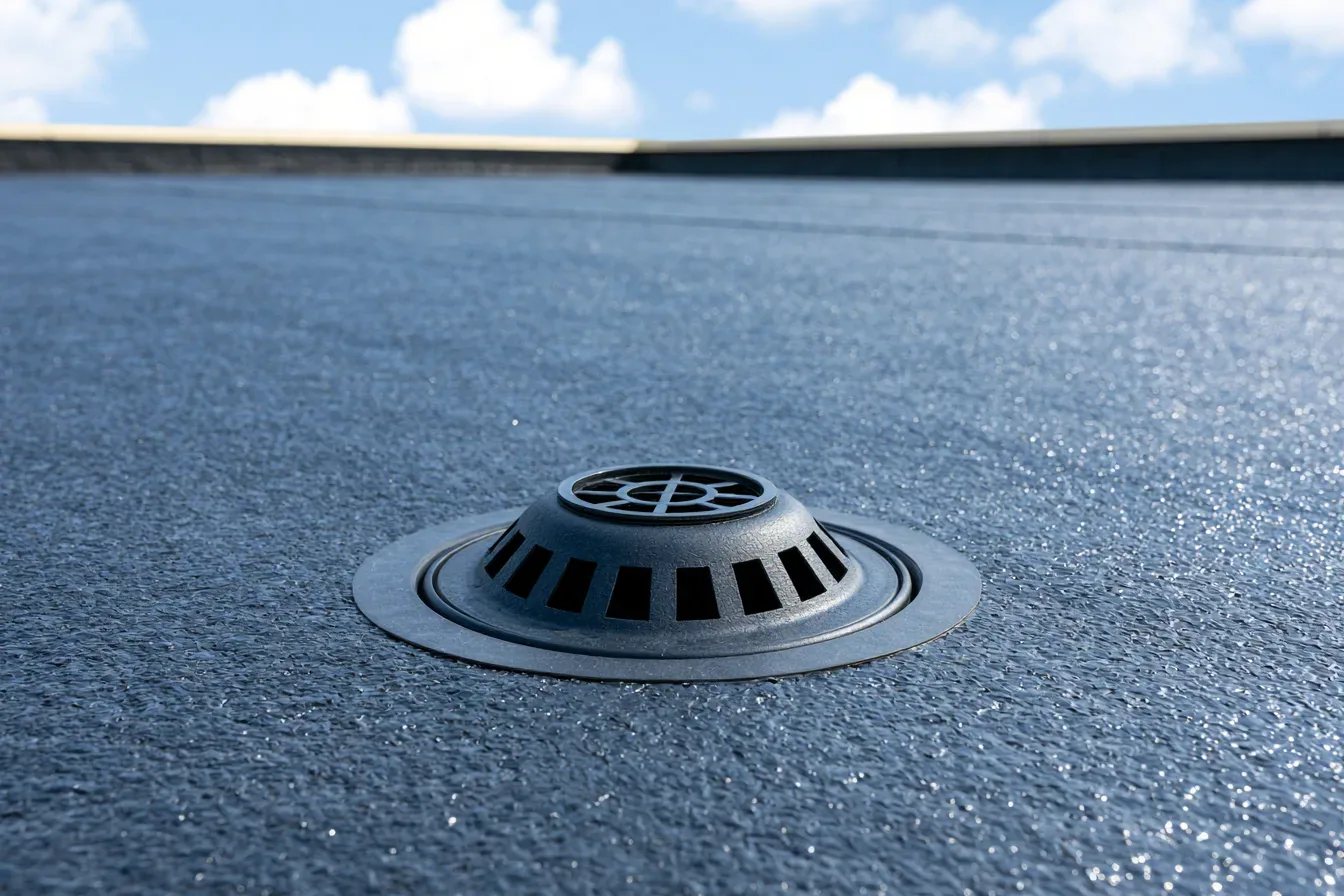
Clear leaves, packaging, and sediment from the drain bowl and strainer, then inspect the clamping ring, membrane flashing, connection, and downstream flow where access allows. At a scupper, look for a blocked throat, deteriorated metal, open corner, or a discharge detail that sends water back to the wall. Confirm that an overflow sits below the membrane termination and has a clear route. Cleaning may resolve a service blockage; it will not correct a settled or incorrectly sloped roof section.
At Sakioka Farms, the business park's stormwater infrastructure is a site-development feature, separate from any individual roof drain. The property's own connection and maintenance responsibilities need verification. At Camino Real, manufacturing and research uses can affect when a crew can access roof outlets. A service plan should state who clears the roof, who inspects the connection, and when an outlet needs follow-up. A flashing-failure assessment can address an outlet perimeter that no longer sheds water.
Do not enlarge a drain opening or add a scupper without an approved design and coordination with the building's drainage system. The outlet, membrane flashing, overflow elevation, and discharge destination work as one detail. We mark the condition and identify when a plumbing or design review is needed before physical changes begin.
Look for a raised patch or a deflected section
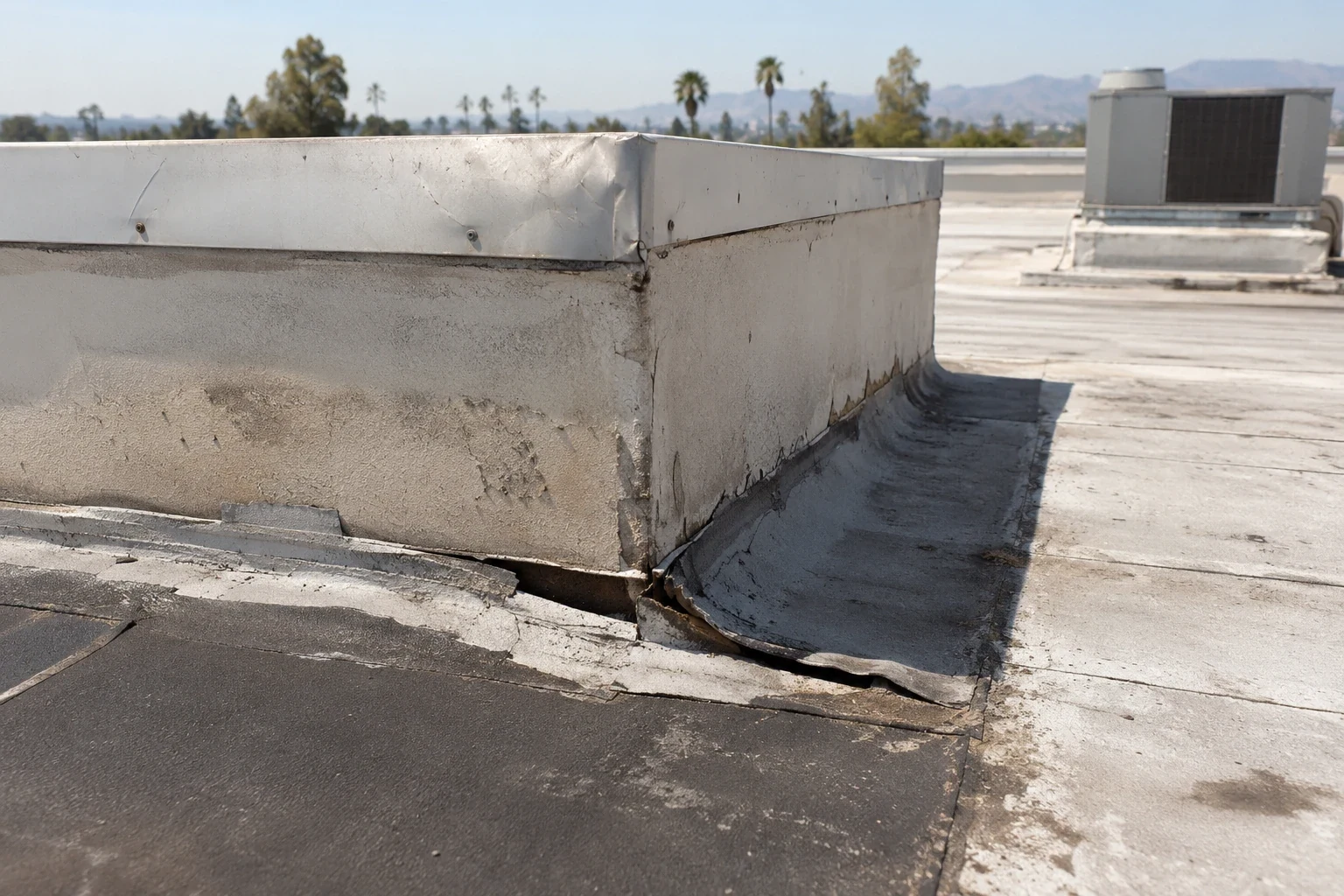
Repeated repairs can create a ridge that diverts water into a nearby low point. Compare the patch height, substrate, and membrane around the pool. Check whether insulation has compressed, the deck has deflected, or an addition created a change in elevation. These conditions call for different scopes, and a surface photograph alone may not distinguish them.
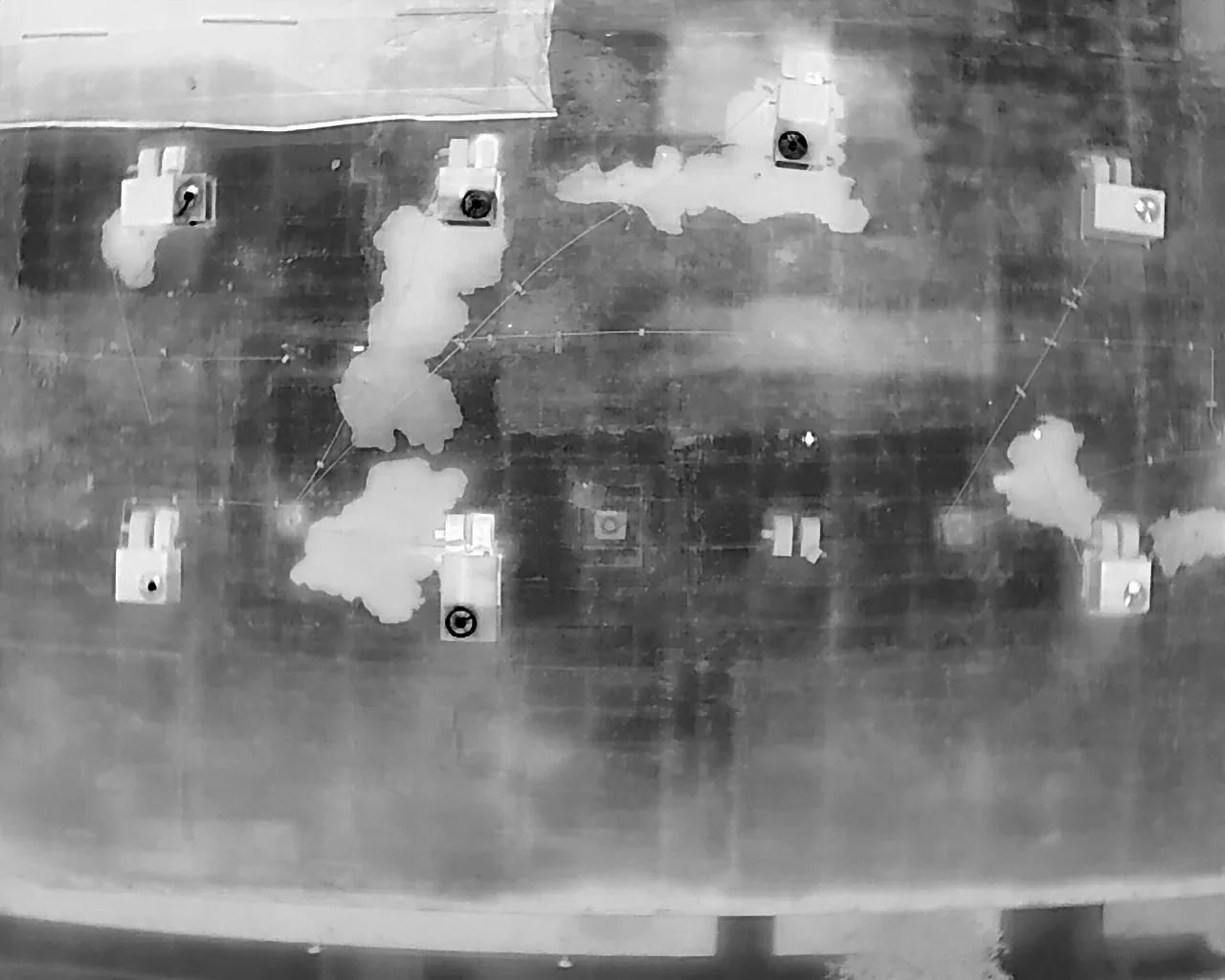
Confirm the roof assembly from records and exposed edges before proposing tapered insulation or a recover. Identify attachment, existing layers, perimeter height, drainage, and the condition below suspected wet areas. If a test opening is needed, mark its purpose, location, protection, and restoration detail for approval. A moisture survey may help select a test area, but readings should be checked against the actual assembly before removal is proposed.
Ordinance 3070 places the 2025 California Building Standards Code in Oxnard’s local code framework. A proposed drain move or slope alteration needs design and permit review for that property; our inspection records elevations, outlets, and visible construction for that review.
Choose correction that addresses the cause
Where debris is the issue, a documented cleaning and service interval may restore flow. A failed drain flashing or scupper can be repaired when the surrounding membrane and connection remain sound. If a raised patch blocks the route, remove or rebuild it using a compatible detail. If slope or deck movement is implicated, a durable correction may require design input, insulation work, or broader replacement.
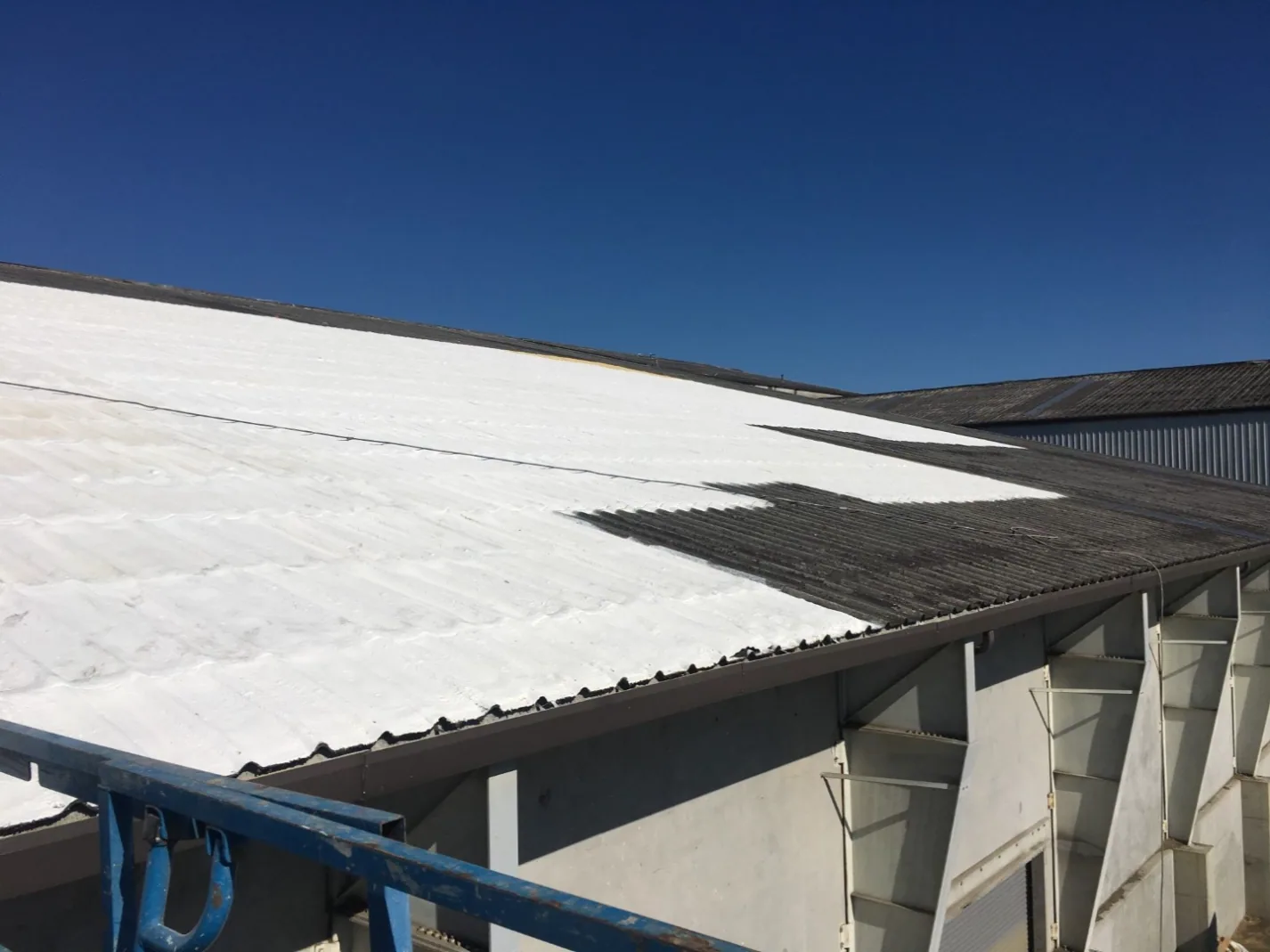
Coating cannot create slope or dry wet insulation beneath the surface. A recover should be considered only after layer count, attachment, edge height, drains, and moisture condition are understood. Replacement planning identifies tear-off limits, tapered insulation assumptions, outlets, overflow elevation, perimeter details, and the daily dry-in boundary. A roof repair scope addresses a confirmed obstruction or flashing defect; replacement planning can price broader correction when the assembly supports it.
Cost and timing depend on access, drain count, equipment around low points, test locations, interior protection, and whether the roof can remain watertight while slope work proceeds. State what is included in cleaning, testing, design, and roofing. If opening the roof exposes wet insulation or deck damage, stop at the agreed hold point and obtain direction before increasing removal.
Keep the low point on the maintenance map
Record the measured or marked pool boundary, nearest outlets, observations, completed work, photographs, and areas that were not reached. Update the roof plan with drain, scupper, and overflow locations. Note whether the correction was cleaning, flashing repair, insulation work, or a design change. A later visit should compare water depth or drainage time against the same mark.
Provide roof plans, past maintenance records, drain-cleaning notes, leak locations, recent repair details, and access rules when requesting service. A wind-damage roof review may find a displaced edge that changes drainage, while a seam repair inspection can address an open joint near a low area. Keep each finding tied to the portion of roof inspected.
Related Roofing Work
More from Roof Damage Repair and nearby services
Request a ponding-water roof inspection
Send roof plans, drain records, photographs after rainfall, prior repairs, and access details. We will mark the low area, trace drainage, and identify the correction supported by the assembly.
Common Questions
When does ponding water call for a roof repair?
A repeated pool, blocked outlet, failed flashing, or raised repair may justify work. We measure the area, trace the outlet path, and identify whether the cause is maintenance, assembly condition, or slope.
Can a new drain solve a low area?
Only if its location and connection address the water path and the approved design allows the change. The membrane flashing, overflow elevation, downstream system, and structural conditions need review first.
Does Hilary's rainfall record show a local roof drains poorly?
No. The Oxnard station's August 2023 record is regional weather context. A roof's drainage performance comes from its measured slopes, outlets, and maintenance history.
Will roof coating remove ponding?
No. A coating may protect a compatible, prepared surface, but it does not create slope or correct a low deck. The cause of the pool should be identified before choosing a surface system.
What records help diagnose recurring ponding?
Share the roof plan, drain locations, dated photos, cleaning history, prior patches, and reports after rainfall. Repeatable field marks help compare the low point and water path over time.