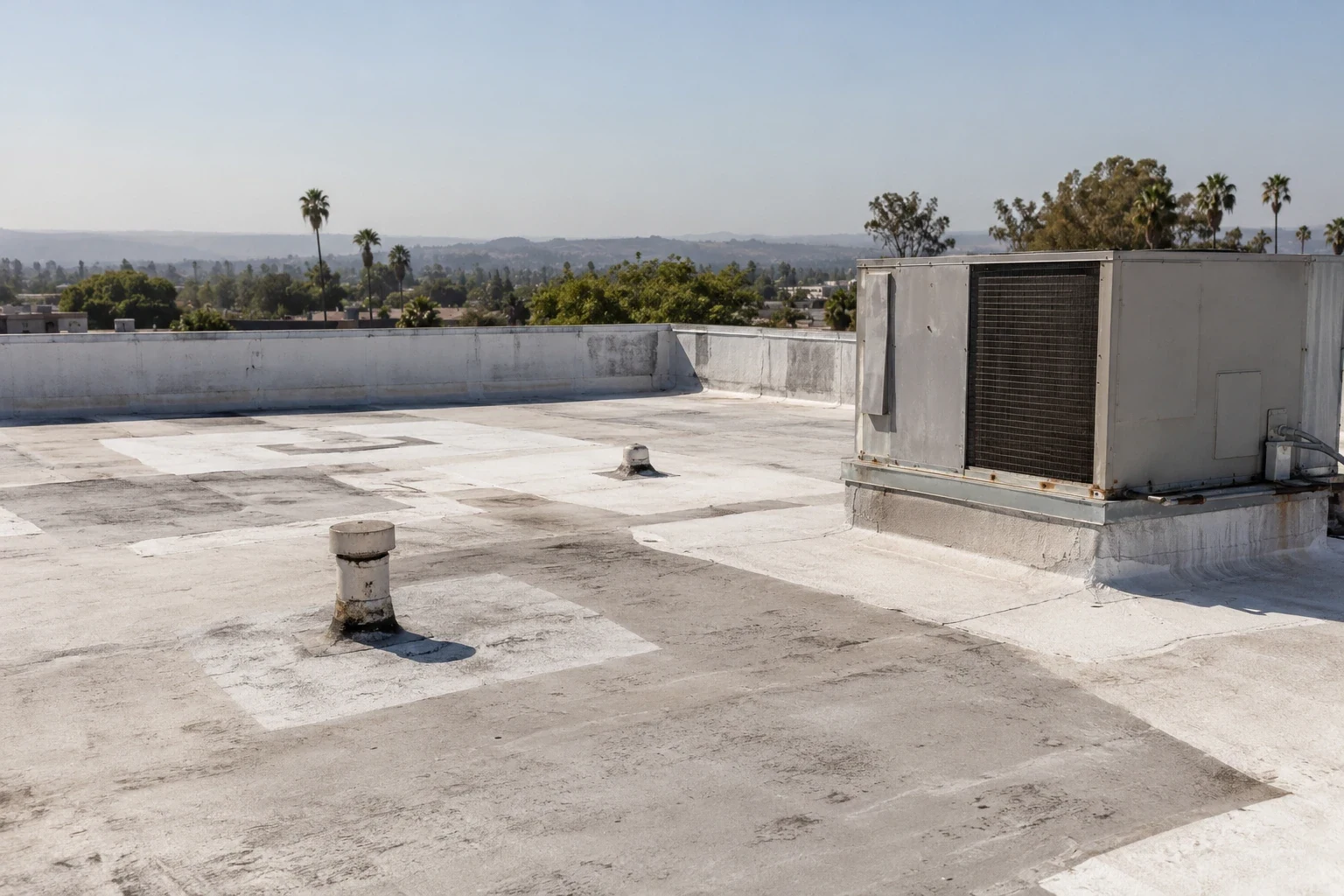
Commercial Roof Seam Failure Repair in Oxnard, CA
Schedule a seam-failure inspection
Commercial Roof Seam Failure Repair
A seam that parts under a probe tells you where to look next: across the lap, toward the nearest termination, and beneath the surrounding sheet. Mark the open length and check whether the material remains bonded on both sides. We identify the assembly before choosing heat welding, adhesive, fasteners, or a panel-specific repair. The method follows the installed roof, not the appearance of the opening alone.
Sakioka Farms Business Park has operating distribution and cold-storage uses, while the Camino Real Business Park plan includes manufacturing, research, offices, and limited commercial activity. Those building contexts can affect roof access and equipment traffic, but they do not identify a seam condition at any property. A Sakioka Farms Business Park seam inspection records the actual roof section, system, and affected run.
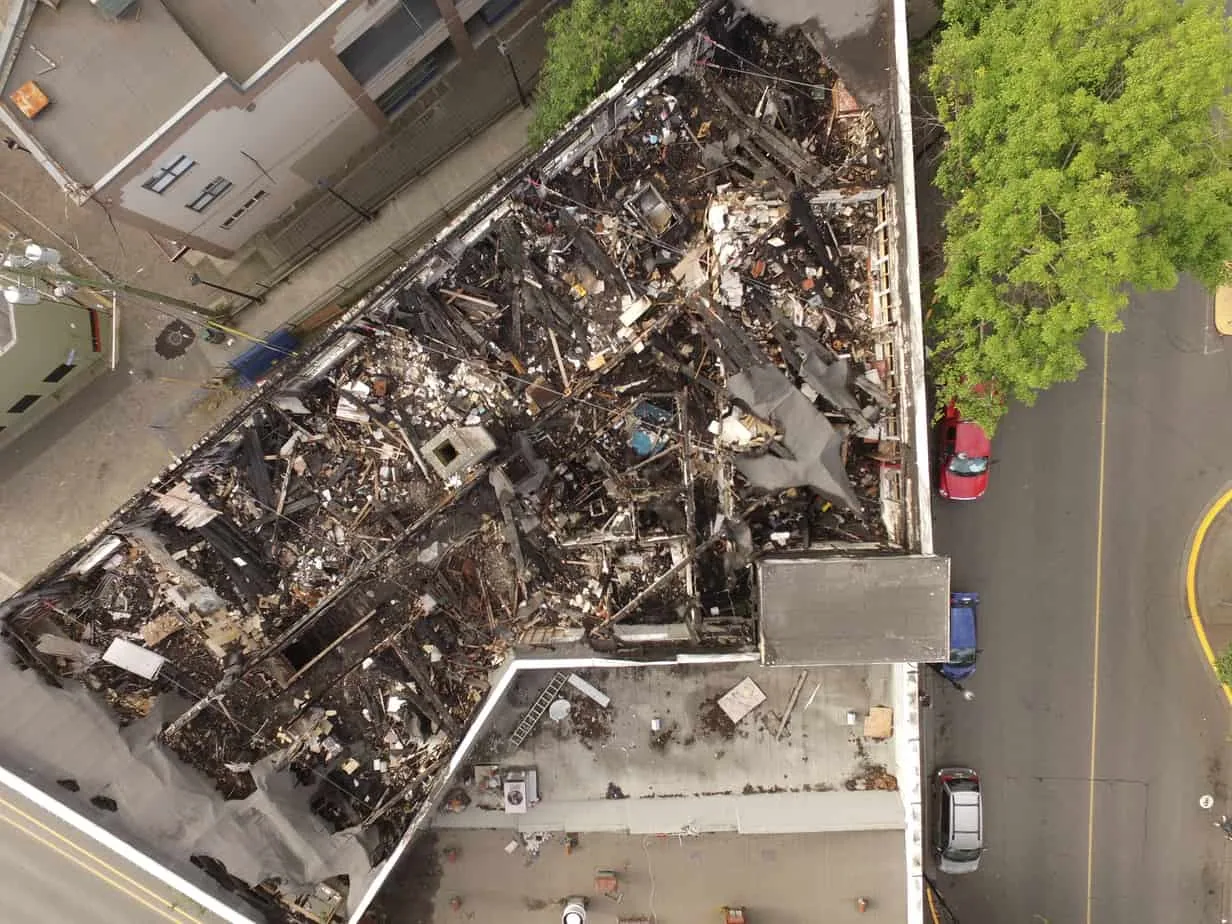
Map the open run before preparing a patch
Record where the seam begins, where it ends, and whether the separation follows a lap, weld, fastener row, panel joint, or transition. Check nearby wrinkles, contamination, bridging, trapped moisture, and signs of repeated repairs. Probe a suspect edge only as permitted by the material and roof condition. A short opening beside a curb may continue along the full panel run or sheet lap, so mark the boundary before removing material.
For thermoplastic membranes, verify that the sheet remains suitable for a heat-welded repair and that the surface can be cleaned and prepared. EPDM, modified bitumen, built-up roofing, and metal panels use different repair details. Confirm the product or system from project records and exposed edges. A commercial roof inspection can record seam condition by roof zone, while a cover-board review can help when compression or substrate movement appears to affect the lap.
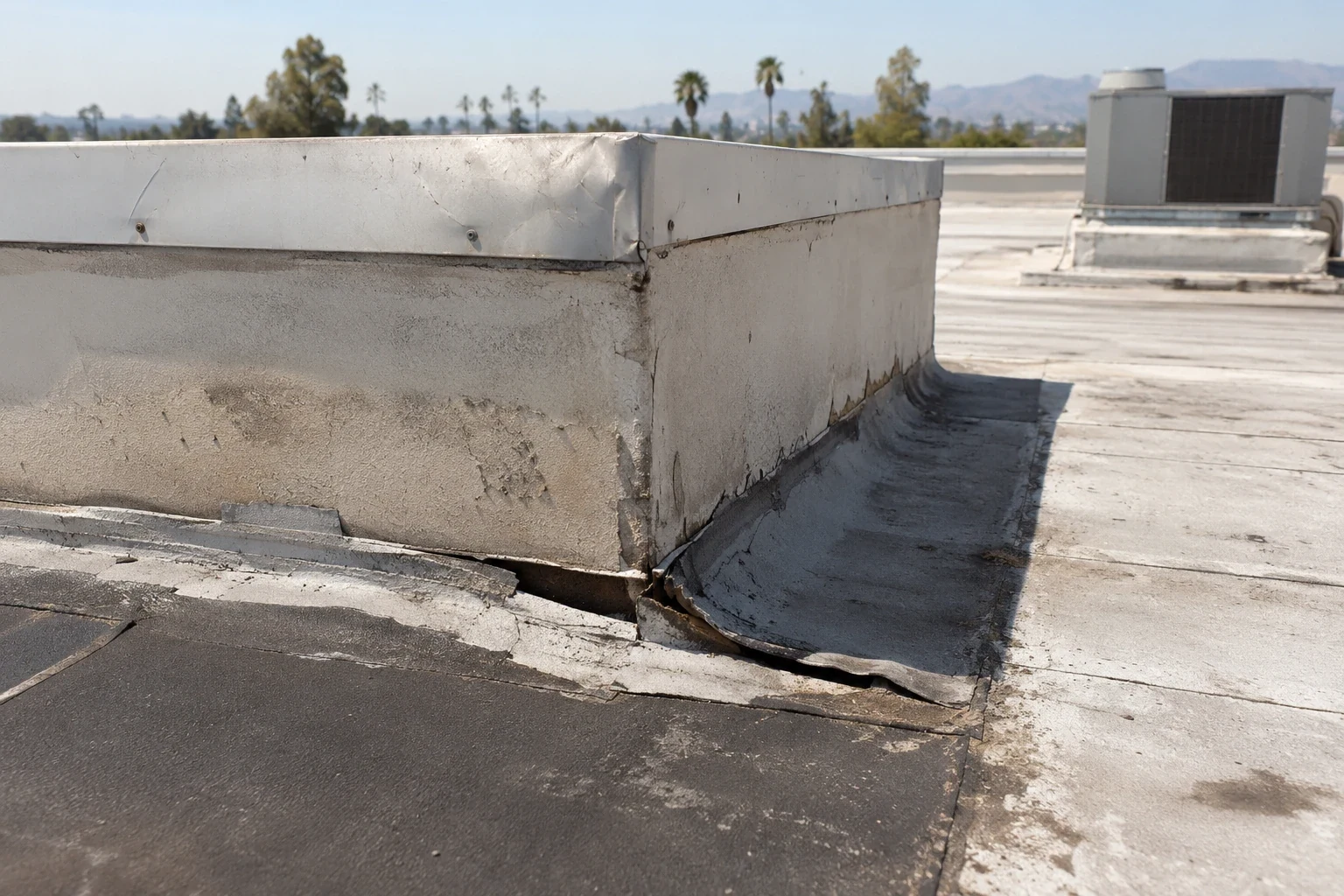
At a transition, inspect the seam's connection to curb flashing, wall metal, or perimeter termination. If a detail is moving or under-supported, a surface patch may only move the opening to the next weak point. A flashing-failure review can define the adjoining transition that needs a separate repair.
Check attachment and substrate beside the split
A seam can separate because the material is aged, contaminated, poorly prepared, stretched, or moving with the layer beneath it. At metal panels, inspect fasteners, sidelaps, end laps, clips, and the support line. At membrane roofs, check weld width, adhesion, sheet tension, plate placement, and cover-board condition where visible. Identify the observed cause only when the field evidence supports it; otherwise list the test or opened area needed to decide.
Where the roof has multiple layers or a prior recover, compare drawings and service records with exposed edges. Hidden attachment can change how far the repair must extend. Set a test opening at a representative seam only when the result will answer a defined scope question. The approved method should include protection, sample location, inspection, and restoration. Do not transfer one test result across unrelated roof sections without evidence.
Camino Real Business Park's planned research and manufacturing uses make rooftop equipment coordination a useful access question for that area. At any assigned property, verify the actual service route and whether mechanical work has disturbed a seam. The operator can identify recent unit or conduit changes; the roof inspection establishes whether those interfaces connect to the opening.
Trace the seam to the leak and drainage path
Interior water may appear away from the open lap. Record the room, date, and time reported, then compare it with the roof plan, low points, penetrations, and transitions. Check whether water can move below the membrane before reaching the deck opening. Mark related stains and wet areas separately so the repair scope does not treat one visible seam as the only possible entry.
At the Oxnard station, Tropical Storm Hilary produced 1.77 inches of rain in August 2023, setting a new August monthly high. Compare the leak date with work orders, outlet conditions, and the seam marks from the inspection. A drain and scupper check can address an outlet restriction that keeps water against the seam. A drain and scupper check can address an outlet restriction that keeps water against the seam.
Oxnard's coastal program maps hazards, including sea-level rise, in designated coastal areas; parcel location matters. Use the current map where coastal planning affects a capital decision. The roof diagnosis still depends on the condition observed at the seam and its water route.
Restore a continuous, compatible seam
Remove loose or contaminated material to sound edges, prepare the receiving surface, and install the repair specified for the identified system. A membrane patch needs compatible sheet, correct overlap, and a completed weld or bond. A metal panel may need a fastener or panel replacement detail. At a long split, extend the work to stable material and include the associated termination. State the length, width, preparation, material, and field check in the scope.
If adjacent attachment or insulation has failed, identify the added work rather than covering it with a larger patch. A repair may be appropriate for an isolated separation; repeated openings, broad seam failure, or wet layers can call for testing, recovery, or replacement. A commercial roof repair proposal should show the supported limit. replacement planning can include the larger assembly if the existing roof cannot hold a durable tie-in.
Timing and cost depend on roof access, seam length, system type, weather protection, equipment location, material cure or weld checks, and interior operations. Include the work window and hold points in the estimate. If the seam opens farther during preparation, pause and document the new boundary before changing the work order.
Track the seam at the next service interval
Closeout identifies the building, roof section, system, seam location, repair method, material, photographs, and any unresolved condition. Mark the beginning and end of the repair on the plan. Note where an area was not tested or could not be accessed. Future inspection can probe the same segment and compare attachment and surface condition with the original record. Keep weld checks and moisture test results beside their corresponding roof-zone marks. Include the inspection date and access limitations in the service history.
Provide roof plans, product or system details, maintenance history, leak locations, and access constraints before service. A puncture assessment addresses a hole through the field surface, while a wind-damage review may find a seam lifted with its edge attachment. Keep related findings distinct unless the field shows a connected failure.
Related Roofing Work
More from Roof Damage Repair and nearby services
Schedule a seam-failure inspection
Share the roof plan, system information, leak location, repair records, and access window. We will mark the failed seam, check adjacent attachment, and define a repair limit supported by field conditions.
Common Questions
How do you find the full length of a split seam?
We mark the visible opening, inspect adjoining lap and termination details, and test the neighboring material as allowed by the assembly. The work boundary extends only to stable, compatible material supported by the inspection.
Can you heat-weld every commercial roof seam?
No. Heat welding applies to compatible thermoplastic membranes when the surface can be properly prepared. EPDM, built-up, modified bitumen, and metal require different materials and connection details.
What if the seam opens above wet insulation?
The wet area must be defined and the substrate reviewed before patching. We document the test boundary and restoration, then price the added removal or replacement only after the condition is confirmed.
Does the Hilary rainfall record prove seam failure?
No. It is a station rainfall measurement from August 2023. A seam condition is established through an inspection tied to the specific roof and repair history.
When should a seam split lead to replacement?
Replacement may be appropriate when openings recur across broad areas, attachment is failing, or the roof cannot accept compatible repairs. We map the evidence and compare options before expanding the scope.