Versico Commercial Roofing in Oxnard, CA
Review the Versico roof in the field
Versico Commercial Roofing
A membrane plan has to account for the roof's service traffic, not only the field sheet. Versico's commercial portfolio includes VersiWeld TPO and VersiGard EPDM systems, which use different seam and flashing methods. We confirm the installed product, deck, insulation, attachment, and leak path before preparing repair or replacement work. Northfield-Seagate Business Park is a broad Oxnard planning area designated for limited and light industrial uses. That context can matter when arranging deliveries or rooftop service access, but we base the work plan on the building's actual operations and layout. Our Northfield-Seagate service planning begins with the roof walk, then follows the low points, perimeter, and penetrations.
Compare the sheet with the complete assembly
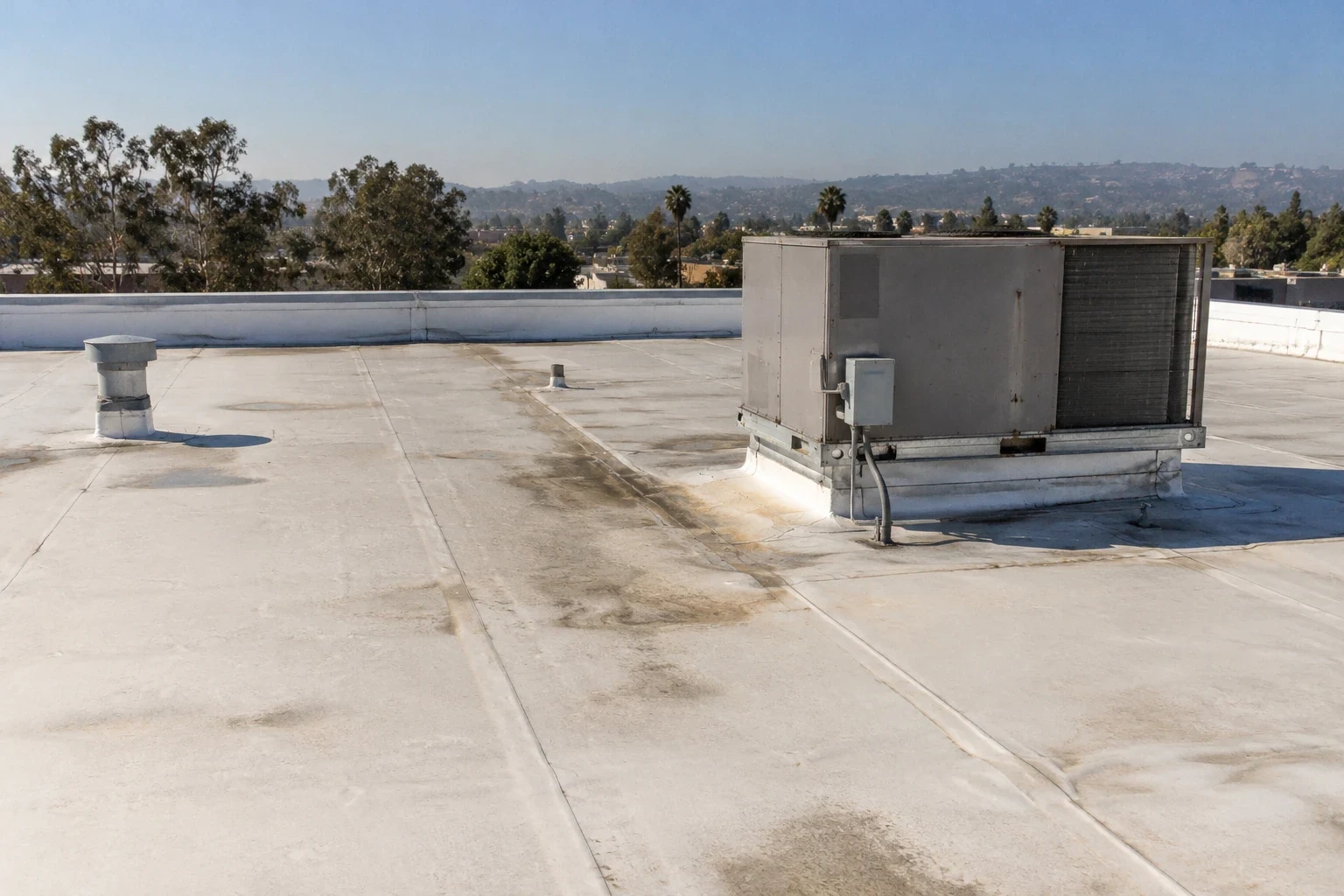
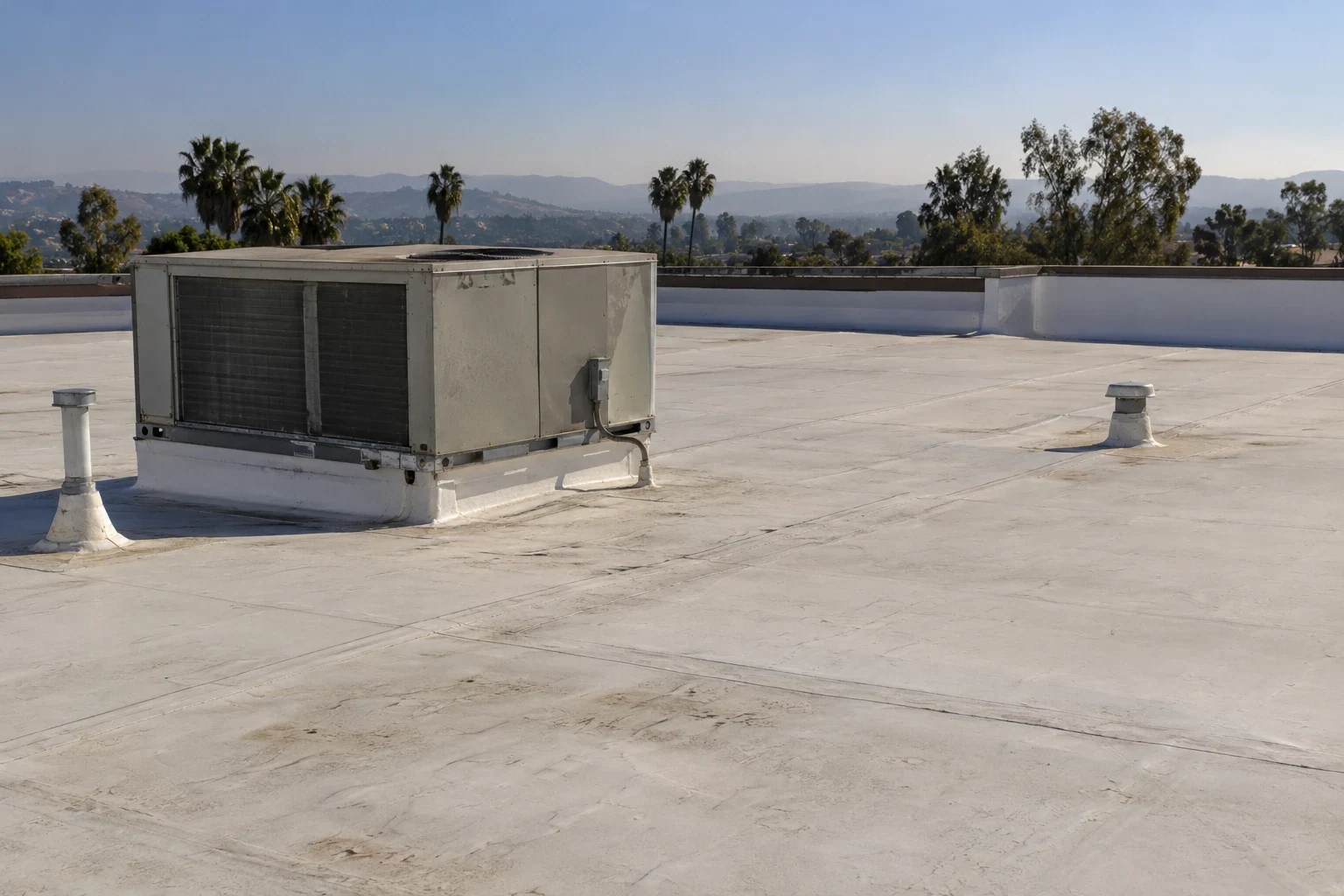
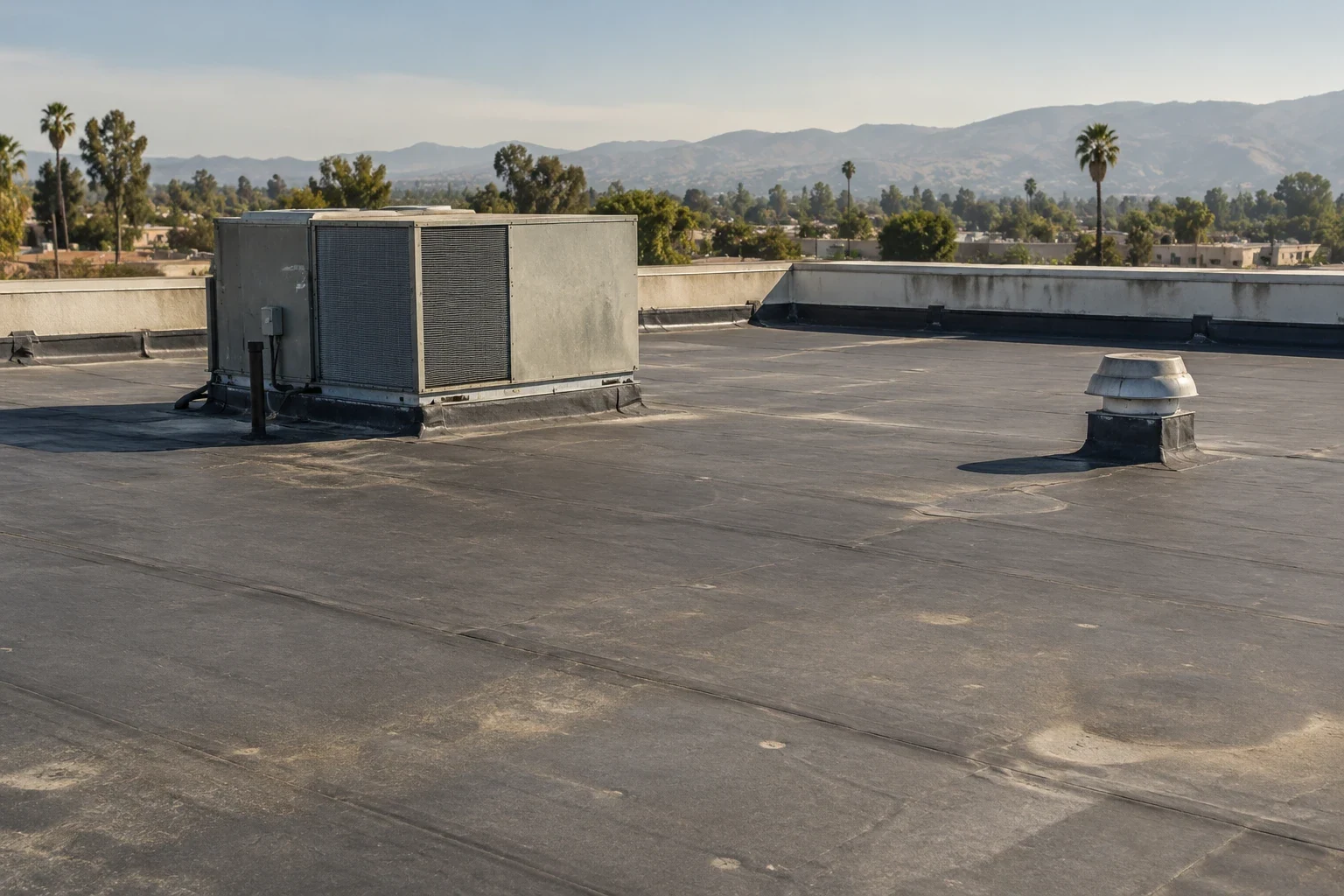
VersiWeld is a TPO membrane system, and VersiGard is an EPDM family. The seams, accessories, and repair details differ, so the first step is identifying what is installed. We inspect surface condition, field laps, flashings, penetrations, drains, and terminations. Then we review the deck, insulation, cover board, attachment, and edge restraint against available project records. An assembly decision should account for the whole path from roof field to wall and drain, not a single product label.
Versico offers TPO sheets in different configurations, including options with factory-applied adhesive. That product feature changes the installation procedure but does not remove substrate, alignment, or detail requirements. Mechanically attached TPO depends on attachment design and perimeter conditions as well as good seams. EPDM relies on different products for joining and flashing. Our TPO roof work and EPDM system repairs follow the membrane-specific details in the project documents.
At the Central Industrial Area, Oxnard planning identifies agricultural processing and vehicle or equipment repair and storage. Active processes can constrain access, which we verify on the building. We mark each penetration and equipment route, then confirm a work window with the facility contact. If another trade will need to cross the roof, the schedule protects the completed section from avoidable traffic.
Locate the entry point and extent
A wet ceiling tile rarely marks the exact roof opening. Water can move along a deck, insulation, or framing before it shows inside. We compare the reported location with nearby seams, curb flashings, walls, drains, and equipment supports. A field mark and photograph show the point we tested and the area that needs follow-up. If moisture extends beyond a visible split or puncture, testing can establish whether the repair remains local or reaches a larger section.
For a Versico assembly, the inspection record should identify the installed membrane and the detail where water could cross the roof plane. We trace reported entry toward low points, drains, scuppers, and overflow routes, then photograph the seams and flashing along that path. A drone image can document broad layout or equipment congestion; hands-on access remains necessary to evaluate welds, terminations, and curb corners. The repair scope follows the observed condition and the compatible system detail.
For a TPO roof, an open heat weld may need cleaning and a compatible repair weld. For EPDM, we inspect the lap and substrate before using products specified for that system. We also check perimeter metal and fasteners, since edge movement can affect membrane attachment. The seam repair plan should identify the material, location, preparation, and completed detail. If the leak starts at a wall turn or equipment curb, the flashing failure repair needs to restore that transition as well.
Select repair, recover, or replacement
A small defect can be repaired when the surrounding VersiWeld or VersiGard sheet is sound and the repair material can bond or weld to a stable boundary. If patches keep opening, we map the pattern and inspect attachment, drainage, and roof traffic. Repeated seam failures can point to an assembly or workmanship issue beyond one isolated spot. We explain which findings support a local repair and which call for broader testing.
Recovering the roof requires a dry and stable base, suitable deck, adequate drainage, and enough clearance for added layers at the edge, drains, curbs, and equipment. Moisture readings or selective openings can identify material that cannot remain. Replacement can correct insulation and deck conditions but adds tear-off, debris handling, temporary protection, and operational coordination. We compare scope by the same roof measurements and identify where concealed conditions could change the decision. Our commercial roof repair and replacement assessment are documented as separate options when both remain feasible.
Project specifications control the approved membrane, attachment, insulation, and accessory package. When a substitution is allowed, we review the complete assembly rather than comparing brand names alone. We resolve differences before purchase, including any requirement for a particular fastening pattern or roof edge detail. That review helps keep transitions, drains, and warranty documents consistent with the approved scope without promising a warranty term outside the project documents.
Keep work areas predictable
Before tear-off, we set material staging, debris routes, hoist locations, tie-off access, and temporary tie-ins. A phased installation should close watertight each day and leave a clear boundary for the following shift. The facility contact identifies intakes, equipment that cannot shut down, roof access restrictions, and hours when noise or deliveries are workable. If hidden damage appears, we photograph it and show the owner the correction and schedule effect before extending the scope.
Oxnard's mapped coastal zone is handled parcel by parcel through the Local Coastal Program. Neither fact substitutes for checking the building. We inspect actual edge metal, corrosion, membrane attachment, and water flow, then coordinate any required project review with the owner. The access plan follows real site restrictions, including occupied areas and service routes.
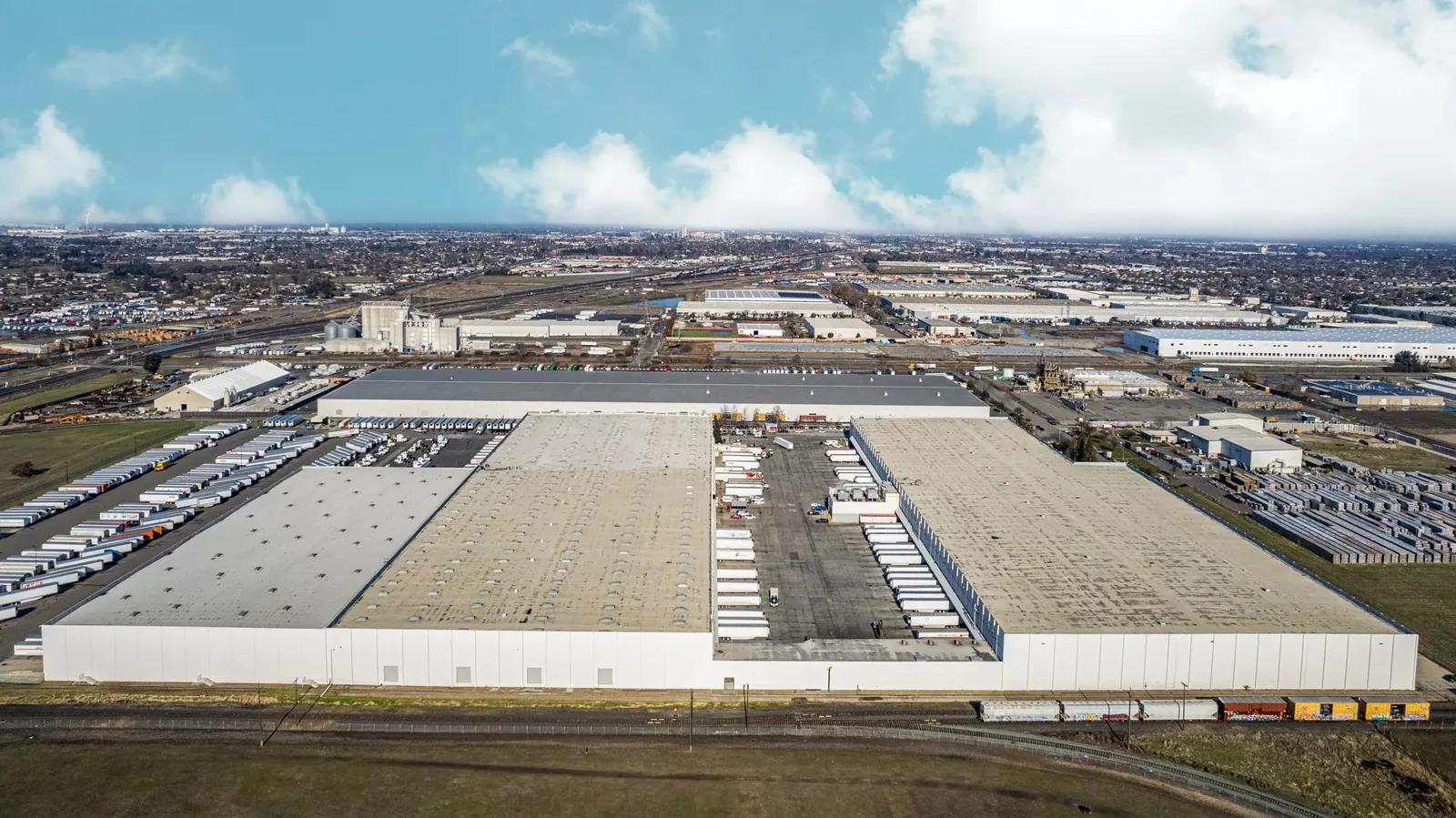
When a larger building remains in operation, our occupied-building reroof sequence separates work zones and daily closeouts. We coordinate mechanical contractors where equipment must move and identify who restores each curb or support. A warehouse roof plan may also need loading-area separation and clear paths to active equipment. The work map makes these boundaries visible before the first section opens.
Give the next visit a starting point
Closeout notes should record the Versico membrane, insulation, attachment, flashing details, and repair locations. We include before-and-after images and roof-plan marks so the next inspection can find the same seam or curb. Keep approved submittals and repair material information with the roof file. If the roof has an unresolved moisture area or a detail scheduled for later correction, the record names it and the recommended follow-up.
Preventive maintenance checks seams, laps, penetrations, drains, edge metal, and surface damage from service traffic. The interval follows observed condition, building use, and upcoming equipment work. At Sakioka Farms Business Park, the city reports distribution and cold-storage or fruit-processing operations. A property manager can use photo-backed inspection records to track roof changes. Where project documents allow other manufacturers, compare the assembly with a Carlisle SynTec roof specification or a Soprema membrane system on compatible details.
Share your roof plan, Versico product records, leak locations, equipment schedule, and access requirements. We will confirm the assembly and provide a repair or replacement scope that addresses the actual roof condition.
Related Roofing Work
More from Roofing Manufacturers and nearby services
Review the Versico roof in the field
Send the roof plan, Versico submittals, leak history, equipment schedule, and access limits. We will identify the installed assembly, inspect its details, and prepare a documented scope.
Common Questions
Are VersiWeld TPO and VersiGard EPDM repaired the same way?
No. TPO seams are heat welded, while EPDM uses different seam and flashing materials. We identify the product and inspect the surface before selecting a patch method, then document the repair boundary and nearby conditions.
What does a factory-applied adhesive option change?
It changes placement and installation steps, but the roof still needs a compatible substrate, correct alignment, and complete flashing details. We review the specific product instructions and assembly before planning the work.
Can one failed VersiWeld seam be repaired?
A local repair can work when the sheet around the seam is sound and a new weld can tie into compatible material. We check neighboring laps, attachment, moisture, and prior repairs to see whether the opening is isolated.
When should an owner consider replacing a Versico roof?
Widespread moisture, unstable attachment, deck damage, recurring seams, or edge failure can move the decision beyond patching. We map the findings and compare repair, recover, and replacement boundaries before recommending a scope.
What should be inspected after equipment service?
Check service routes, seams, curb seals, flashings, and any material left near the work area. We can inspect and photograph the details, then repair confirmed damage with components suited to the membrane.