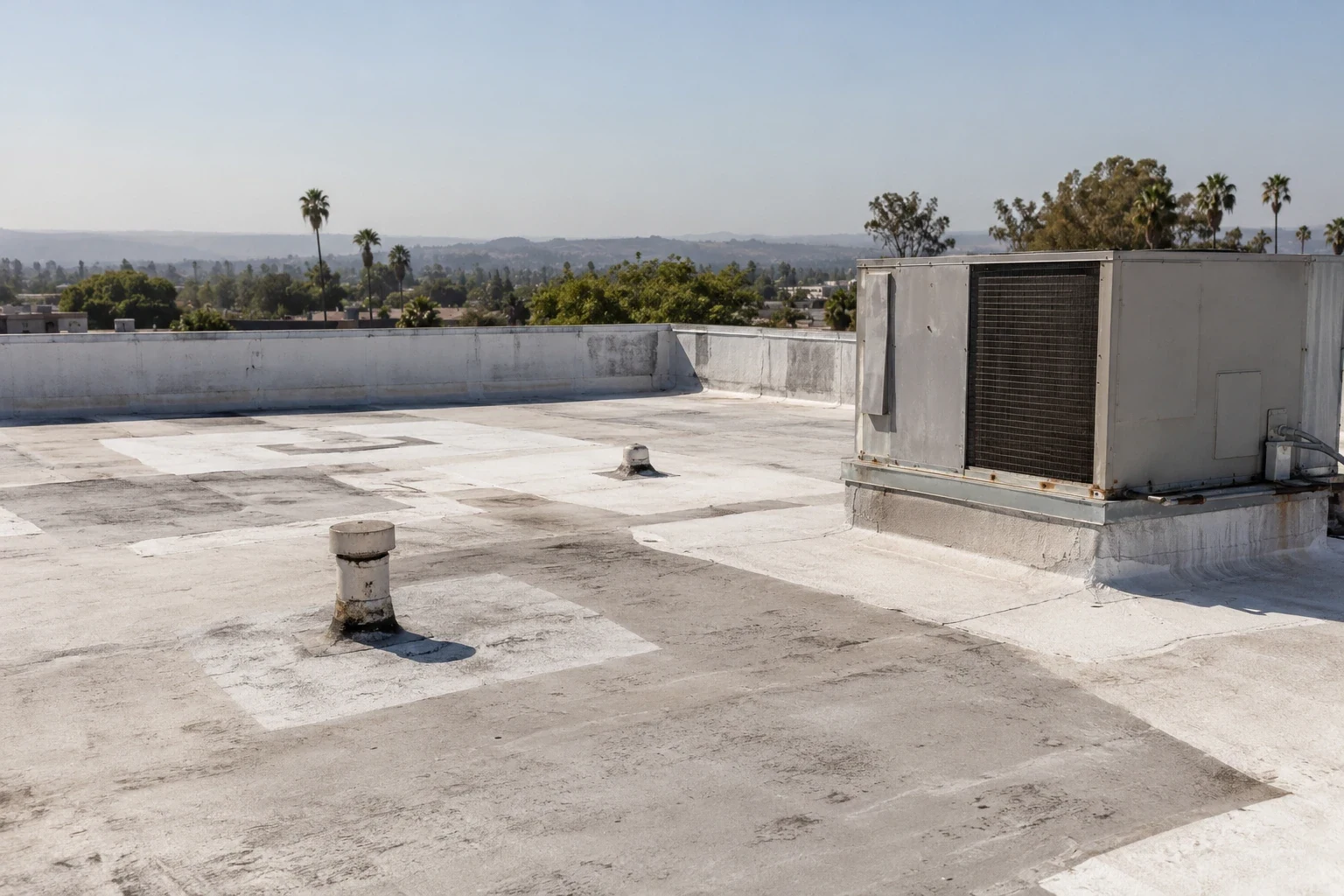
Auto Dealership Roofing in Oxnard, CA
Request a dealership roof assessment
Auto Dealership Roofing
A dealership roof can serve a glass-front showroom, service bays, parts storage, and customer parking under one property plan. Start by separating those areas on the roof map. We inspect the reported section, identify the assembly, and mark the curb, seam, or drain that controls the repair decision. The access plan should keep customer entrances and vehicle movement outside the active work zone.
Oxnard's Rose-Santa Clara Corridor plan includes auto sales and service, business park, retail-commercial, and commercial-manufacturing uses. Downtown Oxnard has Core, General, and Edge districts with mixed retail and office activity. These contexts help explain why vehicle access and public routes matter, but they do not establish the layout or roof condition of any individual dealership. A Rose-Santa Clara Corridor roof walk follows the actual site's building and circulation plan.
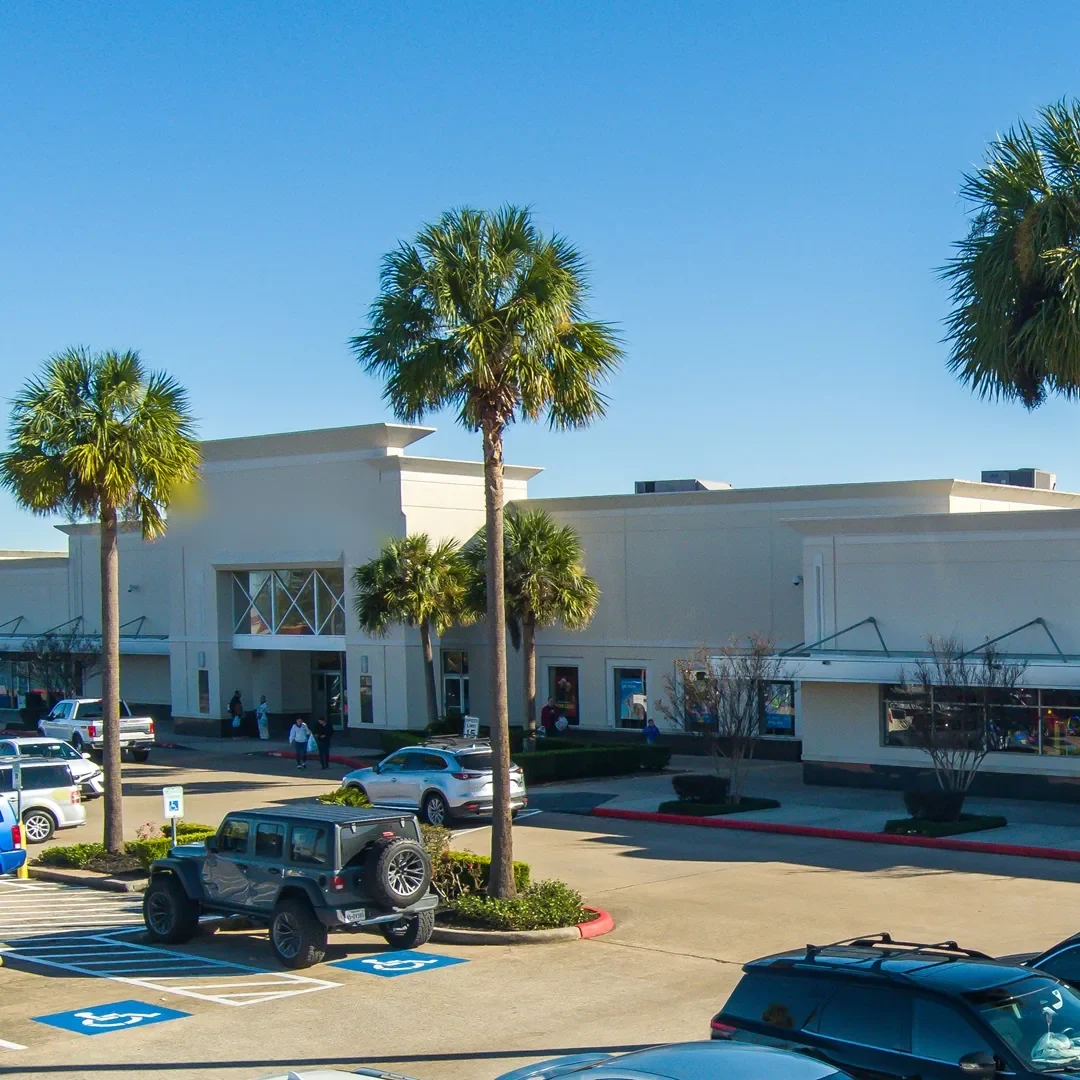
Keep customers and service traffic clear
Confirm customer entrances, service-drive lanes, vehicle staging, parts deliveries, and hours when lifts or temporary barriers would disrupt operations. The property contact approves the work window and identifies any area that must remain open. We plan material placement, fall protection, and the daily dry-in boundary around that route. A moved vehicle lane or entrance should be called out before the crew arrives, not after materials are on the roof.
The showroom and workshop may operate on different schedules. Ask where service vehicles queue, where parts arrive, and whether a roof access point crosses a customer-facing area. If repair work occurs over a service bay, agree on interior protection and the contact who can release the bay. A phased occupied-building work plan can split a replacement into roof zones and coordinate temporary limits with the dealership manager.
Multi-building dealerships need separate roof IDs even if the same business operates them. Note which section was inspected, which was inaccessible, and which equipment prevented a complete view. That boundary avoids extending a finding from the showroom to the repair wing without evidence.
Inspect the curb, canopy, and bay transitions
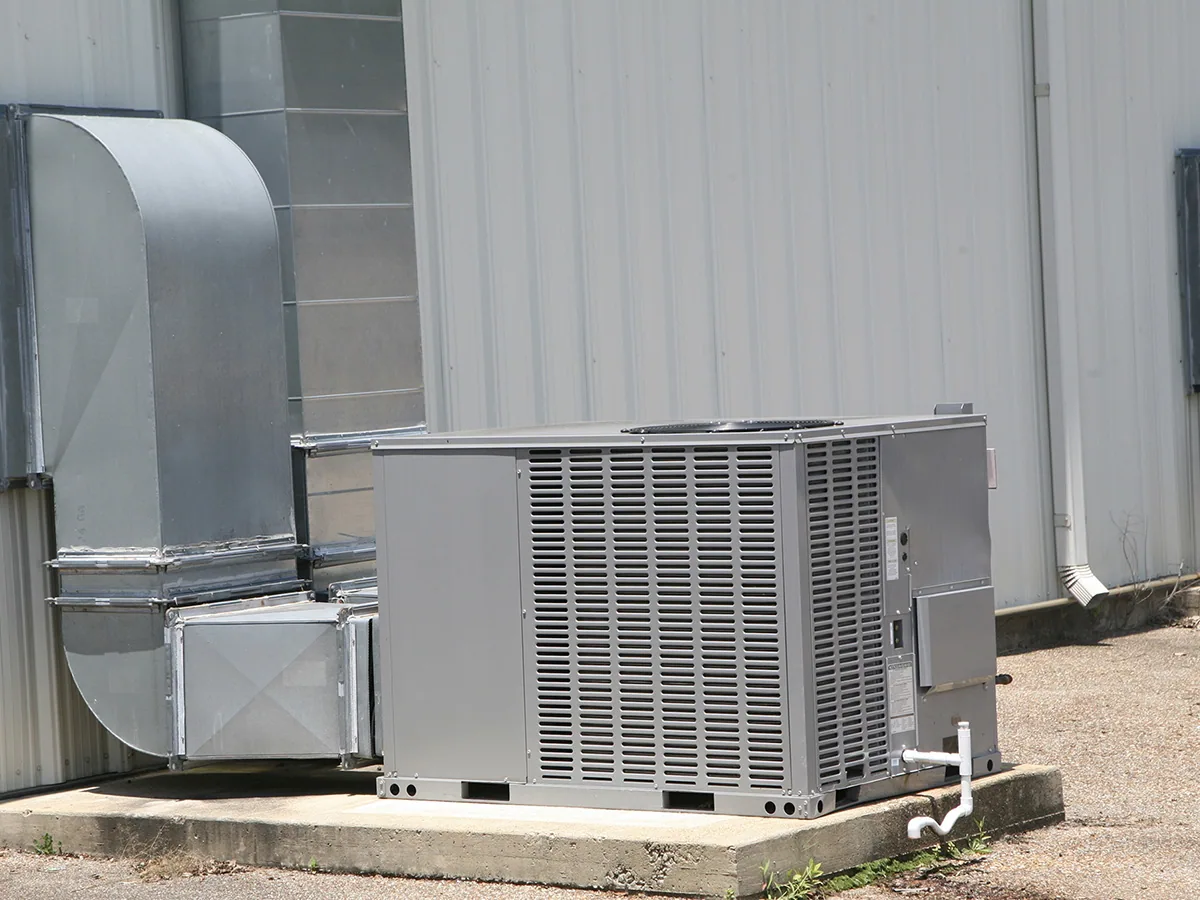
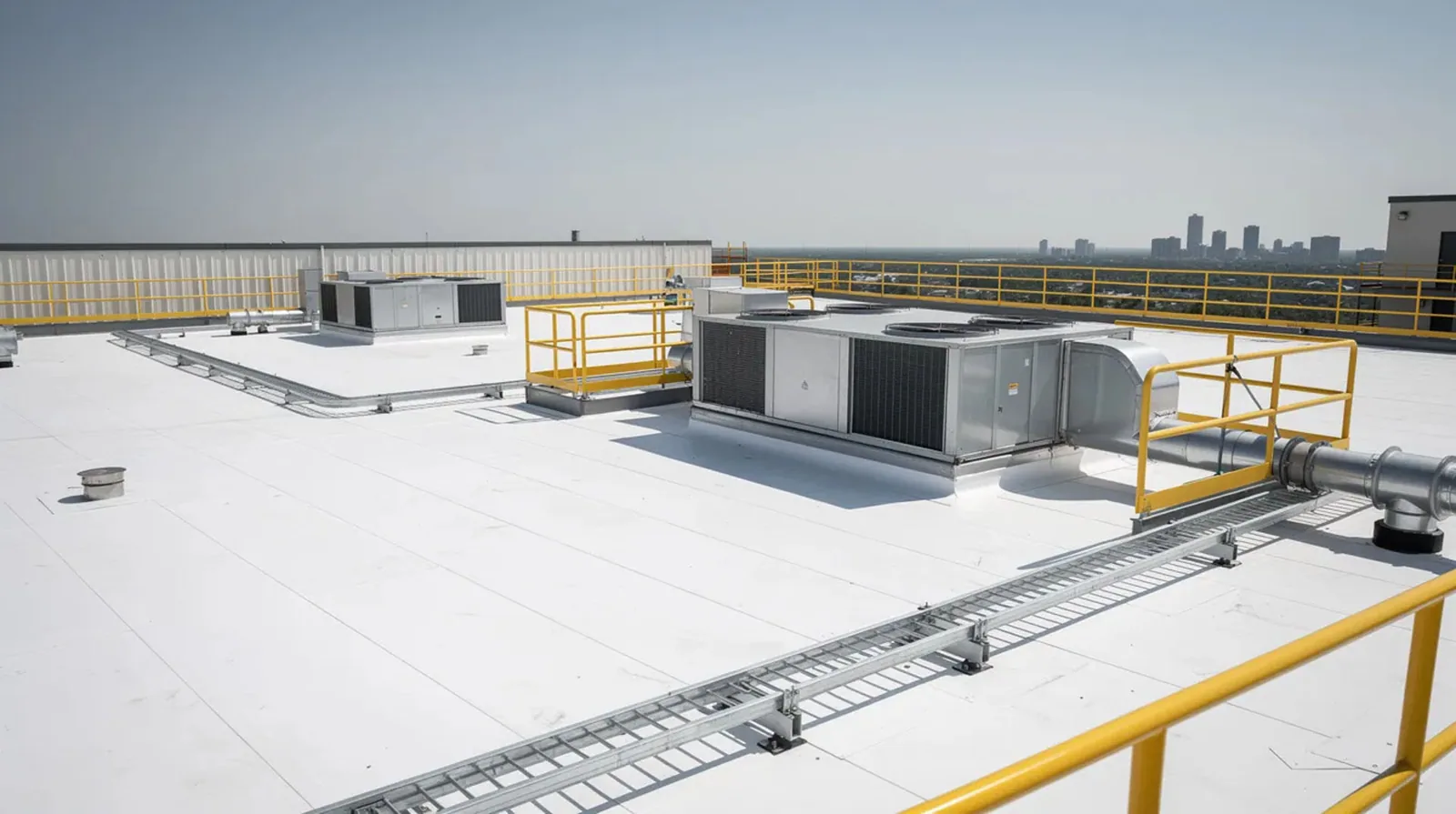
Roof-mounted HVAC units, exhaust fans, skylights, and service penetrations need flashing that remains secure through equipment work and traffic. Check curb seal, flashing height, counterflashing, fasteners, and the condition around each opening. At a canopy connection, follow the transition to the wall or storefront and inspect where runoff exits. A metal panel, single-ply membrane, and built-up surface call for different repair materials, so confirm what is installed first.
Showroom additions and service-bay expansions may have different roof layers or drainage slopes. Compare visible seams and exposed edges with available drawings and prior service records. If hidden material changes whether a patch or overlay will work, define an authorized test opening and the restoration plan. A rooftop curb and support review documents the trade boundary before a unit is lifted. A penetration-flashing inspection marks details where water can bypass the main roof field.
For permitted replacement, the designer and authority having jurisdiction determine applicable requirements based on scope and permit date. Ordinance 3070 placed the 2025 California Building Standards Code in effect for Oxnard. The roof inspection identifies visible conditions and questions that may need design review; it does not determine code compliance by itself.
Trace runoff away from showroom and service areas
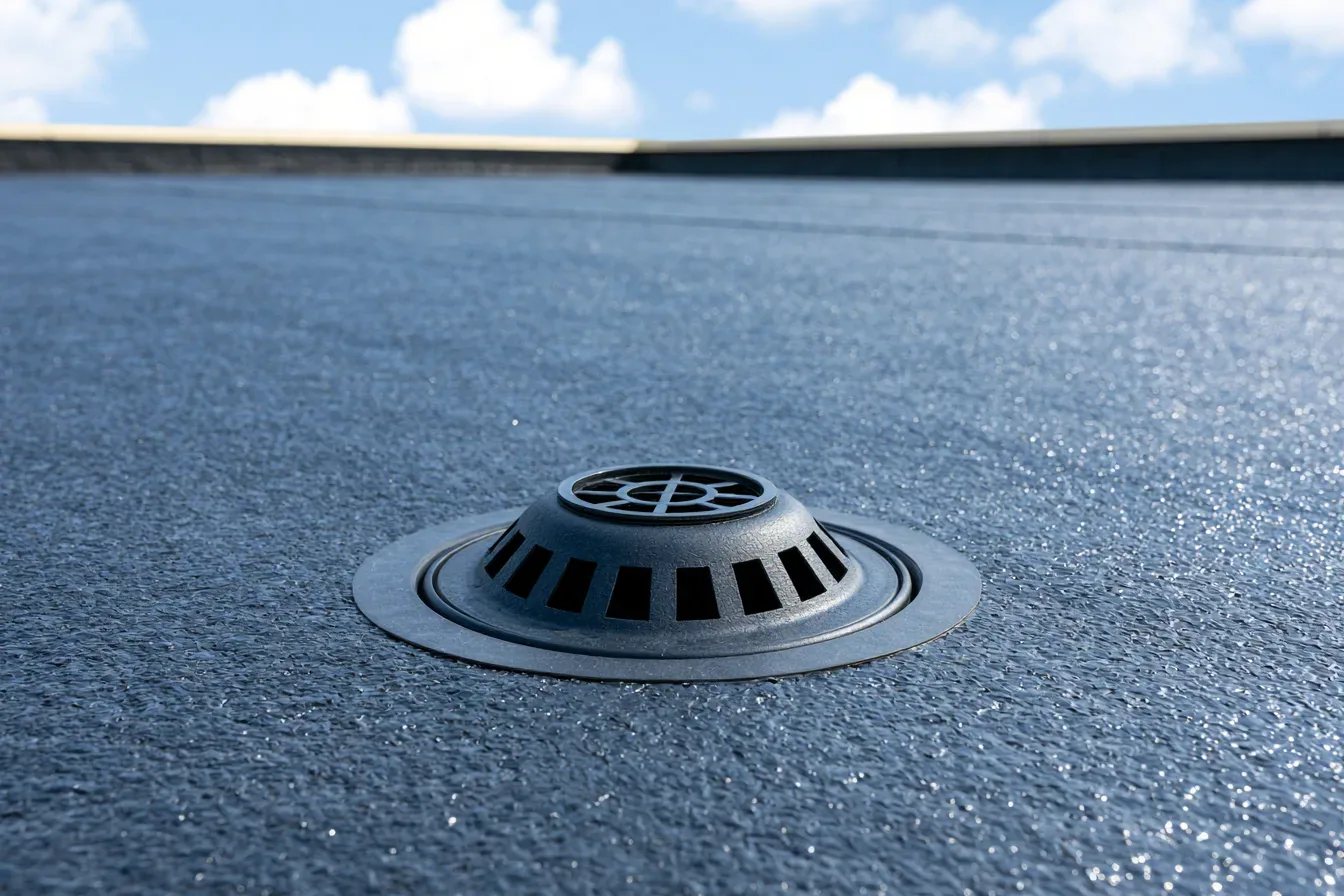
Trace drainage from the showroom and service-bay roof areas to their outlets and overflows; note low spots, debris, ponding lines, and canopy-related obstructions. Check whether the showroom and service bay share a drainage route or discharge to different sides of the property. Water staining inside one area may relate to a seam, curb, wall, or blocked outlet; inspect the roof path before assigning the source.
The Oxnard station's Hilary reading reached 1.77 inches in August 2023 and set its monthly August record. We compare a dealership's leak report with its service log, roof map, and observed drainage conditions. A drain and scupper assessment can identify a defined outlet issue, and a roof inspection report can map nearby seams, penetrations, and edge details.
Oxnard’s coastal land-use program maps sea-level-rise hazards within the designated zone. Check current city mapping to confirm whether a dealership parcel falls inside that boundary before using coastal policy in a long-range facility plan.
Separate a roof repair from a facility upgrade
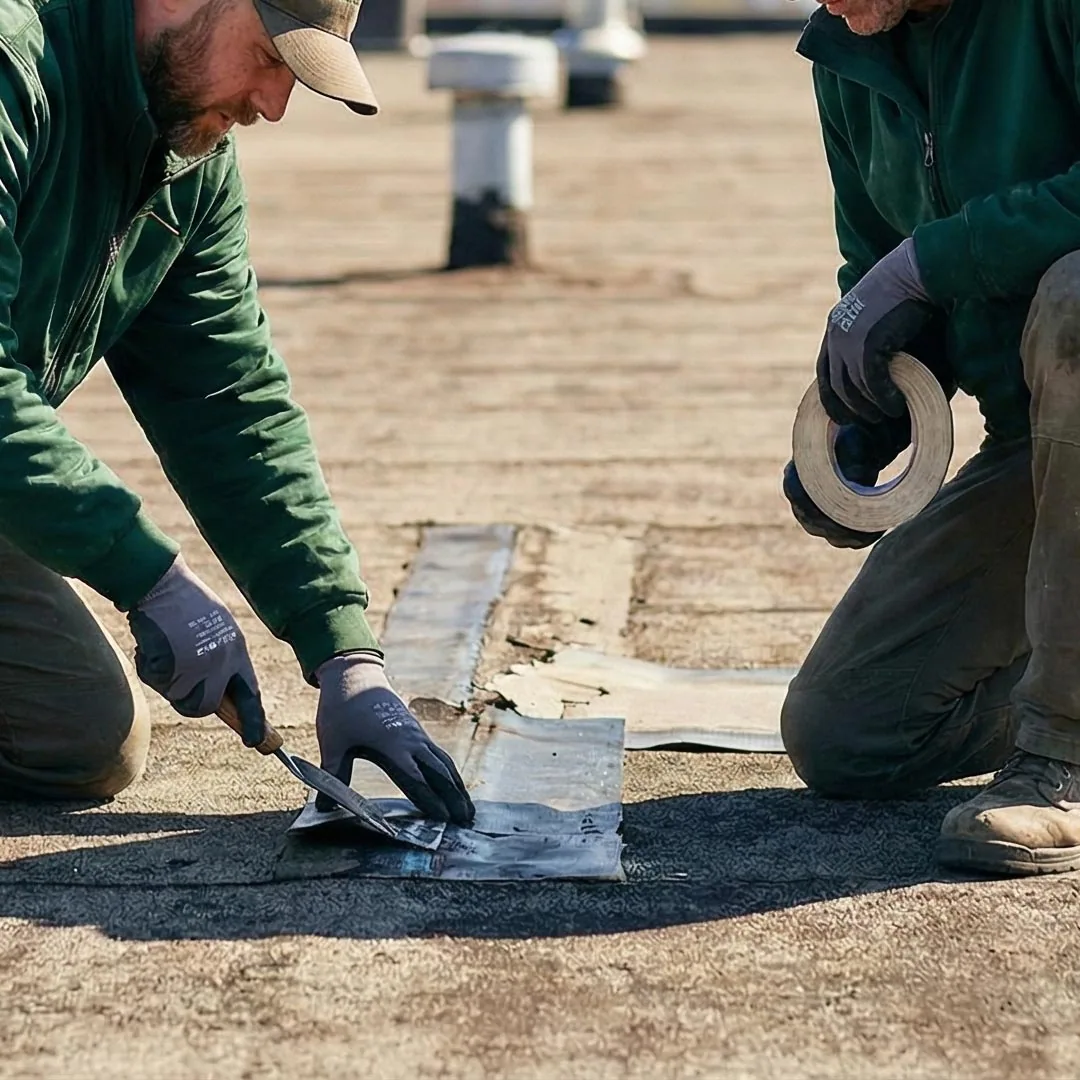
A local repair may suit an isolated split seam, puncture, curb leak, or damaged edge when the surrounding assembly can accept a compatible tie-in. State preparation, materials, work boundary, vehicle protection, and verification in the scope. A repair should not conceal a broader pattern of wet insulation, repeated fastener failure, or movement without further review.
Recovery depends on the existing layers, attachment, drainage, edge height, and substrate condition. Coating requires a compatible surface and does not resolve water below it. Replacement planning identifies removal depth, insulation assumptions, perimeter metal, skylight and equipment coordination, and how each bay or showroom section will be left weather-tight. A commercial roof repair proposal can address a confirmed defect, while replacement planning lays out the broader assembly and access sequence.
Timing may depend on customer hours, service volume, equipment lifting, parking-lot staging, and how much roof can be opened within a shift. Put those constraints into the bid assumptions. If field conditions change the scope, pause at the approved hold point and record the decision before moving into another dealership area. A useful proposal separates roof labor from equipment relocation, sign removal, and interior repairs, then names the party responsible for each interface. This lets the manager compare the roofing scope without treating work by another trade as included.
Give the manager a roof record by building
Closeout lists the inspected buildings and zones, roof material, completed repair, photographs, test points, and deferred items. Mark the repaired curb, seam, drain, or canopy transition on the plan. State which areas were not accessed and whether a mechanical or sign contractor still has work to complete. This lets the facilities manager connect a later report to the same roof feature.
Send the roof plan, service-bay schedule, equipment list, leak locations, access rules, and past repairs when requesting an inspection. An industrial warehouse roof review may also coordinate vehicle routes and deliveries, while an industrial-flex roof review can include office and production transitions. The dealership's own building plan controls the detail and schedule. Include before-and-after images of each repaired curb or seam, plus the date when temporary protection was removed. That gives the next service manager a location-specific record if the same area is reported again.
Related Roofing Work
More from Property Types We Roof and nearby services
Request a dealership roof assessment
Share the building plan, service schedule, equipment list, leak locations, and customer-access requirements. We will map roof conditions by showroom, service area, or other building section.
Common Questions
How do you plan roofing work over a dealership service bay?
The dealership contact approves work hours, vehicle routes, bay closures, and interior protection. We identify the exact roof zone and set a weather-tight stopping point for each shift.
Can the showroom and service wing share a replacement scope?
They can be bid together only after the inspection confirms the assemblies and work limits. We map each roof area and state where materials or drainage conditions differ.
What should be checked around rooftop HVAC equipment?
Inspect the curb seal, flashing height, counterflashing, attachment, and surrounding roof material. Coordinate a planned unit lift so the roofing handoff and final seal are assigned.
Does the Rose-Santa Clara auto-sales designation confirm a dealership roof issue?
No. The corridor plan describes land uses. A roof condition at a specific property needs a field inspection and its own maintenance record.
Which records help price a dealership roof project?
Provide roof drawings, equipment schedules, service-bay hours, repair history, reported leaks, and staging restrictions. We note testing or access conditions that could change the final scope.