Acrylic Roof Coatings in Oxnard, CA
Check acrylic coating suitability
Acrylic Roof Coatings
An acrylic roof coating needs a clean, sound base and enough time to dry through the planned application. We inspect the roof surface, slope, seams, moisture and detail condition before recommending restoration. Oxnard, CA has manufacturing and research uses near Camino Real Business Park and distribution, cold-storage and fruit-processing uses at Sakioka Farms. Each property has its own access and operating requirements. We map the roof, identify the existing membrane or coating, and determine whether acrylic suits the substrate and drainage. Where water remains after ordinary drainage time, the scope should correct slope or outlets before coating.
Identify the existing roof finish
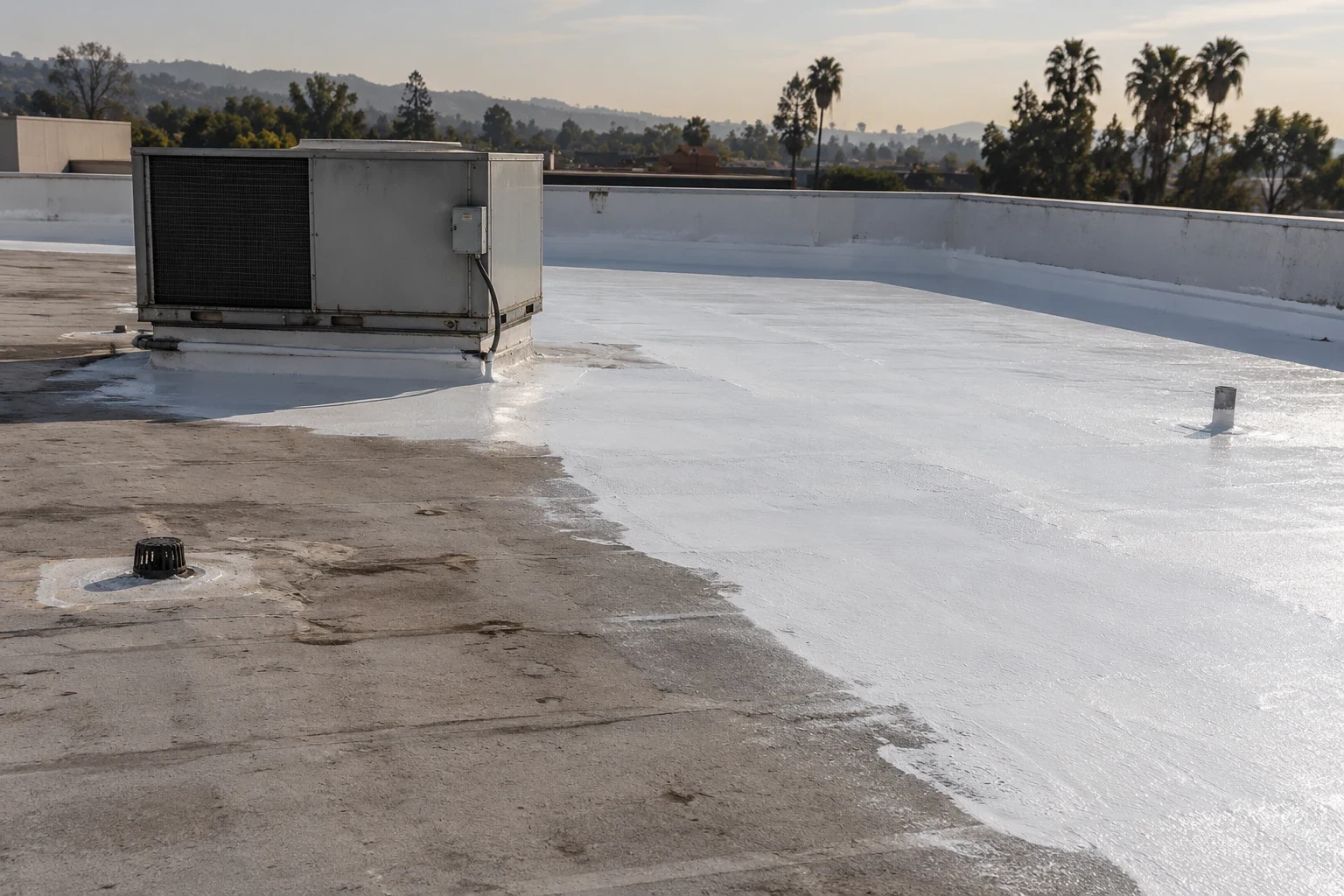
Acrylic coatings can be applied to compatible roof substrates, but the existing material must be identified first. We inspect membrane type, prior coatings, surface chalking, repairs, flashing, stains and areas where water remains. A label or old specification helps, but visible conditions and product compatibility still need verification before material is ordered.
We check adhesion on representative areas when the surface is uncertain. The test identifies whether cleaning, primer or removal of a loose layer is needed. We repair open seams, punctures and weak terminations rather than expect the coating to bridge them. A commercial roof inspection can document roof zones and help set test locations.
Camino Real Business Park has office, research, manufacturing and limited commercial uses. Those categories do not specify a roof system or coating history. We confirm what is installed on the actual building before selecting an acrylic product.
Clean and repair before coating
Coating bond depends on surface preparation. We remove dirt, loose granules, chalking and contaminants with a method suitable for the roof. The substrate must dry within product limits, and wash water or debris must be controlled around drains, equipment and entrances. The work plan protects intake openings and adjacent finishes.
Seams, fasteners, penetrations and transitions receive separate repair. Reinforcing fabric or detail coating may be specified at joints, but it does not replace a failed curb or damaged membrane. We identify repairs, primers and test patches in the scope, then verify the surface before the field application begins.
At Sakioka Farms, delivery and cold-storage operations can affect staging and roof access. We agree on lift areas and work timing with the property contact, then keep the roof available for required service routes. Sakioka Farms area service covers the broad business park.
Set coverage and cure conditions
Acrylic is applied at specified coverage and film thickness, often in multiple passes. The project documents set the target and any reinforcement. We check material consistency, wet-film measurements, application rate and transitions at drains or curbs. Wet-film readings at set intervals show whether each pass is building toward the specified dry-film thickness; closeout records let the owner compare coverage by roof zone.
Temperature, humidity, dew and rain forecast affect cure. Water-based acrylic needs appropriate drying conditions before rain exposure. We schedule the work in weather windows that match product limits and sequence each roof area so wet coating is protected from foot traffic. If conditions shift, the crew pauses rather than apply material outside the specified range.
Drain bowls, scuppers and overflow outlets stay open during and after application. Drainage work can correct an obstruction or low-point condition before the coating scope proceeds.
Review standing water and runoff
Acrylic coatings are not a substitute for a drainage design. We measure low areas and check how quickly water reaches drains, scuppers or gutters. Prolonged ponding can exceed an acrylic product's suitability, so the selected system's immersion limits must be reviewed. Tapered insulation, drain adjustment or structural review may be needed before coating.
The National Weather Service's Oxnard station recorded its largest August rainfall total during Tropical Storm Hilary in 2023. That unusual event reminds the property team to review outlets and overflow paths; it does not predict the next storm or establish a roof's condition. We rely on roof slope, water marks and current outlet condition.
Silicone coating has different water-exposure characteristics. Silicone system evaluation may be useful where the roof has recurring ponding, but substrate and product requirements still govern.
Choose acrylic for a suitable roof
Acrylic may suit a compatible, sound roof where its application and water-exposure limits align with the project. Silicone can be considered for other conditions, while a new membrane or replacement may be the better answer when the existing assembly is wet or failing. We compare substrate, slope, repair needs, weather window and maintenance rather than choose by color or reflectance alone.
For an SPF roof, the coating is part of the protective system and must match the foam and prior topcoat. SPF roofing needs its own inspection and coating repair plan. For a broader roof failure, recover evaluation or replacement planning compares new assembly options.
The proposal states preparation, repairs, primer, coating layers, reinforcement and areas excluded. This makes it possible to compare bids with the same coverage and detail assumptions.
Watch the finish at seams and access points
Maintenance checks coating wear near equipment, walk paths, drains, seams and parapets. We look for peeling, cracks, exposed substrate, punctures and residue that could affect adhesion. A small defect can be repaired if surrounding material remains bonded and dry. Widespread separation calls for a new condition review.
Repair products need to match the installed coating. We avoid applying an unknown sealant or another coating layer before compatibility is checked. After service work, inspect the area where carts, tools or replacement equipment crossed the roof. Record the location, photo and repair so the next walk can compare changes.
Preventive roof maintenance can include coating observations with drain and flashing checks. Where industrial operations occur in the Central Industrial Area, access schedules and staging should be confirmed for the individual property.
Keep the application record with the roof plan
Closeout should list the coating product, primer, surface preparation, repair materials, application areas, weather conditions and thickness records. Photographs show representative details and any areas that were not included. The property team can then use the right repair product at a later inspection.
Before mobilization, we confirm access, wash-water control, protection for equipment and intakes, and forecast conditions. During application, drains remain open and each completed zone is protected until the coating has cured to product requirements. The final walk checks the finish and the transitions.
CRA can inspect and restore eligible commercial roofs with acrylic coating in Oxnard. Provide roof plans, previous product records, maintenance history, known ponding and access details. We will check the surface and explain whether acrylic, another coating or a new roof assembly fits the property.
Related Roofing Work
More from Roof Systems and nearby services
Check acrylic coating suitability
Send roof plans, product history, maintenance records, ponding locations and access requirements. We will inspect the substrate, review application conditions and scope a suitable acrylic restoration in Oxnard.
Common Questions
Can acrylic coating go over an existing roof membrane?
It may, if the membrane and coating are compatible, the roof is dry and stable, and the surface can be prepared as required. We identify existing materials and test adhesion where needed. Open seams and damaged flashing are repaired before field coating.
Is acrylic roof coating suitable for ponding water?
Product limits and the duration of water exposure matter. We inspect slope, drains and water marks before recommending acrylic. If water remains for long periods, drainage correction or another system may be necessary.
How long does acrylic coating need before rain?
Drying depends on product, temperature, humidity, film thickness and site conditions. We follow the manufacturer's application and cure limits and plan work around the forecast. If the weather window closes, application pauses until conditions are acceptable.
Can a roof be recoated with acrylic every few years?
A new layer is not automatic. We inspect adhesion, thickness, repairs, moisture and compatibility before deciding whether another coat is suitable. The coating record and maintenance history help determine what preparation is needed.
What records should be saved after acrylic coating?
Keep product and primer data, preparation notes, coverage and thickness records, weather conditions, repair photos and excluded areas. Those details guide later maintenance and reduce the risk of an incompatible patch.