
Commercial Roofing in Fillmore, CA
Schedule a Fillmore roof inspection
Fillmore
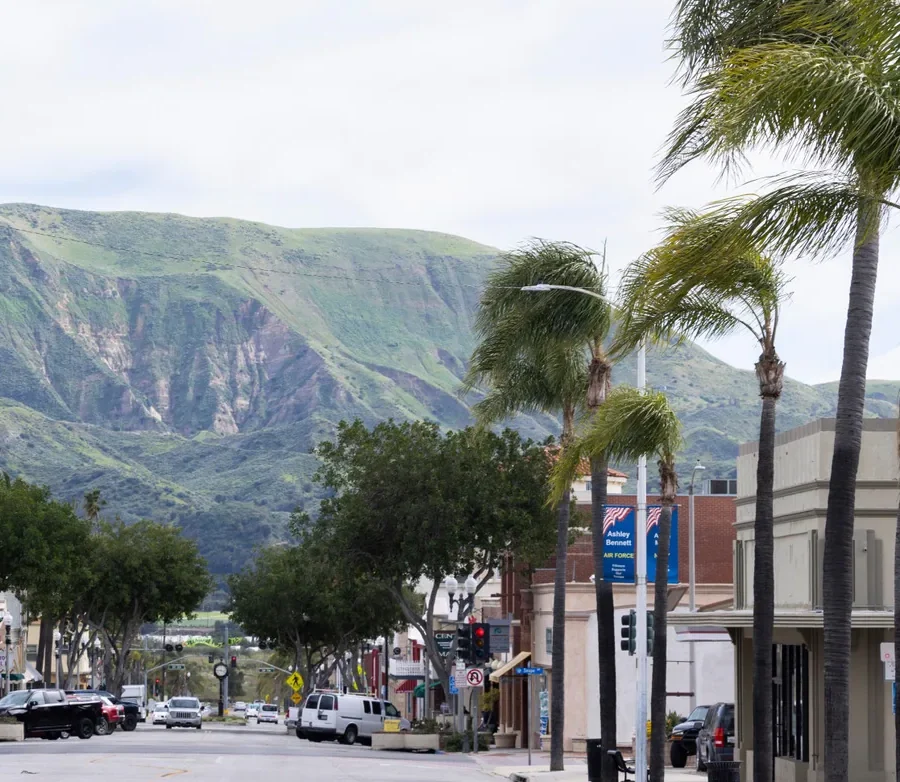
Commercial and light-industrial roof work in Fillmore starts with the property plan and the roof assembly in front of us. The City maintains a Downtown Specific Plan and a Fillmore Business Park Master Plan, while zoning allows office, commercial, and light or medium industrial uses in business-park areas along Highway 126. A separate Southwest Business Park is identified as a future employment focus. We do not infer a roof type from a plan designation. We inspect access, drainage, seams, penetrations, and perimeter details, then field-mark the condition and work boundary. A Fillmore Business Park roof review uses the same building-first walk with attention to access and trade coordination.
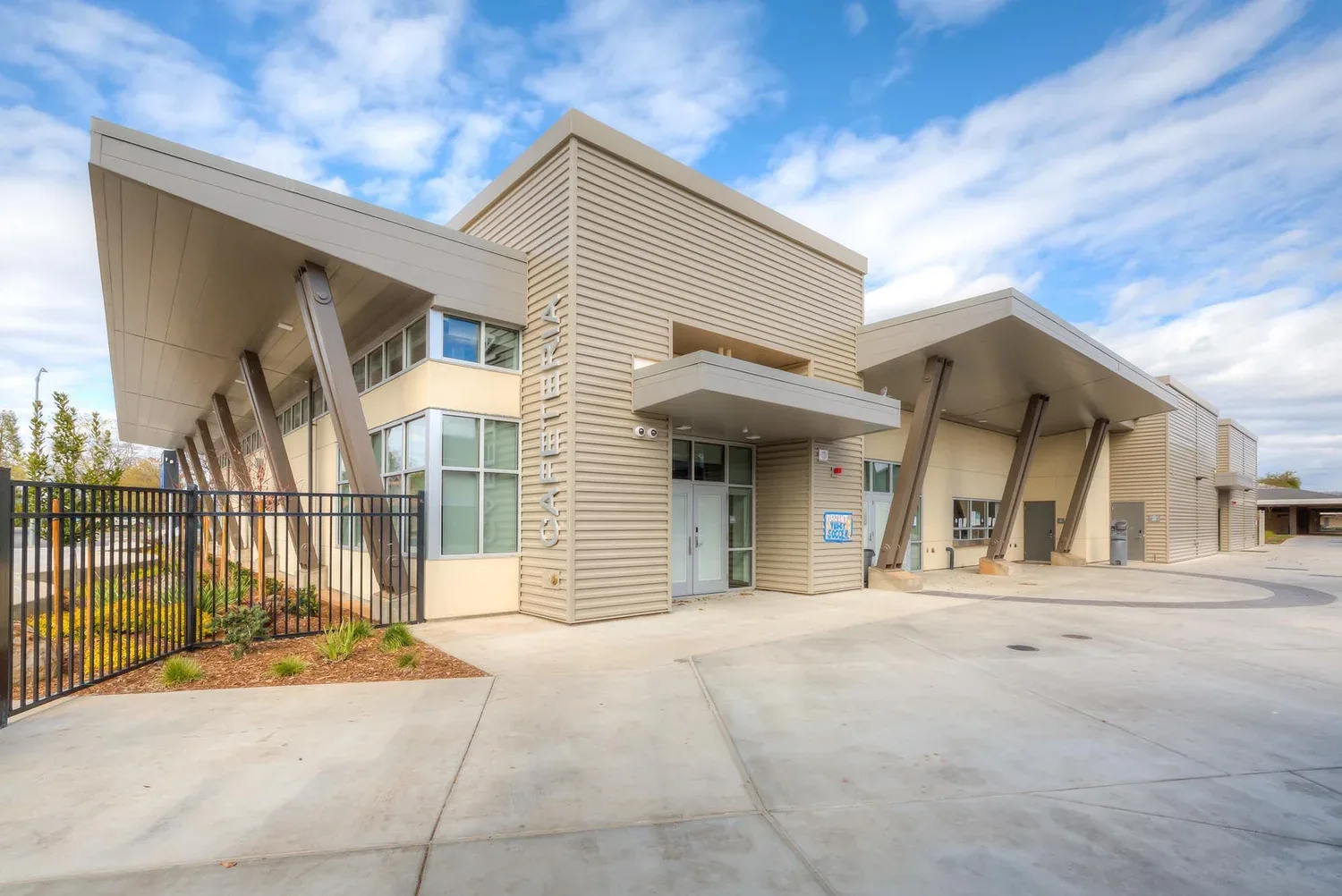
Confirm the route before inspecting the roof
We begin by confirming how the crew reaches the roof and which areas below need protection. The property contact identifies ladders or hatches, tie-off points, service routes, active equipment, tenant hours, and any loading limits. On a roof with additions or more than one elevation, each section gets a plan mark so photographs, test locations, and repair quantities are not mixed together. If equipment blocks a detail, we state what remains out of view and what access would make the next check possible.
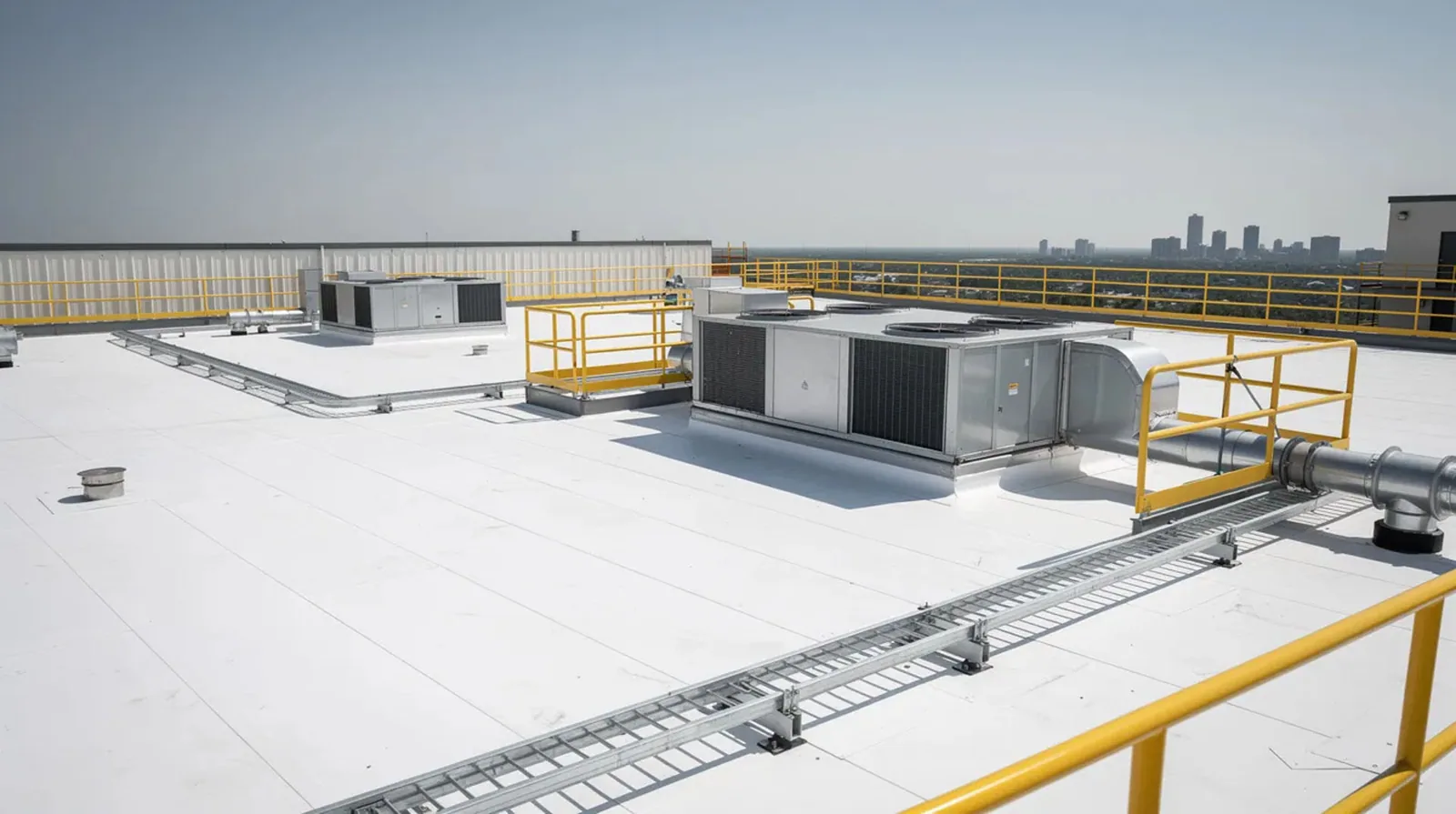
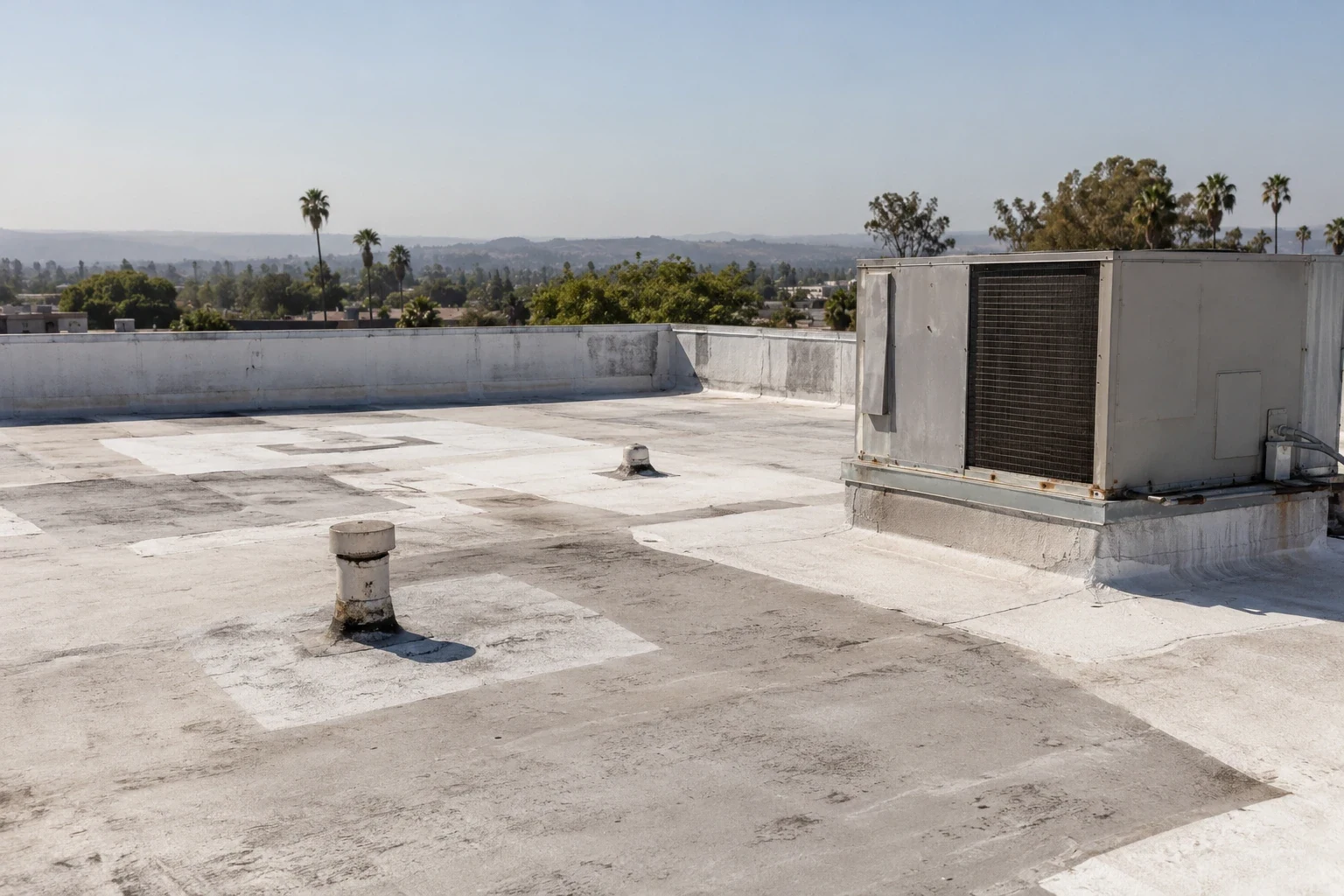
From the access point, we follow the slope toward drains and scuppers, then inspect seams, curb seals, penetrations, walls, edge metal, and prior repairs. A stain indoors may be below a different section than the entry point because water can move under the membrane before reaching the ceiling. We compare the report date and room with details above, photograph the likely path, and mark where moisture testing could alter the repair boundary. A commercial roof inspection records the visible assembly and identifies the next decision.
Fillmore's Downtown Specific Plan and Business Park Master Plan help distinguish property-planning areas. They do not establish a particular building's construction or roof condition. We verify the material, substrate, insulation, and attachment before pricing any repair, so the scope follows the actual roof instead of its zoning label.
Track water through each roof section
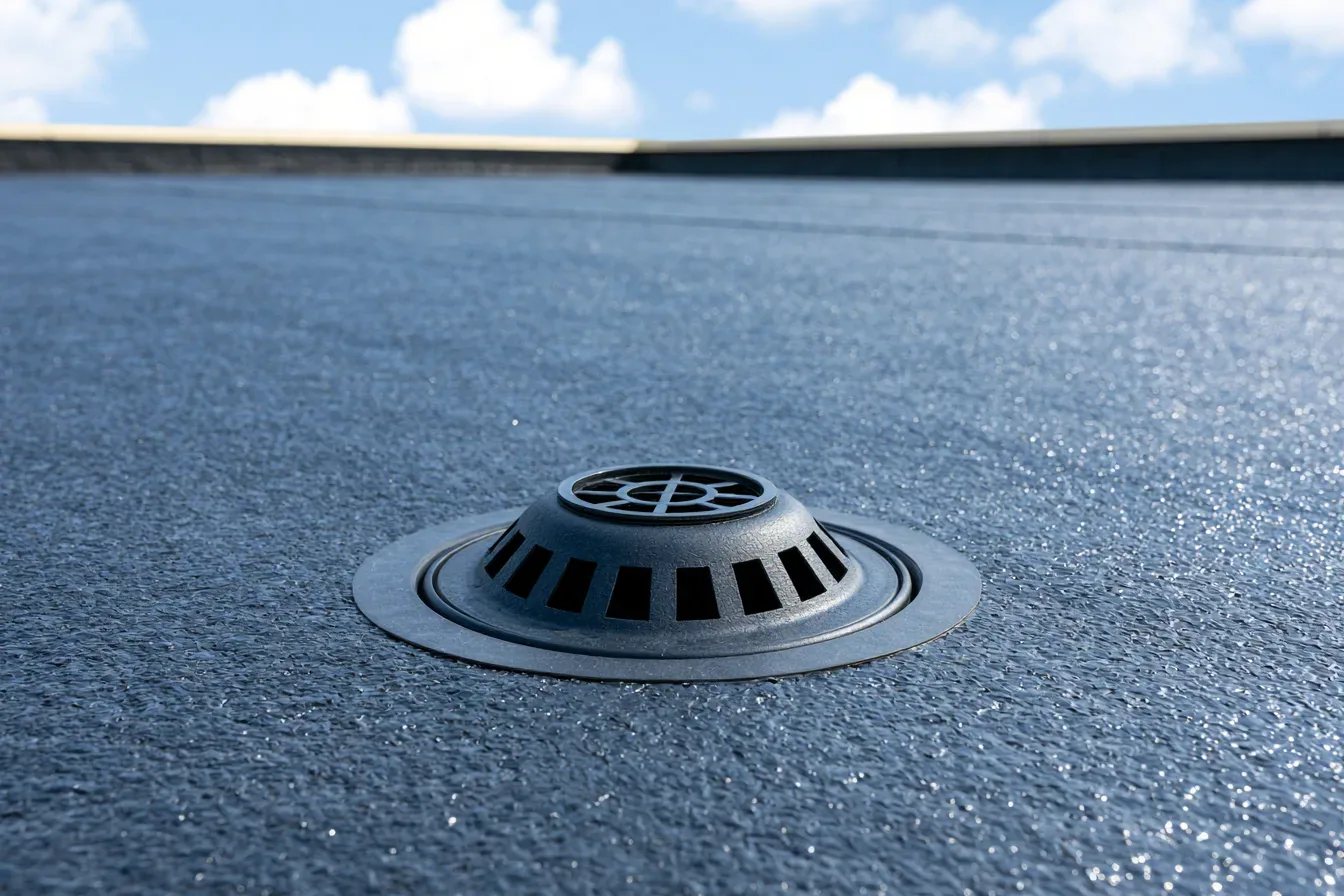
A drain connection can fail even when the surrounding membrane looks intact. We inspect the bowl, tie-in, scupper, overflow route, and the low point feeding each outlet. Debris at the strainer, a depressed area, and a separated membrane edge are different findings with different fixes. We mark which condition is present and whether it continues beyond the visible water mark.
At the Oxnard station, Hilary produced 1.77 inches in August 2023, a record monthly total. That dated regional context can inform a drainage review; at a Fillmore property, we trace its own outlets, low points, and reported water path. We compare the reported time with the marked drainage route. If an outlet clears but standing water remains, we check slope and insulation movement before recommending more than routine maintenance. A drain and scupper repair should correct the failed outlet detail or membrane connection.
Where moisture may sit below the sheet, infrared indications can guide test openings, but the opening confirms what is wet. We show which roof zones need confirmation and how that result changes removal, dry-in, and replacement quantities. A moisture survey is useful when it resolves a decision, not as a substitute for inspecting seams and flashing.
Repair the seam, curb, or edge that failed
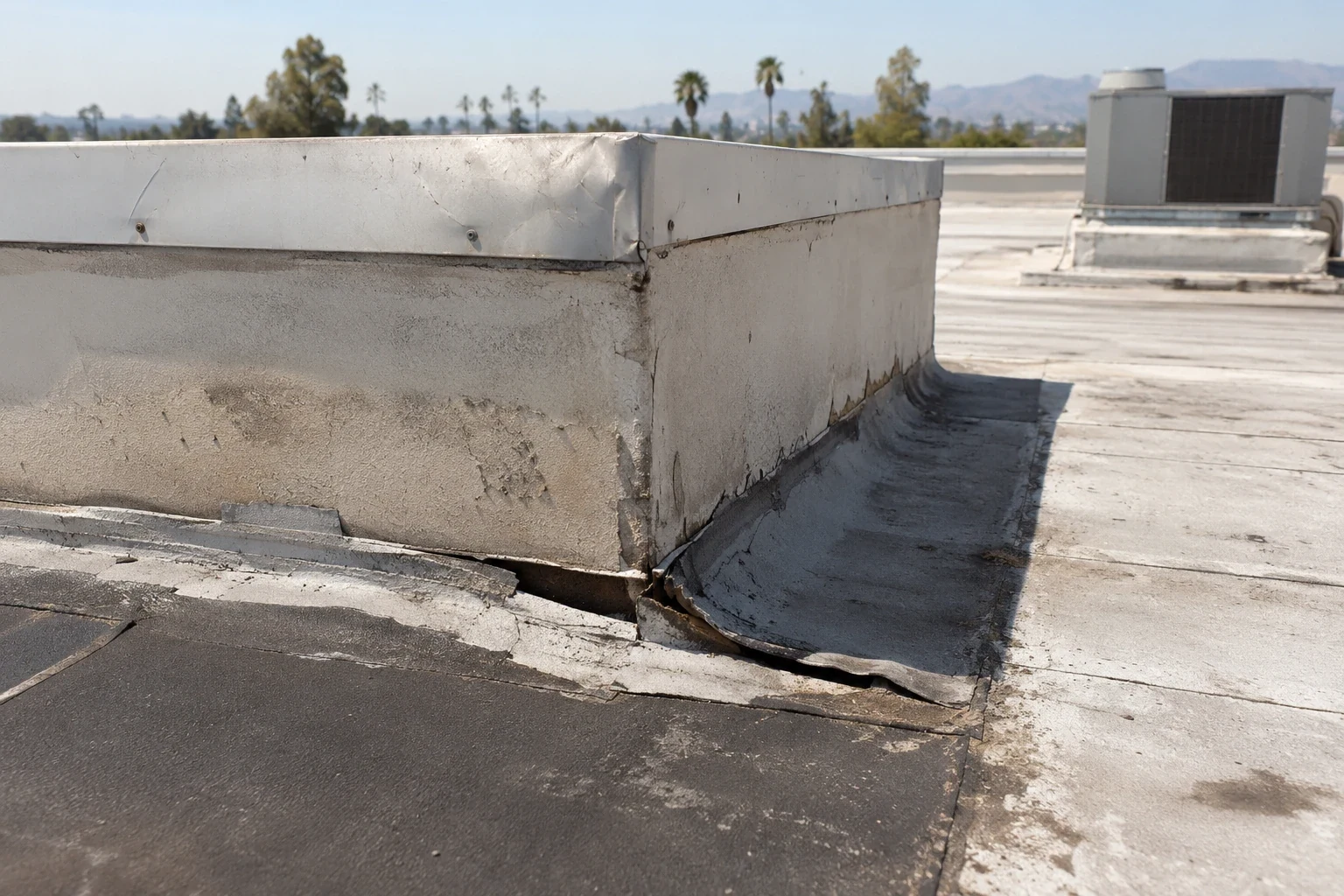
At a pipe or curb, we check flashing height, corners, sealant, fasteners, and the membrane turn. At a wall, counterflashing and termination should leave water a path back onto the roof. Along the edge, we look for loose coping, open metal joints, and failed attachment. The repair needs to reach stable material and restore the transition, not cover a loose edge with a bead of sealant.
The repair method depends on the installed assembly. TPO and PVC need compatible, prepared surfaces for heat welding. EPDM uses different patch and flashing materials; modified bitumen, metal, and coatings require their own methods. We identify the system before applying a product, then record preparation, repair limits, and nearby conditions. A flashing repair can close a confirmed wall or curb opening, while seam repair addresses separation in a compatible membrane.
Highway 126 is part of the business-area planning context for Fillmore, so delivery timing and material staging should be checked with the property contact. We do not assume a roof has direct access from the corridor. The work plan identifies the actual staging point, route, and daily dry-in boundary before a crew opens the surface.
Set the work boundary from the evidence
A local repair can be appropriate when the surrounding roof is stable, the deck supports the work, and the new material can tie into sound roofing. Repeated seam openings, widespread moisture, loose attachment, or deck movement can require testing before the repair boundary is final. We mark findings on the plan and distinguish confirmed work from concealed conditions that could change the quantity.
A recover leaves an existing layer in place only when moisture, attachment, deck, drainage, added height, and project requirements allow it. Added layers can change drain, parapet, and equipment clearances. Replacement gives access to the substrate and insulation, but brings tear-off, debris handling, temporary protection, and longer staging. We compare those options using the same measured sections. A repair scope addresses a defined defect; a recover review checks whether an additional assembly is suitable.
Timing and cost reflect roof height, lift access, preparation, insulation, edge metal, drain work, disposal, equipment moves, and operating hours. Downtown work may have different delivery or tenant constraints from business-park work. We confirm those limits with the owner or facility contact and show how they affect the sequence. Each shift gets a secure temporary tie-in or completed watertight section before the crew leaves.
Leave the next inspection a clear starting point
The closeout record identifies the roof section, assembly, repair method, materials, photographs, and any testing. We mark completed work and open conditions separately. If access limited the inspection, that area remains listed for follow-up instead of being treated as clear. Keep equipment changes and roof work orders with the plan so a new penetration or service route can be compared with earlier findings.
Maintenance checks revisit drains, seams, flashing, counterflashing, edge metal, and roof paths used by service crews. The interval follows observed condition and building use. A manager comparing Fillmore with Santa Paula properties should keep each city's roof facts and repair file distinct. Photo-based roof reports link field marks to repair priorities and capital decisions.
Send the roof plan, leak report, equipment schedule, access instructions, and available repair records. We will trace the reported water path, identify the installed assembly, and return a marked repair boundary with any test allowance separated from confirmed work.
Related Roofing Work
More from Service Areas and nearby services
Schedule a Fillmore roof inspection
Send the roof plan, leak location and timing, equipment schedule, access instructions, and prior repair records. We will mark the water path, identify the installed assembly, and lay out the repair or testing boundary for approval.
Common Questions
Do Fillmore's business-park plans specify a roof system?
No. They establish planned land uses and development areas. We inspect the building to confirm its membrane or metal, drainage, attachment, and condition before proposing roof work.
How should a business-park manager prepare for an inspection?
Provide roof access, equipment restrictions, delivery windows, leak locations, and the plan if available. We use them to map the walk, identify sections that need protection, and note any detail we cannot reach.
Can a roof leak be repaired without replacing the full assembly?
A bounded repair can work if the surrounding material is stable and the repair reaches sound membrane or metal. We check nearby seams, moisture, attachment, and flashing before limiting the scope.
What does the Oxnard storm record tell us about Fillmore?
It supplies a date for the regional weather log. We assess a Fillmore building from its own leak timing, roof map, maintenance notes, and tested drainage path.
What should the repair closeout include?
Keep the roof-plan mark, repair material, preparation notes, photographs, tests, and remaining conditions. We tie each item to a roof section so follow-up work starts in the right place.