
Commercial Roofing in Ojai, CA
Request an Ojai roof condition review
Ojai
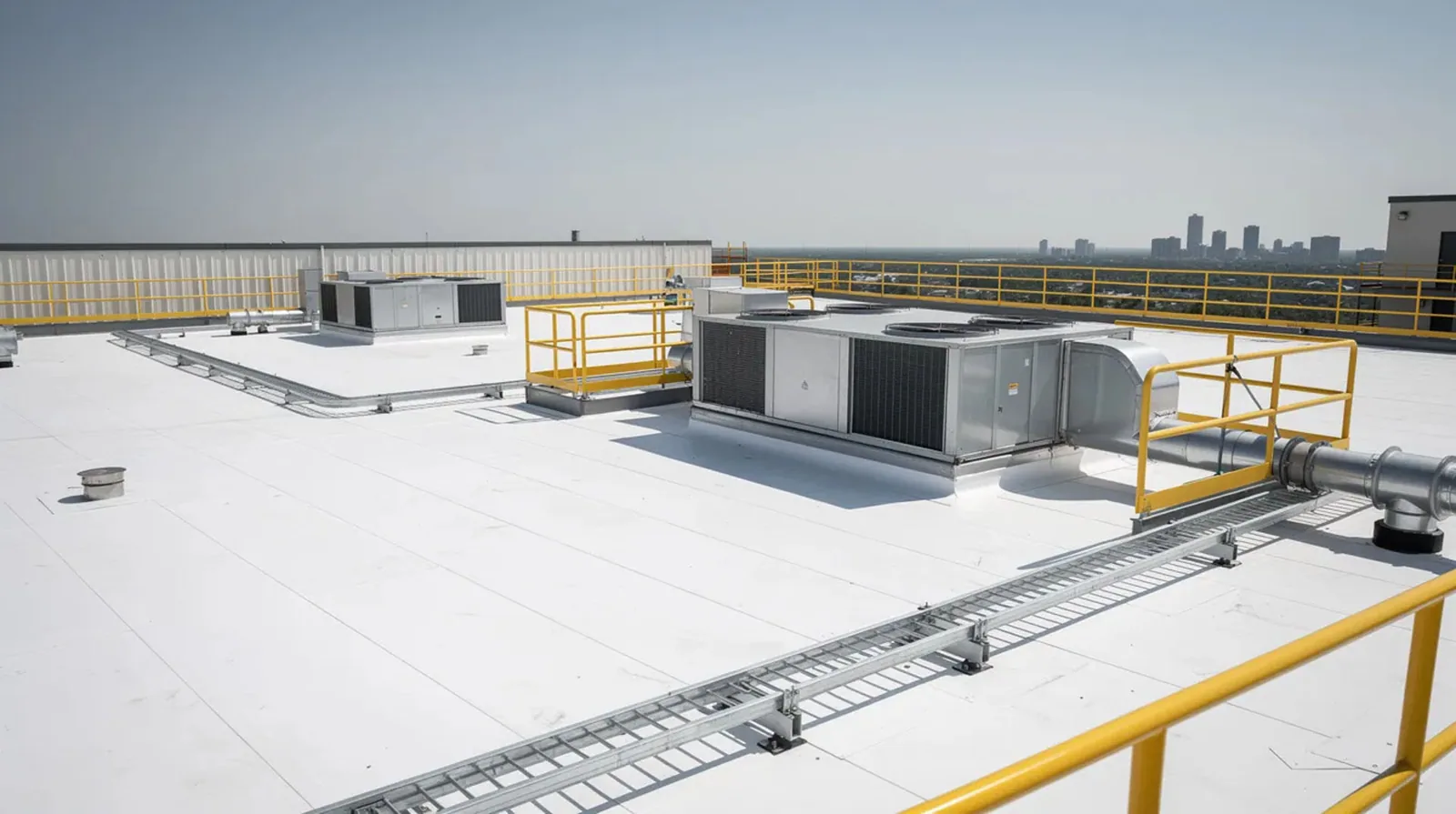
A roof inspection in Ojai starts with the building's assembly and the access route needed to reach it. Ventura County's Ojai Valley Area Plan guides land use in the unincorporated valley, while Ojai is also a member city in the County's regional planning area. Those planning contexts can help a property team confirm which review applies, but they do not identify a roof's material or condition. We inspect the roof, mark drains, seams, penetrations, and edges, and record access limits before setting a repair scope. A Santa Paula roof evaluation keeps its own city facts and building records distinct from Ojai's.

Confirm the roof and property boundary
Before work is priced, we confirm the property contact, roof access, equipment restrictions, and any interior areas that need protection. If land-use responsibility or review jurisdiction is unclear, the owner can confirm it with the appropriate planning office while we document the roof condition. The field scope remains tied to the building: which roof sections are accessible, where water collects, and what material can be identified.
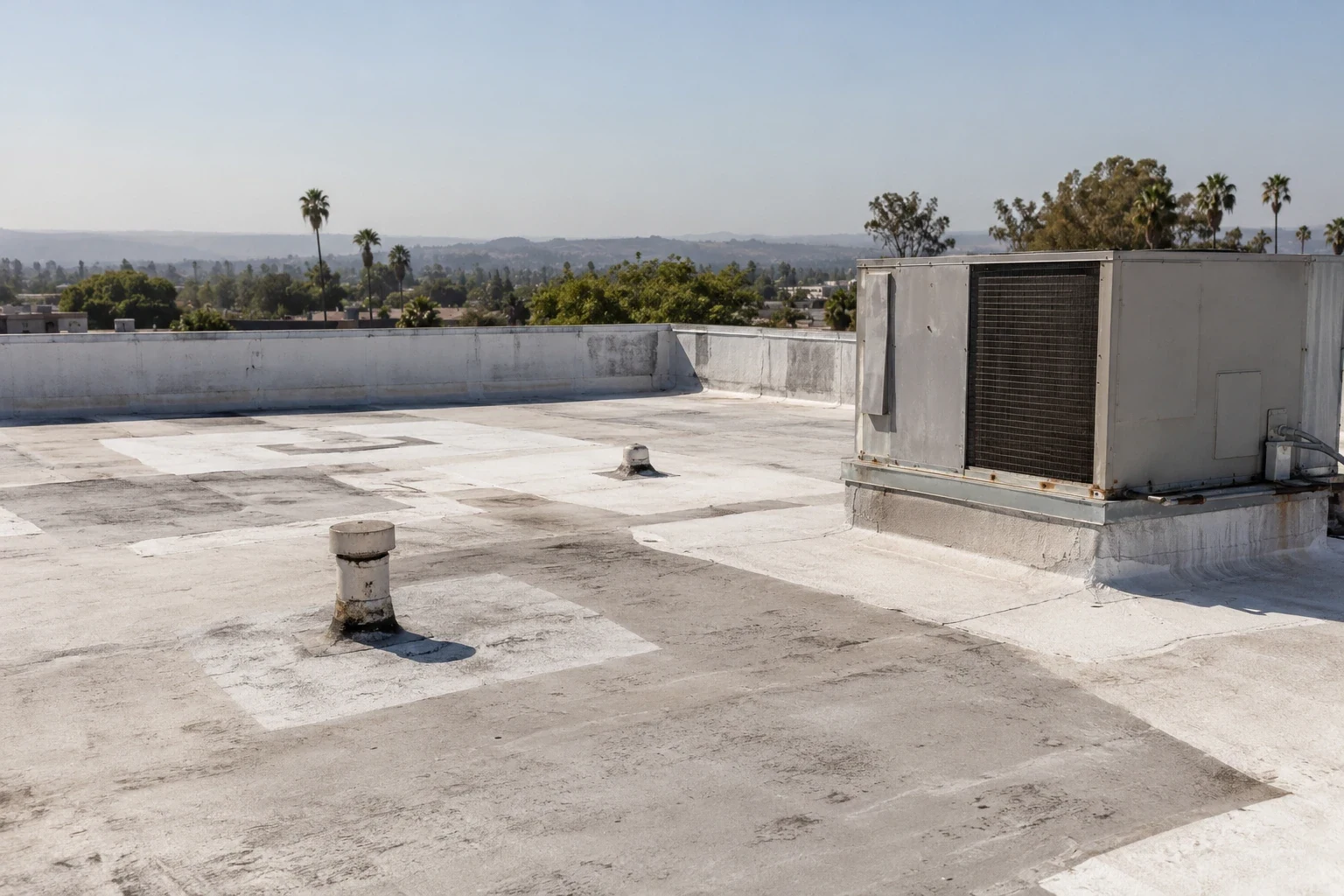
We follow the surface from the hatch or ladder to low points, drains, scuppers, seams, curbs, wall transitions, and edge metal. Each finding receives a photo and plan mark. If a unit blocks a detail or a roof section cannot be walked, we state what remains to inspect rather than treating it as clear. A prior patch may point to a repeat problem, but we check its boundary, nearby insulation, and attachment before deciding whether to repair it again. A hands-on roof inspection gives the owner a condition record to compare with repair proposals.
Oxnard's August 2023 station record was 1.77 inches during Hilary, the largest monthly total for that calendar month. For an Ojai property, we inspect its drains, seams, flashing, and reported water path before setting the scope.
Follow water through a roof section
A ceiling mark is an interior symptom, not the roof entry point. The leak path may cross roof layers or framing, so its entry point can differ from the ceiling mark. We compare the room, date, and operating conditions with roof penetrations, seams, drains, and wall lines above. If the path remains uncertain, we mark a test area and explain whether opening the roof would change the repair quantity.
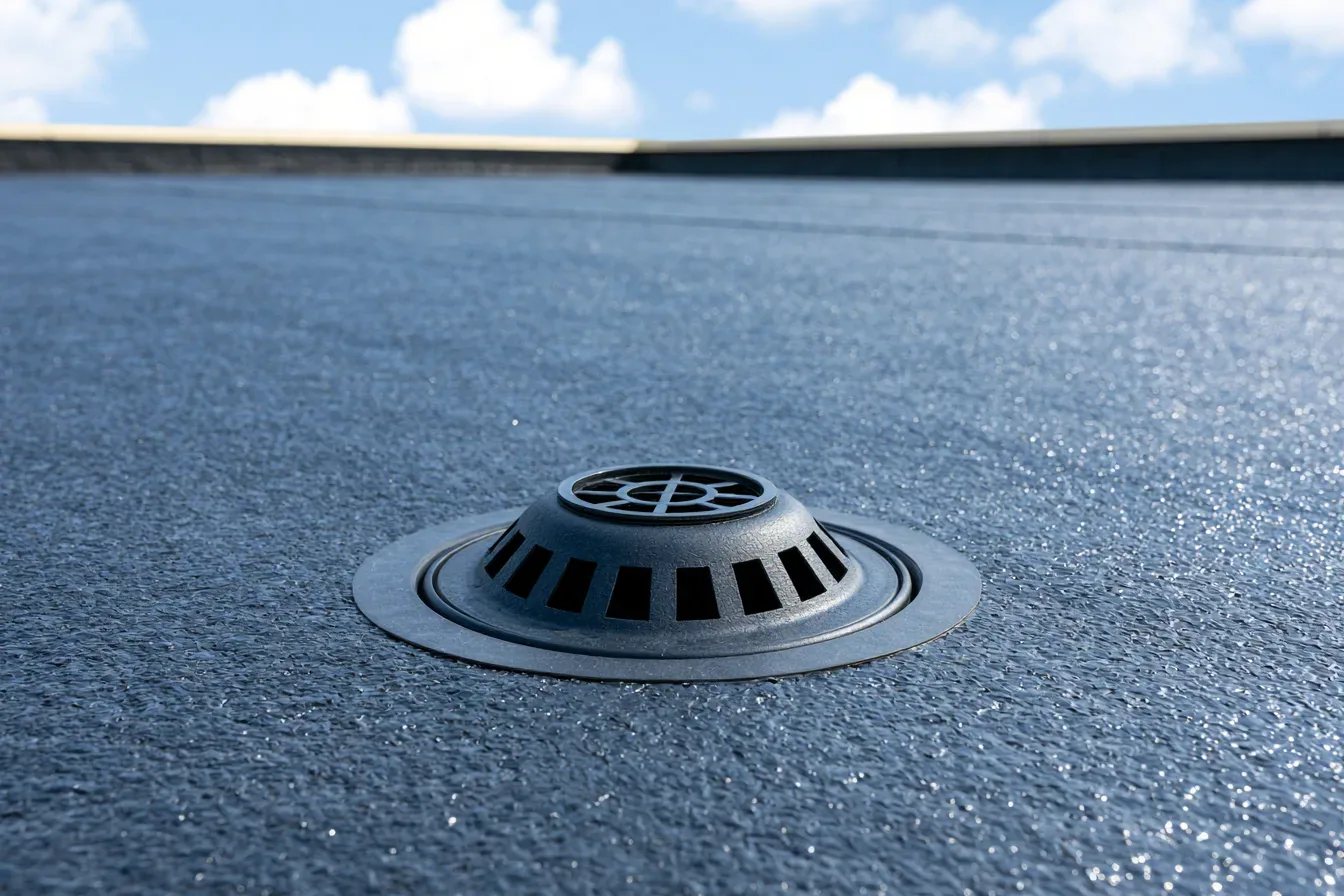
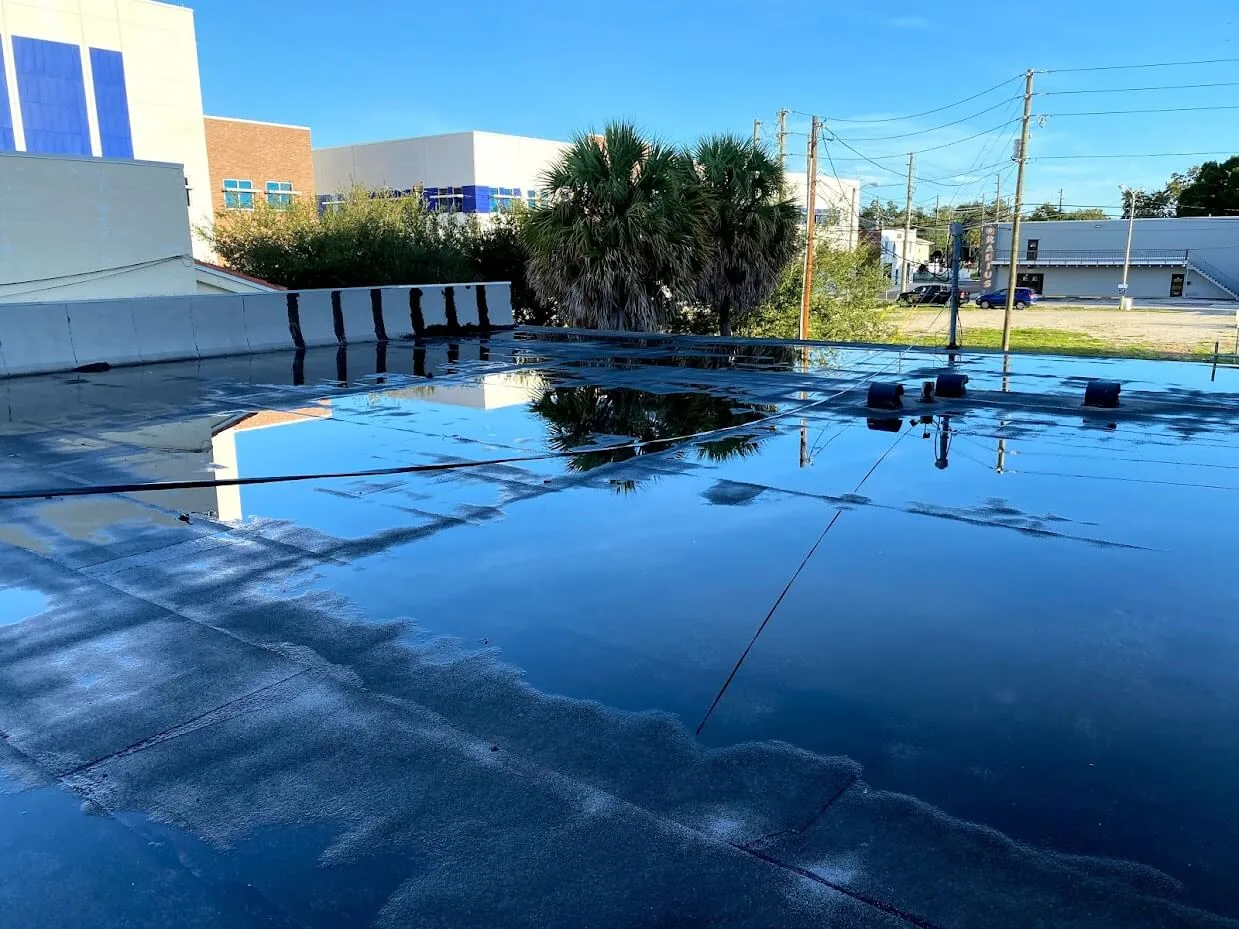
At a drain, we check the bowl, membrane connection, overflow, and surrounding slope. A clear outlet with a broken connection needs a different repair from a blocked strainer. A depression that holds water can point to movement or wet insulation. We photograph those conditions and identify whether maintenance, a detail repair, or testing is the next step. Drain and scupper work addresses a confirmed outlet issue; ponding-water repair considers the roof area and the water route together.
When a moisture survey indicates a suspect zone, we note its limits and propose a test cut if confirmation affects tear-off or replacement. The owner sees the affected area, the test location, and the decision each result would support. A small area of wet insulation can expand a repair beyond a seam, so testing is useful when it establishes a defensible boundary. Infrared moisture mapping can guide that investigation.
Restore the detail that failed
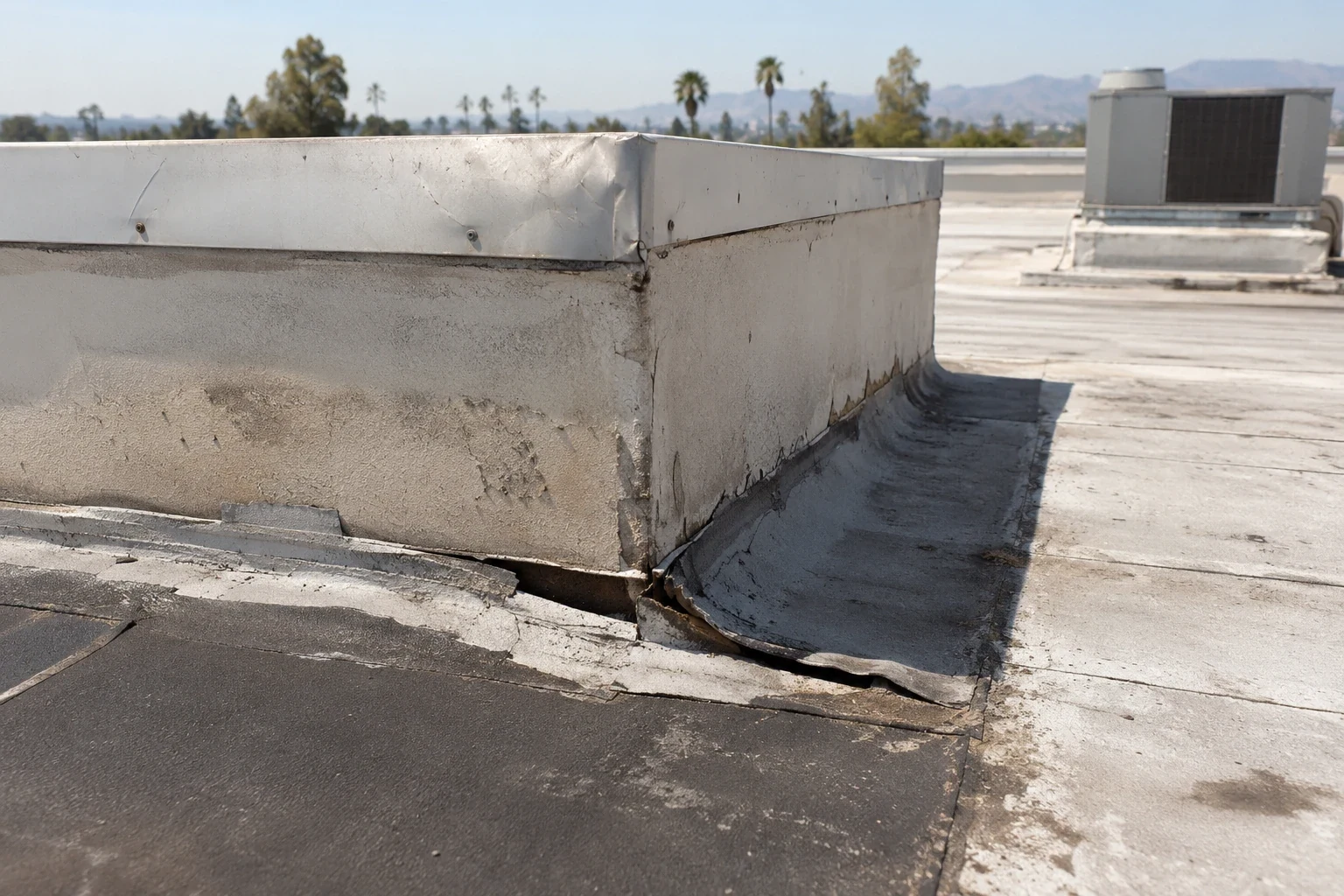
At a penetration, we inspect flashing height, corner treatment, seal, and the membrane turn-up. At the wall, counterflashing and termination need to direct water back across the roof. At the edge, loose coping or a failed membrane attachment can expose the perimeter. We prepare the repair area to reach stable material, then use a method that fits the roof system. The closeout shows the tie-in and any adjacent condition that still needs attention.
Workers from Ojai are part of the regional labor connection to the Port Hueneme coastal economy. For a roof visit, the building's operating hours and access rules set the schedule, which we confirm with the property contact.
Thermoplastic membrane seams may be heat welded after cleaning and preparation. EPDM, modified bitumen, metal, and coatings need different repair products. We identify the installed surface before applying a patch or sealant, then inspect nearby repairs for movement or moisture. Flashing repair can correct a confirmed wall or curb path; edge-metal work restores a defined perimeter connection.
Compare the repair with the roof's remaining options
A local repair can be suitable when surrounding material is stable, dry, and able to receive a compatible repair. Repeated openings, wet insulation, loose attachment, or deck movement call for a wider look. We mark those conditions and identify where testing can answer whether the scope stays small. If a leak is active, temporary protection is listed separately from the permanent correction and closeout.
A recover leaves an existing assembly in place only when moisture, deck, attachment, drainage, height, and project requirements support another layer. Added insulation changes drain and edge details, and may affect clearances at curbs or equipment. Full removal creates access to inspect the substrate, with added tear-off, haul-off, and weather protection in the scope. We compare the alternatives using the same roof measurements, with separate lines for insulation, edge metal, drainage, staging, and equipment coordination. A repair scope can be weighed against a recover assessment before a capital decision is made.
Schedule and cost depend on roof height, access equipment, material handling, removal depth, preparation, disposal, work windows, and how much of the building must remain in service. We set a daily dry-in point and identify who approves concealed-condition work. Those limits matter before the roof opens, especially when repairs cross several elevations or intersect other trade work.
Keep the condition record tied to the building
The closeout records the roof section, material identified, repair preparation, products used, photographs, test findings, and any open issue. We mark the location on the roof plan and give access limits their own note so a later visit knows what was not seen. This makes it possible to compare conditions after another repair or equipment change without relying on a vague description.
A maintenance walk checks seams, penetrations, counterflashing, drains, edge metal, and traffic paths. The service interval follows the building's observed condition and use. Property managers with sites in Ventura can keep those city records distinct while using the same roof-zone fields. Photo-based condition reporting connects the inspection to repair priority, budget, and follow-up.
For scheduling, share the roof drawing, reported leak area and date, gate instructions, equipment hours, and prior service history. We will inspect the reported section, trace the water path, and document the repair decision.
Related Roofing Work
More from Service Areas and nearby services

Request an Ojai roof condition review
To arrange an Ojai roof inspection, share the building drawing, reported leak area and date, entry instructions, equipment hours, and prior service history. We will trace the water path and document the recommended next step.
Common Questions
Does the Ojai Valley Area Plan cover every Ojai property?
It provides land-use guidance for the unincorporated Ojai Valley. Ojai is also part of the County's regional planning area. Confirm the property's applicable review, while we document the roof assembly and condition.
Can you set a repair price from a leak description alone?
A bounded defect may be measurable after inspection. If moisture, attachment, or deck condition could change the quantity, we identify testing and keep concealed work separate from confirmed repairs.
What if an older patch has failed again?
We inspect the patch edge, nearby seams, membrane, and insulation, then compare the failure with drainage and service traffic. The next repair should address the reason the detail reopened, not just cover its surface.
Is the Hilary rainfall number an Ojai measurement?
An August 2023 Hilary observation at the Oxnard station measured 1.77 inches, a monthly high there. We map Ojai drainage from the property itself. We inspect the Ojai property's own drainage layout and water marks before recommending work.
What makes a recover different from replacement?
A recover retains existing layers if they are dry, secure, and compatible with the new assembly. Replacement removes them and allows substrate correction. We inspect both paths and compare the work limits, access, and protection needs.