
Commercial Roofing in Saticoy, CA
Schedule a Saticoy roof condition review
Saticoy
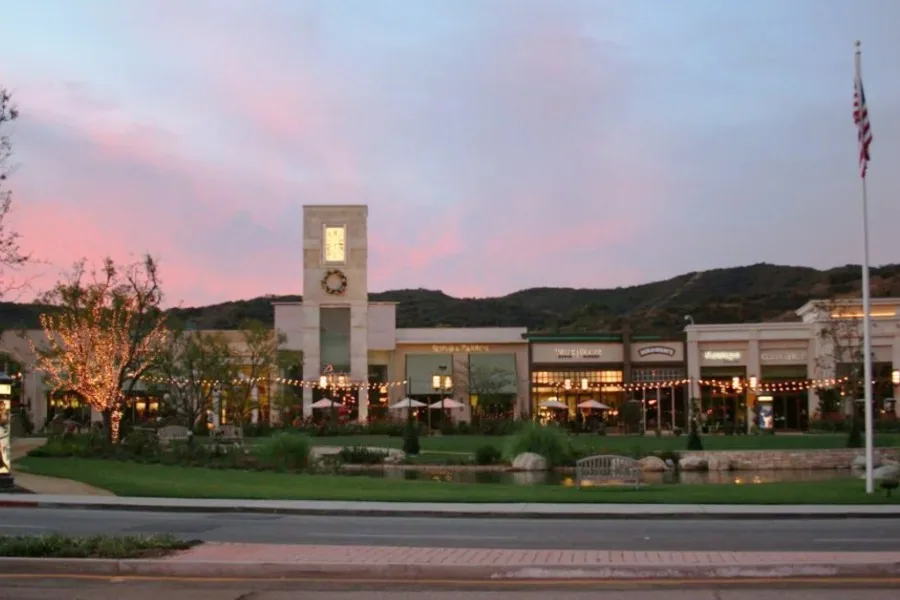
A commercial roof repair in Saticoy starts with a walk that matches the building’s operation to the access and roof details in front of us. We identify the assembly, mark the route to drains and low points, and check seams, curbs, penetrations, walls, and perimeter metal. Ventura County maintains an Area Plan for Saticoy, and Ventura’s planning history identifies the community among districts with commercial and industrial character and planned mixed use. Those facts help frame the service area, but a plan does not specify the roof on an individual property. We document the actual system and condition before setting the work boundary.
Map the roof before setting repair quantities
Before the visit, the property contact approves entry, identifies the roof route, and notes occupied or equipment areas that need coordination. Separate elevations, locked hatches, or service units can limit the first walk. We mark what was inspected and identify any section that needs a different access plan. This keeps a partial view from becoming an unsupported conclusion about the whole roof.
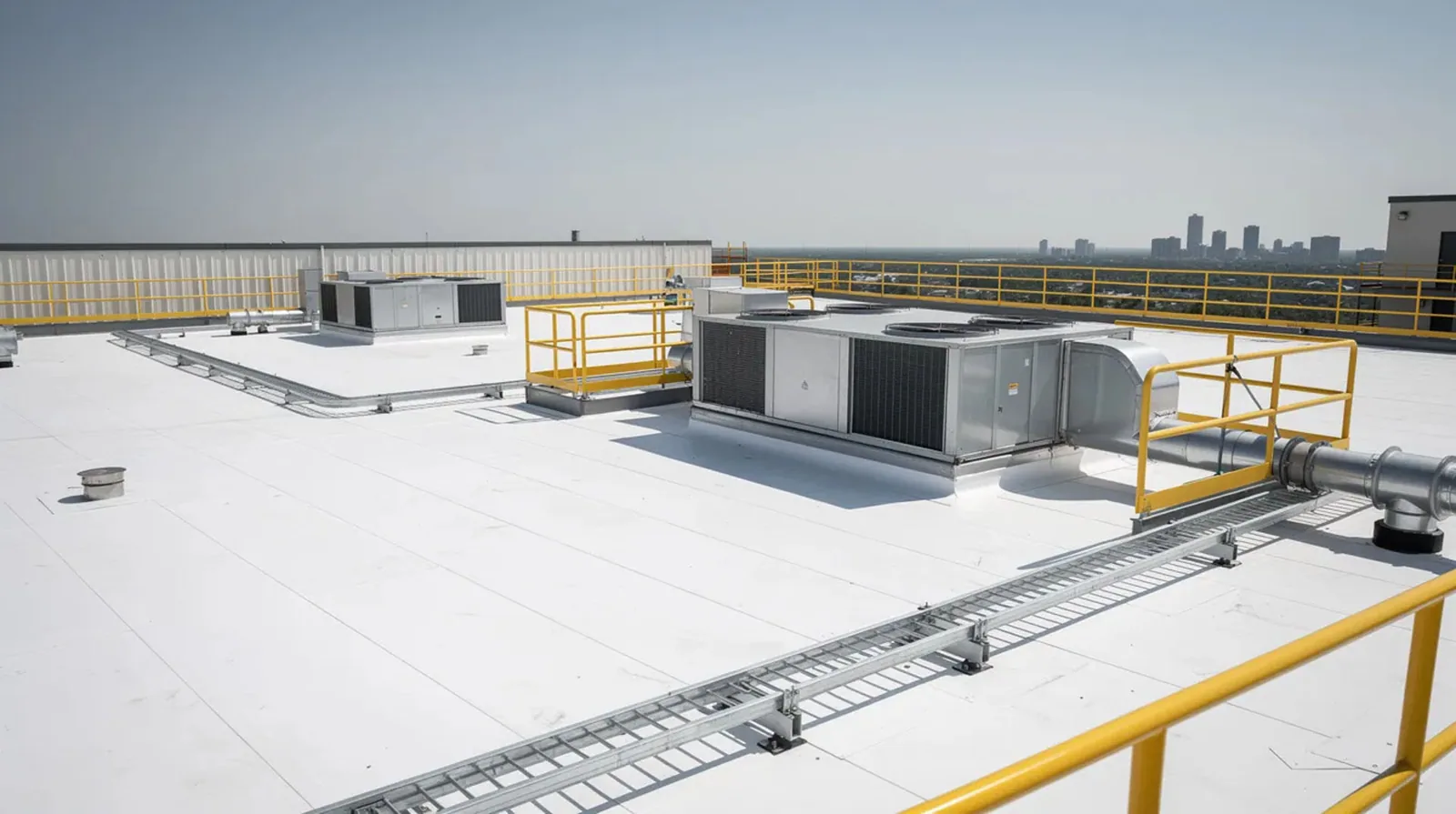
On the accessible roof, we inspect membrane or metal, laps, penetrations, curb seals, wall transitions, edge metal, drains, and scuppers. We note open seams, punctures, loose terminations, worn surfaces, water marks, and previous patches. Each photo gets a roof-area reference, and the scope connects the observed condition with a measured action. A commercial roof inspection can also record roof access, equipment routes, and existing repairs for the property file.
Planning context extends across Saticoy, Ventura, and other nearby unincorporated communities, but roof work follows the inspected property. If an owner maintains more than one building near Ventura, we can keep the same field categories while preserving separate maps, condition notes, and repair records.
Trace water from the low point to its entry
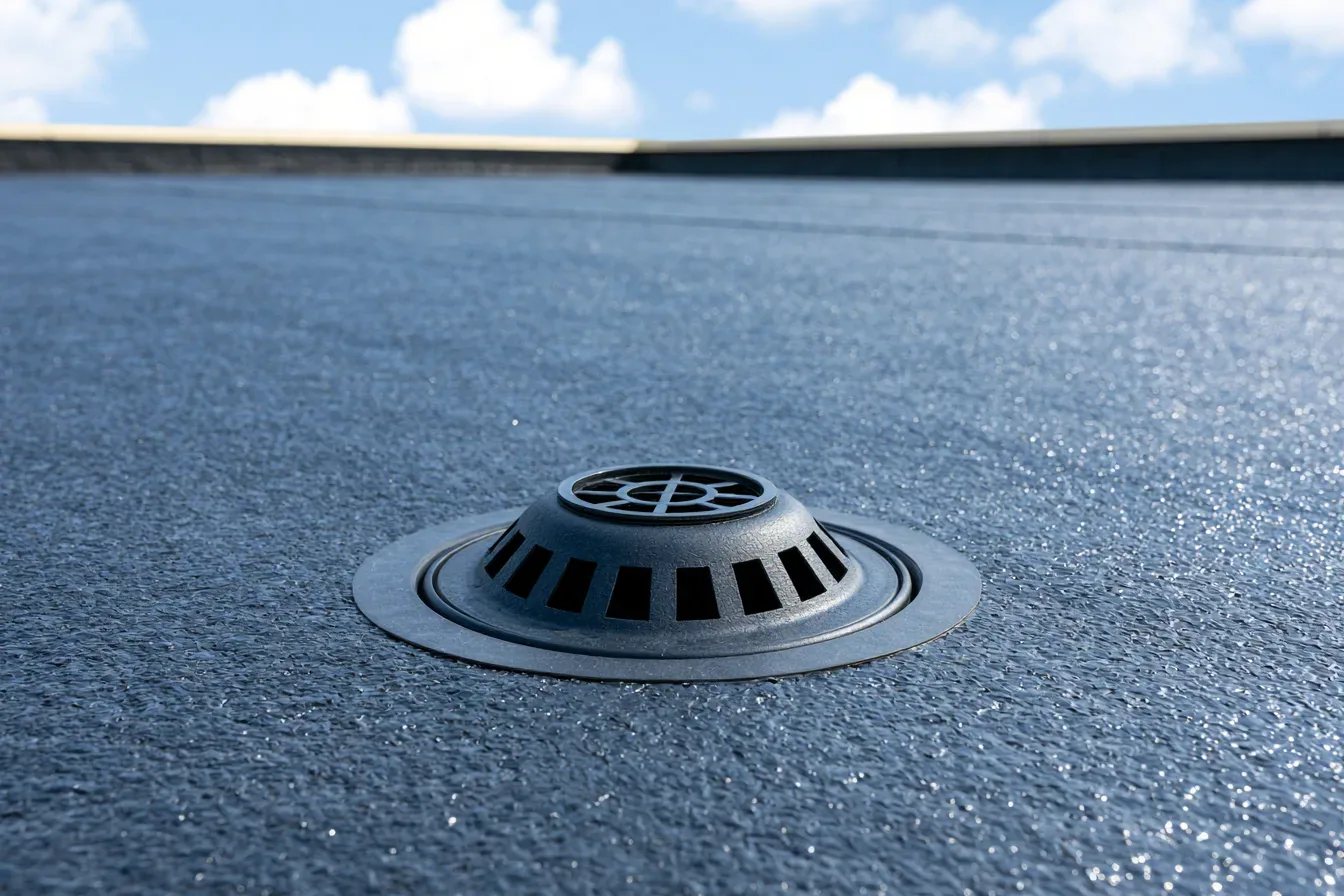
A ceiling mark tells us where water became visible, not necessarily where it passed through the roof. We compare its timing and room location with drains, seams, curbs, wall lines, and roof penetrations. At an outlet, we check the bowl, membrane connection, overflow route, and surrounding slope. A debris blockage, open outlet seam, and low area with settled insulation require different actions. We document the detail and identify whether moisture testing would change the repair quantity.
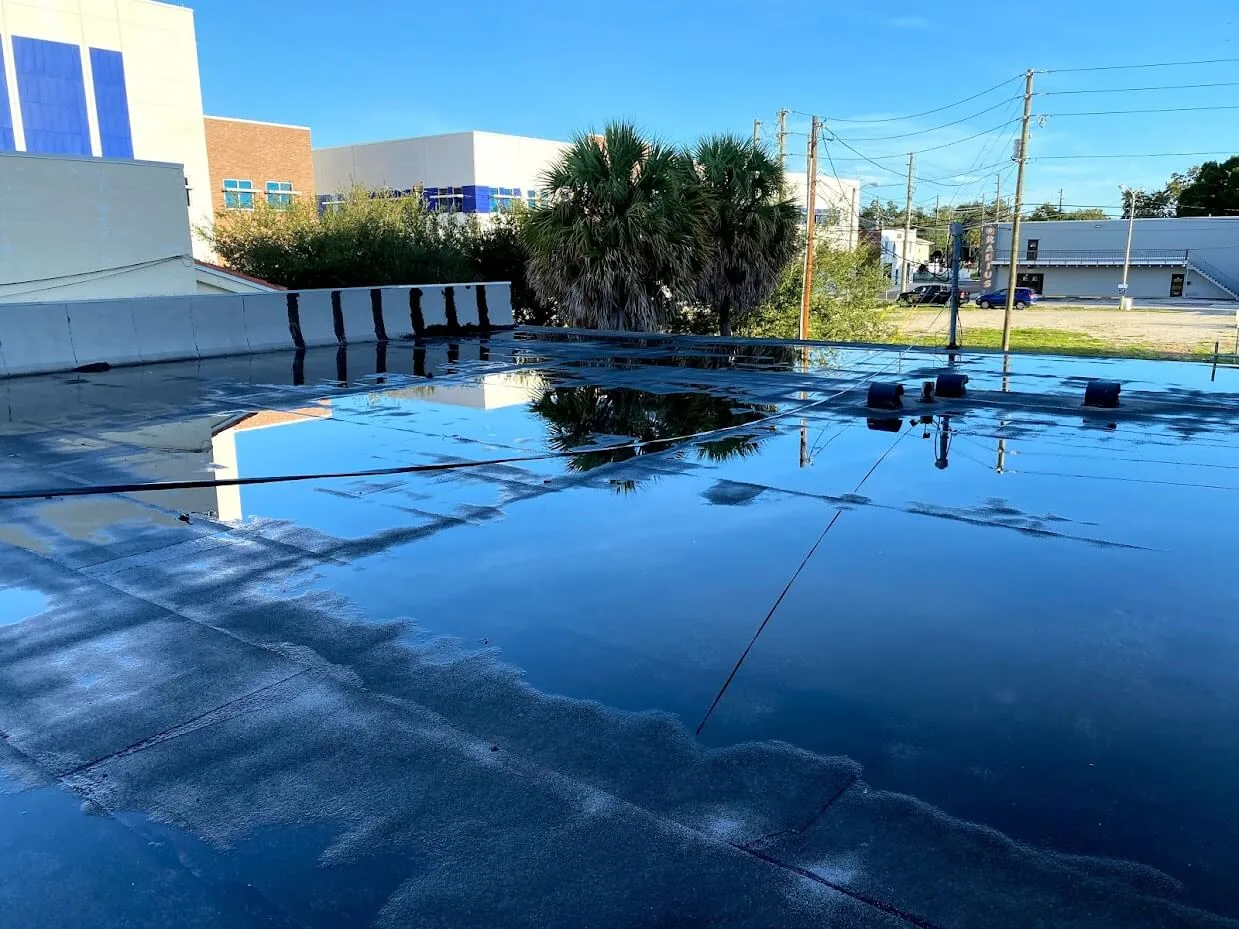
The Oxnard gauge's monthly total reached 1.77 inches in August 2023 during Hilary, its highest August reading. For the Saticoy property, we assess drainage from its own layout, outlets, and water marks. When the connection at a drain is the confirmed problem, drain and scupper repair may address it. If standing water extends beyond the outlet detail, we map the affected section before recommending ponding-water repair.
A moisture survey or test cut is useful when the result could distinguish an isolated lap repair from a wet insulation area. We mark the suspected boundary, explain what each result would mean, and keep investigation separate from confirmed repair quantities. A defined test helps prevent both under-scoping and opening more roof than necessary.
Close the detail with compatible materials
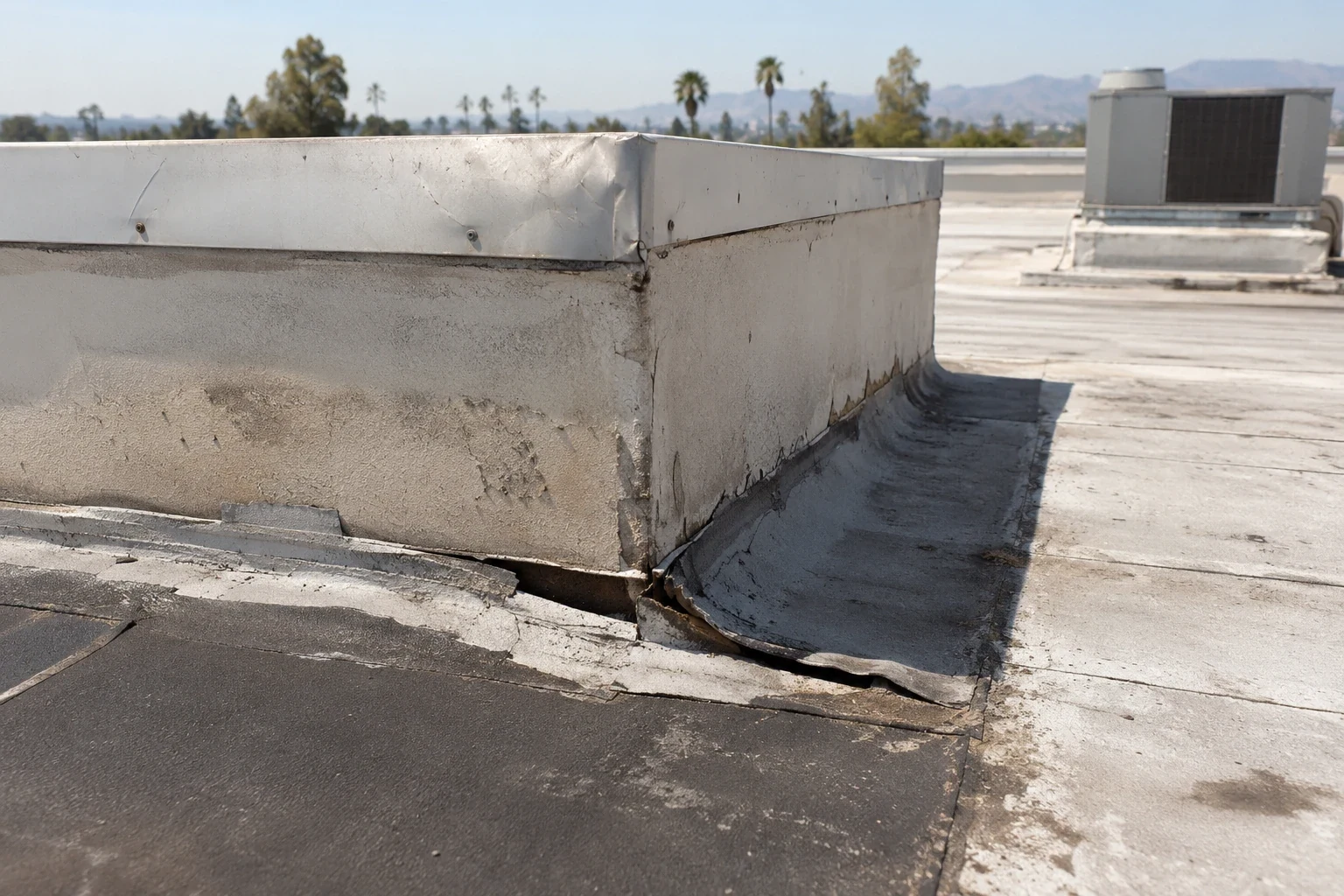
We prepare a repair back to stable material and tie it into the identified assembly. On a curb, we inspect flashing height, corner seals, and the field connection. On a wall, we check counterflashing and termination. On a seam, we look beyond the first visible split to see whether movement or failed adhesion continues. At the perimeter, we inspect laps and attachment rather than relying on sealant to hold loose metal in place.
Thermoplastic sheets need a clean, weldable area. EPDM, modified bitumen, metal, and coatings use different preparation and repair products. We confirm what is installed, then select the compatible method. We inspect an open lap and the surrounding sheet before choosing seam repair. A curb or wall leak follows its own flashing detail. Closeout photos show the completed tie-in and any nearby condition left for separate work.
If another trade must move equipment or conduit, we coordinate the sequence before disturbing the roof detail. For an active leak, a temporary measure may protect the interior until permanent work can be completed. The proposal labels that measure temporary, defines the remaining work, and names the daily dry-in point.
Compare a local fix with a broader plan
A local repair is appropriate when the damage is bounded and the surrounding roof can accept a stable tie-in. Repeat seam openings, widespread moisture, loose attachment, or movement at the deck can require testing or a larger scope. We map each finding, measure the area, and separate known work from concealed conditions. A commercial repair proposal states preparation, materials, access assumptions, and the boundary where the crew will stop.
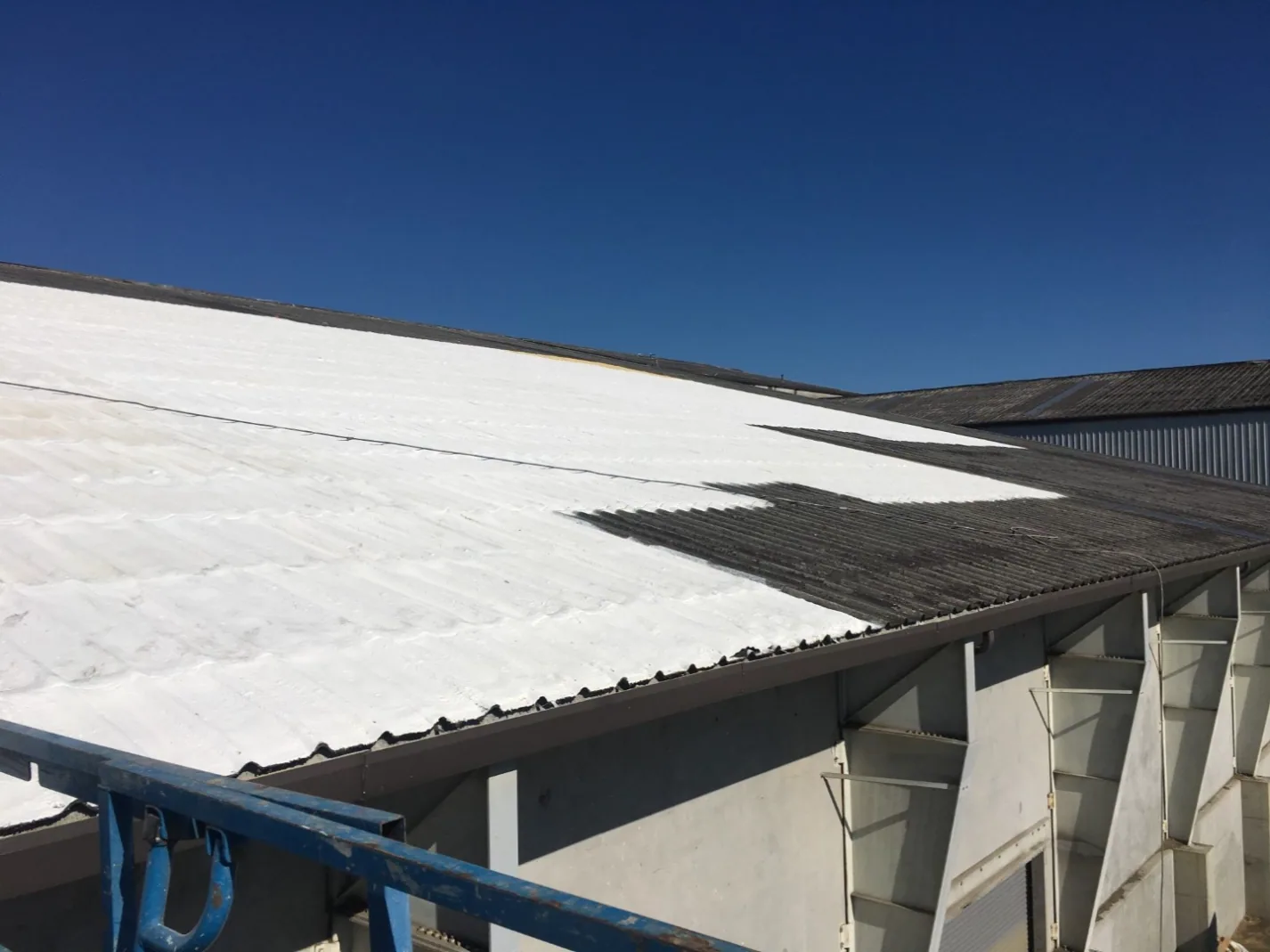
A recover may be possible when the existing assembly is dry, secure, compatible, and within drain and edge limits. Replacement removes existing layers and allows the substrate to be inspected, while bringing additional tear-off, debris handling, and protection. We compare those paths using the same roof sections and list insulation, drains, perimeter metal, equipment moves, and staging as distinct scope items. The owner can then compare disruption and timing with the observed condition.
Ventura’s planning history places Saticoy within a local commercial and industrial planning context. That does not establish what a particular building stores, manufactures, or roofs. We ask how the property operates and note only the access, equipment, and scheduling conditions confirmed on site. For comparison with Camarillo, each property keeps its own condition and work history even where planning responsibilities meet.
Keep the next walk tied to today’s findings
The closeout record lists the roof section, system observed, repair preparation, materials, photographs, tests, and any follow-up. Where access limited the inspection, that area stays marked as open. If another vendor later changes a penetration or service route, the property team can compare that work with earlier photos and field marks.
A maintenance walk revisits drains, seams, curb seals, wall terminations, edge metal, and service paths. The service interval follows the condition and use of the building. A photo-backed condition report can link each finding with its priority, budget, and next check. Separate monitor items from repairs, and state which question or test would move an unresolved item into a defined scope.
Provide a roof drawing, the reported leak zone and date, entry procedure, operating hours, and the relevant maintenance record. We will document the affected sections and return a measured recommendation for repair, testing, recover, or replacement with its assumptions stated clearly.
Related Roofing Work
More from Service Areas and nearby services

Schedule a Saticoy roof condition review
For a Saticoy roof review, send the affected building plan, water-entry dates, service logs, site contact, and access limits. We will trace the leak path and document the needed repair or test.
Common Questions
Does Saticoy’s Area Plan define commercial roof requirements?
It provides a land-use framework for the unincorporated community. The roofing method and repair quantity come from the installed assembly and conditions we inspect at the property.
What should you check before pricing a repair?
We identify the roof system, access, defect boundary, nearby moisture, and the details that connect to it. If concealed conditions could change the work, we define a test or approval point.
Does the Oxnard storm record describe rainfall in Saticoy?
At the Oxnard station, Hilary's August 2023 rainfall reached 1.77 inches, the largest August amount recorded there. We check Saticoy roof conditions on site. We inspect Saticoy's outlets, low points, and water marks to define the roof work.
When is a seam repair enough?
A local seam repair can work when the surrounding sheet is stable and the separation has a clear end. We check nearby movement, moisture, attachment, and prior patches before setting the limit.
How do you handle an area the crew cannot access?
We mark the inspection boundary and list what access would be needed to complete it. That section remains open for follow-up rather than being recorded as clear.