
Commercial Roofing in Ventura Road Corridor, Oxnard, CA
Request a Ventura Road corridor roof inspection
Ventura Road Corridor
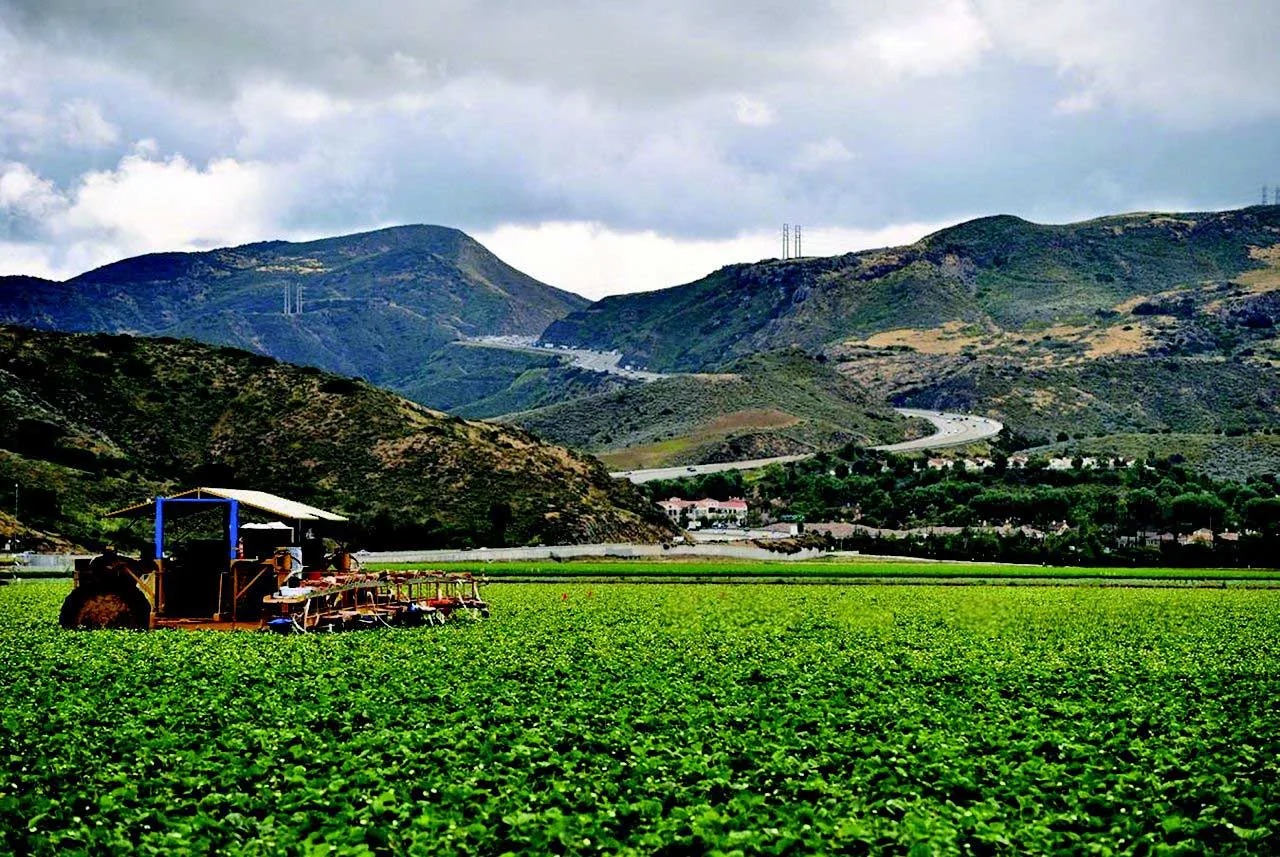
A roof inspection along Ventura Road begins with the commercial use below and the details the crew can reach above. Oxnard’s Northwest Community plan uses the Vineyard Avenue and Ventura Road area for community-serving retail and service commercial uses. Camarillo’s General Plan identifies commercial, industrial, and research or development uses along its arterial network, and Port Hueneme identifies a Ventura Road and Channel Islands Boulevard commercial-center intersection. Those are separate planning contexts along the regional corridor. We confirm the property’s roof assembly, access, and water path before turning its location into a repair quantity.
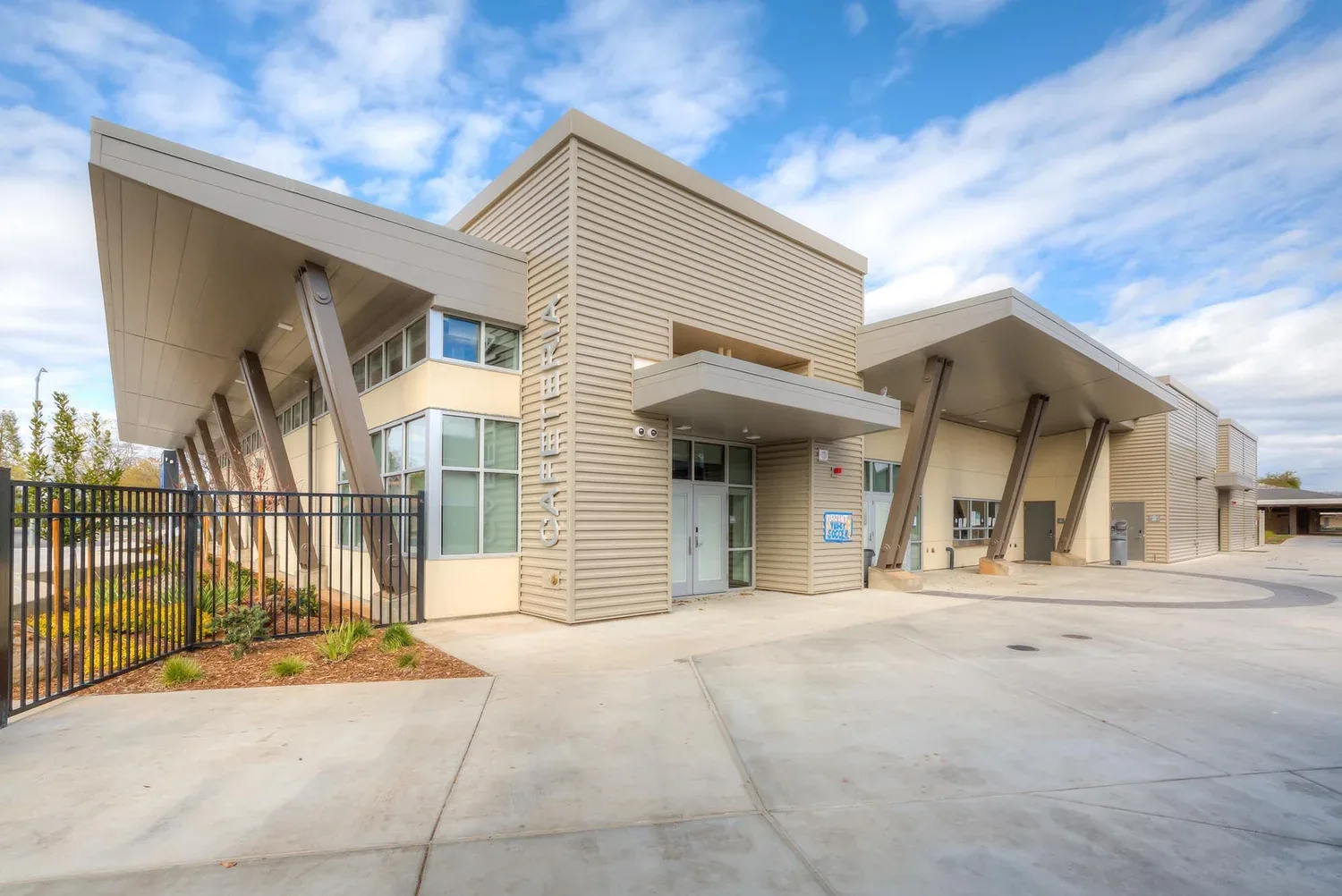
Set a roof walk that fits the property schedule
We confirm the roof entry, tie-off route, contact authorized to approve access, equipment that must stay in operation, and any occupied areas that need protection. A retail or service-commercial operation may have customer hours and deliveries to consider. We verify the actual access window and staging point with the property manager rather than infer it from the corridor designation. Any inaccessible roof section gets marked for a follow-up plan.
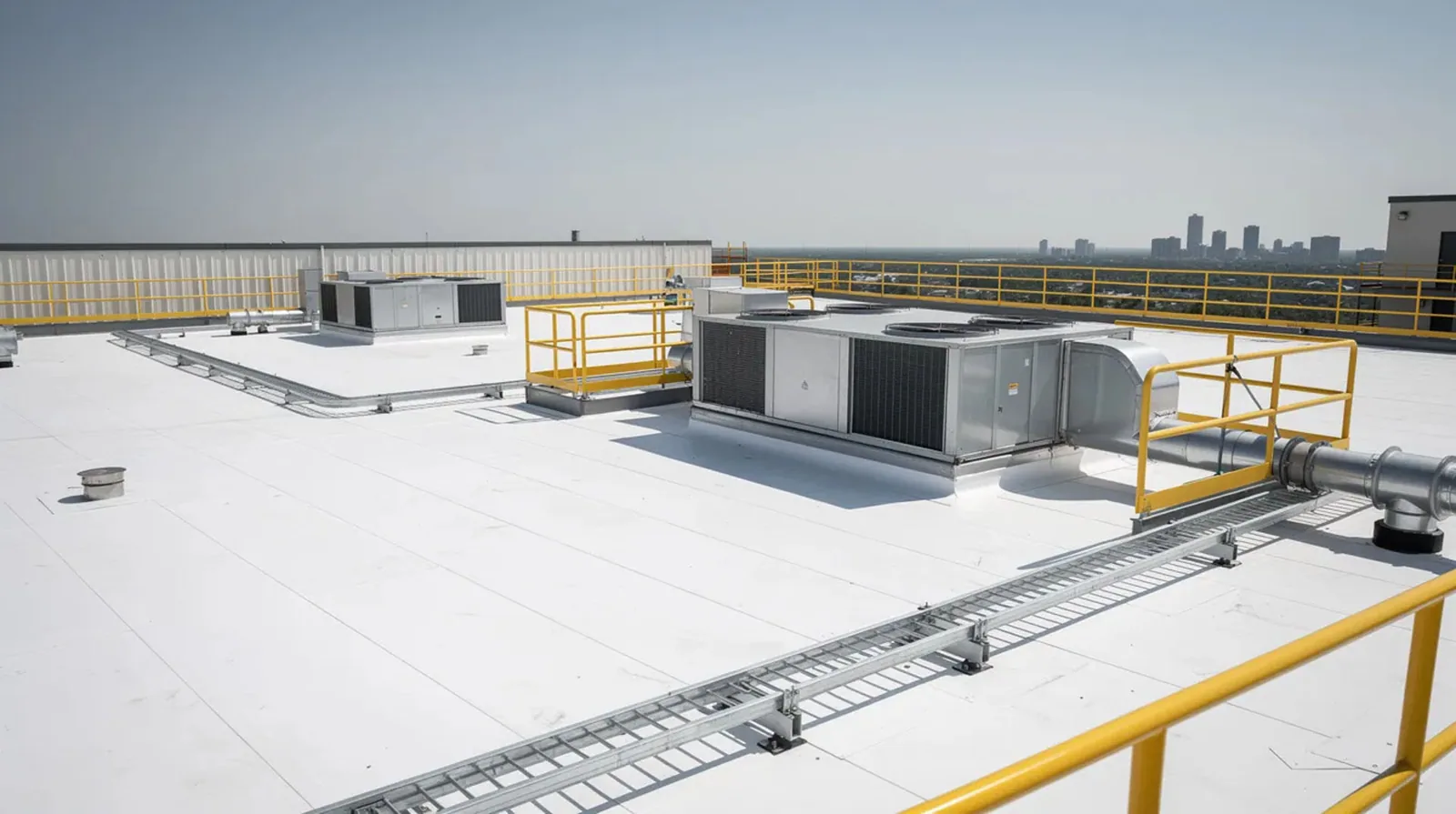
We chart each roof section from its access point, adding water outlets, seam lines, curbs, penetrations, wall transitions, and perimeter metal. We look for open laps, punctures, loose flashing, water marks, ponding, and prior repairs. A photo of a split lap should identify its roof zone so the repair crew can return to the same location. A commercial roof inspection documents the assembly, visible conditions, and access limits that affect the next maintenance or repair decision.
Oxnard, Camarillo, and Port Hueneme each use local planning materials to describe commercial and service activity along their arterials. For a manager comparing properties in Camarillo, keep that building’s roof map and repair history specific to the parcel. The road name does not tell us whether two properties have the same roof system or operating schedule.
Trace the leak across roof sections
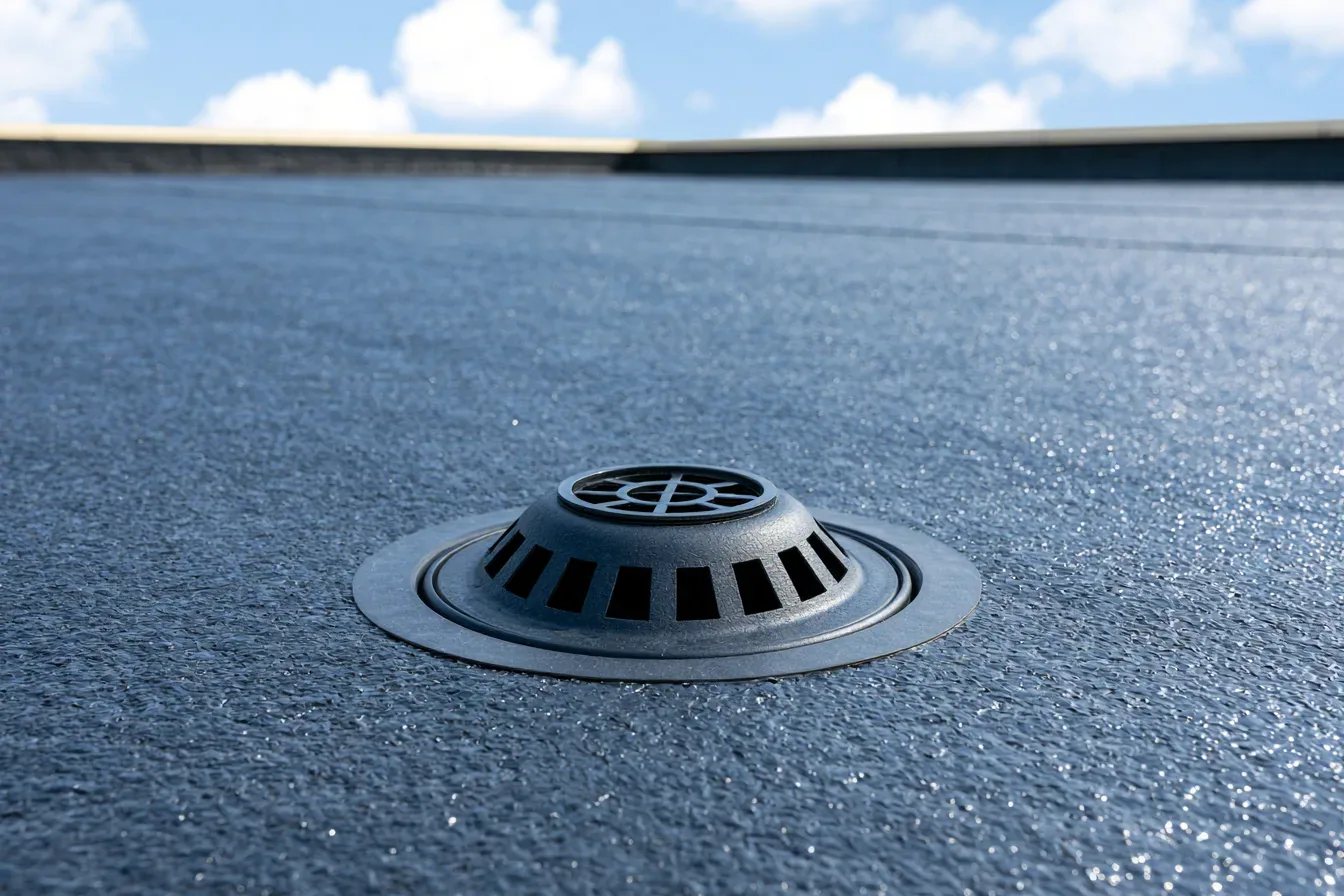
A ceiling stain gives us a room and a time to investigate, but water can move before it becomes visible. We compare the report with penetrations, seams, low points, drains, and wall lines above. At a drain, we inspect the bowl, membrane connection, overflow path, and surrounding slope. At a curb, we check the corners and flashing turn-up. We record what is confirmed and identify whether a moisture survey or test opening could change the work boundary. We record the finding by roof zone before pricing each area.
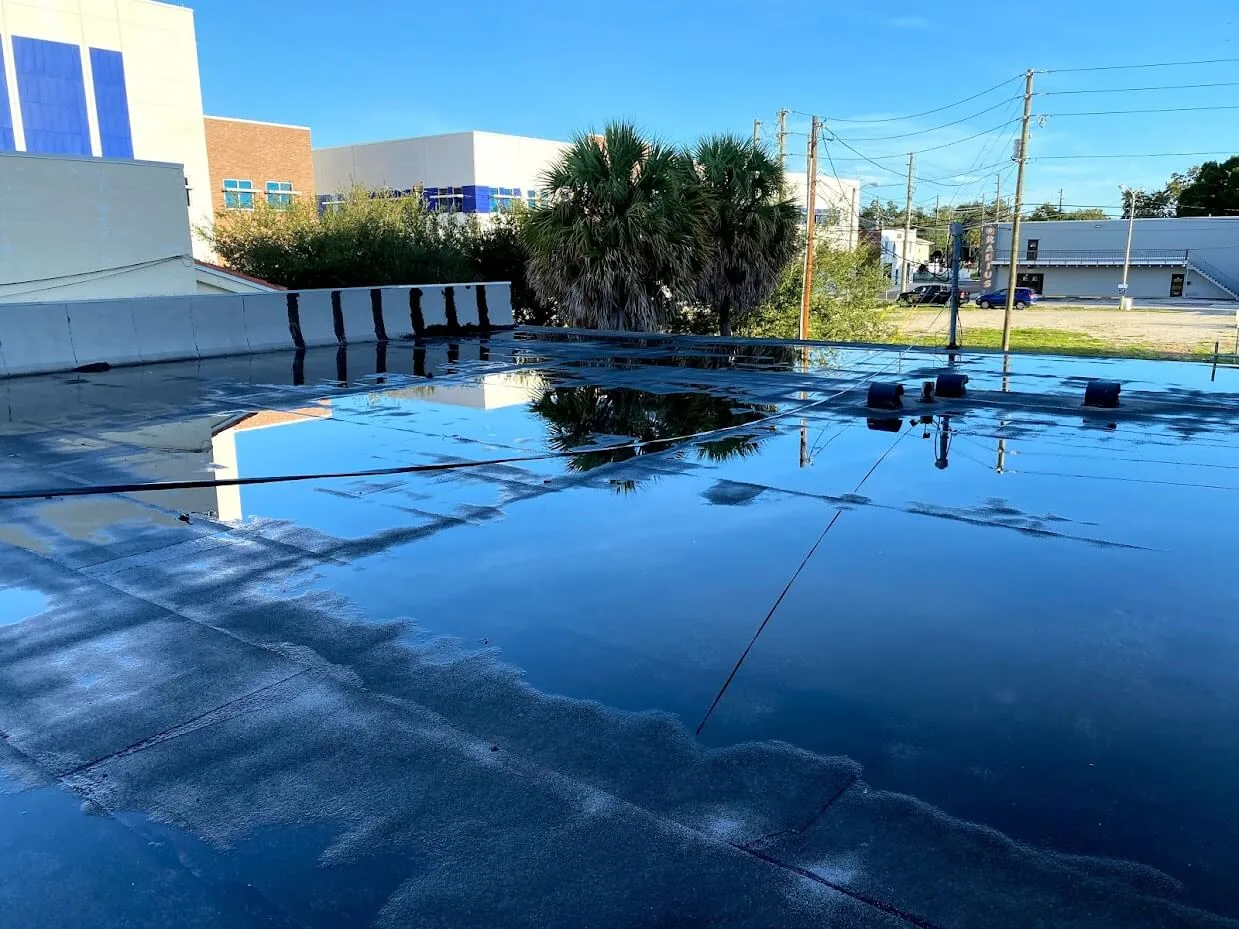
Hilary's August 2023 total at Oxnard was 1.77 inches, unmatched there for August. We check each building's outlet condition, low points, maintenance history, and water marks. A separated outlet tie-in may need drain and scupper repair. Water remaining beyond the outlet warrants a mapped review before ponding-water repair is scoped.
When moisture may extend beneath the visible defect, testing can prevent a small repair from stopping at wet material or a broad repair from opening dry areas. We identify the proposed test location and what its result changes. The estimate then separates known work from the next approval point.
Repair seams, flashing, and roof edges
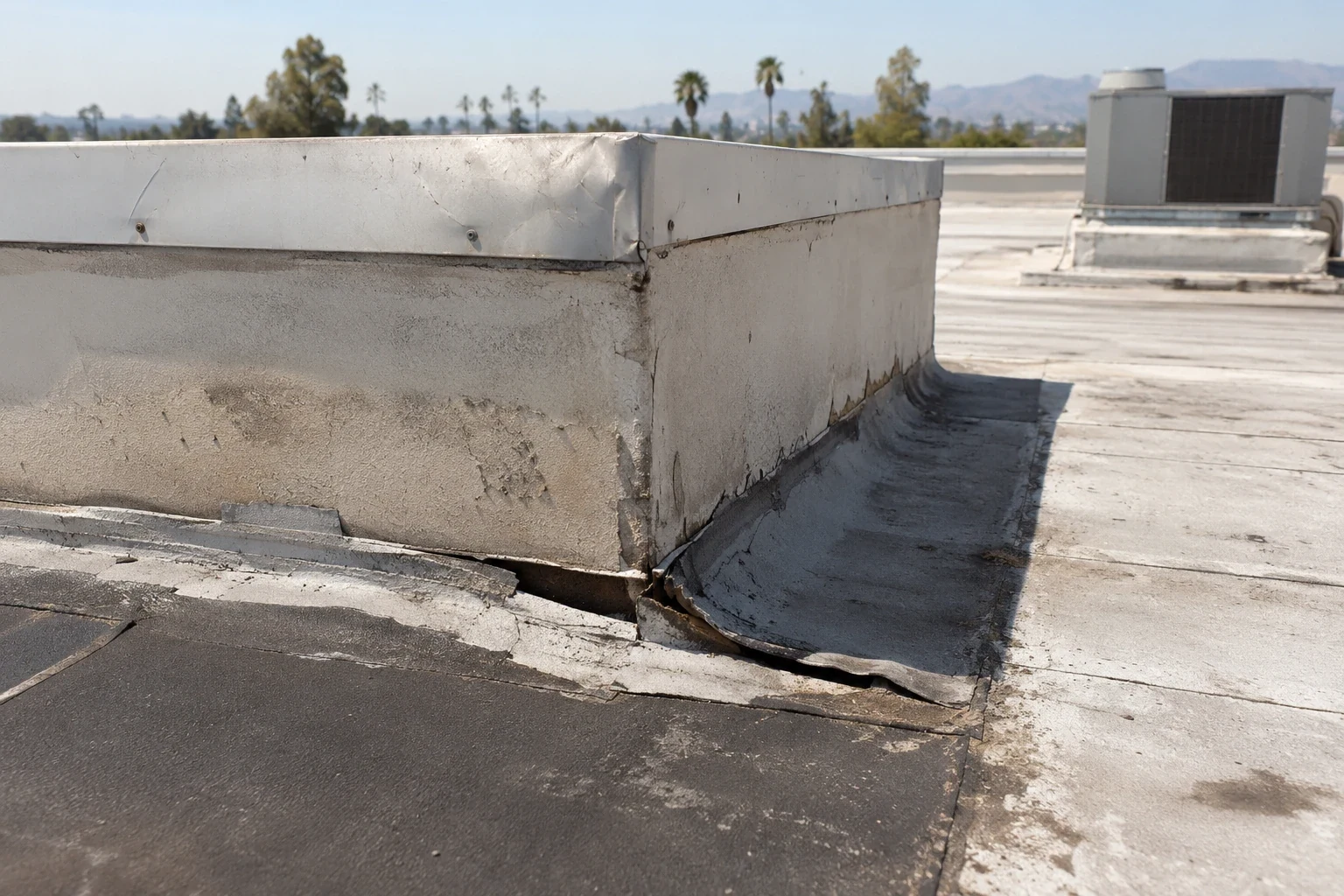
At a seam, we check the full failing lap and nearby attachment. At a curb or wall, we inspect flashing height, corners, seals, and termination. At the roof edge, we look for loose metal, open joints, and a membrane turn that no longer holds. The repair removes failed material to a stable boundary and restores the connection with a method suited to the assembly.
TPO and PVC seams require clean, weldable material. EPDM, modified bitumen, coated roofs, and metal details call for different preparation and products. We identify the system first, then check whether movement, trapped moisture, or an older repair caused the opening. A split lap can need seam repair; a failed penetration or wall connection may need flashing repair. The closeout marks the completed section and any adjacent item that remains a separate decision.
If the building stays open during work, the proposal names interior protection, equipment coordination, staging, and the point the roof will be secure at day’s end. Temporary protection for an active leak is identified separately from the permanent correction, so each step has a defined result.
Choose a scope from the measured condition
A local repair can be durable when the defect is isolated and the nearby assembly is stable. Repeated openings, moisture across several sections, loose attachment, or deck movement may call for testing or broader work. We map each observation and measure the area before pricing. A commercial repair scope should identify the method, materials, preparation, access assumptions, exclusions, and its work limit.
Existing layers qualify for a recover only after checks of moisture, fastening, deck support, roof drainage, edge height, and the project specifications. Replacement exposes the substrate, but adds removal, disposal, protection, and staging. We compare these paths using the same roof zones, showing insulation, edge metal, drains, equipment moves, and work windows as distinct tasks. Hidden conditions remain separate until they are confirmed and approved.
The corridor’s planning context includes community-serving commercial use in Oxnard, arterial-connected activity in Camarillo, and a commercial-center intersection in Port Hueneme. Those facts help frame property coordination; they do not substitute for roof evidence. A Port Hueneme building gets its own access, assembly, and repair record, even when the same manager oversees both sites.
Preserve the roof map for later work
The final record identifies each affected area, installed system, work performed, products, test evidence, and open items. Access limits stay visible. When equipment is added or another crew alters a detail, the property team can compare the new work against the existing map and history. Each mark should lead to a location and an action, whether that means repair, monitor, or inspect again.
Maintenance revisits drains, seams, curbs, penetrations, wall transitions, edge metal, and traffic paths. The service interval follows the roof condition and building use. A photo-backed roof condition report ties field findings to maintenance priorities and capital planning. If testing remains open, the report names the area and the question it will answer so it does not become an undefined task on the next work order.
For a corridor property, send its roof-zone drawing, leak timing and location, entry procedure, equipment hours, and recent maintenance record. We will map the affected areas and provide measured repair or testing options.
Related Roofing Work
More from Service Areas and nearby services
Request a Ventura Road corridor roof inspection
Share the roof plan, leak report, operating window, equipment schedule, and access contact. We will document the affected roof sections and return a measured recommendation.
Common Questions
Is Ventura Road one commercial district under a single city plan?
Oxnard, Camarillo, and Port Hueneme describe different contexts along the regional route. We confirm the parcel and access requirements, then base the roof scope on the building we inspect.
How do retail hours affect a roof repair?
They can change crew access, staging, interior protection, and the daily dry-in sequence. We confirm the property’s work window with its contact before setting the schedule.
Does the Oxnard storm record apply to every part of the corridor?
In August 2023, an Oxnard station reading of 1.77 inches during Hilary established the site's monthly August maximum. We inspect the corridor property's own outlets and water marks. We check each property's drains and water marks before recommending work.
What points to a repair beyond the original leak?
Recurring openings, wet insulation beyond a seam, loose attachment, or deck movement can change the repair limit. We map the evidence and test if the result affects quantities.
Can I use one roof report format across several properties?
Yes, consistent field labels make comparisons easier. Keep each building’s map, system, access limits, and repair history distinct so one location’s findings are not assigned to another.