
Commercial Roofing in Mandalay Bay, Oxnard, CA
Request a Mandalay Bay roof assessment
Mandalay Bay
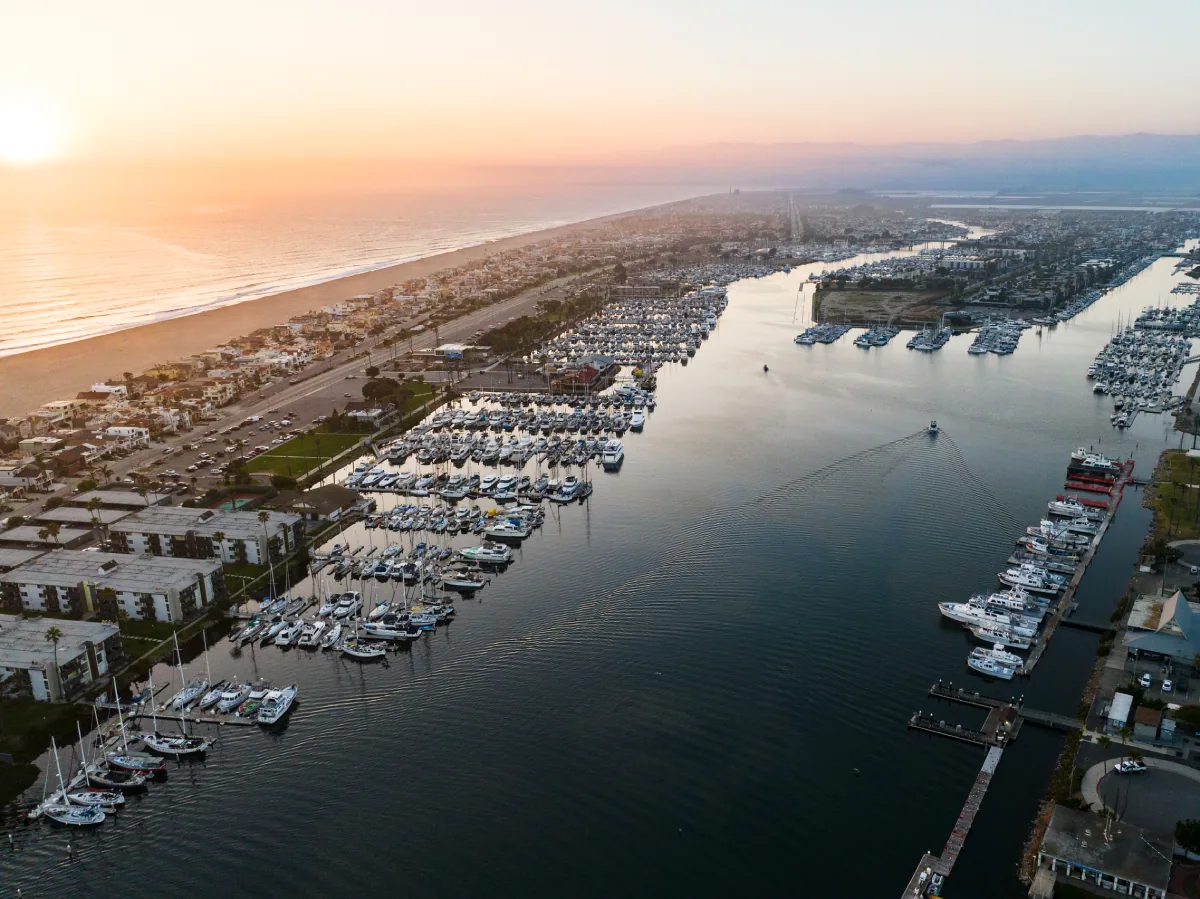
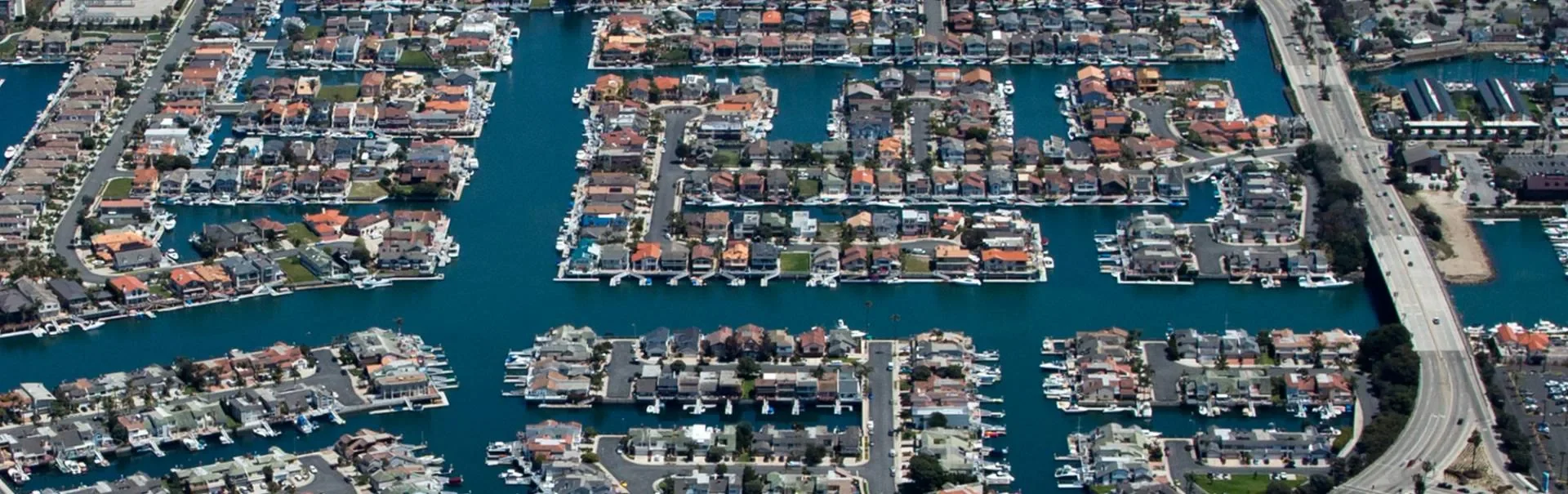
Coastal visitor-service properties in Mandalay Bay need roofing work planned around access, occupants, and the specific roof assembly. Oxnard's General Plan lists approximately 220 acres in the Mandalay Bay plan area for residential and coastal visitor-service uses. The City also maintains public maintenance and waterway assessment districts serving Mandalay Bay-area development. Those are area-wide planning and service facts, not a condition report for an individual roof. We inspect the building, identify its membrane or metal system, and mark drains, edges, penetrations, and work zones before setting the repair boundary. A nearby Channel Islands Harbor-area roof review may involve other coastal land-use categories; each property still needs its own roof walk.

Start with the parcel and the roof plan
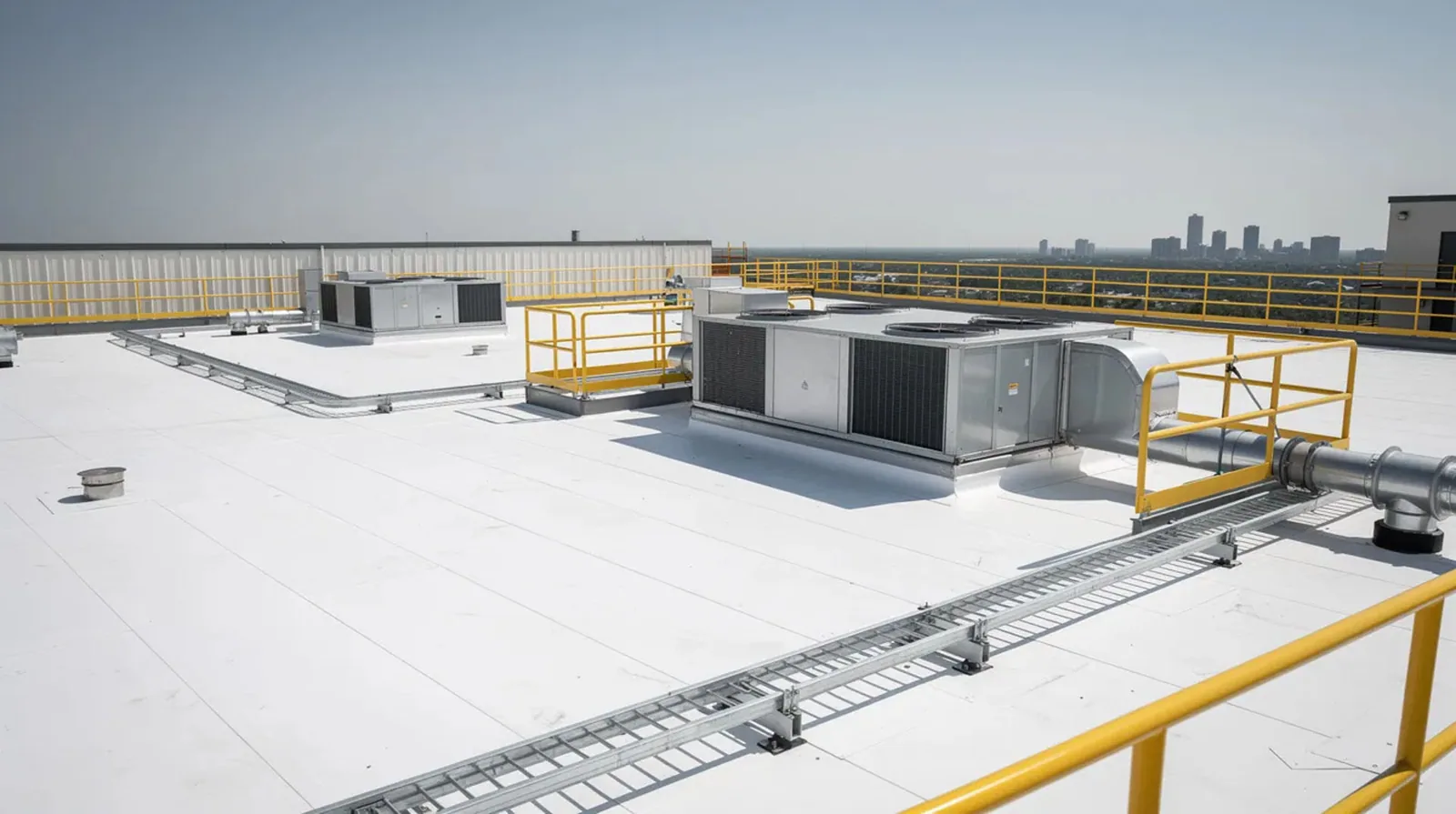
Before the first ladder goes up, we confirm the property entrance, approved roof access, occupied areas below, active equipment, and work hours. A roof plan separates elevations, drains, equipment, and prior repairs. We update missing curbs or penetrations before estimating, then confirm who can release access to each area.
The field walk follows water to low points, outlets, seams, curbs, wall turns, edges, and patches. Photos capture each defect and tie-in area. A leak near a wall does not establish that the wall is the entry point; the water may travel beneath insulation or along a deck. We record the interior report date and room, then test likely roof details in a practical sequence. A roof inspection gives the owner a baseline for repair, testing, or capital planning.
Oxnard's Local Coastal Program maps coastal hazards and adaptation policies for parcels within the designated coastal zone. For a Mandalay Bay property, a project team should use the parcel's mapped setting when a permit or design review calls for it. We keep that planning information distinct from roof condition. The field inspection records observed surface oxidation, edge movement, attachment, and drainage on the building itself.
Track runoff through the roof assembly
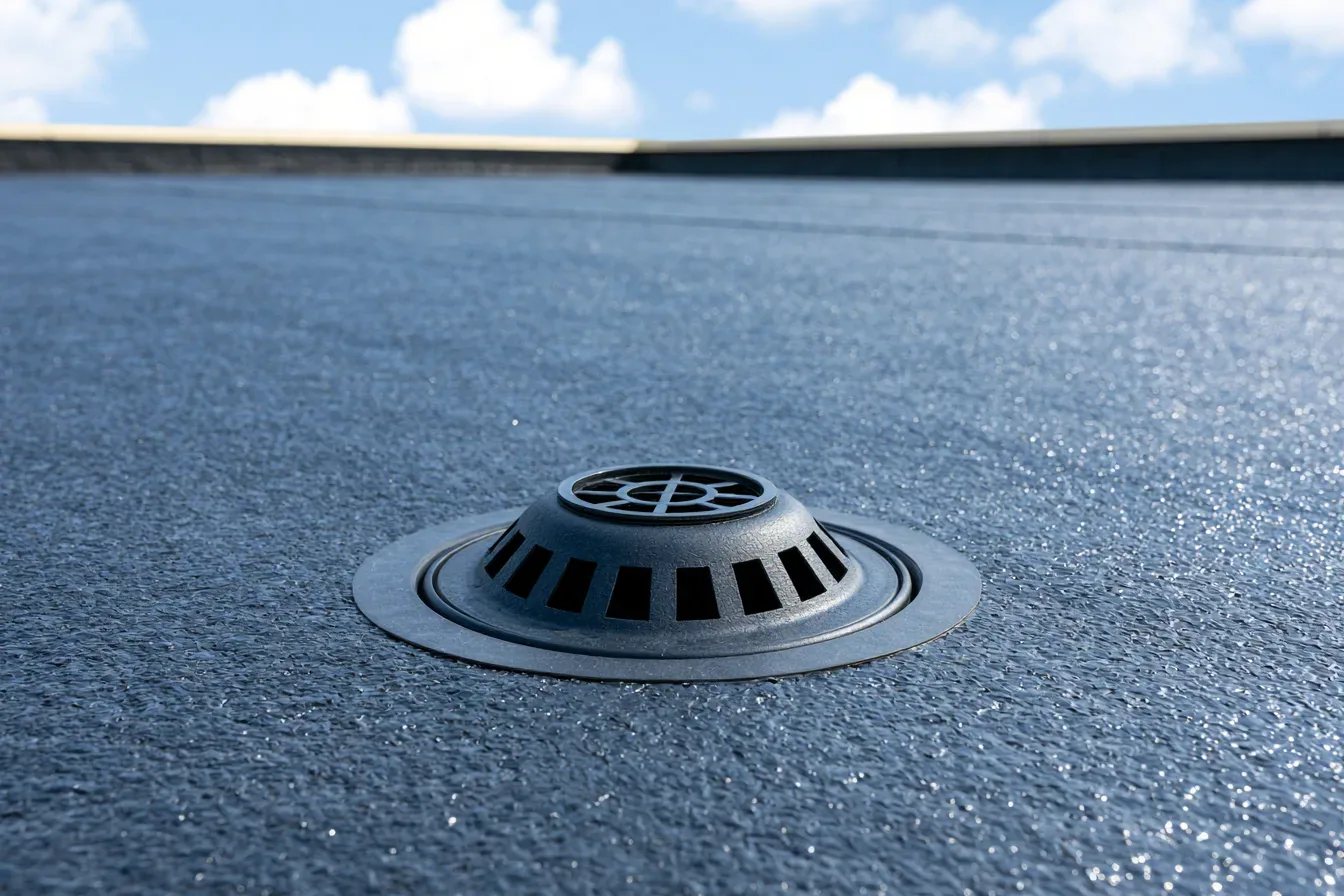
Water management starts where the roof pitches toward an outlet. We look for a clear drain bowl, secure membrane tie-in, working overflow route, and signs that water has been standing or moving across the surface. A blocked strainer is a maintenance issue; an open drain connection or settled insulation may call for repair or broader investigation. We identify which condition is present rather than treating every puddle as a membrane failure.
During Tropical Storm Hilary, the Oxnard station recorded 1.77 inches in August 2023, a new August record there. Use the date to compare maintenance logs and leak reports. We inspect the building's low points, scuppers, overflow paths, and nearby flashing, then mark any water path that connects an exterior condition to the leak report. A drain and scupper evaluation can clarify whether the issue is the outlet, its membrane connection, or the surrounding slope.
If a survey indicates possible moisture beneath the sheet, we identify the roof zones and recommend openings where confirmation would change the scope. A localized seam repair and wet-insulation removal have different quantities and dry-in needs. The manager receives the finding, the test limit, and the decision that follows. This avoids pricing a broad tear-off from a ceiling stain alone.
Repair the detail, not just the visible mark
At a pipe or equipment curb, we inspect flashing continuity, corners, fasteners, sealant, and the membrane tie-in. At a parapet or wall, we check the termination and counterflashing for a route behind the field sheet. Edge metal can loosen or oxidize where water and movement meet. Each defect needs preparation that reaches sound material, then a compatible repair that restores the path through the detail.
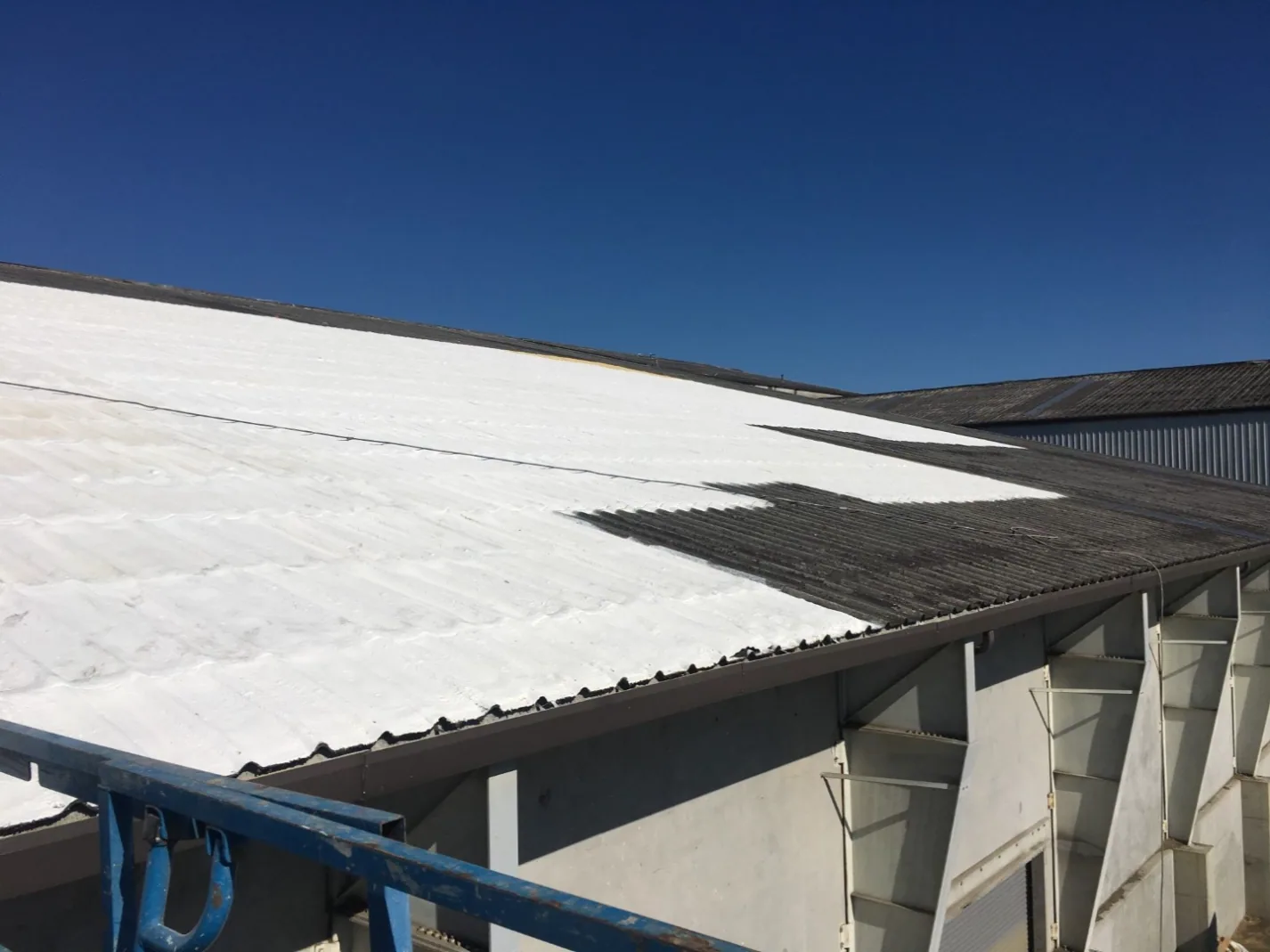
Single-ply repairs need a clean, weldable surface and a stable tie-in. EPDM, modified bitumen, metal, and coatings need different preparation, so we identify the assembly first. Where similar failures repeat, we check the attachment pattern, maintenance traffic, and drain location before treating each one as a separate patch. Seam repair addresses a confirmed opening, while penetration flashing work restores the curb or pipe transition.
Mandalay Bay-area development is served by public maintenance and waterway assessment districts. Those districts can be relevant to a property's service context, but they do not indicate a roof defect or a specific water condition at the parcel. Our scope documents what is visible at the roof and the measures needed to protect the interior while repairs proceed. SouthShore's mixed-use area presents a different planning mix, though the repair method in either district follows its actual assembly.
Set a work boundary the owner can approve
A local repair works when the surrounding roof remains sound and the patch can tie into a stable surface. If moisture extends beneath the membrane, seams are opening across several sections, or the deck moves, a broader scope may be more useful. We field-mark each finding and explain whether a test cut or additional survey would resolve the next decision. The written scope distinguishes confirmed quantities from allowances for concealed material.
A recover is suitable only when moisture, attachment, drainage, deck, edge height, and project requirements allow it. Added insulation affects drains, parapets, doors, and supports. Replacement permits substrate correction but adds tear-off and protection work. We compare both options by work area, staging, disposal, equipment coordination, and daily watertight limits. A recover evaluation and replacement scope can use the same roof measurements to make the tradeoff clear.
Timing is affected by the access window, material route, weather forecast, trade availability, roof height, and the amount of insulation or edge metal being replaced. On an occupied property, we also account for notices, pedestrian paths, and equipment that must stay live. We phase work so each open section has a defined dry-in point. If we find hidden damage, we document it and get approval before extending the boundary.
Preserve the inspection trail
We record the system, repaired detail, preparation, materials, photos, and any open condition. Roof-plan marks tie each repair to its elevation, not a tenant or room name. The file then supports the next inspection and helps a new manager distinguish a completed fix from an open item.
Maintenance checks seams, penetrations, curb seals, drains, edge metal, and areas used for service access. The service interval should reflect the observed condition and planned equipment work. A property team can keep dated photos and open items together with roof condition reporting. If a property extends toward the broader Channel Islands Beach area, use its own parcel context and roof records rather than carrying one building's conditions across an area boundary.
Send the roof plan, leak history, equipment schedule, access contact, and any available repair records. We will inspect the affected sections, mark the water path, and provide a repair, test, recover, or replacement recommendation tied to the building.
Related Roofing Work
More from Service Areas and nearby services
Request a Mandalay Bay roof assessment
Share the roof plan, leak locations, access instructions, equipment schedule, and previous repair notes. We will map the assembly and return field findings with a defined next step.
Common Questions
Does a Mandalay Bay assessment district tell me what is wrong with a roof?
No. It describes public service and maintenance areas. We inspect the roof assembly, drainage, penetrations, and edges to identify any condition that needs repair.
How does coastal-zone planning affect a roofing project?
Oxnard's Local Coastal Program maps hazards and adaptation policies for parcels in its designated zone. The project team checks the actual parcel when that review applies; our roof report separately records field conditions.
Can you stop a leak before the permanent repair is ready?
For active water entry, we can respond at any hour, including weekends and holidays, to protect the affected area. We record any temporary stabilization separately from the permanent correction still required.
What if the roof surface has several old patches?
We map them, check the surrounding membrane and insulation, and compare their locations with the current leak report. A repeat pattern can call for testing or a wider repair boundary rather than another isolated patch.
What do you need to plan work around a visitor-service operation?
Provide operating hours, roof-access instructions, equipment limits, delivery routes, and occupied areas below the work zone. We use those details to set a practical sequence and daily closeout point.