Commercial Roofing in Mission Oaks, Camarillo, CA
Request a Mission Oaks roof condition review
Mission Oaks
Manufacturing, research and development, and agriculture-oriented businesses are part of Camarillo’s industrial mix. Mission Oaks Business Park is one of the city’s established industrial districts, with arterial access tied to the U.S. 101 and Highway 34 network. A roof scope here should account for equipment, service routes, and work windows while staying grounded in the assembly at the property. We identify the system, mark the roof sections and outlets, then trace seams, curbs, penetrations, and edges around the reported condition. The inspection record turns those marks into a repair boundary and an operating plan.
Coordinate access with the building operation
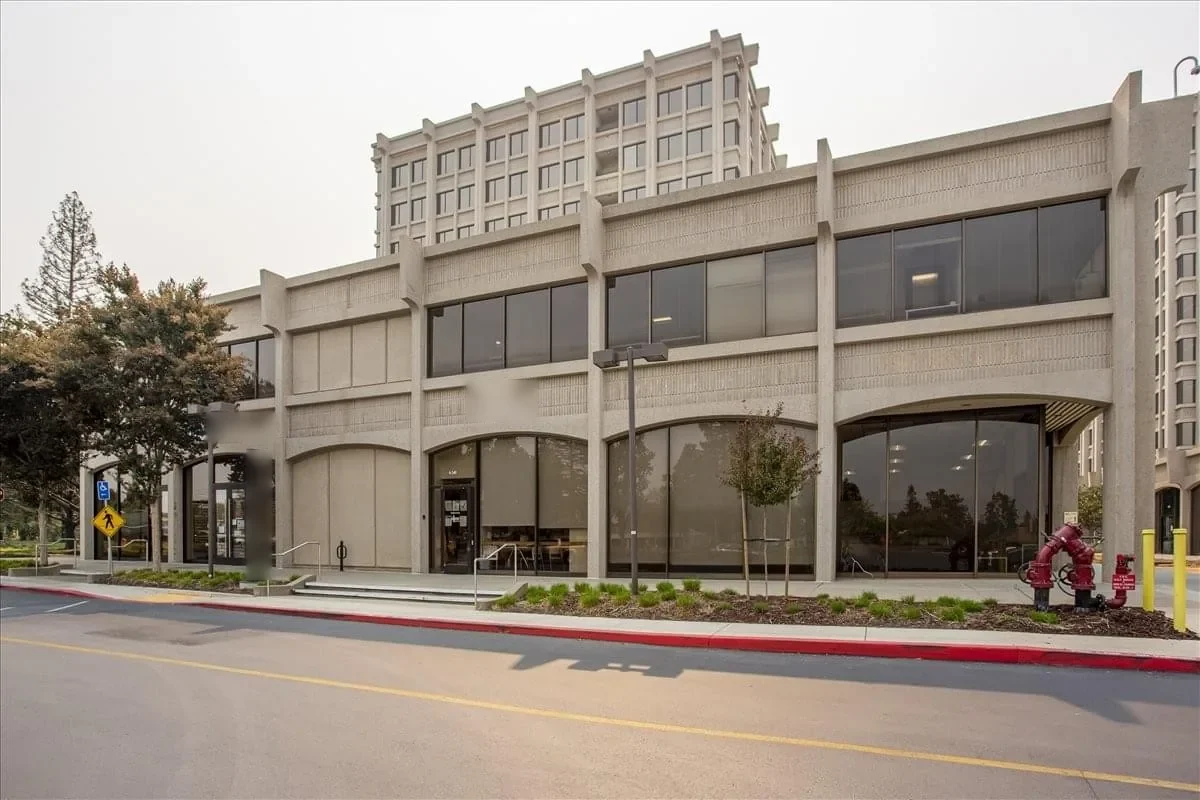
We confirm the property contact, approved roof entry, tie-off route, equipment that must stay active, and interior areas that require protection. A manufacturing or research operation may have equipment or work zones that cannot be interrupted without coordination. We identify those constraints before the crew moves material or opens a roof detail. If access stops at one elevation, the report marks the gap and names what is needed to inspect it.
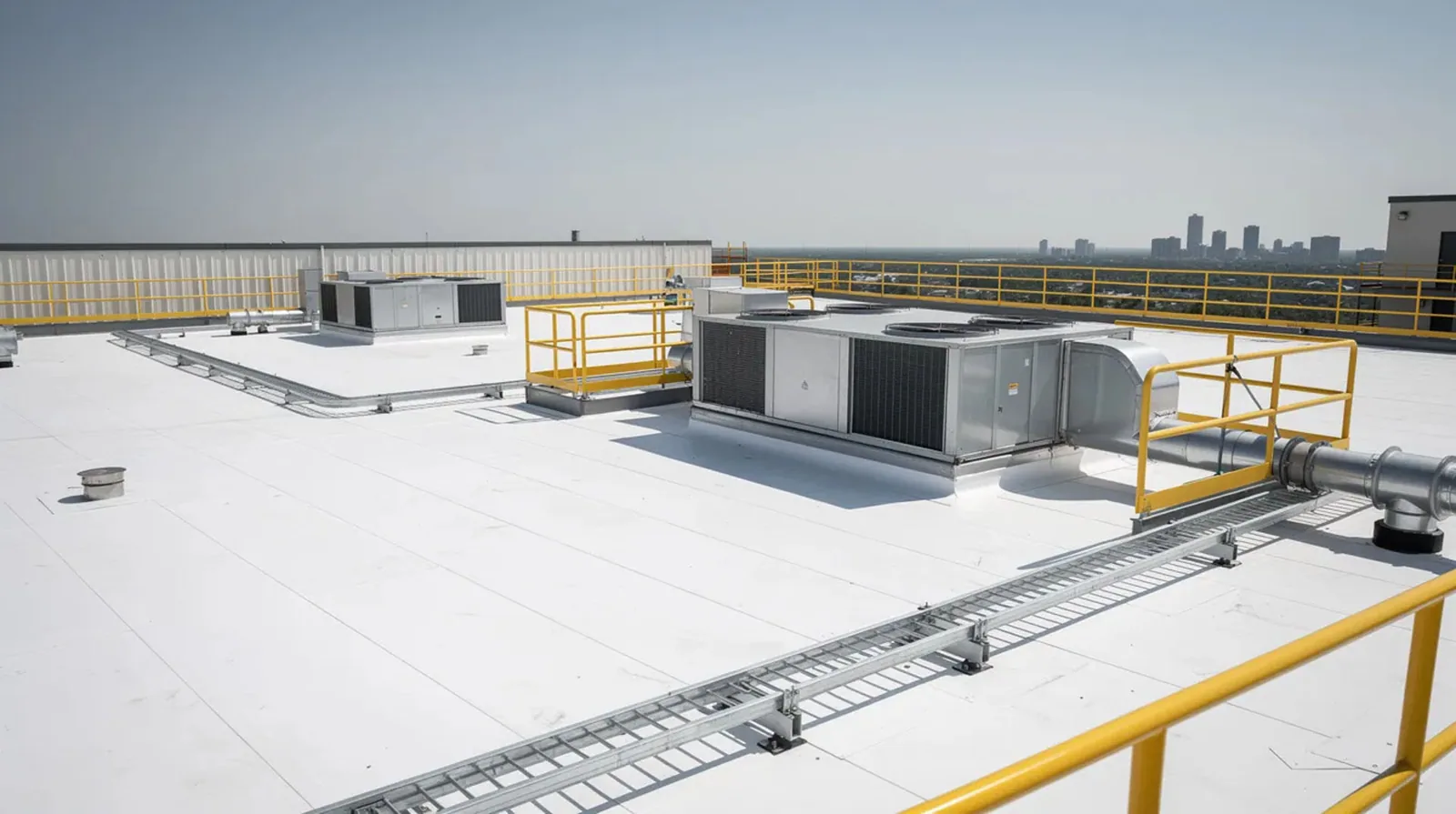
We divide the roof into sections and mark drains, scuppers, seams, curbs, penetrations, wall transitions, edge metal, and service paths. We record open laps, loose terminations, punctures, worn areas, standing water, and earlier patches. Close photos pair with a roof-plan location so a repair estimate can be checked against the same section. A commercial roof inspection can document both visible conditions and access limitations for preventive maintenance or capital planning.
Camarillo’s General Plan identifies Mission Oaks Business Park among its established industrial districts, and the plan describes manufacturing, research and development, and agriculture-oriented businesses in the city’s industrial operations. Those uses make property-specific access and equipment planning important, but they do not determine the roof system. A separate Camarillo roof assessment still begins with that building’s own assembly and maintenance record.
Check drainage where the roof collects water
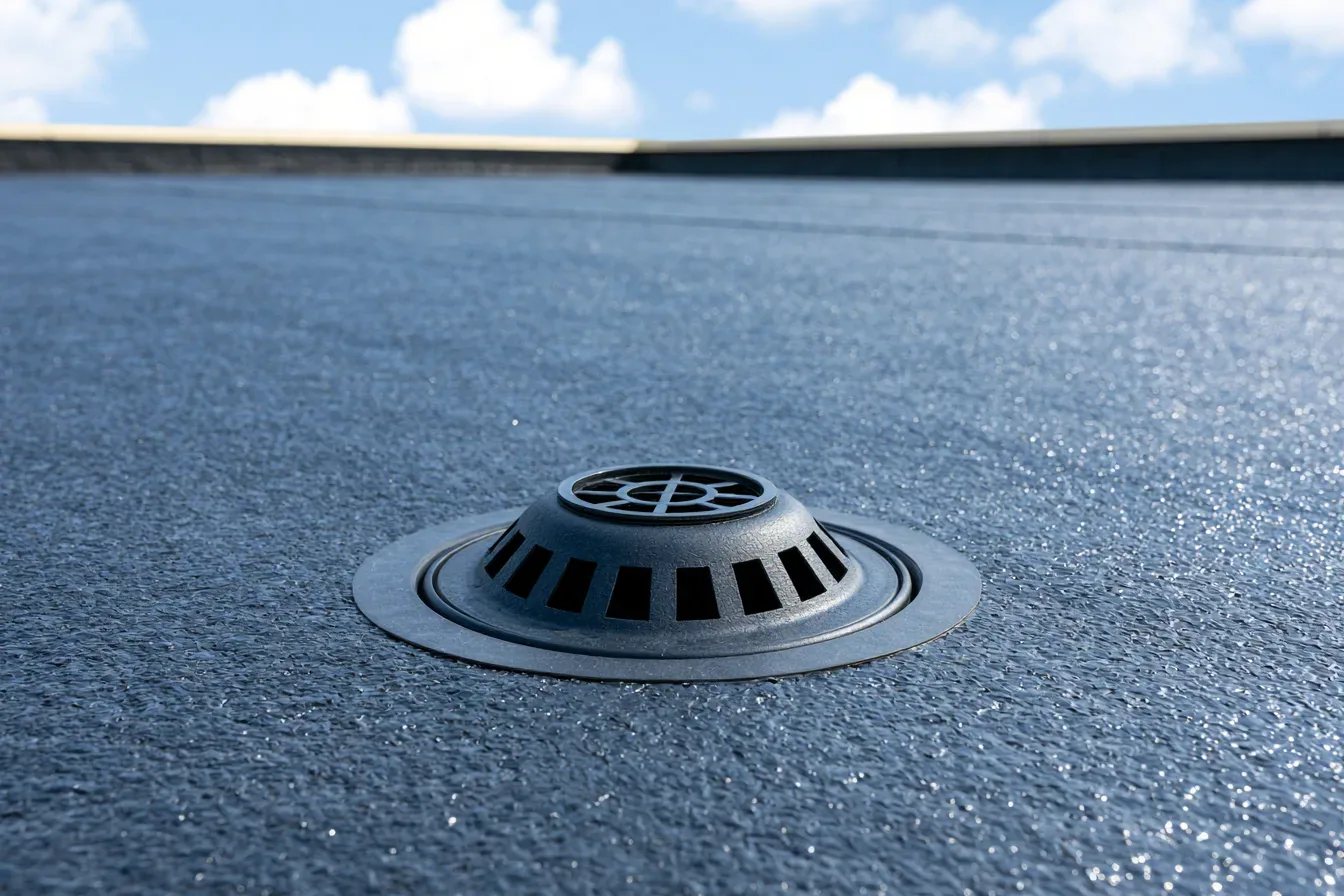
At each drain, we inspect the bowl, membrane tie-in, overflow route, and nearby slope. At a scupper, we check the opening and edge connection. A blockage may be a maintenance task; a split at the drain flange calls for roofing work. A low area that remains wet after an outlet is cleared can point to a slope or insulation issue. We photograph the low point and compare it with leak reports and roof sections before choosing a test.
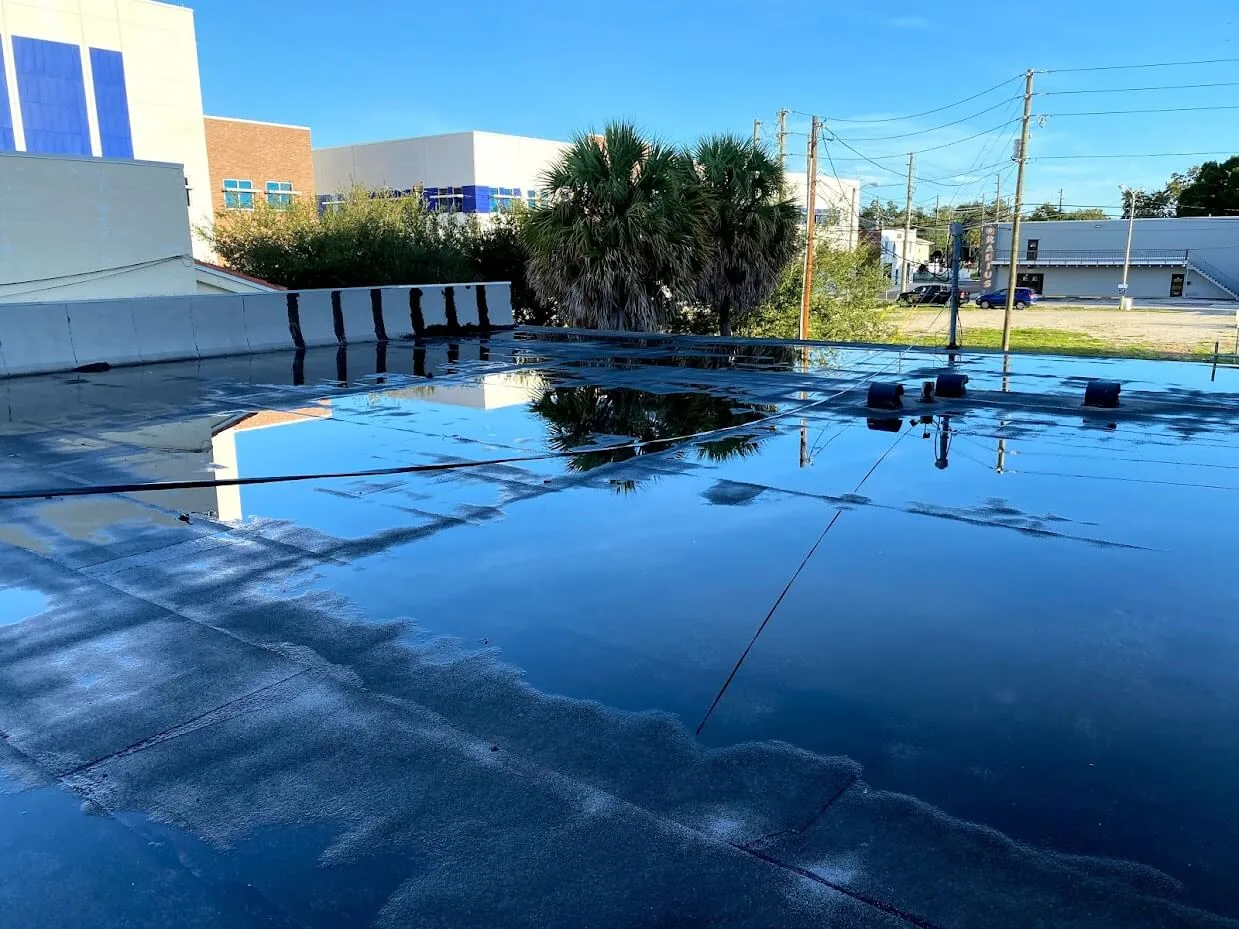
The National Weather Service recorded 1.77 inches of rain at its Oxnard station during Tropical Storm Hilary in August 2023, a new August monthly record there. That dated total is for Oxnard, not Camarillo or Mission Oaks. We use the local property’s own drainage details and water marks to establish the scope. A confirmed outlet failure can need drain and scupper service. If water persists across a wider area, we map its limits before setting a ponding-water repair.
Where an interior report suggests moisture below the surface, we may recommend infrared mapping or a test opening. The estimate states what the survey can locate, where an opening would be made, and what each result would change. A bounded wet area may call for selective replacement; dry material around an isolated seam may support a local repair.
Restore the roof detail without blocking service work
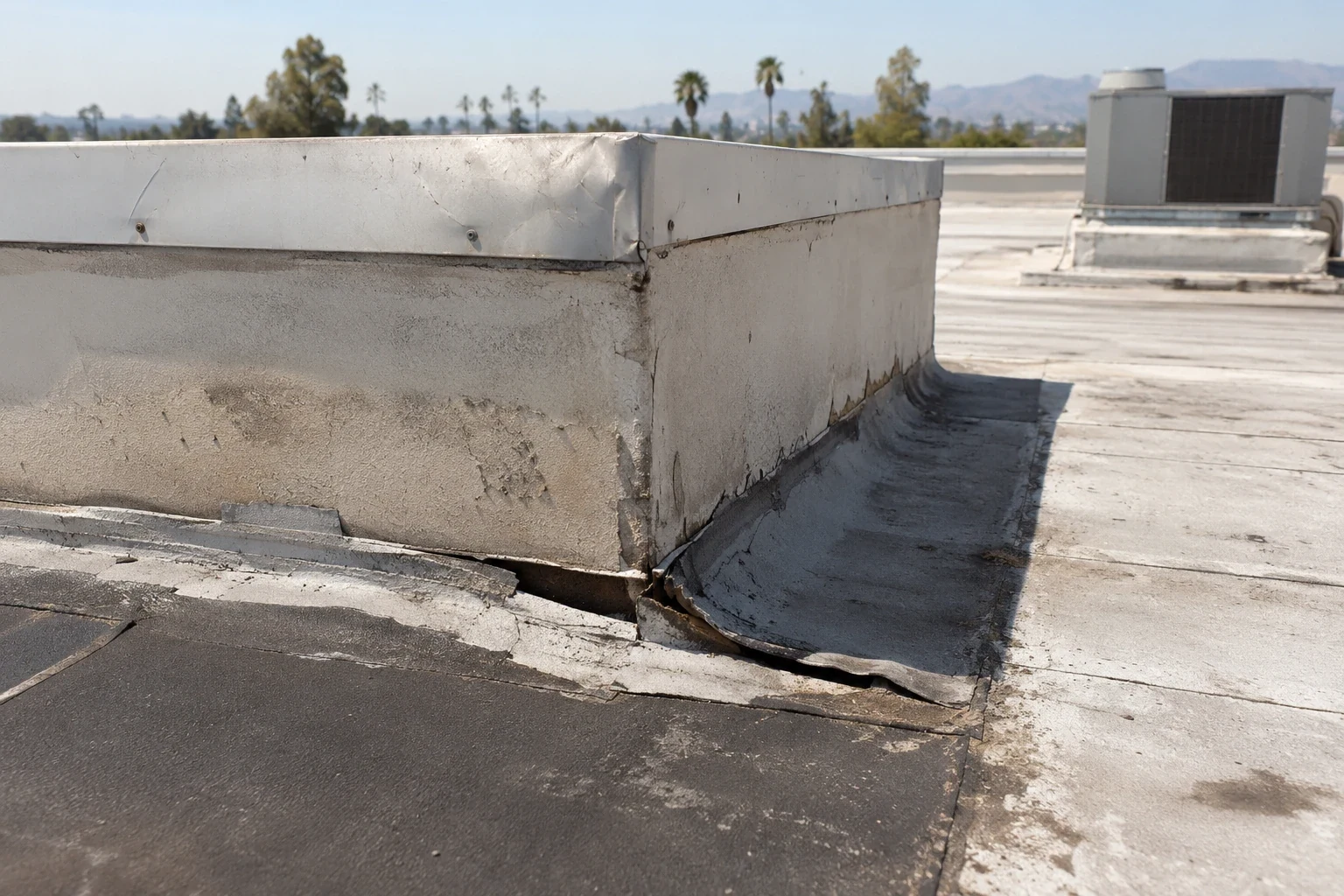
At a curb, we inspect flashing height, corner seals, and the membrane turn-up. At a wall, we check counterflashing and termination. Along a seam, we look for separation beyond the visible opening and check whether movement has pulled the surrounding sheet. The repair reaches stable material, uses a compatible tie-in, and records the boundary so future roof work can find the same detail.
TPO and PVC seams need a clean, weldable surface; EPDM, modified bitumen, metal, and coated assemblies use other repair methods. We identify the system first. A split lap may need seam repair, while a leaking curb or wall transition can call for flashing repair. We inspect adjacent patches and surfaces for moisture or movement before deciding whether the scope can stop at the original defect.
If a production line, instrument, or rooftop unit must remain available, the property team identifies who can approve a shutdown or trade move. We sequence that coordination, interior protection, staging, and the dry-in point before the crew cuts into the assembly. A temporary leak measure is labeled separately from permanent repair and includes the work that remains.
Compare a local repair with an assembly replacement
A targeted repair can hold when the defect is defined and the surrounding material is stable. Repeat seam failures, wet insulation, loose attachment, or deck movement may require testing or broader work. We map the findings and state which quantities are confirmed. A commercial repair scope lists preparation, compatible materials, access assumptions, protection, exclusions, and where work will stop.
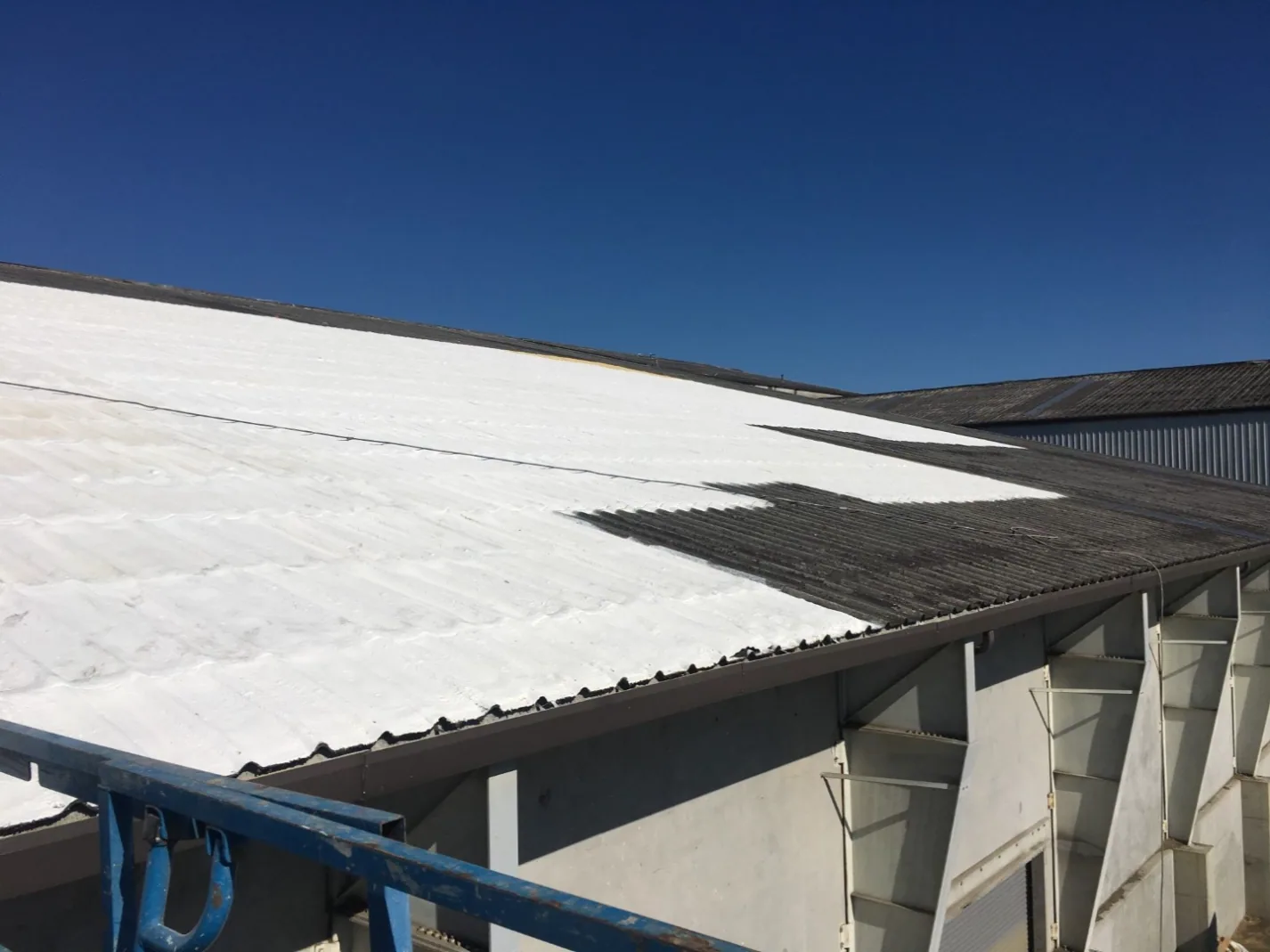
A recover can retain existing layers only when moisture, attachment, deck, drainage, penetrations, and height are suitable for the added system. Replacement removes the existing layers and provides access to the substrate, with tear-off, disposal, staging, and protection included in the sequence. We compare the options over the same measured sections, listing drains, edge metal, insulation, equipment coordination, and work windows separately. For an industrial or research operation, the schedule and protection plan can matter as much as the surface repair area.
Mission Oaks connects to the arterial network identified in Camarillo’s General Plan, including U.S. 101 and Highway 34. That access context can help the property contact plan deliveries; actual staging and roof access are confirmed at the building. For another property in Somis, the crew would verify its route and restrictions independently rather than transfer the Mission Oaks plan.
Leave a serviceable record for the next decision
The closeout identifies the system observed, roof section, repair method, material preparation, photos, test results, and conditions that remain open. We mark each repair on the plan and distinguish it from an area that could not be inspected. If equipment changes or service work adds a penetration, the next inspection can compare it with the existing record rather than rely on memory.
Maintenance checks revisit drains, seams, curbs, penetrations, wall transitions, edge metal, and routes used by service crews. The interval follows roof condition and operation. A photo-backed condition report links a field mark with its repair priority and next check. That makes it easier to separate an urgent opening from a monitor item or a larger capital project in the asset file.
Send the roof plan, leak history, equipment schedule, access contact, and previous repair notes. We will inspect the affected sections, document their condition, and return a repair, testing, recover, or replacement recommendation with quantities and sequencing tied to the property.
Related Roofing Work
More from Service Areas and nearby services
Request a Mission Oaks roof condition review
Provide the roof plan, leak history, equipment schedule, access contacts, and previous repair records. We will inspect the affected sections and return a documented scope with sequence and quantities.
Common Questions
What does the Mission Oaks plan tell us about a particular roof?
It identifies the business park and its industrial planning context. We still inspect the installed assembly, equipment, access, and water path at the property before defining work.
How do you schedule repair around production or research equipment?
We confirm which units or areas must remain active, who approves a shutdown, and when another trade can provide access. The work plan records staging, protection, and the roof’s daily dry-in point.
Does the Oxnard rainfall figure apply to Camarillo?
The 1.77-inch amount was recorded at the Oxnard station in August 2023. We treat it as a dated market event and base Mission Oaks drainage work on the property’s own system.
When is infrared testing useful?
It can help identify a suspect moisture area when that boundary changes the repair or replacement quantity. We define the survey area and any confirmation opening before expanding the scope.
What should a repair closeout include for an operating facility?
It should show roof sections, system, preparation, materials, photos, tests, and unresolved areas. We also record access and equipment coordination so the next work window can be planned from evidence.