
Commercial Roofing in Somis, CA
Request a Somis roof inspection
Somis
A roof inspection in Somis starts with the building’s use and the conditions the crew can actually reach. We identify the roof assembly, mark its low points and outlets, and trace the reported leak across seams, penetrations, curbs, walls, and edge metal. Ventura County places Somis between the Camarillo and Moorpark planning areas and identifies it as a Municipal Advisory Council area. That regional context helps describe the service area, but it does not tell us what a roof is made of or where a leak entered. The inspection record ties each finding to a roof section, a photo, and a repair decision.
Map each roof section and access point
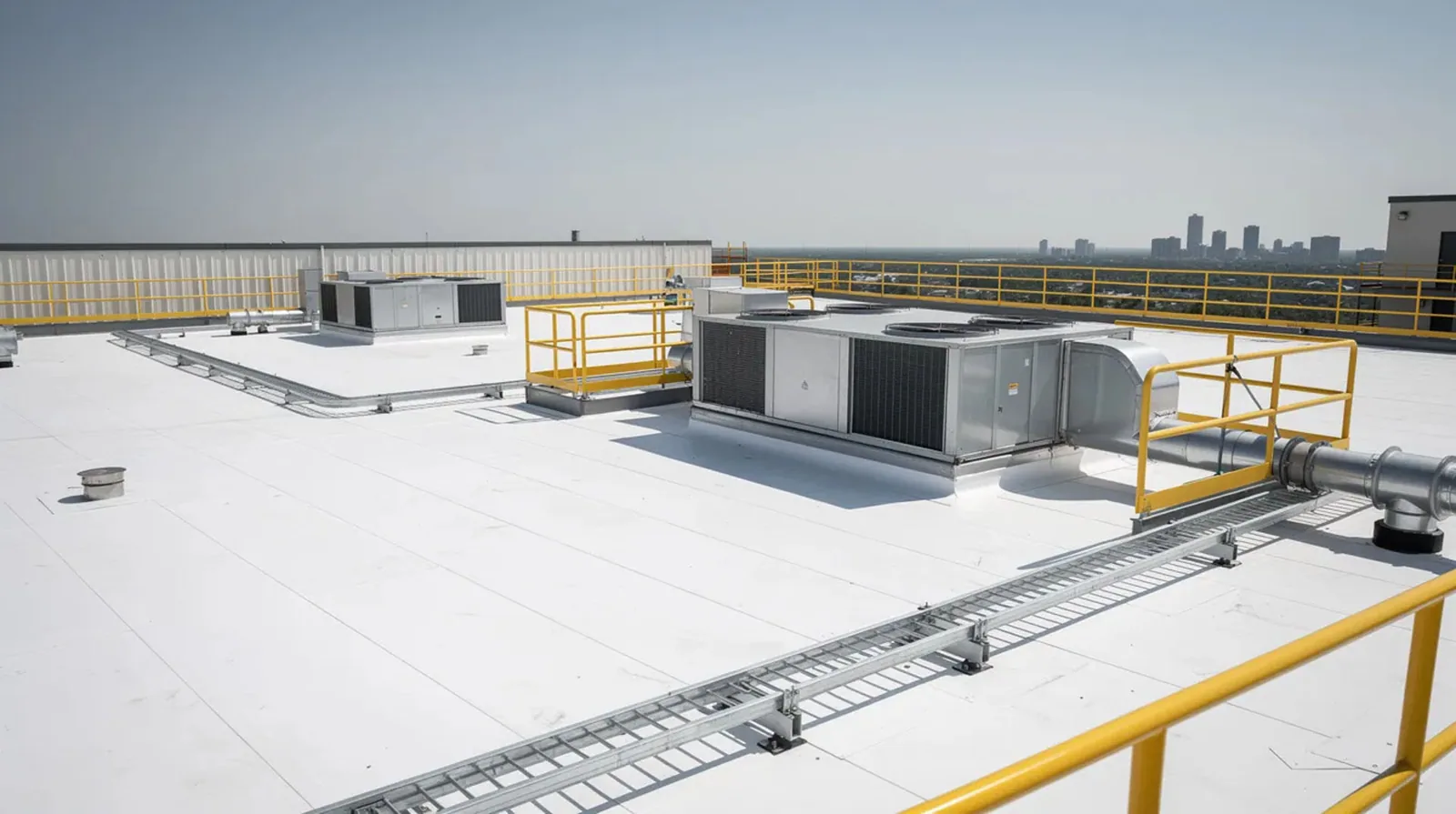
We begin with the access route, property contact, tie-off locations, equipment restrictions, and any occupied space below the work. A hatch may open onto one section while another elevation remains separated by equipment or a change in height. We mark what the crew inspected and any boundary that needs a second visit. A clear record of access limits protects the estimate from treating an unseen area as if it had passed inspection.
On the walk, we check the membrane or metal, seams, curbs, penetrations, wall terminations, drains, scuppers, and perimeter. We record punctures, open laps, loose flashing, ponding, surface wear, and previous patches. The close-up photo shows the condition; the roof map shows where it is. That pairing makes a repair order useful to the person scheduling work and to the crew returning to complete it. A hands-on commercial roof inspection can also establish a baseline for a maintenance file rather than ending with a leak-only note.
Ventura County’s map places Somis between two planning areas, Camarillo and Moorpark. Property teams comparing nearby buildings can use a consistent inspection form, while keeping parcel details and roof findings specific to each site. A nearby Moorpark roof inspection gets its own map and access record.
Measure drainage before choosing the repair
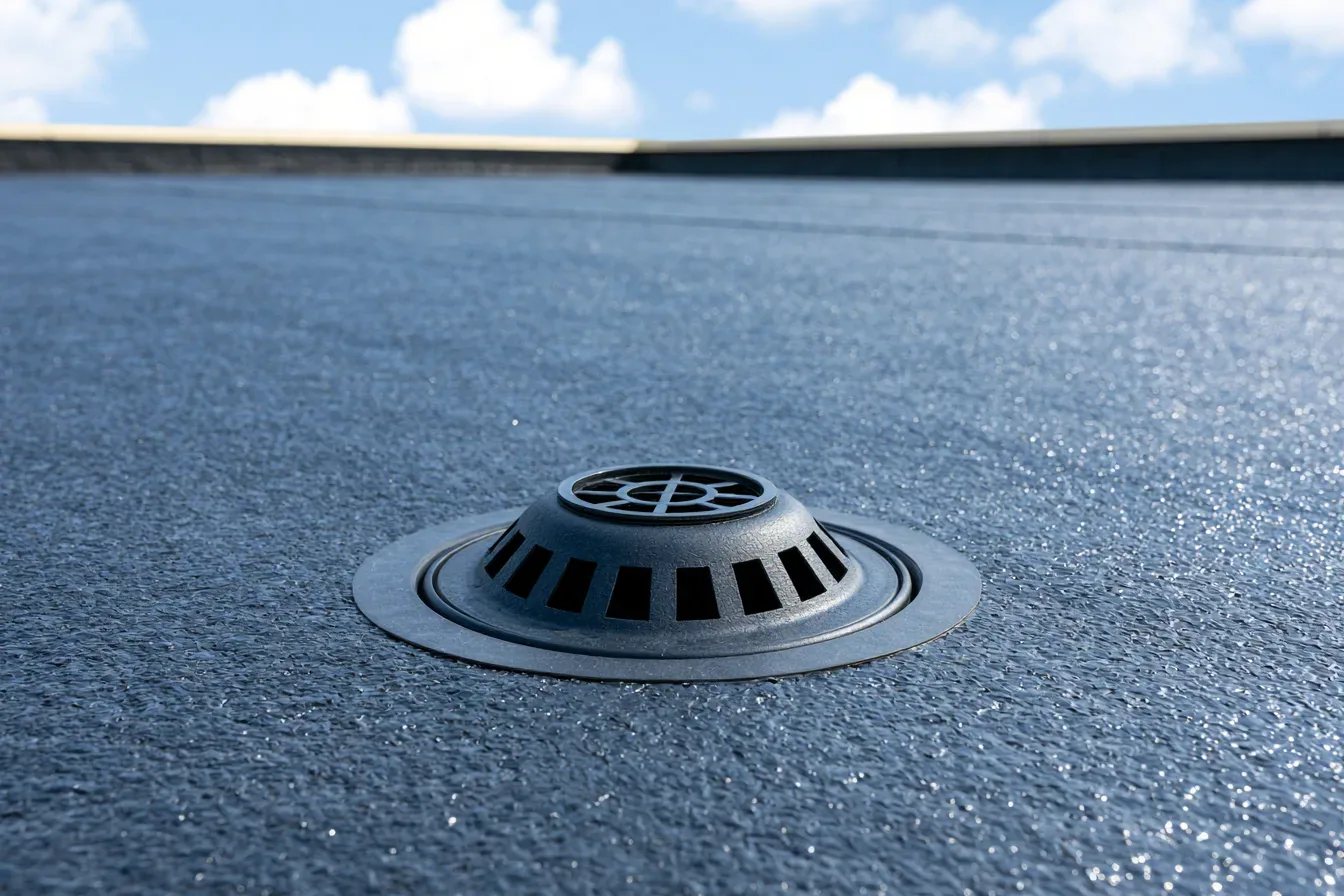
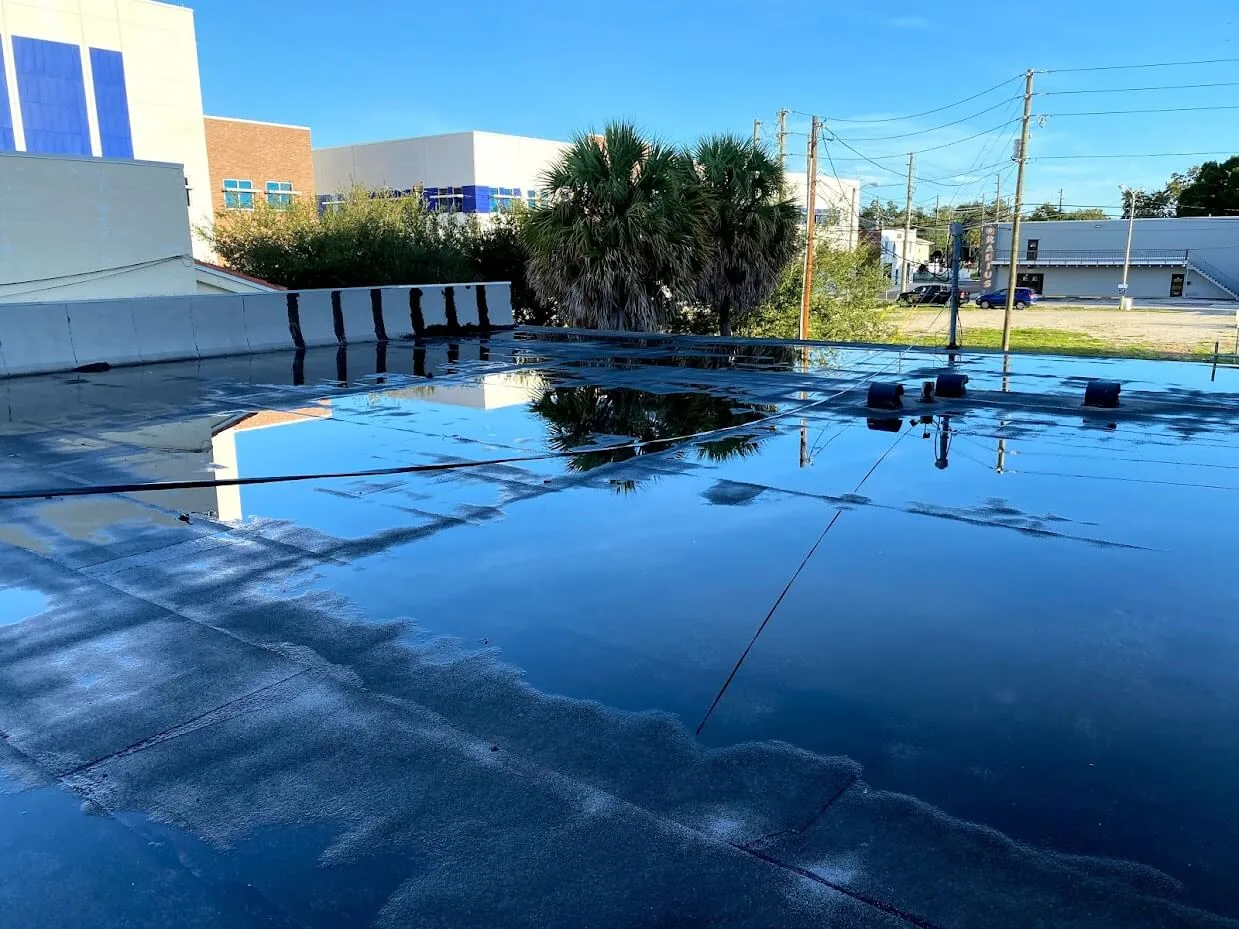
At the low point, we measure how far water spreads and see whether sediment stops at the strainer or continues toward the membrane edge. A blocked throat needs clearing; a split at the outlet calls for a roofing repair. We note the overflow elevation, route to the discharge, and any change in the ponding line, then compare those marks with the roof plan and interior report.
Hilary’s August 2023 rainfall reached 1.77 inches at the Oxnard weather station, a record monthly total. In Somis, we check the property’s outlet capacity, overflow, and water marks, then map a low area if pooling continues after the drain clears. For a confirmed outlet defect, drain and scupper service can restore the connection. If water remains after the outlet is clear, we map the affected roof area before recommending ponding-water correction.
When a moisture survey or a small test opening could change the quantity, we describe the test area and what each result would mean. Testing can show whether wet insulation ends near a seam or continues into a wider section. We identify the proposed opening, restoration method, and approval point before expanding the work. This keeps the repair boundary tied to evidence rather than a broad allowance.
Restore the failed seam or flashing
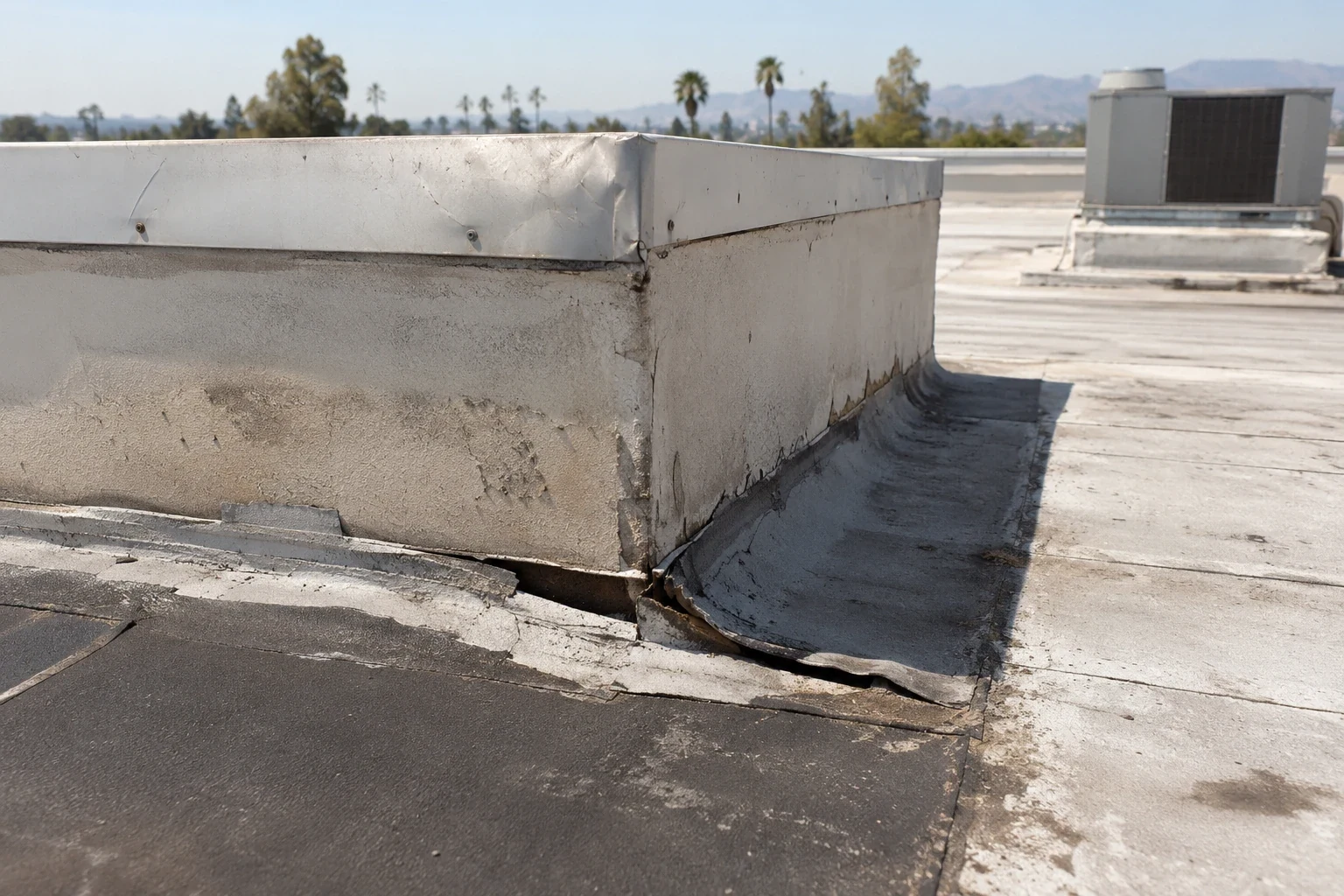
At a curb, we check corners, flashing height, seals, and the turn into the roof field. At a wall, counterflashing and termination should keep water moving toward the membrane. At a seam, we check how far adhesion or a weld has failed and whether movement is pulling at the adjacent sheet. The repair starts by removing loose material to a stable edge, preparing the surface, and using a method compatible with the identified system.
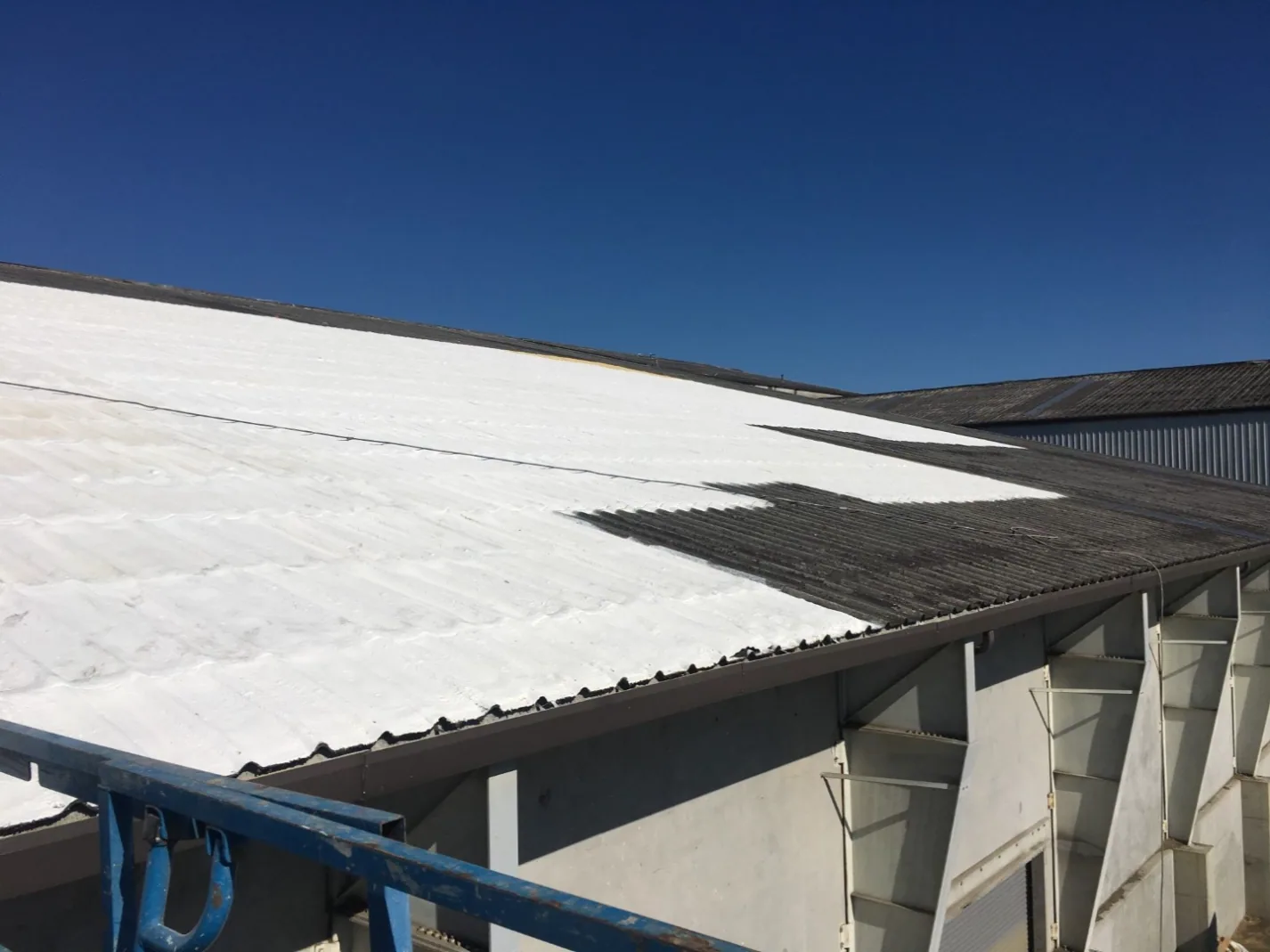
TPO and PVC require clean, weldable surfaces. EPDM, modified bitumen, metal, and coatings use different preparations and repair materials. We identify the assembly before applying a patch and check adjacent details for a common cause. A confirmed lap opening can call for seam repair; a failed wall or curb transition may need flashing repair. Photos document the finished tie-in and show whether nearby wear remains for future work.
For an active leak, temporary protection can limit water entry until conditions allow the permanent tie-in. The estimate labels that step as temporary, states the remaining work, and identifies the daily dry-in point. If equipment, electrical work, or another trade blocks the repair, we coordinate the order before the roof is opened.
Compare patching with a broader assembly decision
A bounded repair is a good candidate when the surrounding material is stable, the defect has a clear limit, and the new material can bond or weld to a sound surface. Repeat openings, broad moisture readings, loose attachment, or deck movement can change the scope. We map the observed defects and separate confirmed quantities from concealed conditions. A commercial repair scope should name the repair area, preparation, material, access assumptions, and closeout record.
Before pricing another layer, we confirm dry materials, secure attachment, a sound deck, clear outlets, and enough edge height. Where one of those checks fails, removal and new insulation may be necessary. The replacement scope names the tear-off limits and dry-in plan, while a recover option shows which layers remain and how drains and edges terminate. The property contact can then weigh disruption against the condition found instead of relying on a generic service-life claim.
Camarillo’s General Plan identifies agriculture-oriented industries in its industrial mix, relevant to the shared agricultural plain around Somis. That fact does not define a particular property’s use or roof. Where an operation handles materials or equipment, we ask how service routes and active work areas affect access; then the inspection plan records the actual constraints. A portfolio spanning Camarillo and Somis can compare findings without merging their property histories.
Carry findings into the next service interval
The closeout identifies the roof section, system observed, repair method, photos, testing, and remaining conditions. We mark inaccessible areas separately and list what would resolve an open question. Keeping new equipment penetrations and later roof work with the map helps the next inspection distinguish an old condition from a new one. The record should make the next decision easier, not simply preserve a list of defects.
At follow-up, we photograph outlet bowls, low points, flashing returns, and prior repairs from the same plan references. Fixed viewpoints show whether water lines or seam edges changed and help identify the area that needs another visit. Photo-based roof condition reports can connect those field marks to repair priorities and capital planning. For a leak that returns, the prior repair location and preparation notes help us check whether the opening failed at its edge, the membrane moved, or water entered at a nearby transition.
Send the roof plan, leak date and location, access instructions, equipment schedule, and previous work orders. We will inspect the affected section, explain what is confirmed, and return options for repair, testing, recover, or replacement with boundaries the owner can review.
Related Roofing Work
More from Service Areas and nearby services

Request a Somis roof inspection
Share the roof plan, leak history, access route, equipment schedule, and prior repair notes. We will document roof conditions and return a measured recommendation.
Common Questions
Does the county planning map set the roof repair scope in Somis?
No. It locates Somis within the county’s planning framework. We set the roofing scope from the assembly, water path, access, and conditions documented at the property.
What should an inspection include when a roof has separate elevations?
We map each reachable section and note access limits, transitions, and equipment obstructions. The findings stay tied to their own roof area so no unseen section is implied to be clear.
Is the Hilary rainfall total a Somis measurement?
The Oxnard station’s August 2023 Hilary rainfall record adds dated regional context. A Somis roof assessment follows the building’s outlets, slope, water marks, and service history.
When does a drain problem need roofing work?
A blocked strainer may need clearing, while a separated membrane connection or failed overflow requires a roof detail repair. We inspect the bowl and surrounding assembly before pricing either task.
How do you price concealed moisture?
We identify a test area when its result could change quantity or method, then keep confirmed repair work separate from concealed conditions until the boundary is known.