
Commercial Roofing in Moorpark, CA
Request a Moorpark roof assessment
Moorpark
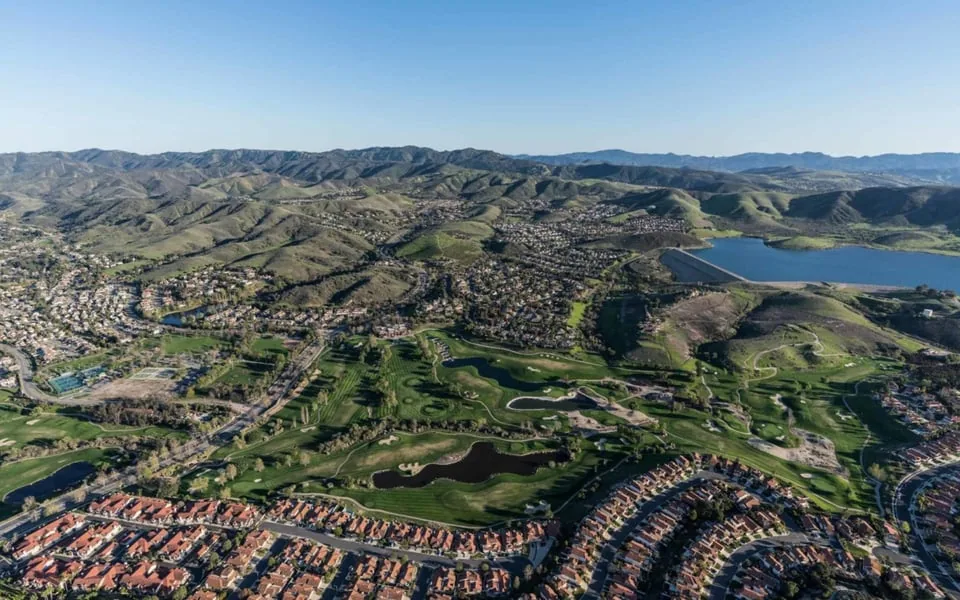
Property managers in Moorpark need a roof scope tied to the building, not just the parcel record. The City adopted General Plan 2050 in May 2023 and publishes a land-use map for business and property planning. That map helps orient a capital discussion, but it does not tell us what membrane, insulation, or deck is on a particular building. We check access, roof sections, drainage, penetrations, and edge metal, then record the assembly and condition before recommending work. A Simi Valley roof inspection follows the same field discipline while keeping its own property records separate.

Mark each section before setting a repair limit
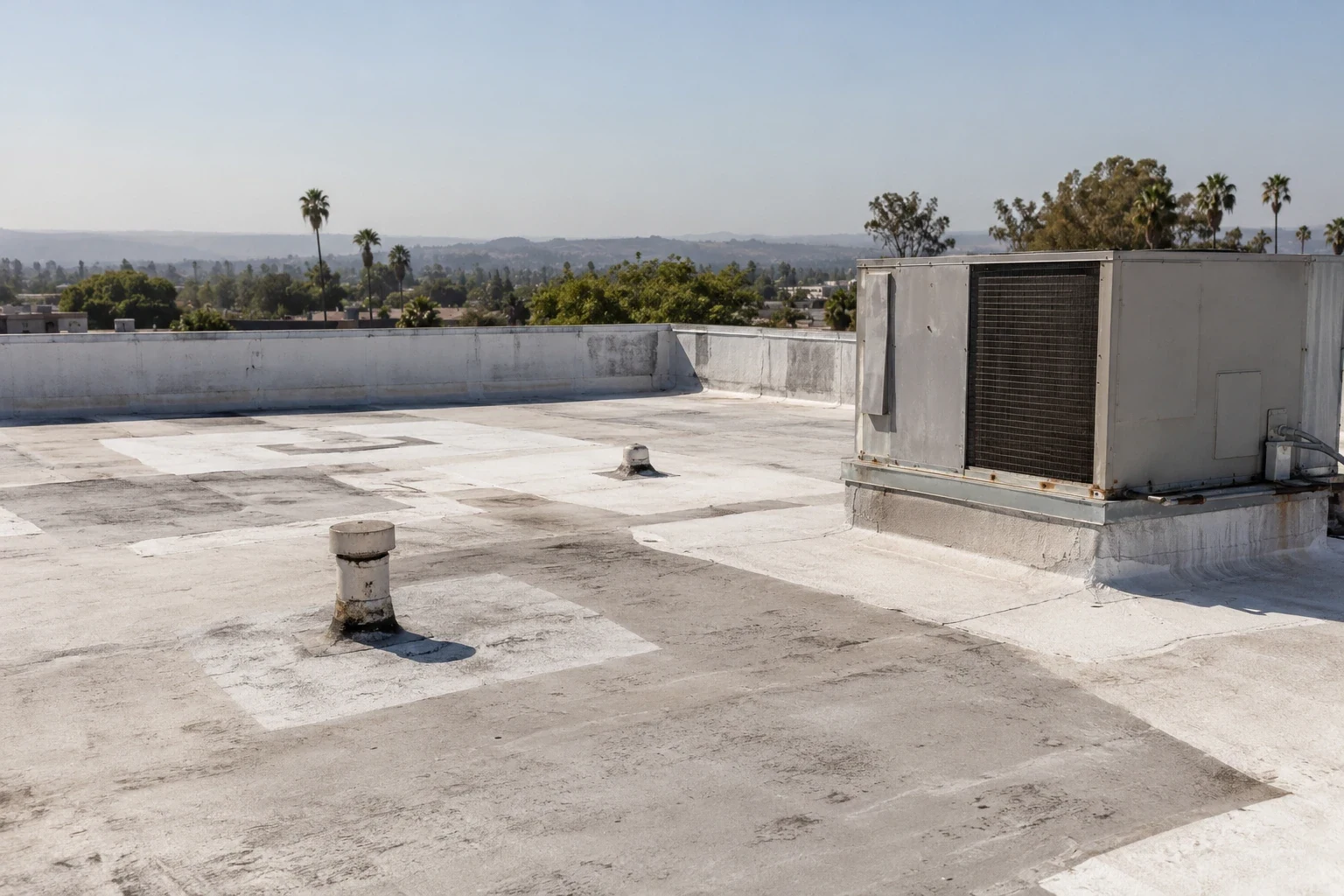
We begin at approved access and confirm the route, tie-off points, roof hatch, active equipment, and areas below that need protection. If the roof has more than one elevation or an addition, the plan gets a mark for each section. Photographs and test locations then stay tied to the correct area during pricing and follow-up. We note any blocked detail or unsafe surface so the report does not imply that the entire roof was reached.
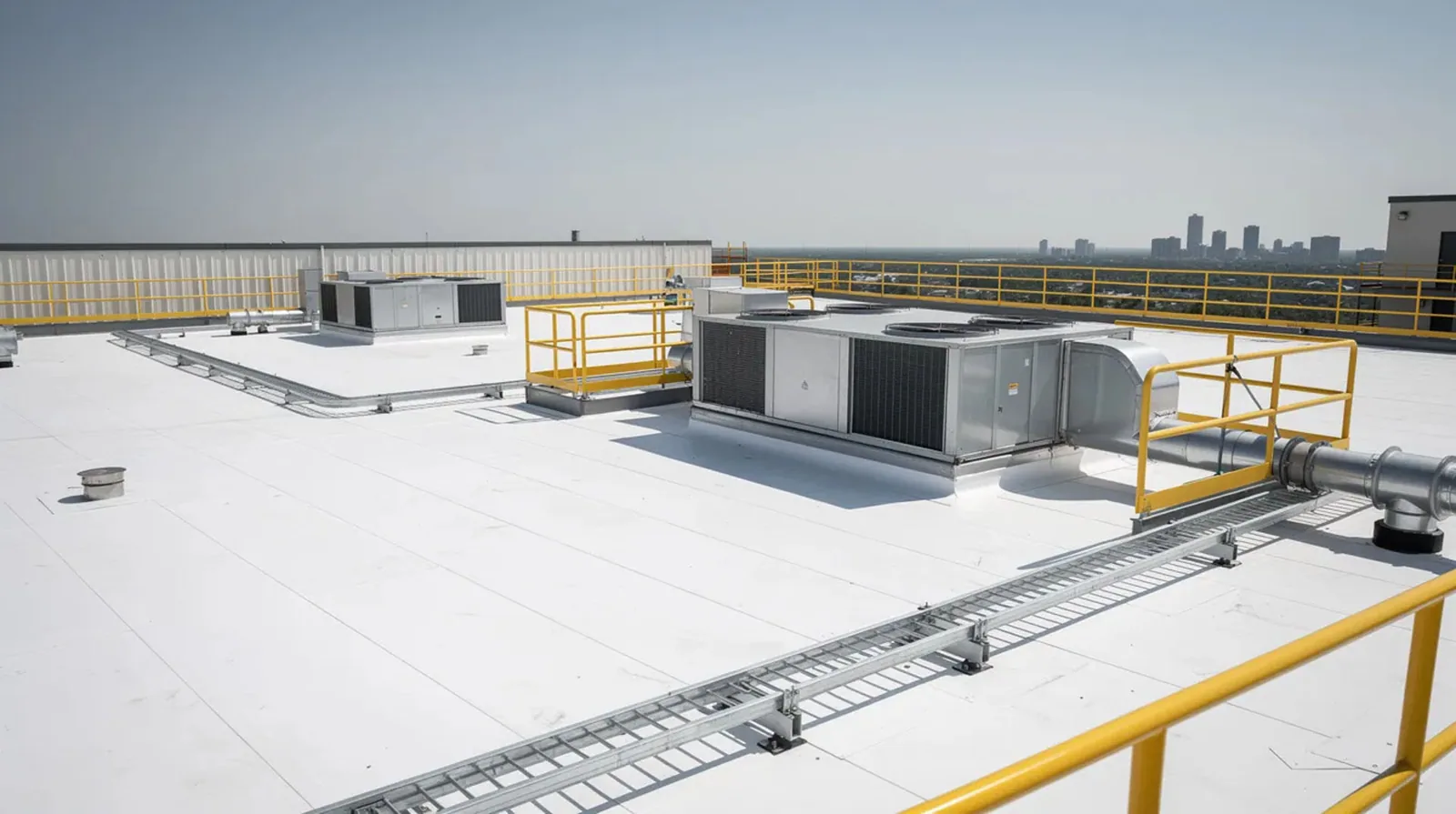
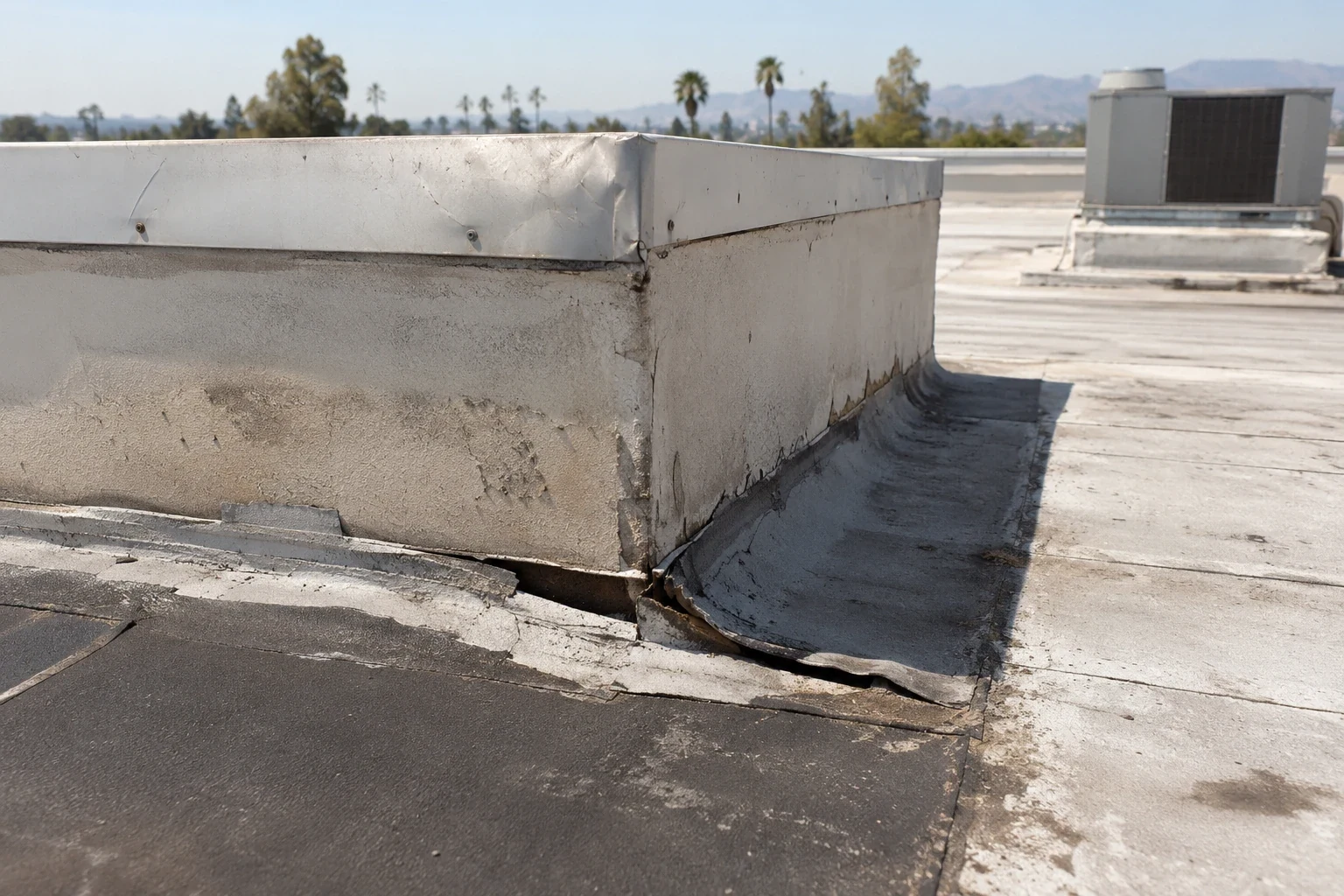
On the roof, we follow slope toward drains and scuppers, then check seams, flashings, curbs, penetrations, and perimeter transitions. We look for loose terminations, punctures, open laps, surface splits, and previous patches. At an equipment curb, the membrane turn and corner treatment need to remain continuous; at a wall, the termination and counterflashing should direct water onto the roof. A commercial roof inspection ties each observation to the building plan and names where testing could change the scope.
Moorpark's General Plan 2050 guides city growth and development, and the land-use map is a reference for property planning. A roof inspection has a different job: identify the material and condition found overhead. We compare available records with the field surface and confirm the assembly before selecting a repair material or estimating removal.
Trace water beyond the interior stain
The room where water appears may not sit directly under the opening. Water can travel through insulation or along a deck before it reaches a ceiling. We record the date, room, operating conditions, and previous response, then inspect the roof above and upslope for seams, drains, curbs, and wall details. The field mark shows the areas checked and the route that needs confirmation. If a test opening would settle the repair boundary, we identify its location before cutting.
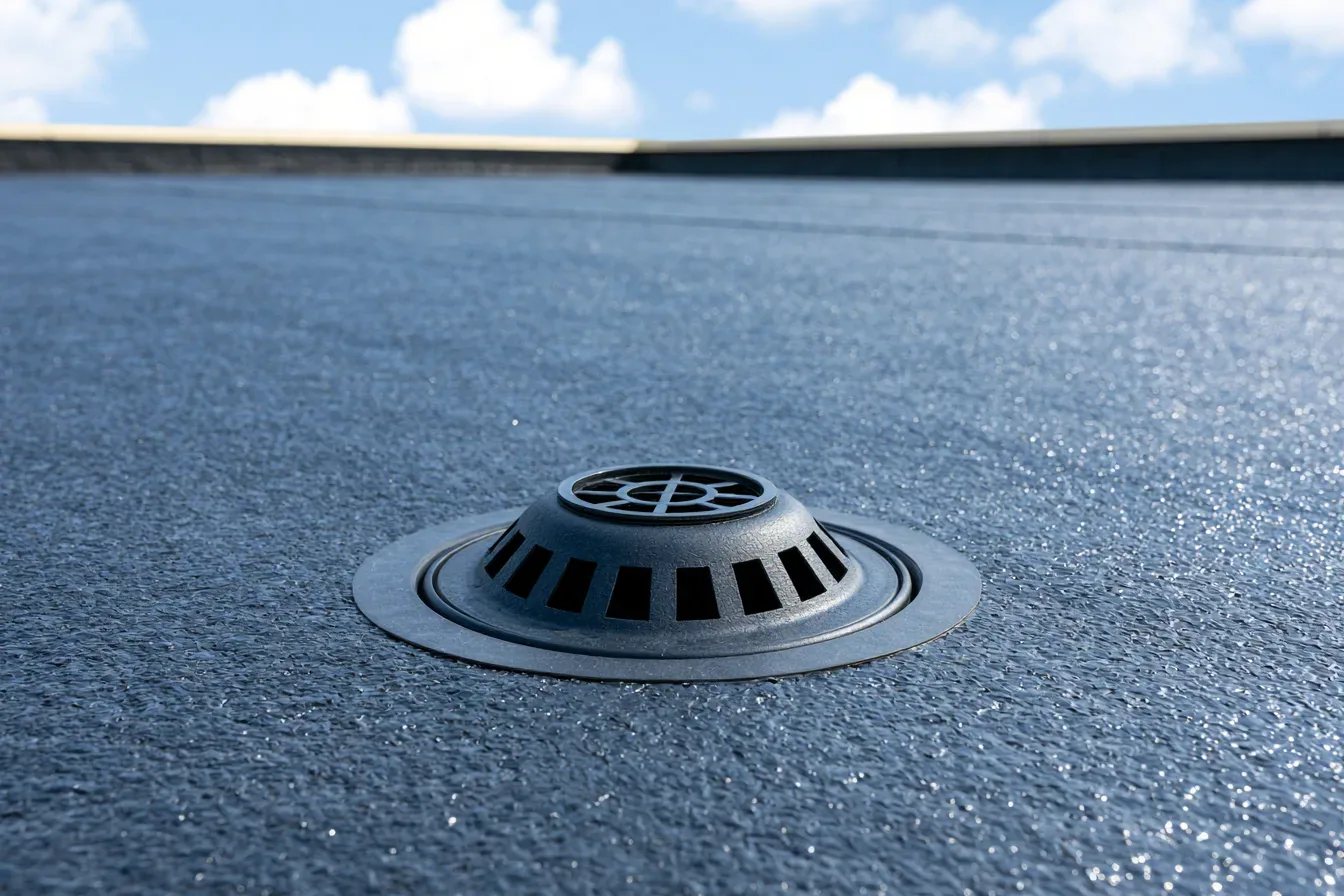
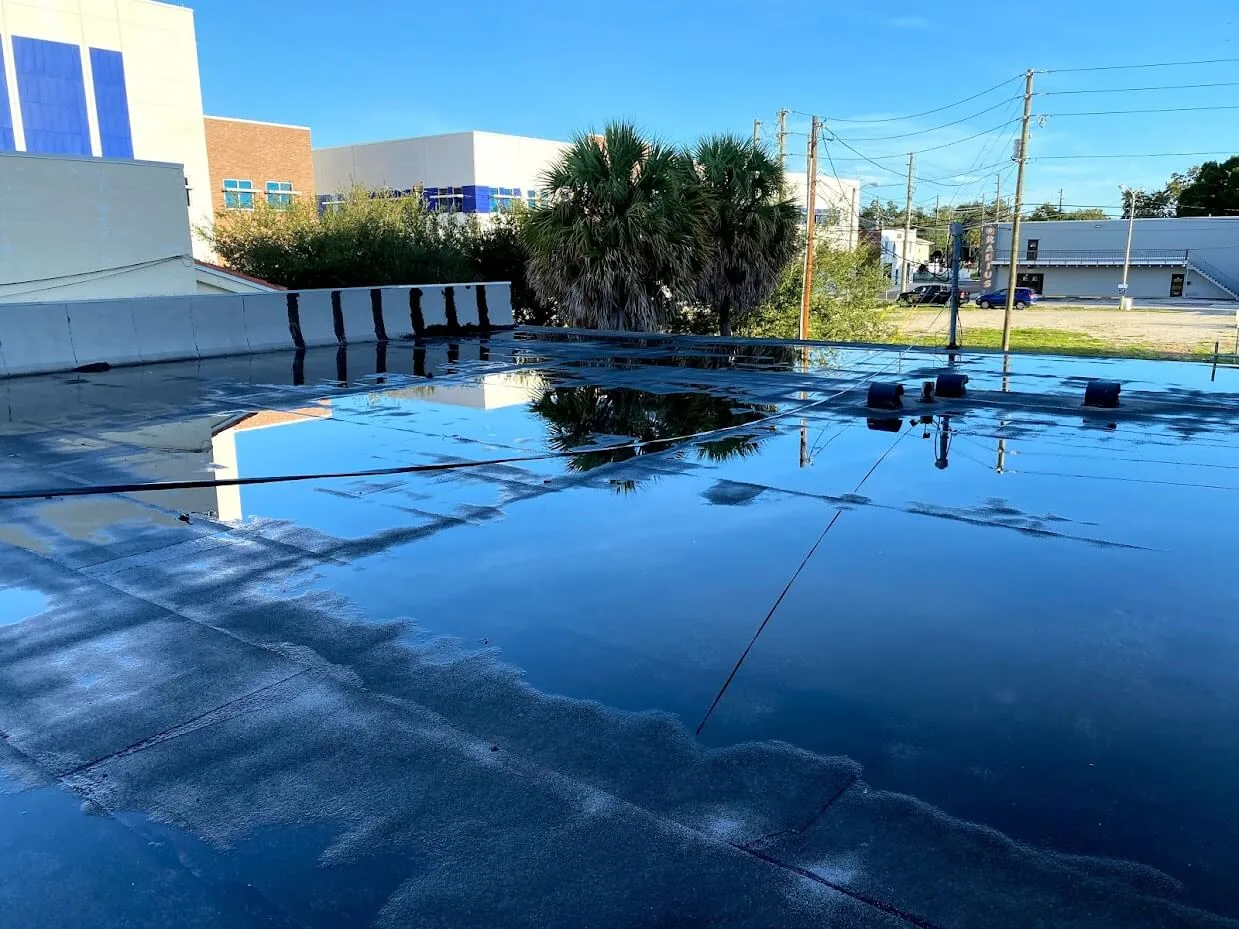
Oxnard's August 2023 Hilary station total was 1.77 inches, a record for that month. We diagnose Moorpark roof conditions from the property’s slope, drains, overflow paths, seams, and penetrations. A drain inspection checks outlet connections; a ponding-water repair addresses a confirmed drainage or low-area condition.
When a moisture survey shows a suspect zone, we explain what the scan indicates and where a test cut would confirm the material below. Wet insulation changes the work area, disposal, dry-in, and replacement quantities. If the field sheet is sound around a single seam opening, the work may remain more limited. We show those choices with separate quantities so the owner can decide from what the roof reveals.
Match the repair to the installed assembly
A thermoplastic membrane, EPDM, modified bitumen, metal roof, or coating each needs a different repair preparation. We identify the visible system, check the condition of the surrounding material, and remove loose or contaminated areas needed to reach a stable boundary. A heat-welded seam requires a clean, weldable surface; a metal panel repair needs the correct lap and fastening detail. Our closeout record identifies the tie-in and marks neighboring details that need a separate inspection.
The perimeter can be as important as the field. We inspect coping, edge metal, fasteners, gutters, and the connection between the membrane and vertical wall. If earlier patches cluster around one unit, we check curb movement and service traffic before applying another patch. A flashing repair can restore a wall or curb transition, while edge-metal work addresses a confirmed perimeter defect. The report states whether those items are separate or part of one water path.
Equipment trades may need to move a curb or line before the roof can be closed. We coordinate responsibility and timing, protect active intakes, and plan a dry-in point for each shift. The owner receives a photo and scope adjustment if concealed deck or insulation conditions change the repair extent.
Compare repair, recover, and replacement
A local repair can solve a defined opening when the surrounding assembly is dry enough and secure. Repeated seam separation, broad moisture findings, weak attachment, or deck movement may require more than patching. We field-mark those conditions and explain whether a survey or test opening can confirm the next step. The work proposal separates permanent repair from temporary protection so a leak response is not mistaken for a complete correction.
A recover can retain an existing layer when deck, moisture, attachment, drainage, added height, and project requirements support it. Extra thickness changes edges, drains, curbs, and equipment supports. Replacement requires tear-off and disposal but exposes the substrate for correction. We compare both options using the same measurements and list insulation, edge metal, access equipment, protection, and trade coordination separately. A commercial repair scope can be evaluated beside a recover plan before the owner chooses a broader project.
Timing and cost depend on roof access, lift needs, material staging, removal depth, dry-in limits, and the hours available to work. An occupied property may need a sequence that leaves some roof sections available for service access. We confirm those constraints before scheduling and identify who can approve a scope change when concealed conditions appear.
Keep property planning and roof history aligned
Closeout records identify the roof section, assembly, repair material, preparation, photographs, test results, and any remaining condition. We mark completed work and follow-up areas separately on the roof plan. That gives a later inspector a clear location to revisit and helps a property manager compare the same detail through multiple service visits. The record should also retain equipment changes and access restrictions that affect future maintenance.
A service interval follows the roof's observed condition, use, and planned work. Maintenance checks seams, drains, flashing, counterflashing, edge metal, and service paths. Managers who also maintain properties in Thousand Oaks can use consistent report fields while keeping each property's observations tied to its own city and building. For a multi-city portfolio, each property's roof records stay tied to its own inspection file. Photo-backed condition reports connect repair priorities to later capital decisions.
Share the roof-zone plan, dates and rooms with leaks, access rules, equipment restrictions, and prior work orders. We will walk the affected areas, verify assemblies, and return a scope for repair, testing, or capital planning.
Related Roofing Work
More from Service Areas and nearby services
Request a Moorpark roof assessment
For Moorpark roof service, share the roof-zone map, leak locations and dates, operating calendar, equipment needs, and earlier maintenance notes. We will verify roof conditions and prepare an inspection-backed repair or capital scope.
Common Questions
Does Moorpark's General Plan map identify my roof assembly?
No. It is a land-use planning reference. We compare available property records with the roof surface and identify the membrane, deck, drainage, and condition during the inspection.
Can a roof leak be traced when the stain is far from a drain?
Water can move beneath the membrane before reaching the interior. We inspect the room report, nearby seams, curbs, walls, and drainage, then test any route that could change the repair boundary.
How do you know when a recover is suitable?
The deck, moisture, attachment, drainage, added height, and project requirements all need review. We inspect and test uncertain areas, then show what material can remain and what must be corrected.
What does the Hilary rainfall record say about Moorpark?
The Oxnard station recorded 1.77 inches during Hilary in August 2023, a new monthly record. We inspect Moorpark drains, roof slopes, seams, and the reported water path before setting the work scope.
What information should be ready for a roof inspection?
Provide access instructions, a roof plan, leak dates and locations, equipment schedule, previous repair records, and operating limits. We verify those details during the field walk.