
Commercial Roofing in Thousand Oaks, CA
Schedule a Thousand Oaks roof walk
Thousand Oaks
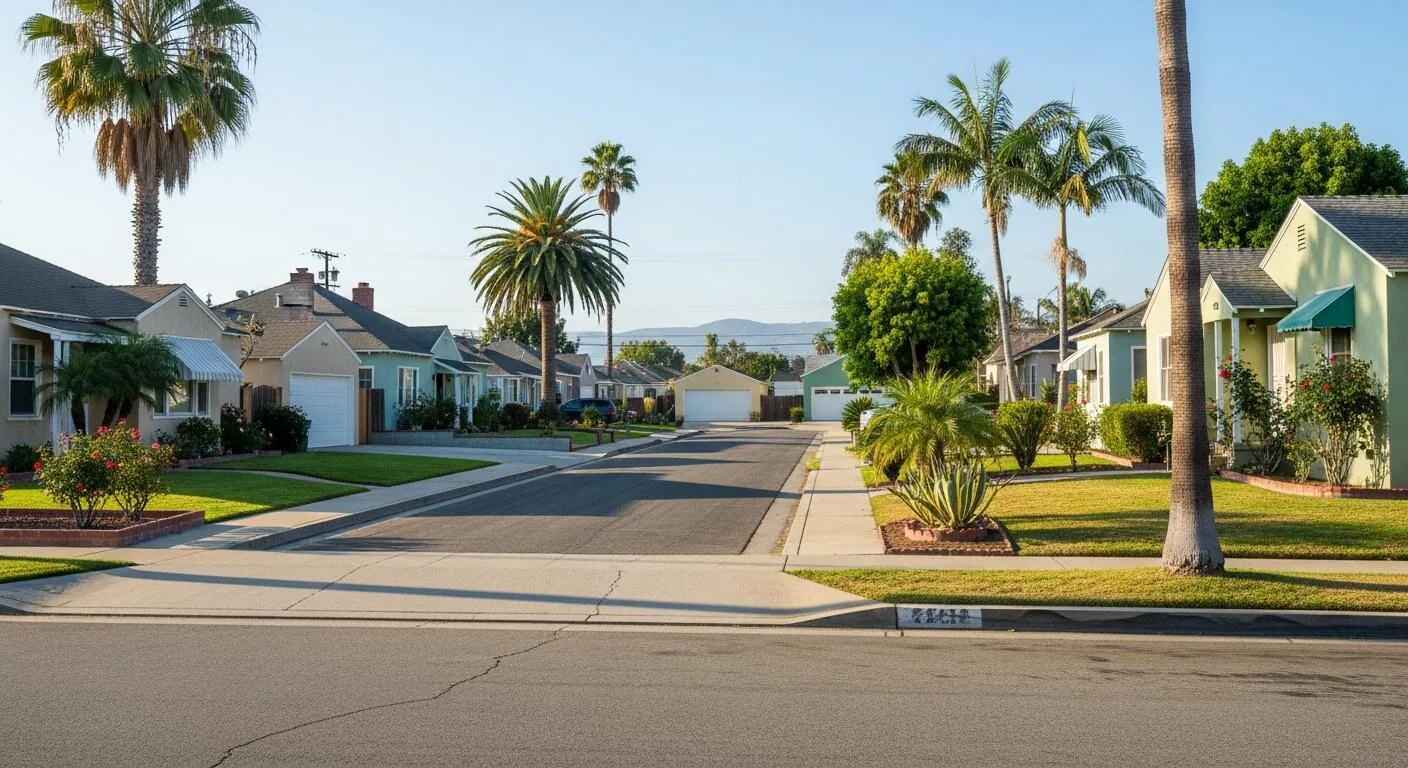
Facility use sets the access plan for a commercial roof in Thousand Oaks. Ventura County maintains an Area Plan for unincorporated parts of the Thousand Oaks area, while the city is also part of the County's incorporated-city planning network. A property manager may need to confirm which plan or review applies to a particular parcel. Our roof inspection answers a different question: what assembly is installed, where water moves, and which details need repair? We mark the roof sections, hatches, drains, seams, penetrations, and edges before estimating work. A Newbury Park roof walk may involve the County's planning framework for nearby unincorporated areas, but the field findings stay with the individual property.
Establish the route and inspection limits
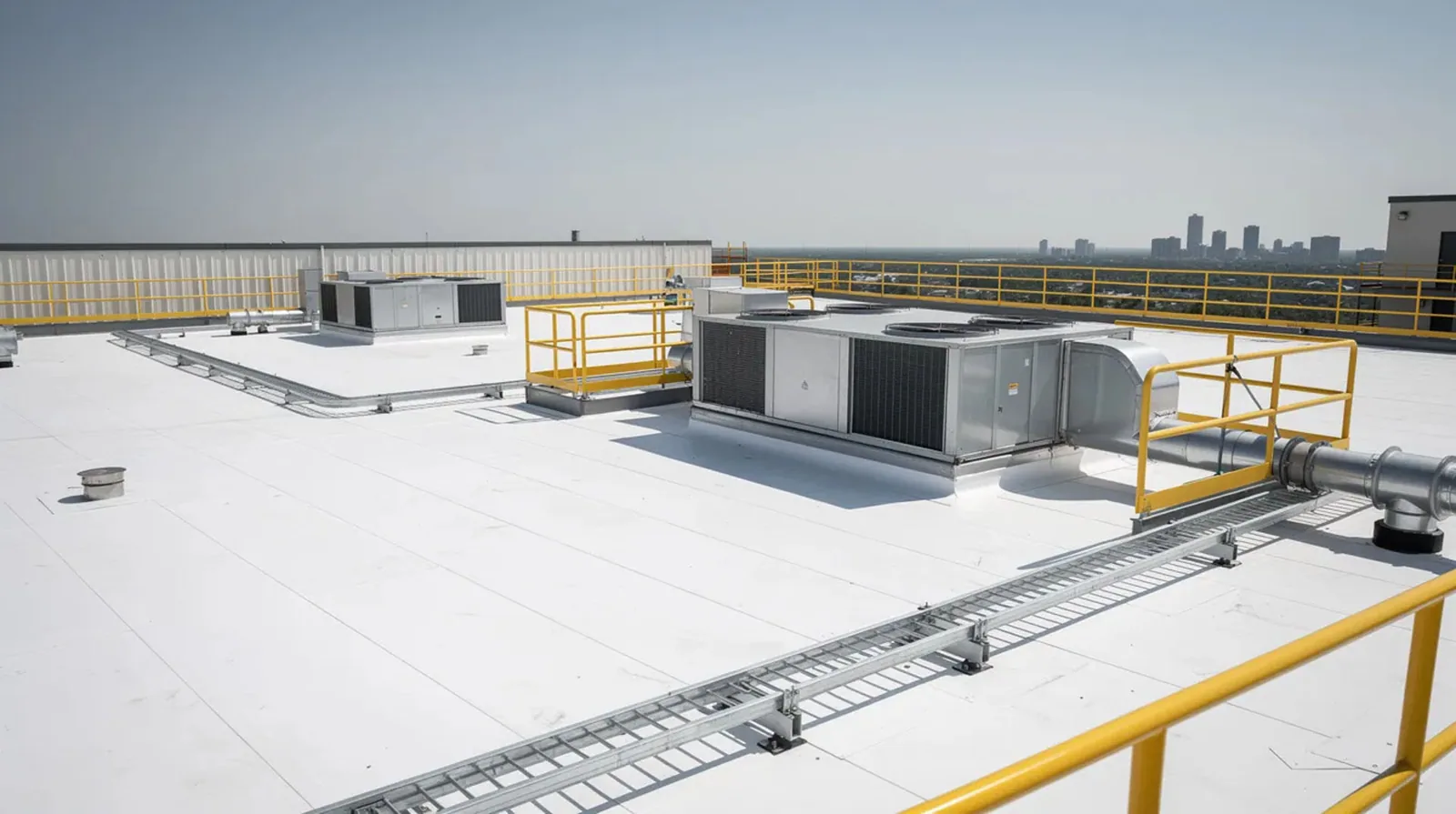
We confirm the property contact, approved access, tie-off locations, equipment restrictions, and areas below that need protection. If the roof has additions or separated elevations, we mark each zone so photos and repair quantities refer to the correct section. We also note service paths and access limitations. A unit that blocks a wall transition or a fragile surface that cannot be crossed leaves an inspection gap that the report should name.
The roof walk follows slope toward drains and scuppers, then checks seams, penetrations, curbs, flashing, and perimeter metal. We record open laps, punctures, loose terminations, water marks, surface wear, and previous patches. A ceiling stain does not show where the leak entered. We compare the date and room with roof details above, follow the likely path, and identify whether moisture testing would change the repair scope. A hands-on inspection produces field marks the property manager can use for the next budget or service decision.
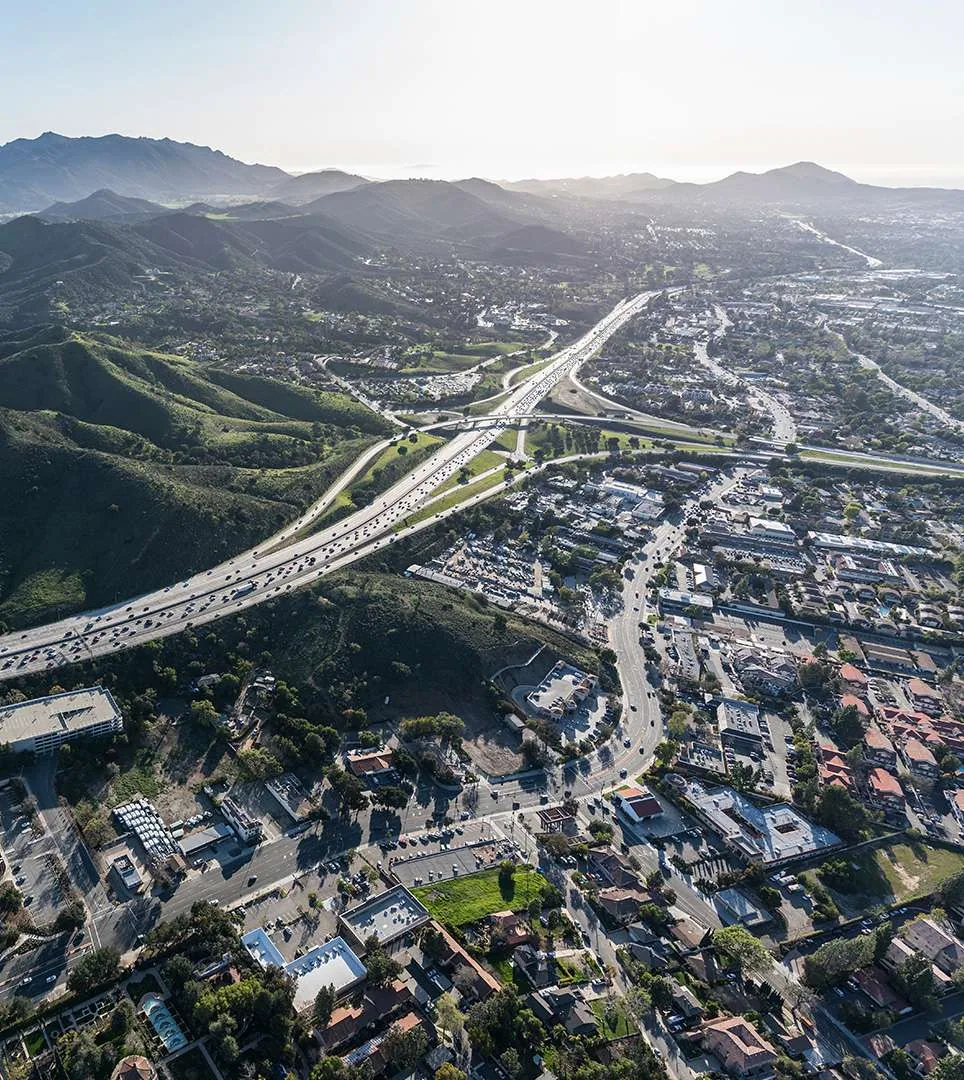
Thousand Oaks is part of Ventura County's city and regional planning network. That planning context matters when a property team checks land-use or project requirements. The roofing scope still comes from the assembly and conditions we inspect, not from an area-plan label or an assumption about what the building contains.
Read the low points before closing a leak
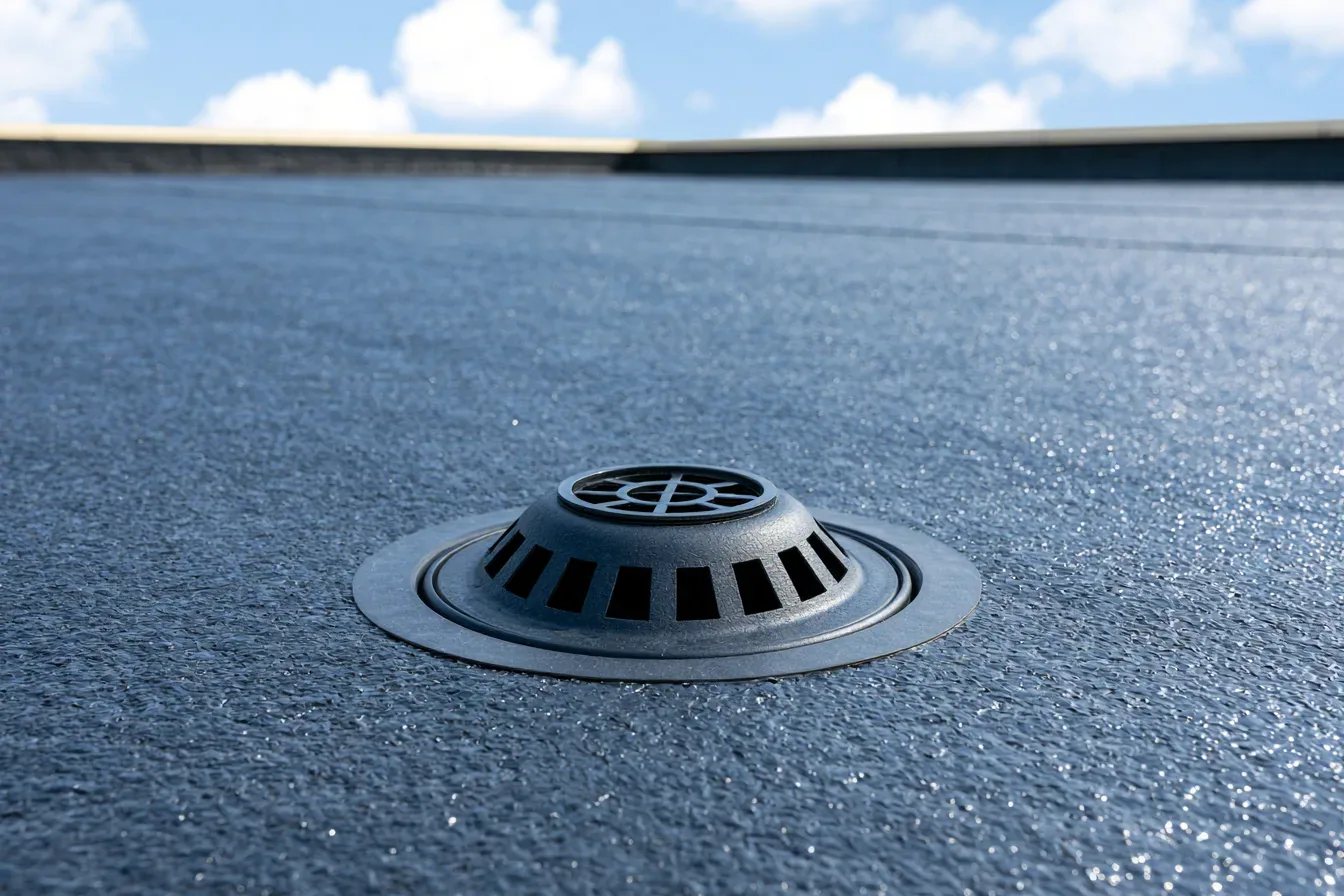
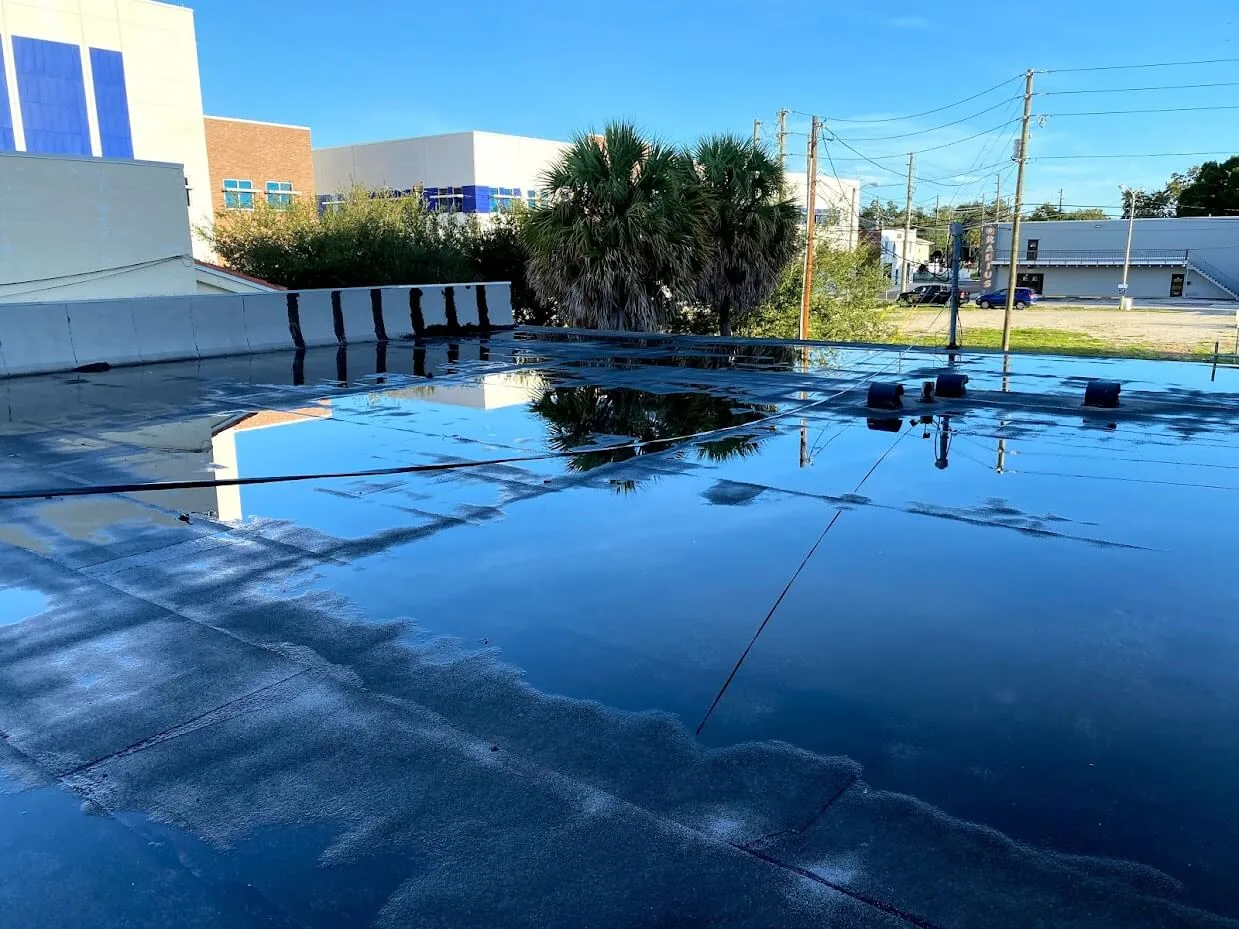
A drain can be the entry point, or it can simply sit below water that entered at a different seam. We inspect the bowl, membrane connection, overflow route, and surrounding slope. At walls and curbs, we look for a path behind the flashing. We note whether a blocked outlet, settled insulation, or open transition is present, then trace any interior report against those roof features.
Port Hueneme’s employment-flow analysis lists Thousand Oaks among the regional worker-home communities. For a Thousand Oaks reroof, the property’s own drainage inspection and maintenance history guide the scope. If water remains after an outlet is cleared, we check whether slope or insulation movement is contributing. Drain and scupper work addresses a confirmed outlet defect; ponding-water repair needs evidence of the roof area and cause.
When the membrane surface does not show the full extent, an infrared survey can help direct test openings. We mark the suspect zones and explain what each test would resolve. Wet insulation may require removal, while a dry area around an isolated seam can support a smaller repair. The estimate states quantities only after that boundary is clear.
Restore seams, curbs, and roof edges
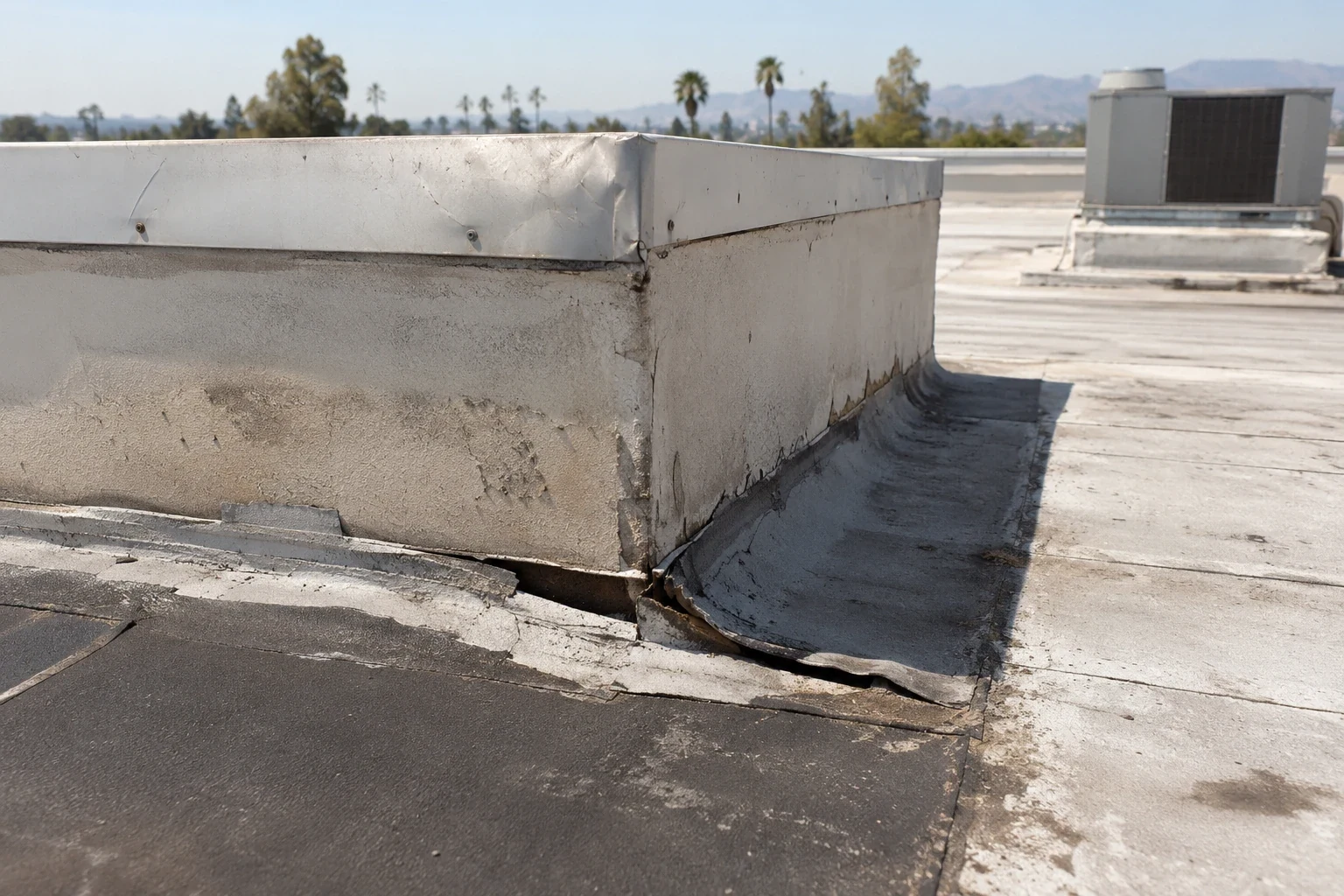
At a curb, we inspect corners, flashing height, the seal, and the connection to the field sheet. At a wall, counterflashing and termination should keep water on the roof side. At the edge, loose coping or separated metal can leave the perimeter exposed. We prepare each repair to reach stable material, then tie it into compatible roofing. A photo shows the completed detail and its location on the plan.
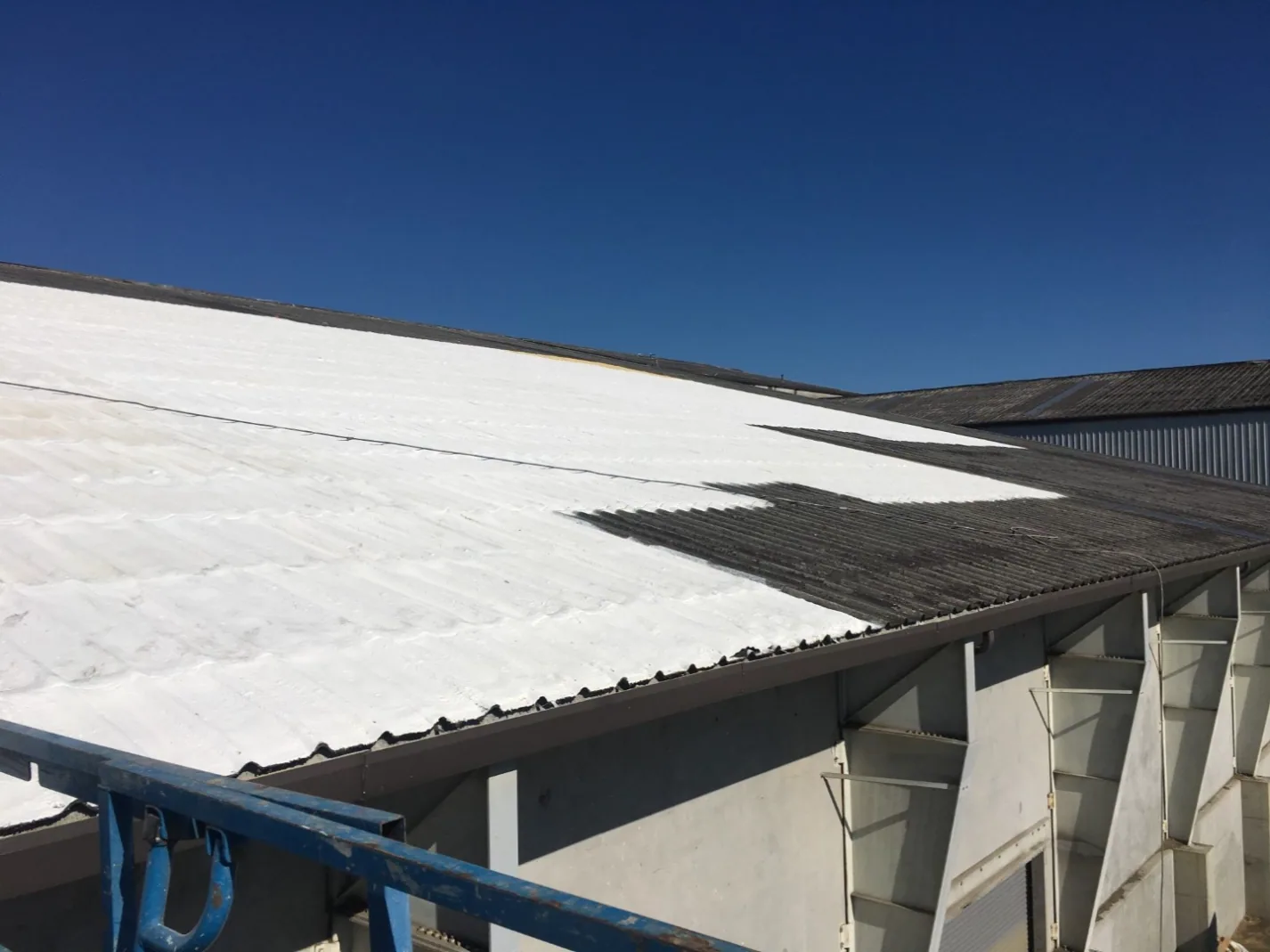
The repair method depends on the existing system. TPO and PVC seams need a prepared, weldable surface; EPDM, modified bitumen, metal, and coatings use different repair materials. We identify the roof before applying a patch and check nearby areas for movement, moisture, or earlier repairs. If a repeated seam failure has a common cause, the scope addresses that pattern rather than pricing each opening as unrelated. Seam repair and flashing correction restore different parts of the roof path.
Mechanical or electrical work may need to precede a flashing repair. We coordinate who will disconnect or move equipment and confirm a time to close the roof detail. The work sequence identifies staging, interior protection, and the daily dry-in point before the crew opens the assembly.
Choose the work from measured roof conditions
A targeted repair makes sense when the surrounding membrane or metal is serviceable and the defect can be closed at a stable boundary. Repeated openings, broad moisture readings, loose attachment, or deck movement can point to a wider problem. We field-mark those conditions and recommend testing where it changes the repair or replacement quantity. Temporary protection for active water is recorded separately from permanent correction.
A recover is appropriate only when the existing layers, moisture, attachment, drainage, height, and project requirements support it. Added insulation can change drain and edge heights, curbs, and equipment clearances. Replacement allows substrate correction but includes tear-off, disposal, staging, and weather protection. We compare recover and replacement using the same measured area. A commercial repair scope can be considered alongside a recover evaluation before a capital project is approved.
Cost and duration depend on access equipment, roof height, preparation, removal depth, insulation, edge metal, drain work, equipment shutdowns, haul-off, and the available work window. We set material routes and protection zones with the facility contact. If the roof remains occupied by other trades, we identify which paths stay open and which sections close after each shift.
Connect the roof record to the property plan
The closeout should identify the building, roof section, assembly, repair materials, preparation, photographs, and test results. We use roof-plan marks to separate completed work from conditions that need follow-up. If the inspection could not reach a detail, the record states that limit. The next manager can return to the same location and compare it with the last report instead of relying on a general note that a leak was fixed.
Maintenance reviews seams, drains, flashings, counterflashing, edge metal, and service routes. The interval follows observed condition and the building's work schedule. A portfolio with both Simi Valley and Thousand Oaks properties can use consistent fields while retaining each city's facts and roof history. Photo-backed roof reports help connect inspection findings with the next maintenance and capital decision.
Send the roof plan, leak dates and locations, equipment schedule, access limits, and previous repair records. We will inspect the affected sections, field-mark conditions, and return a repair, testing, recover, or replacement recommendation.
Related Roofing Work
More from Service Areas and nearby services
Schedule a Thousand Oaks roof walk
Provide the roof plan, leak history, equipment schedule, access instructions, and prior repair notes. We will inspect the affected sections and outline the next work decision.
Common Questions
Does the Thousand Oaks Area Plan apply to every property in the city?
The County's plan addresses unincorporated portions of the area, and Thousand Oaks is also part of the incorporated-city network. Confirm the parcel's applicable review; we document the roof system and condition separately.
What should a roof manager do when a leak is reported?
Record the room, date, and operating conditions, then protect the interior if water is active. We trace the report to roof seams, drains, walls, and penetrations before setting a permanent repair boundary.
Can a repair be limited to one curb?
It can when the curb detail is the confirmed entry point and nearby membrane, attachment, and insulation remain sound. We inspect around the corner and tie-in before limiting the scope.
What regional employment context includes Thousand Oaks?
Port Hueneme's employment-flow analysis lists Thousand Oaks among the regional worker-home communities. For site work, the facility contact sets access and operating windows, and our inspection maps the building's own roof conditions.
How do you keep roof records useful for a portfolio?
We mark the building and roof section, document repairs with photos, and separate open conditions from completed work. Separate files keep each property's inspection history tied to its own location.