
Commercial Roofing in Pleasant Valley Corridor, Oxnard, CA
Request a Pleasant Valley corridor roof review
Pleasant Valley Corridor
Along the Pleasant Valley corridor, a roof scope has to account for how the property operates as well as where water is entering. Oxnard planning materials identify Pleasant Valley Road as a scenic corridor and a boundary in the South Oxnard planning area. Port Hueneme’s economic plan describes a broad commercial and retail corridor with naval-base access, while Camarillo’s General Plan maps the road among arterials connecting commercial and industrial land uses. Those are distinct planning contexts along the corridor. At each building, we verify the roof assembly, access, drainage, and repair boundary instead of assuming the same conditions across the route.
Confirm which roof sections the crew can reach
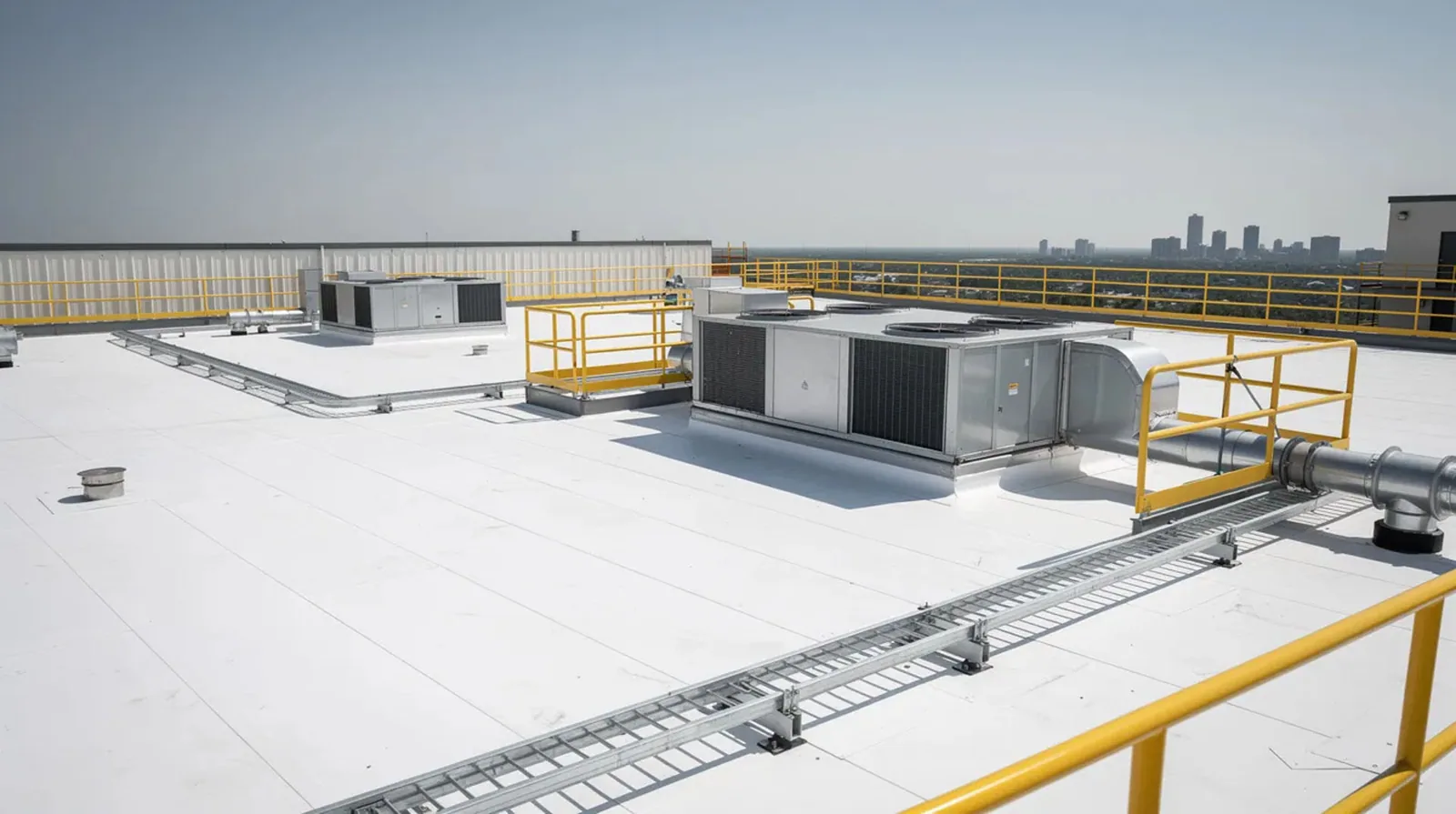
We start with the property contact, authorized roof entry, tie-off route, equipment restrictions, and work windows. A commercial or retail operation may need its own delivery schedule and interior protection. A property close to an access route may have staging limits that do not apply elsewhere. We confirm those details with the manager and mark where the inspection can proceed. If equipment or access prevents a full walk, we leave that section identified for follow-up.
On the roof, we map seams, drains, scuppers, penetrations, curbs, walls, edge metal, and previous repairs. We record open laps, loose terminations, punctures, worn surfaces, water marks, and ponding. Photos pair a close detail with a roof-section reference, letting maintenance staff find the condition again. A commercial roof inspection can set a baseline beyond the current leak, including access limits and areas that need testing.
The corridor touches planning frameworks in Oxnard, Port Hueneme, and Camarillo. That broader context helps a portfolio manager understand why a parcel’s jurisdiction and work sequence should be checked individually. For a separate Camarillo roof assessment, we preserve that property’s map and condition history rather than carrying findings from another address.
Follow the water path, not just the stain
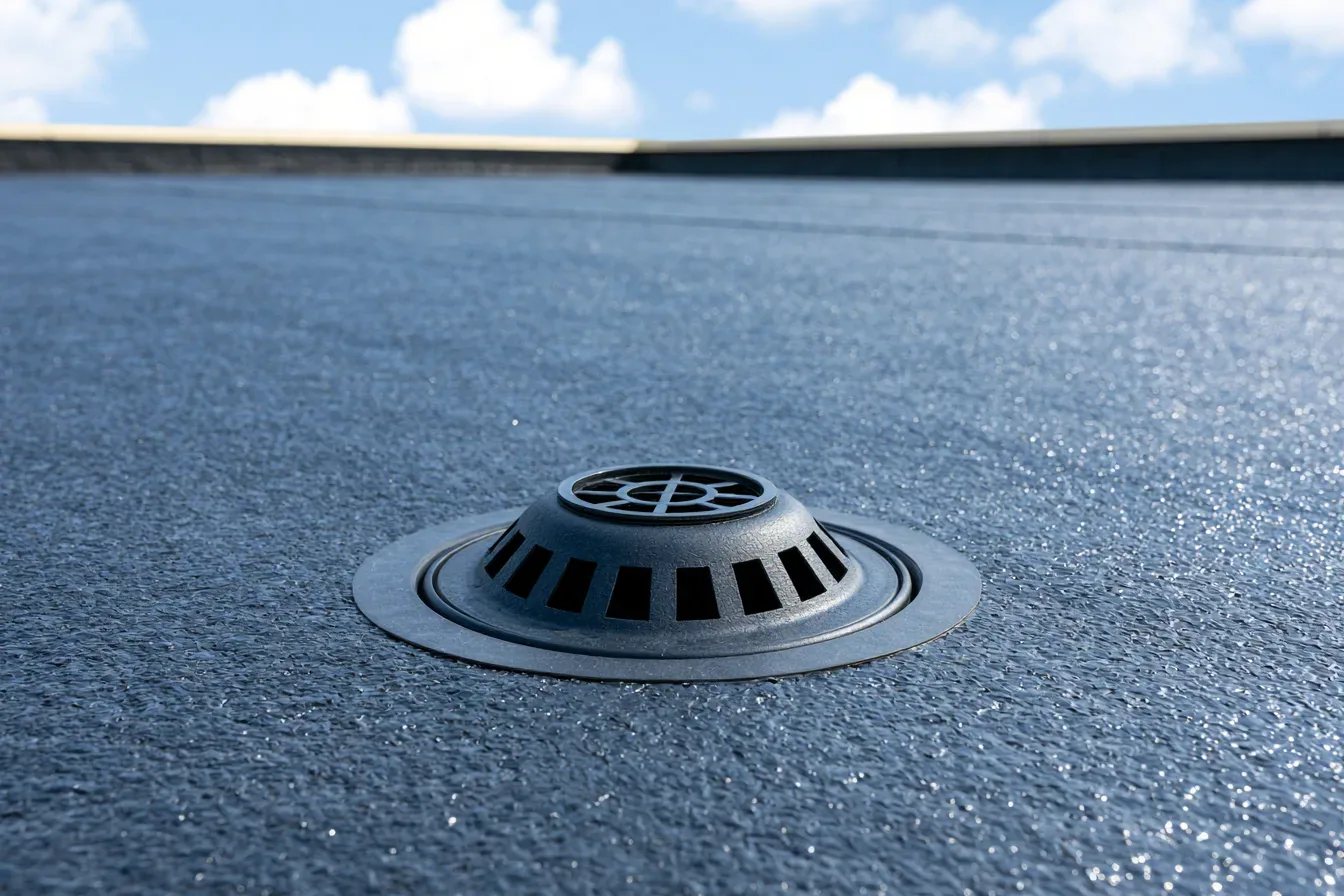
We compare the reported room and timing with details above it. Water can move under insulation or along the deck before it appears indoors. At a drain, we check the bowl, membrane connection, overflow route, and slope. At a wall or curb, we inspect flashing height, corners, and termination. At the perimeter, we look for open joints, loose coping, or failed attachment. The field mark shows what is observed and where a test might change the repair limit.
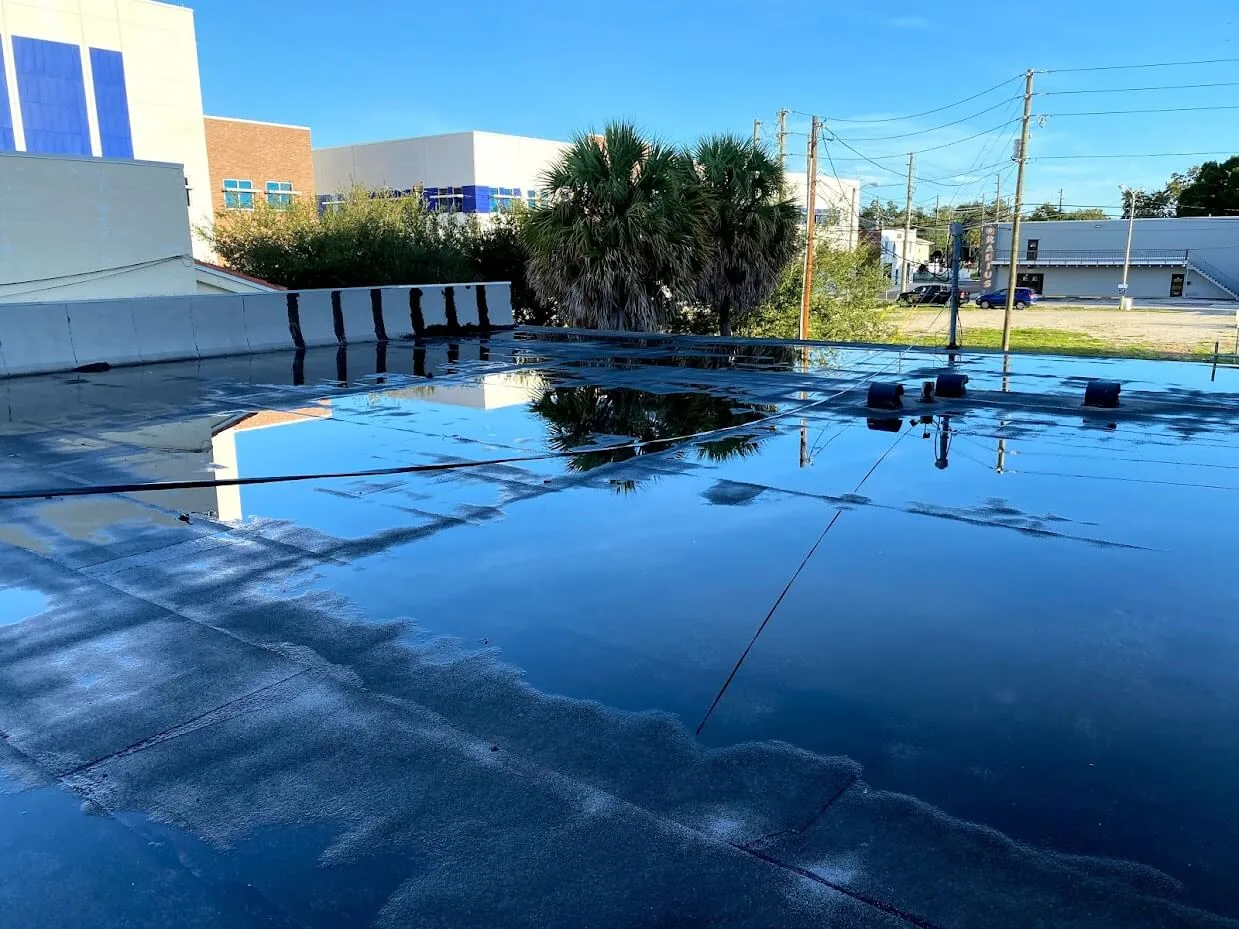
The National Weather Service recorded 1.77 inches at its Oxnard station during Tropical Storm Hilary in August 2023, its highest August monthly total there. That is a dated Oxnard station measurement, not a total for every corridor parcel. We inspect the property’s own outlets, low points, and water marks before recommending work. A separated drain connection may need drain and scupper repair; water that stays in a broader roof depression may need ponding-water repair after its area and cause are checked.
If the surface does not show how far moisture extends, an infrared survey or test opening can establish whether insulation is involved. We explain the test area and which result changes the scope. That information can distinguish a bounded detail repair from a larger removal and dry-in plan.
Repair the roof assembly at a stable boundary
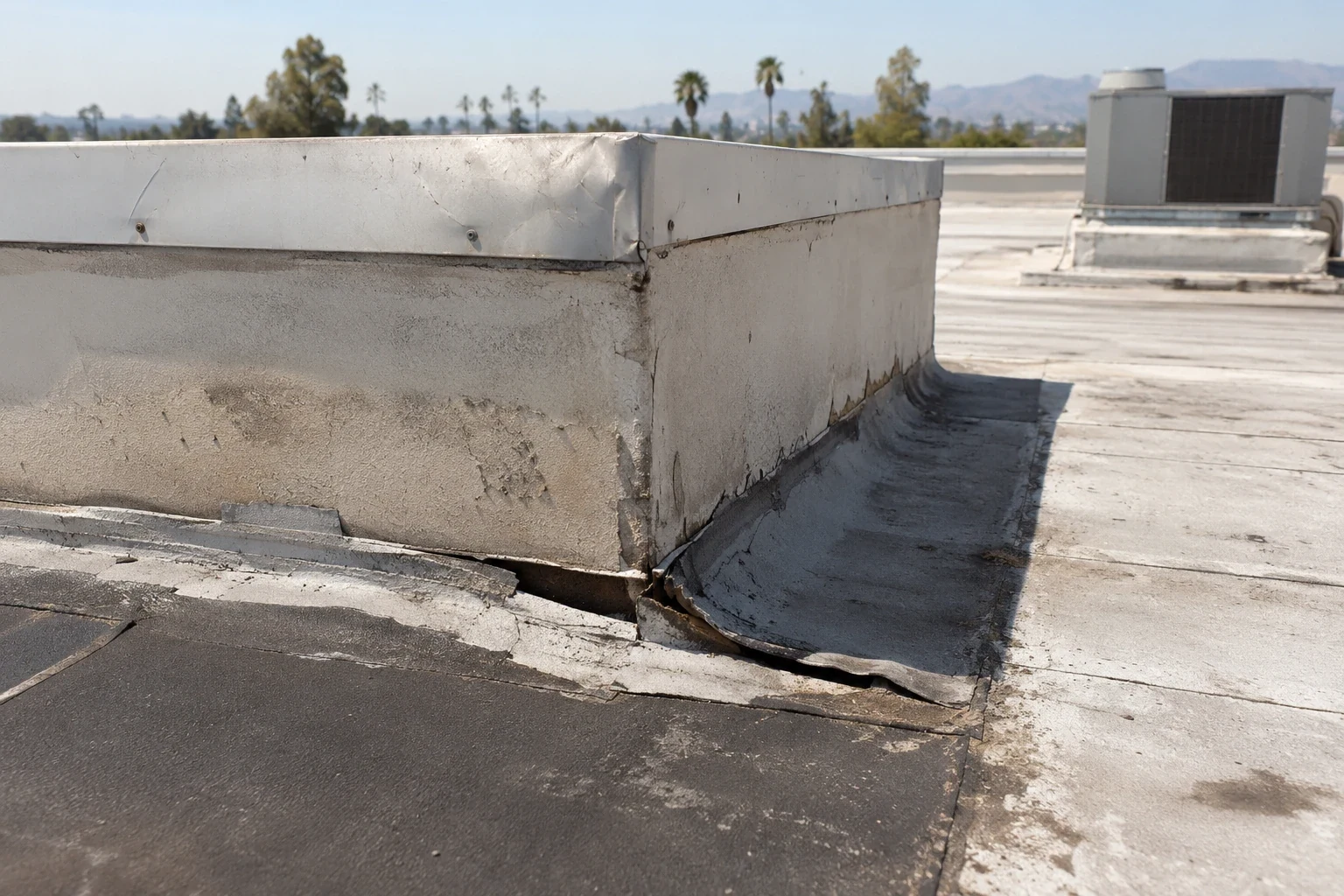
A repair should restore the connection, not cover a symptom. At a seam, we inspect how far the weld or adhesion has failed. At a curb, we check corners, flashing height, seal, and the field sheet. At a wall, we follow counterflashing to its termination. Around an edge, we inspect metal joints and attachment. We remove loose material to stable roofing and prepare it for a compatible tie-in.
TPO and PVC need clean, weldable surfaces; EPDM, modified bitumen, metal, and coating systems call for other materials and techniques. We identify the roof before choosing a repair method. A split lap may need seam repair, while a failed curb or wall detail can call for flashing repair. If operations require equipment to stay active, the crew sequence identifies the trade coordination, protection below, and daily dry-in boundary before the roof opens.
When water is active, a temporary measure can protect the interior while the permanent correction is scheduled. We show the temporary boundary and remaining work separately. Photos at closeout document the restored detail and any adjacent condition that still needs a decision.
Compare repair options across the measured area
A local repair fits when the defect is defined and the surrounding assembly can hold a durable tie-in. Repeat openings, broad moisture, loose attachment, or deck movement may require testing or a larger area. We mark the evidence, measure the work, and separate confirmed quantities from concealed conditions. A commercial roof repair scope identifies materials, preparation, access assumptions, protection, and where the work stops.
A recover keeps the existing assembly only when moisture, attachment, deck, drains, edges, and clearances support another layer. Replacement exposes the substrate but adds tear-off, debris handling, staging, and temporary protection. We compare each option using the same measured sections, with insulation, edge metal, drains, equipment moves, and work windows listed distinctly. The proposal makes it possible to compare bids by roof area and task rather than by a headline total with different assumptions.
Pleasant Valley Road appears in the plans of Oxnard, Port Hueneme, and Camarillo for different reasons: scenic and planning-boundary context, a broad commercial/retail and access corridor, and arterial connections to commercial and industrial land. For a manager with properties near Port Hueneme or in Mission Oaks, Camarillo, the roof record should show each building’s actual use and access. The corridor designation alone does not set a repair quantity.
Keep location and repair records together
The closeout lists the system observed, roof section, repair preparation, materials, photos, tests, and open conditions. We mark inaccessible areas separately and state what is needed to inspect them. When later work changes a penetration or service route, the property team can compare it with the earlier map rather than reconstructing a roof history from scattered work orders.
Maintenance revisits drains, seams, curb seals, penetrations, wall terminations, edge metal, and equipment paths. The interval follows condition and building use. A photo-backed roof condition report links field marks to repair priorities and budget decisions. For a corridor portfolio, consistent labels help compare work while preserving the specific findings and approvals at each building.
Share the roof plan, leak date and location, equipment schedule, access contacts, and prior repairs. We will inspect the affected sections and return a repair, testing, recover, or replacement recommendation tied to measured conditions and a clear work limit.
Related Roofing Work
More from Service Areas and nearby services
Request a Pleasant Valley corridor roof review
Send the roof plan, leak report, access details, equipment schedule, and prior repair notes. We will mark the affected areas and return a measured scope with clear sequencing.
Common Questions
Does Pleasant Valley Road have one planning status along its full length?
No. Oxnard, Port Hueneme, and Camarillo describe different planning contexts along the corridor. The property contact can confirm the parcel’s applicable review; we document the roof and access at the building.
How do corridor operations affect roofing work?
Access windows, deliveries, equipment use, and protection below can change staging and sequence. We confirm those conditions with the property contact and include them in the work plan before opening the roof.
Is Hilary’s rainfall figure a corridor-wide measurement?
It is an August 2023 reading from the Oxnard weather station. We use it as a dated city record and assess each building’s drainage from its own outlets and water marks.
What evidence supports a wider repair area?
Moisture beyond the detail, recurring openings, loose attachment, or deck movement can widen the scope. We map those findings and test when a result could change the repair boundary.
Can I compare roof reports from buildings in different cities?
Use consistent section labels and condition fields, but keep each property’s plan, observations, and approvals separate. We can help compare repair tasks without transferring one building’s findings to another.