Commercial Cool Roof Installation in Oxnard, CA
Review reflective-roof options
Commercial Cool Roof Installation
A reflective roof changes the surface temperature pattern, but it does not correct wet insulation, failed seams or poor drainage. We begin with the assembly and building use, then compare coating, membrane and recover options that can provide a reflective finish. Oxnard, CA includes agricultural processing and equipment-service uses in the Central Industrial Area, plus distribution and cold-storage development at Sakioka Farms. Roof design and energy profile vary by property. We measure the existing condition, confirm insulation and attachment where needed, and check how the proposed surface will meet edges and equipment. The recommendation separates roof repair from energy goals.
Check the roof before changing its surface
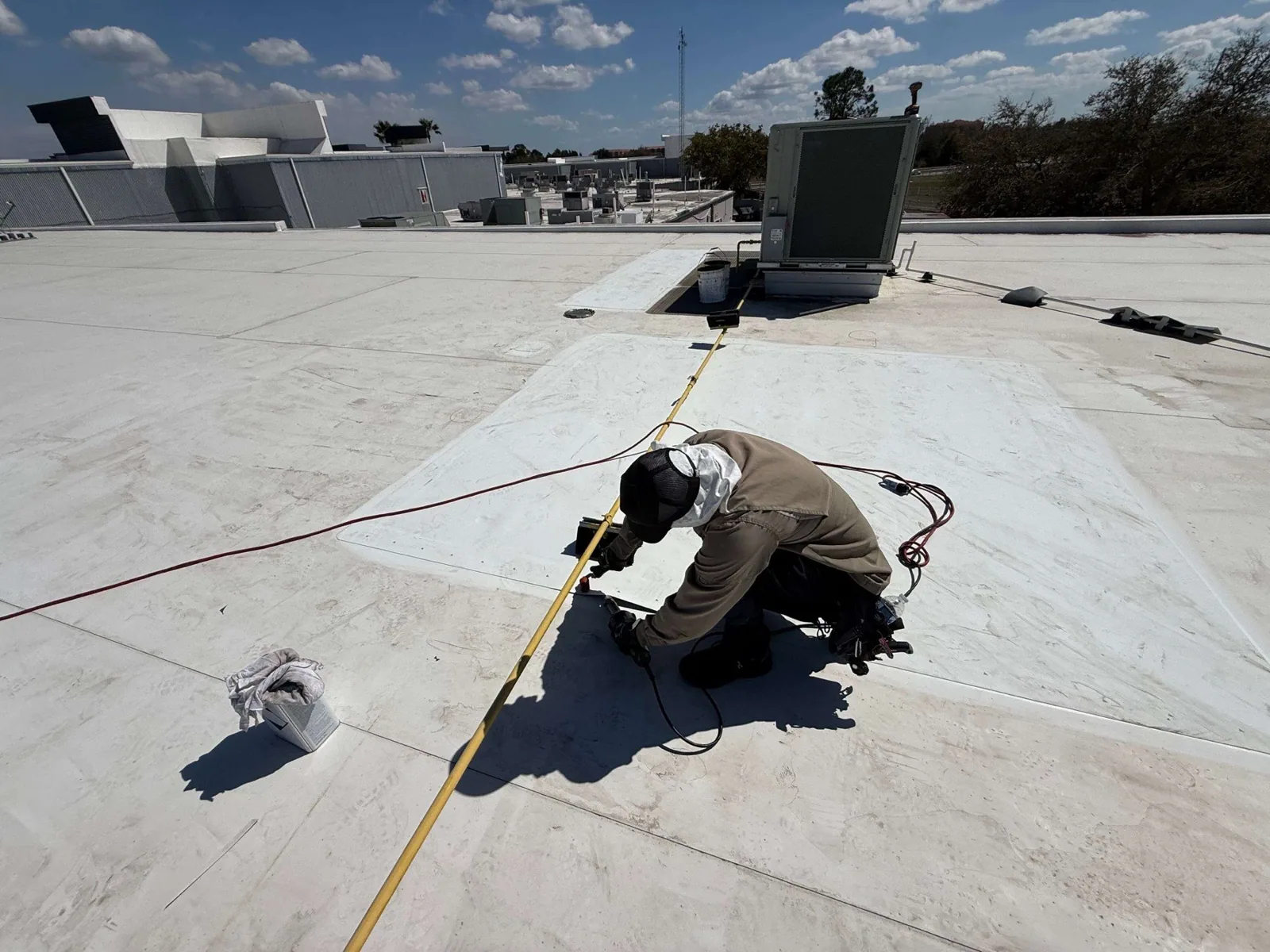
We inspect membrane seams, flashings, edge metal, drains, ponding, surface wear and prior patches. A reflective finish needs a sound substrate. If water is entering through an open seam or curb, that repair comes first. Where moisture may be trapped below the membrane, we review the roof history and use appropriate testing before covering it.
Existing insulation, deck type and attachment method affect which assemblies are feasible. We compare those conditions with the building's plans and current roof records. A single area may have more than one repair generation, so we mark the limits of each. A commercial roof inspection records the full field condition before the owner chooses a coating or replacement path.
We note shading, equipment and service paths that may wear the finish. Those observations guide maintenance, not utility forecasts.
Compare reflective systems by assembly
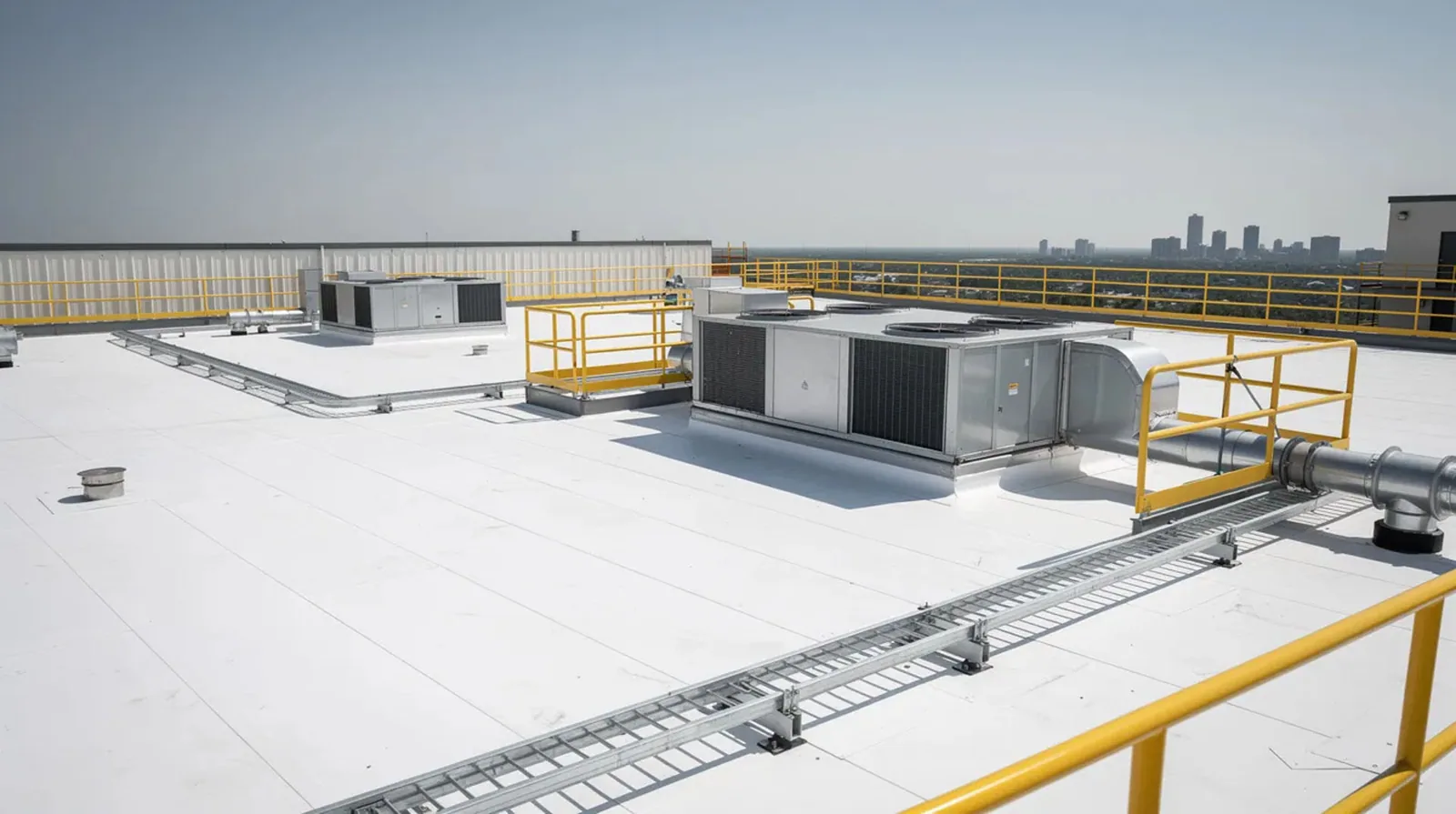
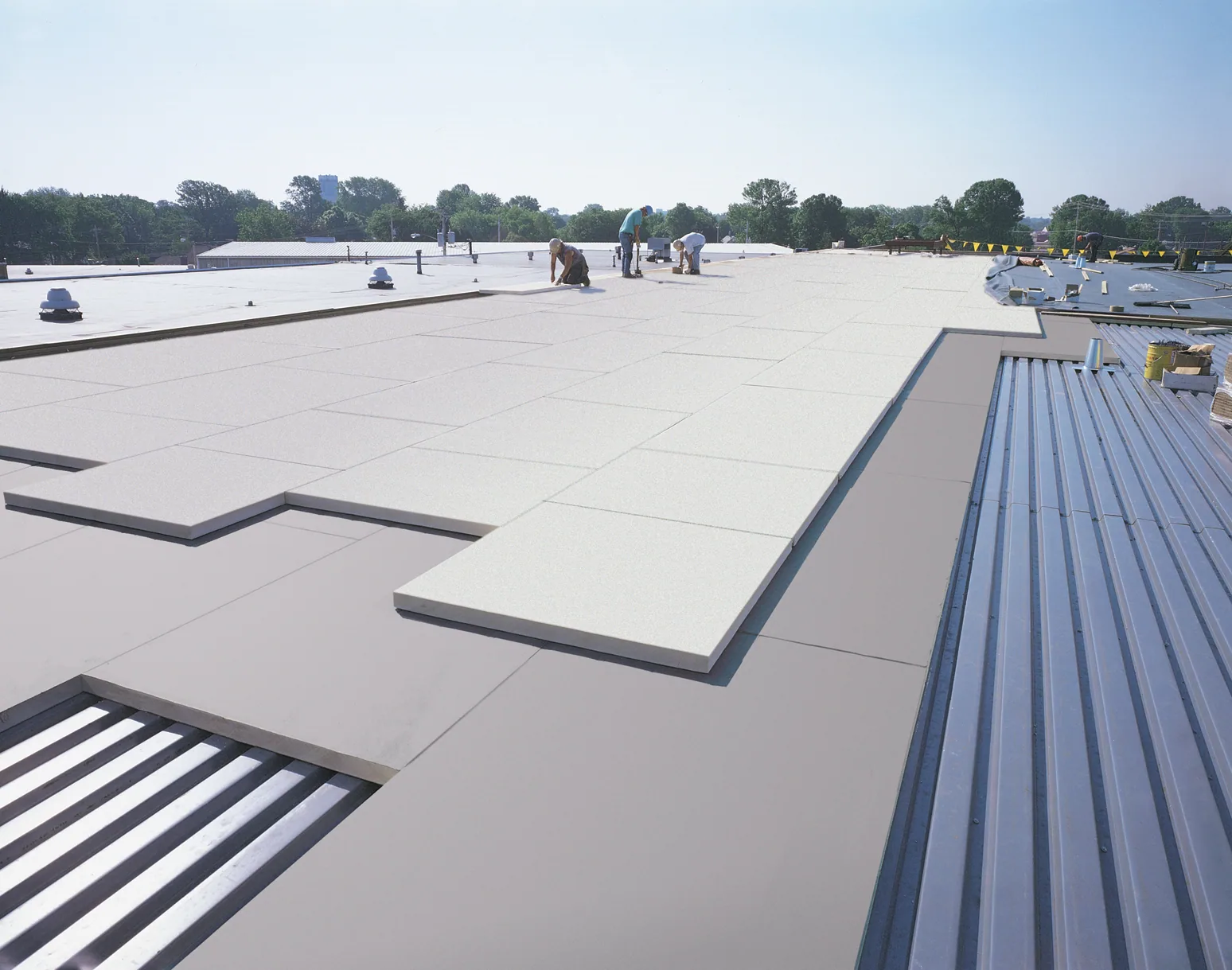
A reflective membrane can be installed as part of a replacement or approved recover. A coating may be appropriate when the existing roof is sound, dry and compatible with the product. Substrate, slope, ponding history and preparation determine coating suitability. It is not a substitute for replacing wet insulation or rebuilding a failed curb.
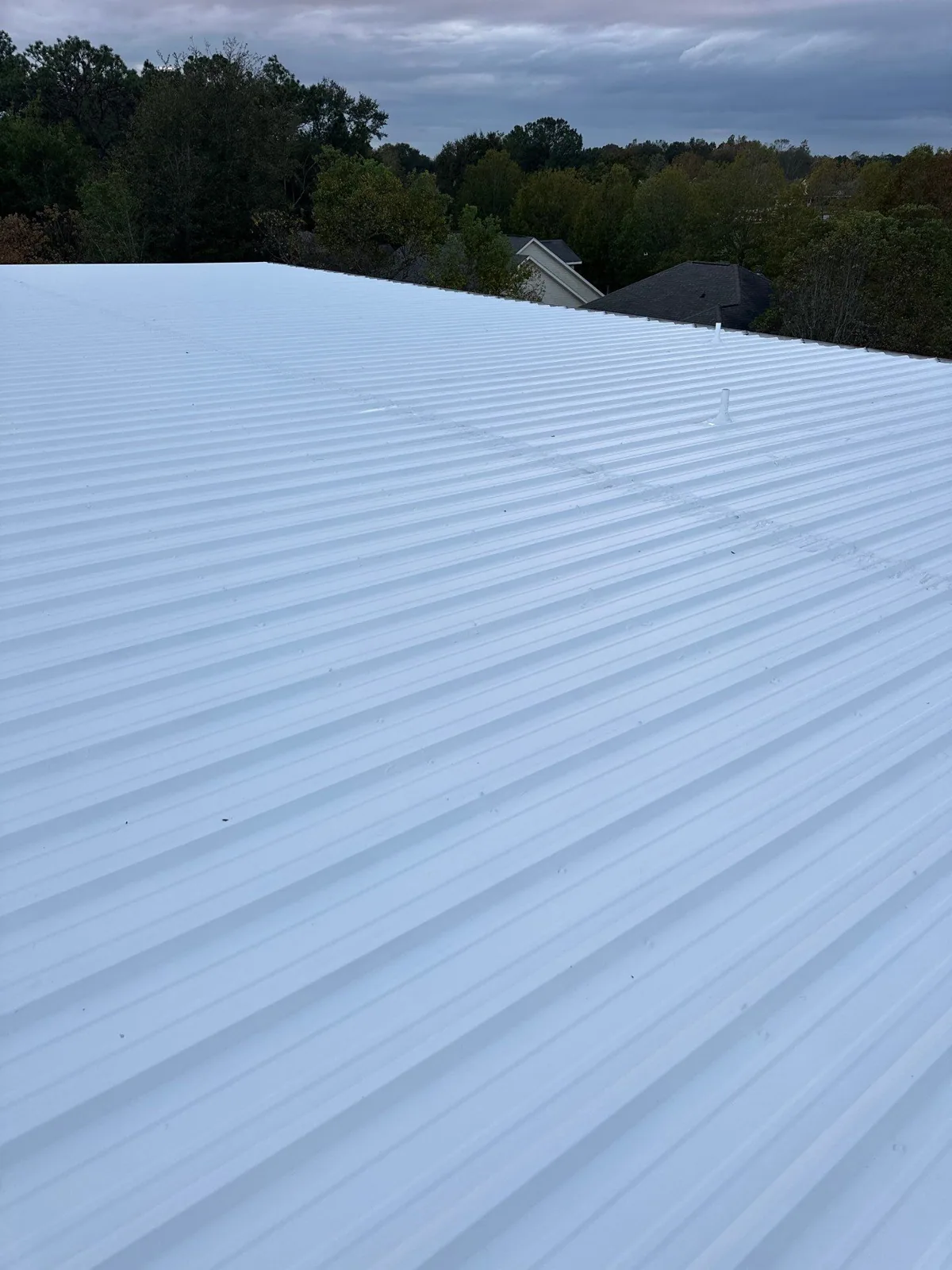
We specify system, preparation, primer if needed, reinforcement and target coverage. For a membrane, the plan specifies attachment, seams, flashing and perimeter terminations. For a coating, it identifies repairs, test patches and surface conditions that could affect adhesion. Coating restoration can be evaluated where the existing roof meets those requirements.
Owners may also compare a new single-ply assembly, such as TPO roofing, when broader replacement work is needed. We align the specification with the project criteria and manufacturer's instructions rather than selecting by color alone.
Set expectations for heat and energy
A reflective surface sends more incoming solar energy away than a darker surface under comparable conditions. The effect on indoor temperature or energy use depends on insulation, HVAC efficiency, occupancy, controls, air leakage and the weather. We document roof work; energy estimates require building-specific analysis.
Insulation may be the larger performance issue. We review existing thickness where records or testing support it, look for thermal gaps at curbs and parapets, and coordinate proposed improvements with code and project requirements. Added insulation changes curb height, edge transitions and drain geometry. Insulation and cover-board work can be scoped with the selected membrane so the finish and thermal layer work as one assembly.
On manufacturing or research buildings near the Camino Real Business Park, equipment, process loads and operating schedules influence the owner's priorities. The area plan identifies office, manufacturing, research and limited commercial uses, but does not establish any individual tenant's energy profile. We ask for the building's actual operating information before comparing options.
Resolve drains, edges and equipment first
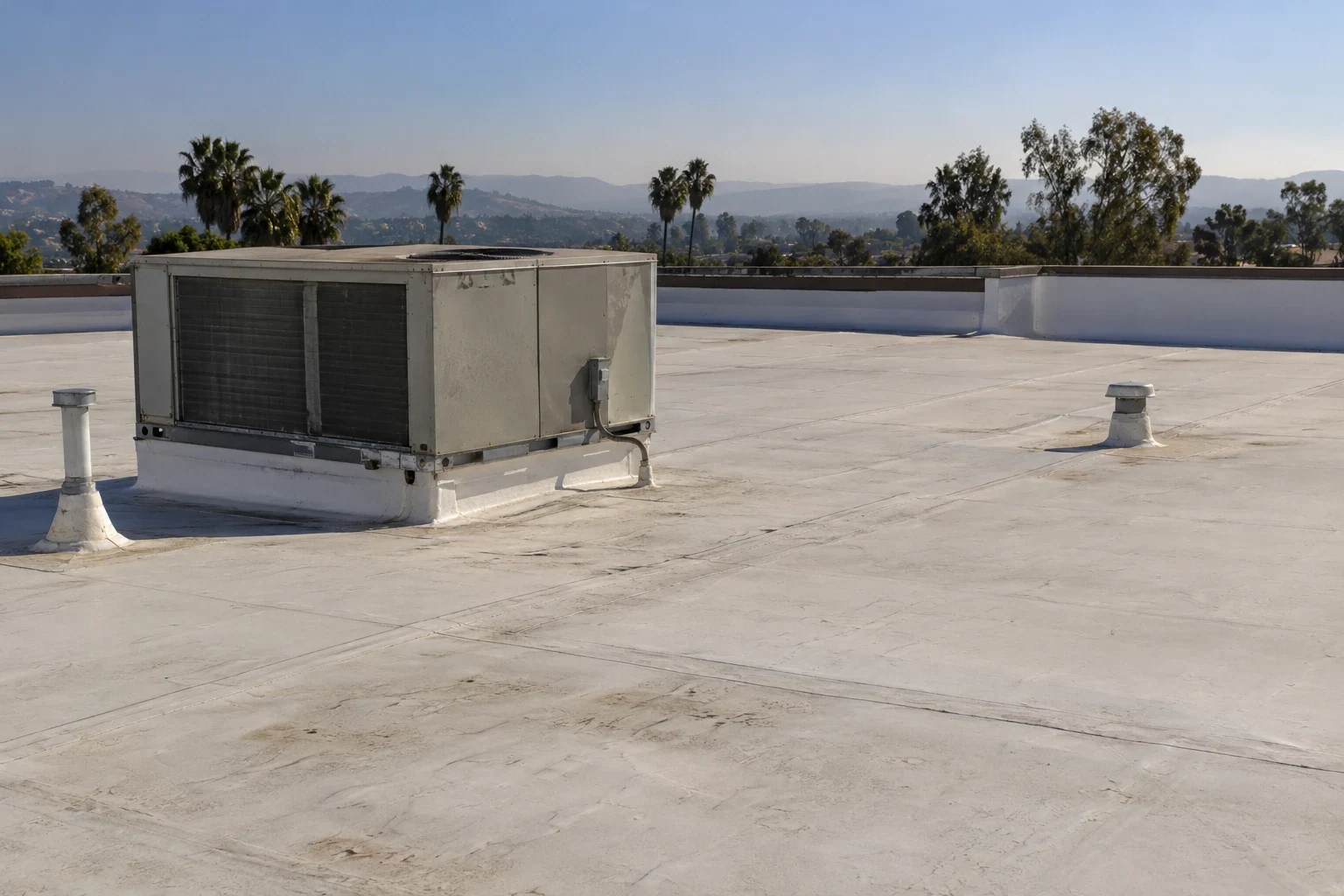
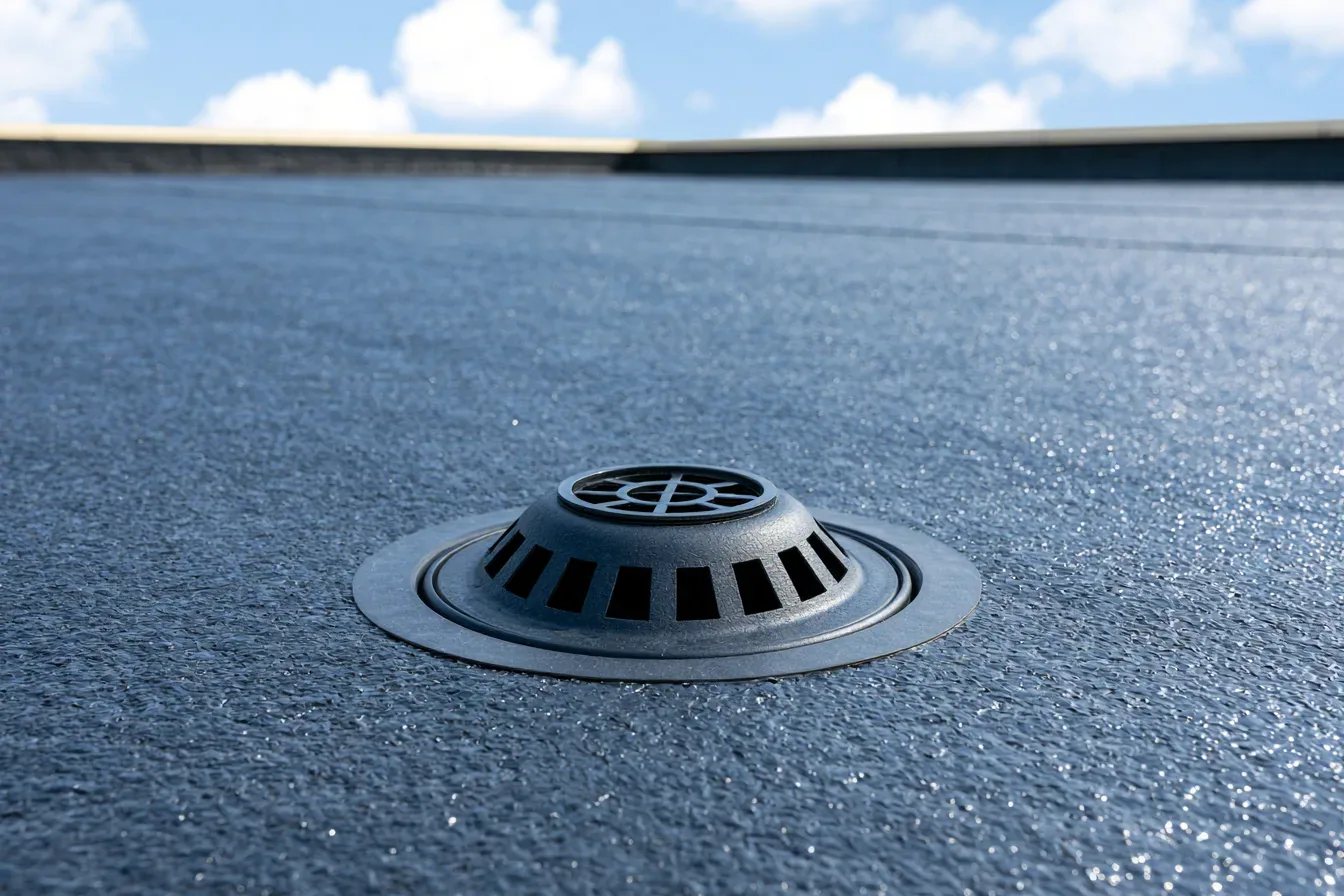
Reflective work still depends on a continuous roof detail. We review drains, scuppers, curbs, skylights, expansion joints, parapets and edge metal before setting the scope. Coating cannot bridge a loose termination or close an overflow outlet. New membrane can add height that changes the curb flashing or gutter connection. Every transition must remain serviceable after installation.
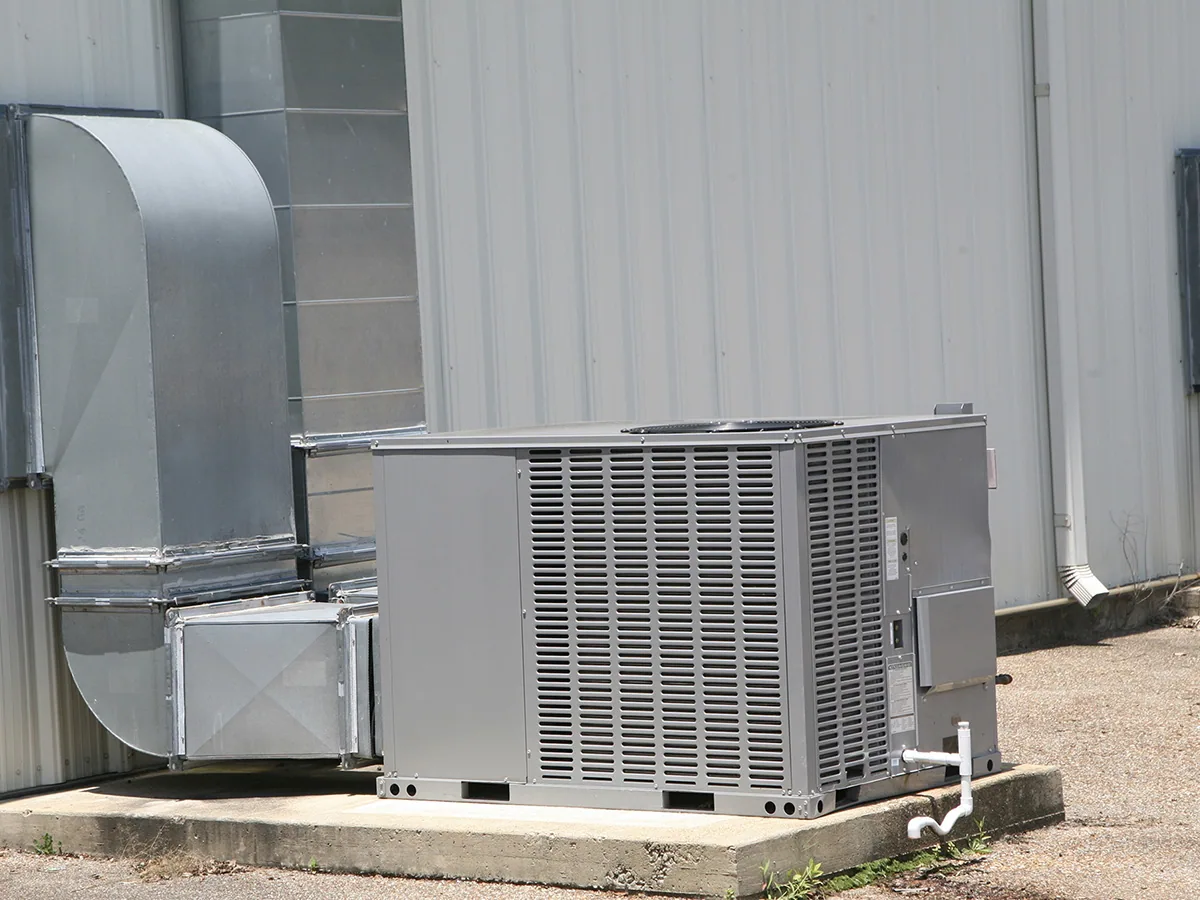
We map low points and outlets before adjusting slope. Where water rests because insulation has settled or the drain sits too high, the repair plan must address that cause. Drainage correction can coordinate tapered insulation, outlet openings and overflow routes with a reflective system. Rooftop units also require proper clearance and curb flashing; equipment curb service can be coordinated before the new surface goes down.
The scope lists retained material, removal and tie-ins so bidders can price the same assembly.
Use Oxnard conditions in the right context
The Central Industrial Area has a mix that includes agricultural processing, outdoor storage and vehicle or equipment repair. These uses can affect roof access, staging and the amount of surface exposed to service traffic. We plan protection and inspection routes for the property in front of us instead of assuming all industrial roofs operate alike.
Sakioka Farms is a broad business park with reported distribution, cold-storage and fruit-processing buildings. Such uses can have different interior temperature control and loading patterns. Those details matter to access and insulation review, but a district label does not establish a particular building's roof or energy use. Roofing support in Sakioka Farms is coordinated with the building's field conditions.
The National Weather Service's Oxnard station recorded an August 2023 rainfall record during Tropical Storm Hilary. That dated event is useful when reviewing drainage and water entry; it does not imply a reflective system will prevent storm damage. We keep the surface recommendation separate from repairs required by current conditions.
Keep the reflective finish performing
A roof's appearance can change as dirt, foot traffic and repairs accumulate. We set a maintenance interval based on system requirements, roof access and the features recorded at installation. We check seams, flashings, drains, walk pads, supports and service paths.
Repairs should use materials compatible with the installed roof. A coating patch over a contaminated or damp surface may not bond, and incompatible sealant can complicate later work. We document the product family and repair method so a future maintenance crew knows what is present. If damage extends beyond a localized area, we explain when a section repair, restoration or replacement is more practical.
For a commercial property manager, the useful record ties each finding to a roof zone, photograph and next action. Roof condition reporting helps organize those observations for budget and service planning.
Choose the scope with measured evidence
Our proposal identifies the existing assembly, repairs needed before reflective work, selected product or membrane, and details that affect installation. It identifies assumptions requiring confirmation. If the roof is not a good candidate for coating or recover, we state why and show the replacement scope for comparison.
Before construction, we coordinate access, weather windows, equipment shutdowns and protection for occupied space. During work, the crew checks preparation and concealed details before covering them. At closeout, photographs and product records give the owner a baseline for inspection.
CRA can inspect the roof, repair current failures and compare reflective options with the property's actual conditions. Bring plans, maintenance and energy records to compare options against building needs.
Related Roofing Work
More from Commercial Roofing Services and nearby services
Review reflective-roof options
Share the roof plan, repair history, equipment schedule and any available energy records. We will inspect the assembly and compare reflective options for your Oxnard property.
Common Questions
Will a cool roof lower our energy bill?
A reflective finish can reduce solar heat absorbed at the roof surface, but utility impact depends on insulation, HVAC, schedules, controls and the building envelope. We document the roofing work and can coordinate roof data for an energy analysis; we do not assign savings without building-specific modeling.
Can a reflective coating go over any commercial roof?
No. The existing membrane, moisture, adhesion, drainage, ponding and detail condition determine whether a coating is suitable. We inspect and may recommend test patches. Wet or unstable material and failed transitions need correction before a coating is considered.
Is a reflective membrane different from a roof coating?
Yes. A membrane is a sheet assembly with seams and flashing details, while a coating is applied over a prepared substrate at a specified coverage. Either can have a reflective surface, but their repair methods and eligibility differ. We describe the assembly rather than treating the color as the system.
Can reflective roofing be added during a reroof?
Yes, if the selected membrane or coating is approved for the substrate and project design. Replacement is the time to correct insulation, drainage and curb height. We include edge metal and penetrations in the roof plan so the new surface terminates cleanly.
What records help compare cool-roof proposals?
Roof plans, repair history, known leaks, utility data, equipment schedules and warranty documents help define the decision. We verify the assembly and state the preparation, materials and detail work in the proposal, allowing the owner to compare like scopes.