
Duro-Last Commercial Roofing in Oxnard, CA
Verify the roof before fabrication
Duro-Last Commercial Roofing
A roof plan can show drain and curb locations, but field measurements decide whether a fabricated sheet fits the building. Duro-Last's commercial system uses PVC membrane and offers factory fabrication of sheets and accessories from project dimensions. We inspect the deck, insulation, edges, drains, and penetrations before verifying the measure. At Sakioka Farms Business Park, reported distribution, cold-storage, and fruit-processing operations can affect material handling; the roof survey defines the installation sequence. Our PVC roof work begins with dimensions and the assembly found in the field.
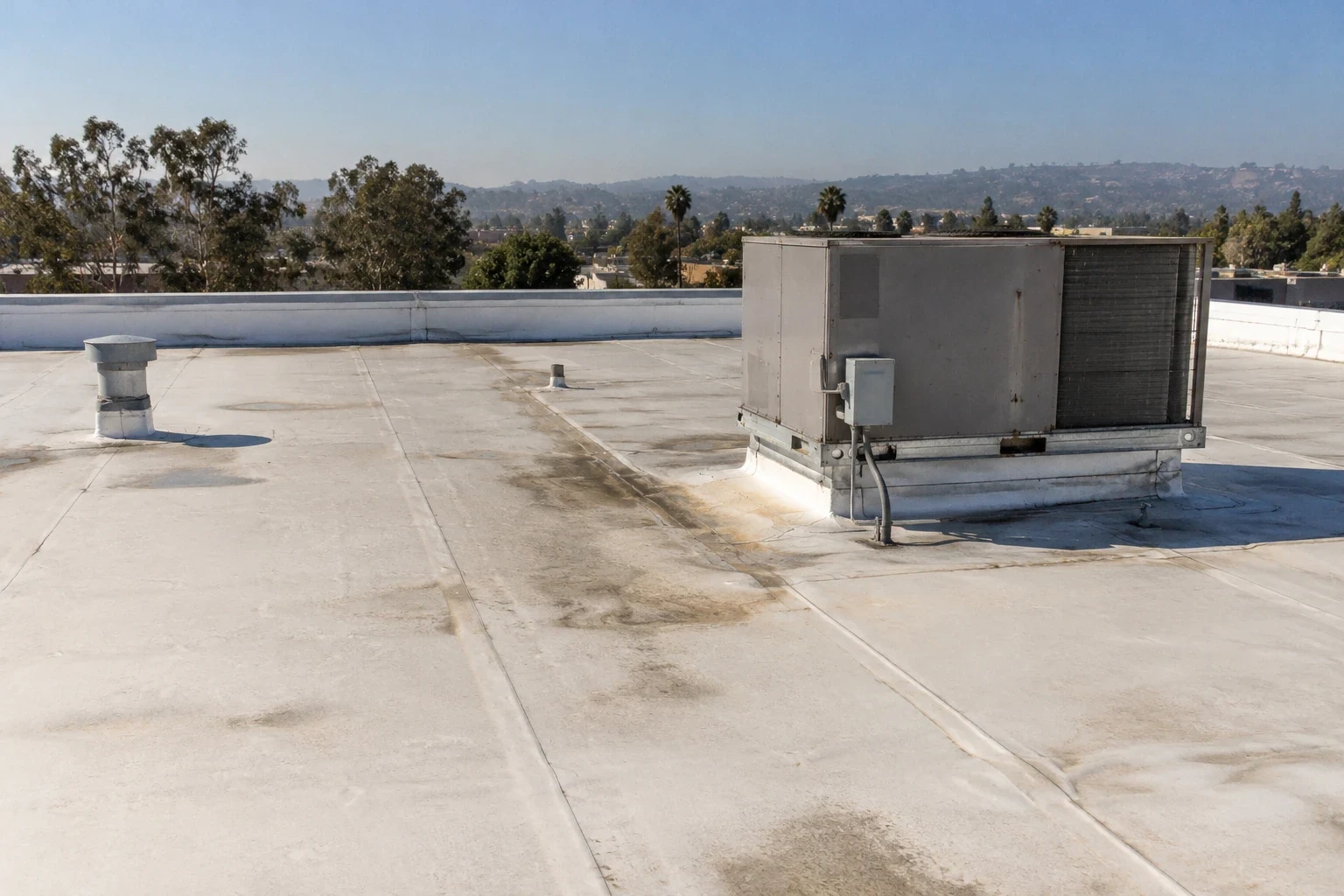
Measure the roof before fabrication
Duro-Last's factory-fabricated system can reduce some field seaming by preparing sections and accessories from project dimensions. Accurate dimensions matter at roof sections, parapets, curbs, drains, supports, and transitions. We compare the plan with field conditions and note changes that affect fit before fabrication begins.
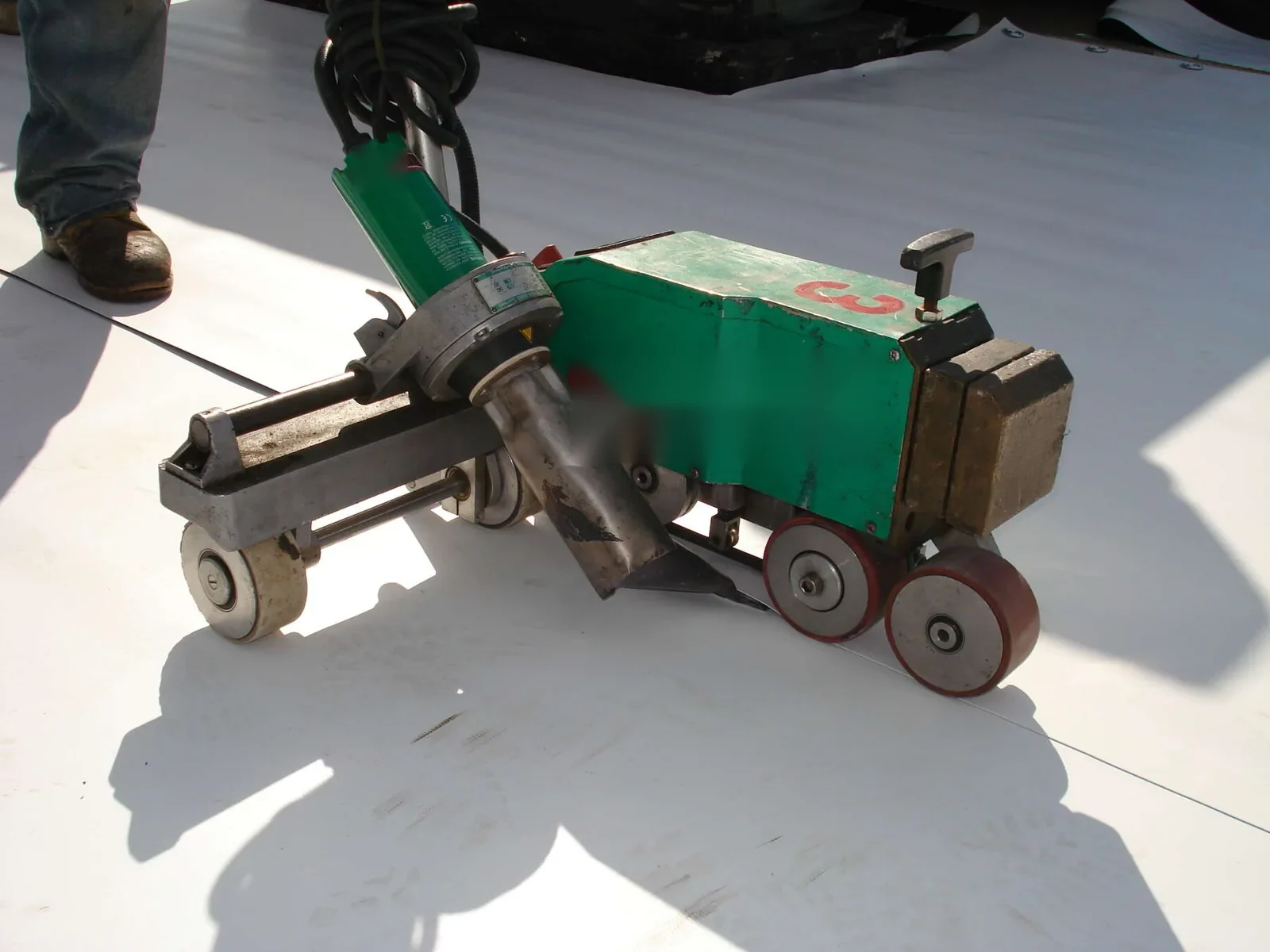
Factory preparation does not remove the need for sound substrate, attachment design, secure perimeter details, or field work at transitions. We confirm deck and insulation condition, drainage, edge metal, and the specified attachment method. Where the system uses induction welding, the details and components must suit the approved assembly. We follow product documents and project specifications rather than assuming one installation method applies to every roof. The commercial roof inspection identifies conditions that need correction before dimensions are finalized.
Downtown Oxnard's planning code allows mixed urban uses, including office and retail alongside residential and live/work properties. On an occupied building in that setting, hoisting, tenant paths, noise windows, and roof-hatch access can shape the work sequence. We coordinate those constraints before delivery so fabricated sections reach the roof in installation order. The plan reserves access for future equipment service.
Close the seams and penetrations
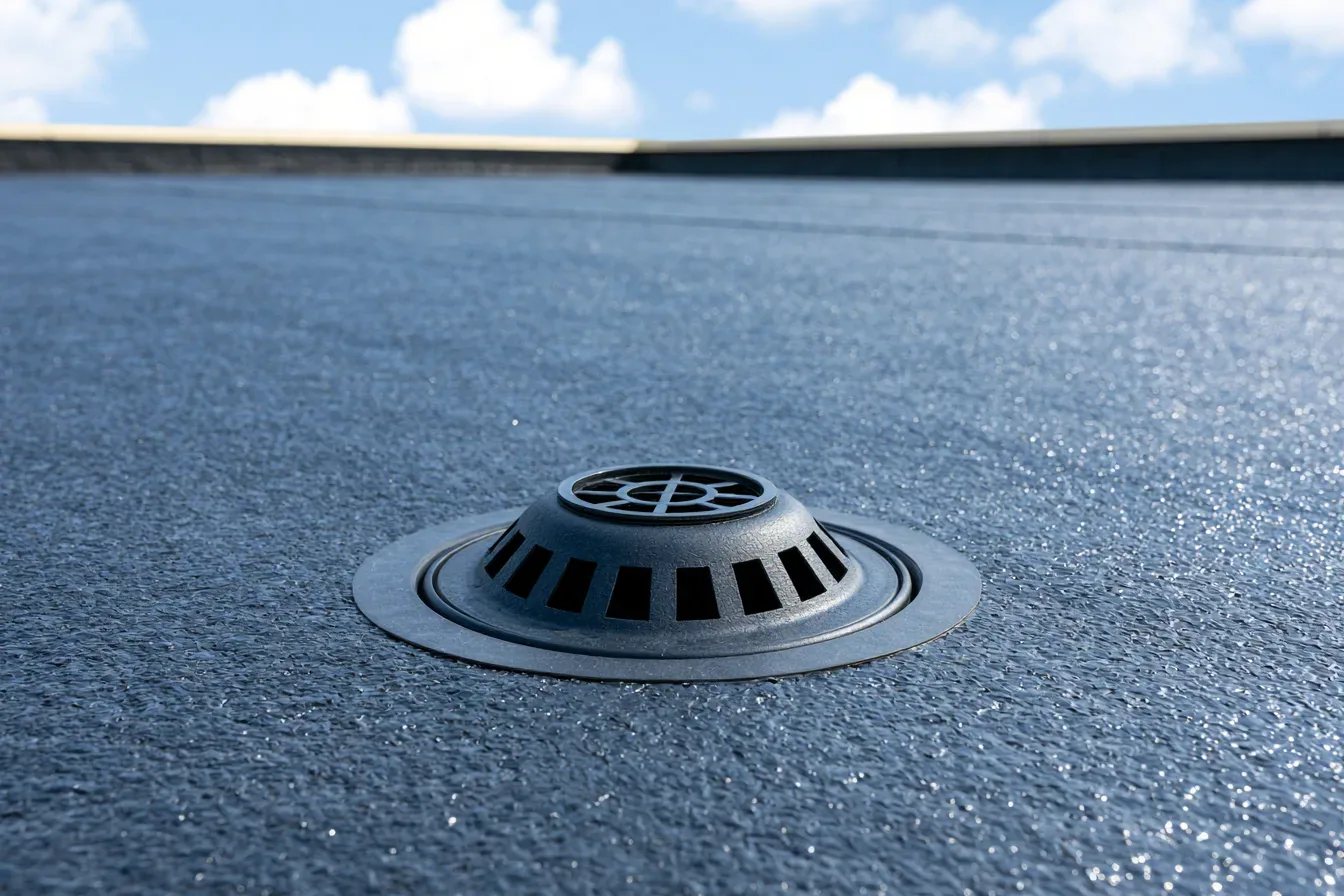
Even a roof with factory-prepared sheets has field details. We inspect and close the remaining seams, corners, curb flashings, drains, wall transitions, and perimeter terminations. A weld must be made on clean, prepared membrane under the required conditions. We probe seams and review intersections where the sheet changes direction. At drains, the membrane detail needs a secure connection that allows water to enter the bowl without leaving an open edge.
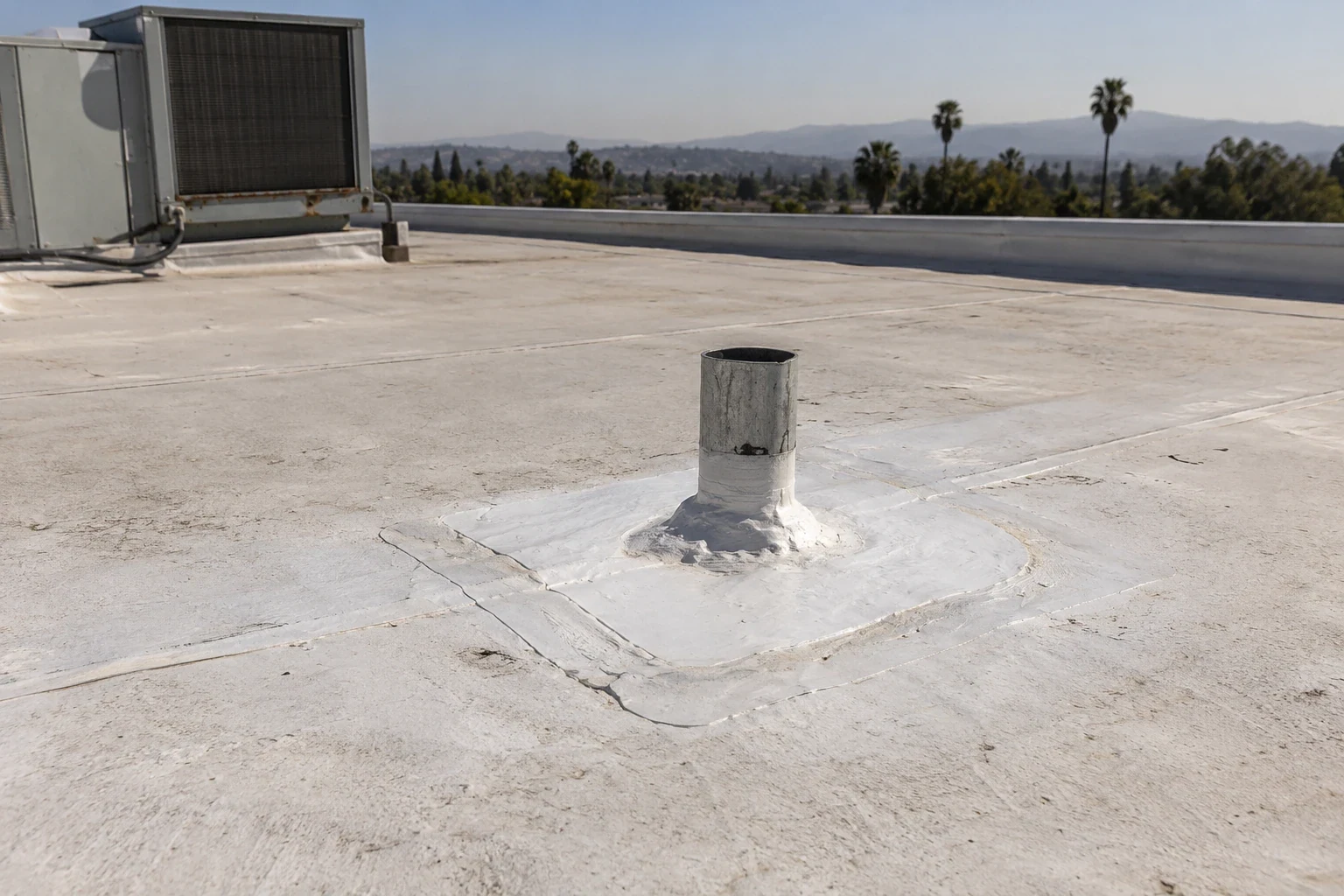
Equipment penetrations require coordination with the mechanical contractor. If a curb, support, or conduit changes after measurements, the fabricated layout may need adjustment. We confirm which trade is responsible for disconnecting or resetting equipment and when the roof is ready to close. A penetration repair should restore both the membrane and the flashing detail, not just apply sealant around the visible opening. Our penetration flashing work and drain detail work follow the condition and system requirements at each point.
Water can travel beneath a sheet before an interior stain appears. We inspect the reported leak area and nearby low points, seams, and transitions. Oxnard's 1.77-inch Hilary total in August 2023 set a station record for that month. A Duro-Last leak file can pair the event date with its drain inspection, interior report, and field photographs to support a repair boundary.
Repair a Duro-Last roof without guessing at fit
A puncture or seam opening can be repaired when the surrounding membrane is stable and the new material can tie into compatible sheet. We clean and prepare the repair zone, check adjacent seams and attachment, and inspect for moisture or damage beneath it. If the repair reaches a fabricated detail, we verify the dimensions and accessory type before closing the work. A patch cannot conceal loose edges or wet insulation beyond the opening.
Where leaks repeat, we compare repair locations and look for a shared cause such as movement, drainage, traffic, or an edge condition. A photo and field mark show the owner the defect and repair boundary. Testing can help determine whether insulation beyond the visible stain is wet. If the membrane is broadly serviceable, a defined repair may be enough. If attachment or insulation problems span multiple sections, we map them before comparing a recover or replacement. The puncture repair scope identifies the affected area and the material used.
During a repair visit, we also note equipment or maintenance routes that could damage the new work. A service contractor can receive a marked access path and any restrictions around fresh seams. We recommend a follow-up check where adjacent material or concealed conditions remain uncertain. The report records the next action instead of implying that one patch closes every issue on the roof.
Set expectations for a new membrane
Replacement begins with a decision about tear-off, deck correction, insulation, drainage, and edge details. We assess whether any existing layers can remain, whether moisture requires removal, and how the assembly will terminate at walls and equipment. Factory-fabricated sections are based on the accepted roof plan, so the measure-and-verify step is scheduled after repair limits and equipment changes are known. That sequence reduces the chance of ordering material around a detail that will move.
Cost depends on access, removal volume, substrate repairs, insulation, edge metal, drain work, and protection for active building areas. A broad roof with limited access may need a different material route than a building with direct staging. We identify work phases, daily watertight boundaries, and owner decisions, then compare recover and replacement on the same measurements. A replacement plan includes tie-ins and concealed conditions; recover review confirms whether another layer is appropriate.
At larger properties, operations determine what can happen during each shift. Sakioka Farms' reported distribution and cold-storage uses highlight why delivery routing and equipment access belong on the plan. We confirm the specific building's loading times, roof hatch, work zones, and service constraints with its representative. No two properties use the same roof access in the same way, even when they share a district.
Keep fabrication records with the roof file
Closeout records should include the approved roof plan, field measurements, product submittals, membrane details, attachment, insulation, and any changes made during installation. We add photographs and marks for seams, drains, curbs, and repair boundaries. If the installed layout changed from the fabrication drawing, that difference belongs in the final record. A future repairer can then distinguish an original factory section from a field patch.
Maintenance walks check seams, perimeter restraint, flashing, drains, surface damage, and access paths after other trades visit. The inspection interval follows condition and building use. Keep fabrication records available for later equipment or penetration work. A roof condition report can connect dated photographs to the plan. If a project specification permits other systems, compare a GAF membrane assembly or Sika PVC assembly on the complete scope, including details and attachment.
Send the roof plan, Duro-Last submittals, leak history, equipment schedule, and access limits. We will confirm measurements, inspect the current assembly, and prepare a repair or replacement scope that matches the building's roof and operating needs.
Related Roofing Work
More from Roofing Manufacturers and nearby services
Verify the roof before fabrication
Provide roof plans, leak history, product records, equipment schedules, and access contacts. We will field-check dimensions and conditions before preparing a repair or replacement scope for your Oxnard property.
Common Questions
Does factory fabrication eliminate all field seams?
No. It can prepare sections and accessories from measured dimensions, but the roof still has field joints and transitions. We verify seams, corners, penetrations, drains, and perimeter details during installation.
What roof information is needed before Duro-Last sheets are fabricated?
A current roof plan and field measurements of sections, edges, drains, curbs, and penetrations are needed. We confirm equipment changes and existing conditions before approving the layout so fabricated sections fit the building.
Can an existing PVC roof be patched with a Duro-Last detail?
We identify the installed membrane and check its condition, repair boundary, and compatibility first. A new sheet must weld or tie in to stable material, and any wet insulation or loose edge needs separate correction.
How do you handle a curb that changes after the roof is measured?
We stop and compare the revised curb location with the fabrication drawing. The owner and mechanical contractor confirm the change, then we update the detail or sequence before closing the membrane around it.
What should be kept after a Duro-Last installation?
Keep the approved plan, field dimensions, submittals, product details, photos, repair locations, and any installation changes. These records help locate factory sections and protect the membrane during later equipment work.